


A leaking shower elbow might seem like a minor annoyance—just a few drops of water behind the wall or around the shower arm connection. But left unchecked, that small drip can rot timber frames, damage plasterboard, and create the perfect environment for mould to thrive in Sydney’s humid summer months. By the time you notice staining on your ceiling or wall, the damage has often spread far beyond the original leak point.
In this guide, you’ll learn what a shower elbow is, why it leaks, and how to spot the warning signs early. We’ll walk you through the risks of delaying repairs and explain when to call a licensed plumber to protect your home from costly water damage.
Key Takeaways
- A leaking shower elbow can cause hidden wall damage, mould growth, and structural rot if not repaired promptly.
- Most leaks occur at the threaded connection between the shower arm and the wall outlet due to worn washers or failed thread seal.
- DIY fixes often provide temporary relief but may not address underlying pipe corrosion or incorrect installation.
- Professional diagnosis ensures the leak source is accurately identified and repaired to Australian Standards and NSW plumbing regulations.
- Antons Plumbing & Gas (NSW Lic. 210933C) offers same-day service across Sydney with upfront pricing in AUD and a lifetime labour warranty on all repairs.
What Is a Shower Elbow and Why Does It Leak?
A shower elbow is the curved fitting that connects your shower arm to the water supply pipe hidden inside the wall. It allows the shower head to extend outward at a comfortable angle. Most elbows are brass or chrome-plated brass, threaded at both ends to screw into the wall outlet and accept the shower arm.
Leaks typically develop at the threaded connections where the elbow meets the wall pipe or where the shower arm screws into the elbow. Over time, thread seal tape (often called plumber’s tape) degrades, rubber washers harden and crack, and mineral deposits build up on the threads. When these seals fail, water seeps past the connection and tracks back along the pipe into the wall cavity.
In Sydney homes—especially those in older suburbs built before the 1990s—copper and galvanised steel pipes are common. Galvanised fittings can corrode from the inside, weakening the threads and making a watertight seal almost impossible. Even modern brass elbows can develop hairline cracks if over-tightened during installation or if the wall shifts slightly due to settling or minor building movement, which isn’t unusual in Sydney’s clay and sandstone soil areas.
Common Causes of a Leaking Shower Elbow
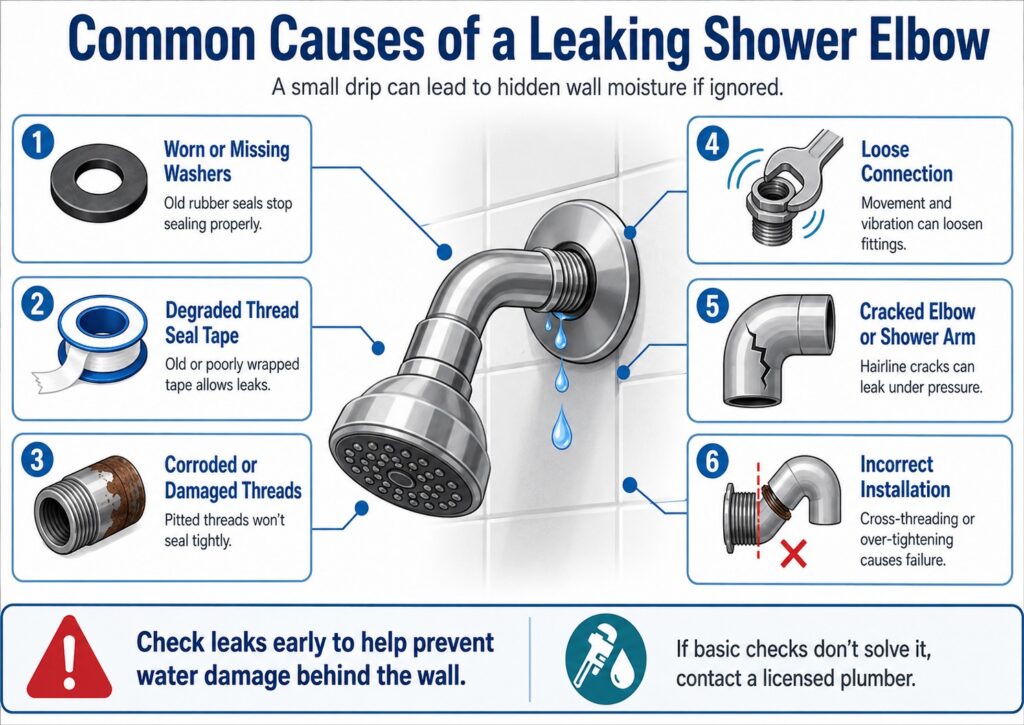
A leaking shower elbow can start as a small drip but may lead to hidden moisture behind the wall if ignored. In many cases, the issue comes from worn seals, poor installation, damaged threads, or movement in the fitting over time. Understanding the common causes can help homeowners identify whether the problem needs a simple adjustment or professional plumbing repair.
1. Worn or Missing Washers
The rubber washer inside the shower head connection compresses to form a seal. After years of exposure to hot water and pressure changes, the washer becomes brittle and loses its ability to seal properly. Removing the shower head and inspecting the washer is a simple first step many homeowners can take.
2. Degraded Thread Seal Tape
Thread seal tape wraps around the male threads of the shower arm and elbow to fill tiny gaps and prevent water from escaping. If the tape was applied incorrectly—wrapped anti-clockwise or in too few layers—it won’t create a reliable seal. Even correct application breaks down over time, especially in high-use bathrooms.
3. Corroded or Damaged Threads
Galvanised steel and older brass fittings can corrode, leaving rough, pitted threads that no amount of tape or tightening will seal. If you notice greenish staining around the elbow or flaking metal, corrosion is likely the culprit. Replacing the elbow and potentially a section of pipe is the only permanent fix.
4. Loose Connection
Vibration from daily use, thermal expansion, or even minor building movement can loosen threaded fittings over time. A connection that was snug five years ago may now allow water to weep past the threads. Tightening the joint may stop the drip temporarily, but if the threads are worn, the leak will return.
5. Cracked Elbow or Shower Arm
Hairline cracks in the elbow body or shower arm are less common but do occur, especially if the fitting was over-tightened or knocked during cleaning. These cracks are often invisible until water pressure forces moisture through, leading to a persistent leak that won’t respond to re-sealing.
6. Incorrect Installation
If the original plumber used too much force, cross-threaded the fitting, or failed to support the shower arm properly, the elbow may never have sealed correctly. Retrofitting a rain shower head—which is heavier than a standard head—can also stress an undersized or poorly installed elbow, causing it to leak or crack. Under NSW plumbing regulations, this type of work must be carried out by a licensed plumber and, in many cases, notified to Sydney Water.
A leaking shower elbow should not be ignored, especially if the leak appears near the wall connection. What looks like a small plumbing issue may allow water to spread behind tiles, plasterboard, or wall framing. If basic checks do not solve the problem, a licensed Sydney plumber can inspect the fitting, repair the leak, and help prevent further water damage.
Common Causes at a Glance
This section highlights the most common causes of shower elbow leaks and the typical fixes used to resolve them.
| Cause | Typical Fix |
|---|---|
| Worn or missing washer | Replace rubber washer |
| Degraded thread seal tape | Re-wrap threads with fresh tape |
| Corroded or damaged threads | Replace elbow and affected pipe section |
| Loose connection | Re-tighten or replace worn fitting |
| Cracked elbow or arm | Full fitting replacement |
| Incorrect installation | Professional reinstall to Australian Standards |
Warning Signs Your Shower Elbow Is Leaking
Not every leak announces itself with a puddle on the floor. Many leaks hide behind tiles or inside the wall cavity, slowly causing damage for months before you notice. Watch for these red flags around your shower area.
- Water stains on the ceiling below: If your bathroom is on an upper floor, brown or yellow patches on the ceiling beneath often indicate a slow leak tracking down through the wall frame.
- Peeling paint or bubbling plaster: Moisture trapped behind the wall surface will cause paint to lift and plaster to soften. You might also notice a musty smell near the shower wall.
- Mould or mildew around the shower arm: Black or green spots on grout, caulk, or the wall surface suggest persistent moisture. Mould thrives in damp, enclosed spaces like wall cavities.
- Loose tiles near the elbow: Water seeping behind tiles can dissolve adhesive and grout, causing tiles to shift or sound hollow when tapped.
- Dripping from the shower arm when the tap is off: A slow drip from the connection point after you turn off the water is a classic sign of a failed washer or thread seal.
- Reduced water pressure: If corrosion has narrowed the internal diameter of the elbow or pipe, you may notice weaker flow from your shower head.
Why You Shouldn’t Ignore a Leaking Shower
A small leak might only waste a few litres of water each day, but the hidden costs add up fast. Water that escapes into your wall cavity doesn’t evaporate—it soaks into timber, insulation, and plasterboard, creating conditions ripe for decay and health hazards.
Timber wall frames can begin to rot within weeks of continuous exposure to moisture. Once the rot sets in, structural repairs often require removing sections of wall lining, replacing framing members, and repairing or replacing affected plumbing. What started as an AU$200 elbow replacement can balloon into a multi-thousand-dollar (AUD) renovation if left unchecked.
Mould spores spread quickly in damp environments, and prolonged mould exposure may contribute to respiratory symptoms, skin irritation and other health problems. If you have young children, elderly family members, or anyone with asthma or compromised immunity, mould exposure is a serious concern. Professional mould remediation often costs more than the original plumbing repair would have.
Water damage also affects your home’s resale value. Buyers and building inspectors look for signs of leaks, and even repaired damage must often be disclosed. A history of water ingress can reduce offers or derail a sale entirely, especially in Sydney’s competitive property market where pre-purchase building inspections are standard practice.
Steps to Diagnose a Leaking Shower Elbow
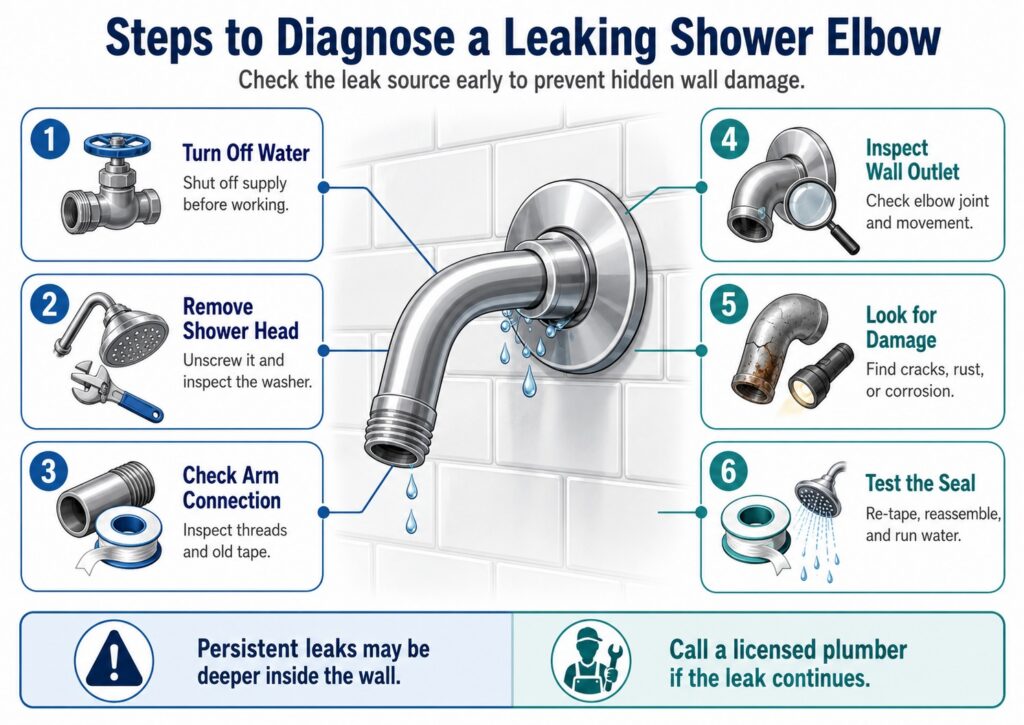
Diagnosing a leaking shower elbow starts with checking where the water is escaping and whether the issue is at the shower head, arm, elbow, or pipe connection. A careful inspection can help you tell the difference between a simple washer or tape problem and a deeper leak inside the wall. Taking the right steps early can prevent unnecessary damage and help you decide when to call a licensed plumber.
1. Turn Off the Water Supply
Before you touch any fittings, shut off the water to your bathroom at the isolation valve or the main stopcock. This prevents further leakage and ensures you can work safely without sudden water flow.
2. Remove the Shower Head
Unscrew the shower head from the arm by turning it anti-clockwise. Use a cloth or adjustable wrench if it’s tight, taking care not to damage the chrome finish. Inspect the internal washer for cracks, hardness, or deformation.
3. Check the Shower Arm Connection
Examine the threads on both the shower arm and the elbow. Look for corrosion, stripped threads, or old thread seal tape that has become gummy or discoloured. Wipe the threads clean with a dry cloth.
4. Inspect the Elbow and Wall Outlet
If the arm connection looks sound, the leak may be at the elbow-to-wall joint. Gently try to wiggle the shower arm. Excessive movement suggests a loose or damaged elbow inside the wall. You may need to remove the wall flange (escutcheon) to see the full connection.
5. Look for Cracks or Damage
Use a torch to inspect the elbow body and arm for hairline cracks. Run your finger along the joints—if you feel moisture or see water beading, the seal has failed. Note any greenish staining (copper corrosion) or rust (galvanised steel).
6. Test the Seal
If everything looks intact, try re-wrapping the threads with fresh thread seal tape (wrap clockwise, three to five layers) and reassemble the connection. Turn the water back on and run the shower for a few minutes. If the leak persists, the problem lies deeper—inside the wall or at the pipe connection.
A leaking shower elbow may be simple to diagnose when the issue is a worn washer, loose fitting, or failed thread seal tape. However, leaks that continue after resealing may point to a damaged elbow, cracked pipe, or hidden issue inside the wall. If water keeps appearing near the wall outlet, it is best to have a licensed Sydney plumber inspect the connection before the leak causes further damage.
When to Call a Licensed Plumber for a Leaking Shower
Some leaks are straightforward, but others signal deeper problems that require professional diagnosis and repair. Any work that alters the wall-concealed water supply pipework in NSW must, by law, be carried out by a licensed plumber, and larger jobs may need to be notified to Sydney Water. Contact a licensed plumber—such as our team at Antons Plumbing & Gas (NSW Lic. 210933C)—if you notice any of the following.
- The leak persists after you’ve replaced washers and re-sealed threads.
- You see corrosion, rust, or greenish staining around the elbow or shower arm.
- Water stains appear on the ceiling below or the wall behind the shower.
- Tiles near the shower arm are loose, cracked, or sound hollow when tapped.
- You smell mould or notice dark spots on grout or caulk.
- The shower arm moves excessively or feels loose even when tightened.
- You’re installing a new rain shower head or shower-over-bath system and want the fittings sized, supported, and sealed in accordance with the relevant AS/NZS 3500 plumbing standards.
Our team is available 24/7 for emergency repairs across the Sydney Metro—Inner West, Eastern Suburbs, North Shore, Northern Beaches, Hills District, Western and South-Western Sydney, and Sutherland Shire. We offer same-day service with no call-out fee from 7am to 3pm on weekdays (excluding public holidays), and we charge a fixed rate in AUD so you know the cost before we start. Call us on 0493 824 176 or book online for a fast quote and prompt, professional service.ll us on 0493 824 176 or book online for a fast quote and prompt, professional service.
The True Cost of Delaying Shower Elbow Repairs
Postponing a simple elbow repair might save you a service call today, but the hidden costs can be steep. Water damage spreads silently, and by the time you notice staining or mould, the repair bill often includes wall lining replacement, timber frame repairs, mould remediation, and potentially even electrical work if moisture has reached wiring.
Home and contents insurance policies vary, but many exclude damage caused by gradual leaks or lack of maintenance. If an assessor determines you ignored obvious warning signs—like a persistent drip or water stains—your claim may be denied. Even when covered, you’ll face excess payments, premium increases, and the inconvenience of coordinating tradespeople and temporary accommodation if the bathroom is unusable.
From a health perspective, prolonged exposure to mould can trigger allergies, asthma attacks, and respiratory infections. Children and elderly family members are especially vulnerable. Professional mould testing and remediation can cost thousands of dollars, and some moulds require specialist treatment to remove safely.
Repairing a leaking shower elbow early—before water enters the wall—typically costs a fraction of what you’d pay for structural repairs and mould cleanup. Our fixed-rate AUD pricing means you’ll know the cost upfront, and our lifetime labour warranty gives you peace of mind that the repair will last.
Why Choose Antons Plumbing & Gas for Shower Repairs
We’ve been protecting Sydney homes for more than 25 years, and we understand the unique challenges of local plumbing—clay pipes, tree roots, variable water pressure, and heritage-listed properties. Our licensed plumbers arrive on time, diagnose the root cause, and present clear options with upfront AUD pricing. No hidden fees, no jargon, no mess left behind.
Every repair complies with NSW Fair Trading licensing requirements, Sydney Water regulations, and relevant Australian Standards. Antons Plumbing & Gas operates under NSW Lic. 210933C, which homeowners can verify through the official NSW tradesperson licence register. We use quality parts from trusted brands, document our findings, and back our workmanship with a lifetime labour warranty. Whether you need a simple washer replacement or a full bathroom renovation, we tailor our approach to your home, timeline, and budget.
We’re available 24/7 for emergencies, and same-day service is standard across the greater Sydney region. Call 0493 824 176 or book online to schedule an inspection, request a fast quote, or get immediate help with a leaking shower elbow. Our team is ready to protect your home from water damage—done right the first time.
Conclusion
A leaking shower elbow is more than a minor drip. Left unaddressed, it can rot timber, foster mould, and trigger costly structural repairs. Early diagnosis and professional repair protect your home, your health, and your budget—ensuring your shower stays safe and watertight for years to come.
Antons Plumbing & Gas fixes leaking shower elbows across Sydney’s Inner West, Eastern Suburbs, and North Shore with precision leak detection and repair services backed by 25 years’ experience and NSW Lic. 210933C. Our licensed team responds same-day to stop water damage before it spreads through your walls. Get started with upfront AUD pricing and no call-out fee today.
Related Articles
- Faucet Cartridge Extension Identification Guide for Plumbing Repairs
- Apartment Valve Moves When Neighbor Uses Water: What It Means
- Water Leaking Through Ceiling: Is It a Plumbing Emergency?
FAQs
What Causes A Shower Elbow To Leak?
A shower elbow can leak due to several reasons, including worn-out seals, corrosion, loose fittings, or damage from impact or pressure changes. Over time, the materials may degrade, leading to water escaping and potentially damaging your walls and flooring.
How Do You Fix A Leaking Shower Elbow?
To fix a leaking shower elbow, first, turn off the water supply. Then, remove the elbow fitting, inspect it for damage, and replace any worn seals or fittings. If the elbow is corroded or damaged, it may need to be replaced entirely. It’s best to consult with a licensed plumber to ensure the repair is done correctly and safely.
Can A Leaking Shower Elbow Be Repaired?
Yes, a leaking shower elbow can often be repaired, especially if the issue is due to a simple seal replacement or loose connection. However, if the elbow is extensively damaged or corroded, replacement may be the more reliable option. Our experienced team at Antons Plumbing & Gas can assess the situation and recommend the best course of action.
What Are The Signs Of A Leaking Shower Elbow?
Signs of a leaking shower elbow include water stains on the wall or ceiling, dampness around the shower area, mould growth, or a noticeable increase in your water bill. If you notice any of these signs, it’s important to address the issue promptly to prevent further damage.
How Much Does It Cost To Replace A Shower Elbow?
The cost to replace a shower elbow can vary based on several factors including the extent of the damage and the specific plumbing requirements of your home. For an accurate estimate in AUD, it’s best to contact us at Antons Plumbing & Gas, where we provide upfront pricing and personalised service tailored to your needs.
Do You Offer Emergency Shower Elbow Repairs In Sydney Tonight?
Yes, our licensed plumbers (NSW Lic. 210933C) are available 24/7 for emergency repairs across the Sydney Metro area, including the Inner West, Eastern Suburbs, North Shore, Northern Beaches, Hills District, Western and South-Western Sydney, and Sutherland Shire. Call 0493 824 176 for immediate assistance.
How Quickly Can You Send A Plumber To Fix My Leaking Shower?
We offer same-day service across greater Sydney for most bookings. If you’re experiencing an active leak causing water damage, mention this when you call 0493 824 176 so we can prioritise your job.
Is There A Call-Out Fee For A Shower Elbow Repair?
There is no call-out fee for bookings made between 7am and 3pm on weekdays (excluding public holidays). We also provide fixed-rate pricing in AUD before any work begins, so there are no surprises on your invoice.
Do You Provide An Upfront Quote Before Starting The Repair?
Yes, our plumbers inspect the leak, explain what’s causing it, and give you a fixed AUD price before starting any work. You’ll always know the cost upfront—no hidden fees.
What Sydney Suburbs Do You Service For Shower Leak Repairs?
We service the greater Sydney Metro region, including the Inner West, Eastern Suburbs, North Shore, Northern Beaches, Hills District, Western and South-Western Sydney, and Sutherland Shire. Check our suburb pages or call 0493 824 176 to confirm coverage for your address.
Are Your Plumbers Licensed To Repair Shower Elbows In NSW?
Yes, Antons Plumbing & Gas holds NSW Lic. 210933C, and all shower elbow repairs are carried out to Australian Standards and NSW Fair Trading requirements, with Sydney Water notifications handled where required.
Do You Offer A Warranty On Shower Elbow Repairs?
Yes, every repair we complete is backed by a lifetime labour warranty, giving you confidence the fix will last.
Can I Book A Same-Day Shower Elbow Repair Online?
Yes, you can book online through our website or call 0493 824 176 directly. Same-day appointments are available across most of the Sydney Metro area.
What Payment Methods Do You Accept?
We accept standard Australian payment methods for plumbing services. Ask our team when booking for full details on payment options available for your job.
Do I Need Council Or Sydney Water Approval To Replace A Shower Elbow?
Minor like-for-like repairs generally don’t require council approval, but any alteration to concealed water supply pipework must be carried out by a licensed plumber, and certain jobs must be notified to Sydney Water. Our licensed team handles this compliance for you.
Will You Check For Hidden Water Damage Behind My Shower Wall?
Yes, as part of our diagnosis we check for signs of moisture, timber rot, and mould behind the wall lining near the leak, and we’ll advise you honestly if further repairs beyond the elbow are needed.
Can You Fix A Leaking Shower Elbow In An Apartment Or Strata Property?
Yes, we regularly work in strata and apartment buildings across Sydney. We can liaise with strata managers where required and ensure repairs meet building compliance requirements.
Do You Work On Weekends And Public Holidays?
Yes, our emergency plumbing service operates 24/7, including weekends and public holidays. Note that the no call-out fee period applies to weekdays from 7am to 3pm, excluding public holidays.
How Do I Know If My Shower Elbow Needs Repair Or Full Replacement?
If the leak is due to a worn washer or degraded thread tape, a repair is usually sufficient. If there’s visible corrosion, cracking, or the elbow is embedded in a damaged wall section, replacement is typically the more reliable long-term fix. Our licensed plumbers can assess this on-site and explain your options before any work starts.
What Should I Do While Waiting For The Plumber To Arrive?
Turn off the water supply to the bathroom at the isolation valve or main stopcock if you haven’t already, avoid using the shower, and place towels or a container to catch any dripping water to limit further damage until we arrive.
How Do I Book Antons Plumbing & Gas For A Shower Elbow Repair?
Simply call 0493 824 176 or book online through our website. Let us know the symptoms you’re seeing (drips, stains, loose tiles) so we can bring the right parts and give you an accurate AUD quote on arrival.