

Knowing how to clean floor drain openings can help prevent slow drainage and unpleasant odours in homes from Bondi apartment laundries to Parramatta garages. Regular cleaning removes hair, lint, soap residue, dirt and other debris before it restricts water flow. In most cases, you can clean the drain yourself by removing the grate, clearing visible debris, scrubbing the opening and rinsing it with hot tap water.
This guide explains how to clean a floor drain grate and opening safely using basic household tools, with NSW plumbing rules in mind. Regular cleaning can remove hair, lint, soap residue and dirt before they restrict water flow or create unpleasant odours — and if the problem is bigger than a DIY fix, we’ll show you when it’s time to call a licensed Sydney plumber.
Key Takeaways
- Regular floor drain cleaning helps prevent blockages, odours and costly flooding incidents in Sydney homes and units.
- Most floor drains include a removable grate and a water trap that requires periodic inspection and flushing.
- DIY methods like hot water, bicarb (baking) soda and vinegar can clear minor clogs and refresh drain traps effectively.
- Persistent slow drainage or sewer gas smells signal deeper issues that need professional CCTV inspection and hydro jetting.
- Anton’s Plumbing & Gas (NSW Lic. 210933C) offers same-day drain cleaning across Sydney with upfront pricing, no call-out fee, and a lifetime labour warranty.
Quick answer: To clean a floor drain, remove the grate, clear visible debris, scrub the cover and accessible drain opening, rinse with hot tap water and restore water to the trap. If water remains pooled or backs up through the drain, the pipe may be blocked further inside — and it’s time to call a licensed Sydney plumber.
Why Floor Drains Need Regular Cleaning
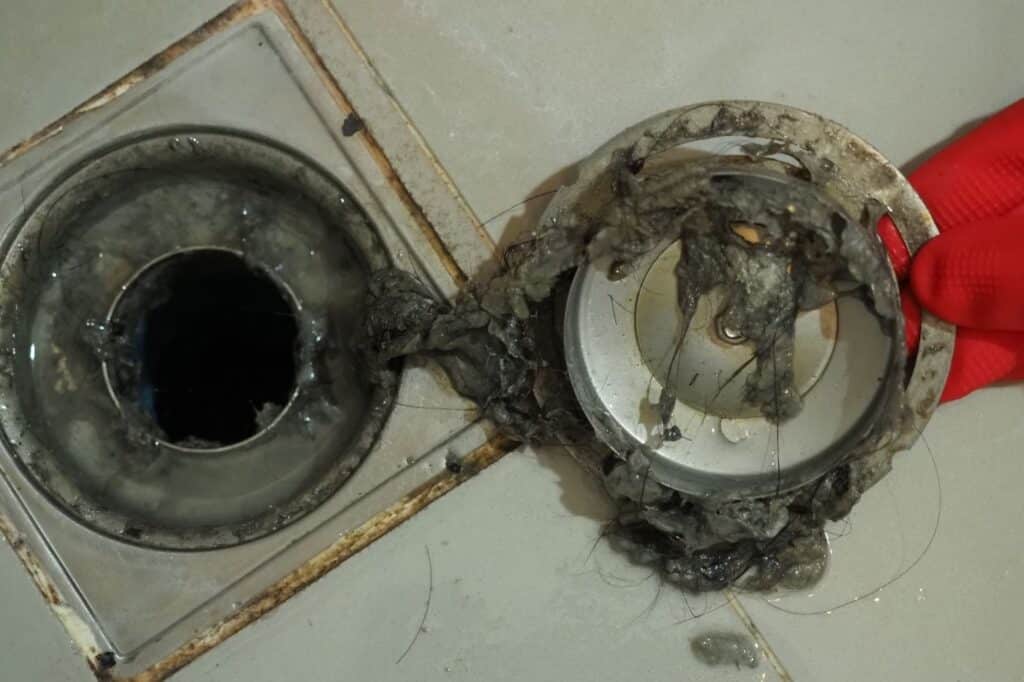
Floor drains sit at the lowest point in a room, collecting dirt, hair, soap scum, lint and grease that wash off floors and appliances. Over time, this debris builds up inside the drain pipe and trap, restricting water flow. In high-use areas like laundries, garages or workshop spaces (proper basements are uncommon in most Sydney homes, though some older terraces and Federation houses have them), sediment can build up in as little as six months. If the water trap dries out, sewer gases escape into your home, creating a health hazard and an unbearable stench.
Cleaning your floor drain at least once a year keeps water flowing freely and maintains the trap seal that blocks foul odours. In Sydney properties with older clay pipes or tree-root intrusion — common across leafy suburbs like the Upper North Shore and the Inner West — routine maintenance also helps you spot early warning signs before a minor clog becomes a burst pipe or sewage overflow.
Worth knowing: Sydney Water generally owns and maintains the sewer main beyond your property’s boundary trap, but everything from your floor drain through to that connection point is your responsibility as the property owner. If DIY cleaning doesn’t fix a slow or smelly floor drain, it’s time to call a licensed Sydney plumber rather than risk pipe damage or a breach of NSW plumbing rules.
How to Clean Floor Drain: Step-by-Step Instructions
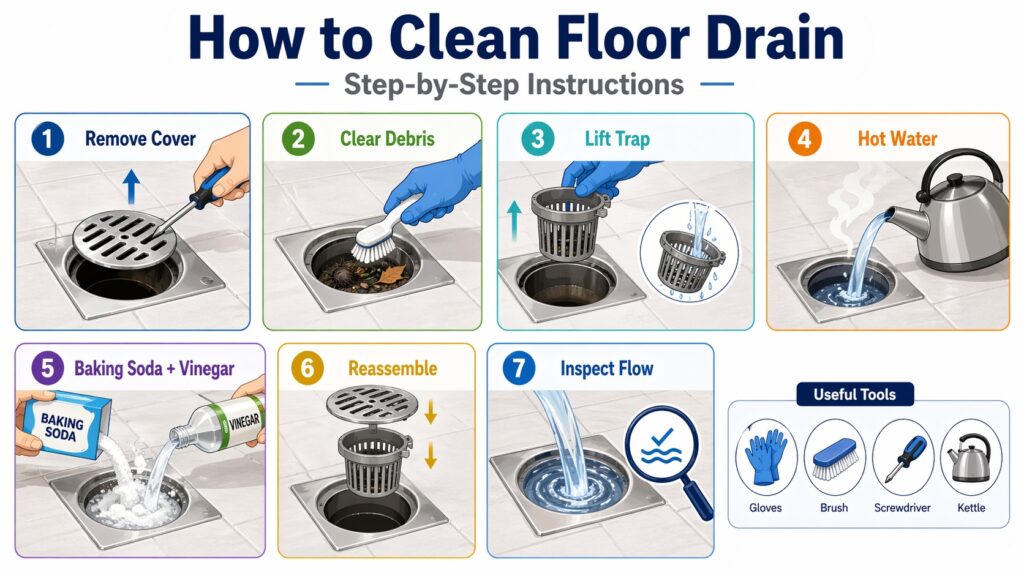
Cleaning a floor drain is straightforward when you follow a systematic approach. You will need basic tools and a little patience to remove buildup and restore proper drainage. Below are the core steps to get your floor drain running clean again.
1. Remove the Drain Cover
Lift or unscrew the metal or plastic grate covering the drain opening. Some covers simply lift out, while others require a flat-head screwdriver to pry loose. Set the cover aside on a towel or old newspaper to catch any drips.
2. Clear Visible Debris
Use gloved hands or a small brush to scoop out hair, lint, leaves and other solid material sitting on top of the trap. Drop the debris into a bin rather than flushing it, which can push clogs deeper into the pipe.
3. Lift Out the Water Trap
Many floor drains feature a removable trap insert that twists or lifts straight out. Check for a sealing ring or gasket as you remove the trap. Rinse the trap under running water and scrub the inside with an old toothbrush to remove slime and buildup.
4. Flush the Drain With Hot Water
Pour a kettle of boiling water slowly down the drain to dissolve grease and soap residue clinging to the pipe walls. Hot water also helps dislodge light clogs and refreshes the trap seal. Repeat two or three times if the water drains slowly.
5. Apply Bicarb Soda and Vinegar
Sprinkle half a cup of bicarb (baking) soda into the drain, then follow with one cup of white vinegar. The fizzing reaction breaks down organic matter and neutralises odours. Let the mixture sit for 15 minutes, then flush again with hot water.
6. Reassemble the Trap and Cover
Place the cleaned trap back into the drain body, making sure the sealing ring sits flush to prevent leaks. Run a brief stream of water to fill the trap and restore the gas barrier. Replace the grate and test drainage by pouring a bucket of water down the drain.
7. Inspect for Slow Drainage or Odours
If water still pools or you smell sewer gas after cleaning, the blockage may lie deeper in the pipe or the trap seal may be compromised. At this point, professional diagnosis with a CCTV drain camera can pinpoint tree roots, pipe cracks, or collapsed sections that DIY methods cannot reach.
Tools and Materials You Need to Clean a Floor Drain
Gathering the right supplies before you start makes the job faster and safer. Most items are inexpensive and available from a hardware store (such as Bunnings) or supermarket. You probably already have several of them at home.
| Item | Purpose |
|---|---|
| Rubber gloves | Protect hands from bacteria and sharp debris |
| Flathead screwdriver | Pry up stuck drain covers |
| Old toothbrush or bottle brush | Scrub trap and grate surfaces |
| Bucket or kettle | Carry and pour hot water |
| Baking soda and white vinegar | Natural deodorizer and mild clog dissolver |
| Plunger | Create suction to dislodge blockages |
| Drain snake or auger | Reach clogs deeper in the pipe |
| Towels or newspaper | Catch spills and protect flooring |
For stubborn clogs or recurring issues, professional-grade tools like hydro jetters and CCTV cameras deliver results that DIY equipment cannot match. Our licensed Sydney plumbers carry these on every service van, ready to diagnose and clear blockages the same day you call.
Preventive Maintenance Tips for Floor Drains
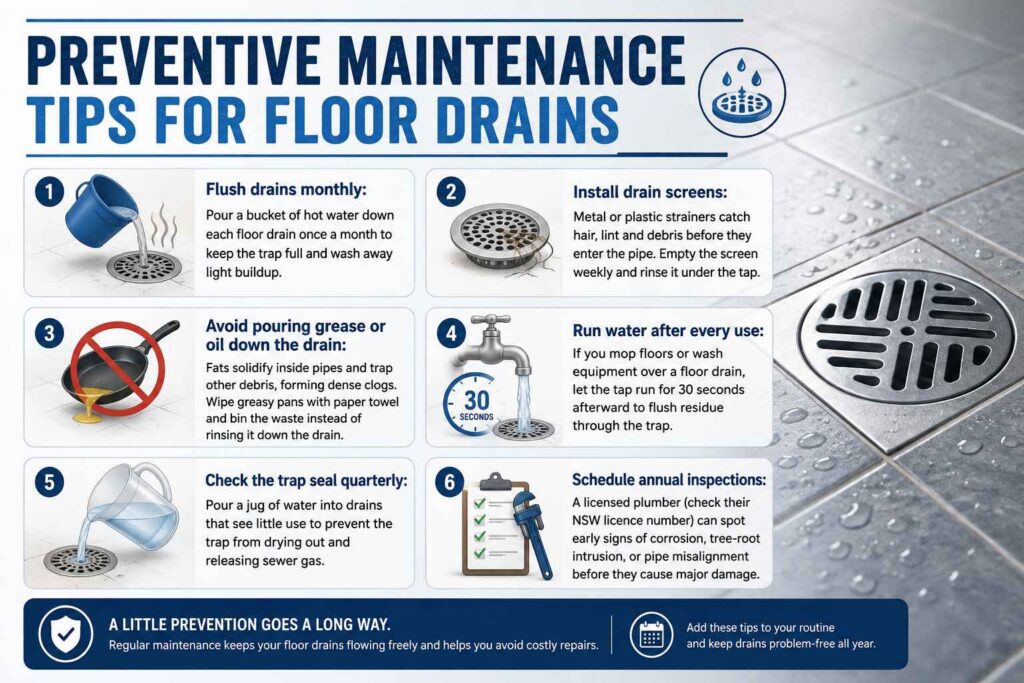
Keeping your floor drain clean is easier than fixing a flooded laundry or garage. A few simple habits can extend the life of your drain and reduce the risk of emergency call-outs. Here are practical steps you can take year-round.
- Flush drains monthly: Pour a bucket of hot water down each floor drain once a month to keep the trap full and wash away light buildup.
- Install drain screens: Metal or plastic strainers catch hair, lint and debris before they enter the pipe. Empty the screen weekly and rinse it under the tap.
- Avoid pouring grease or oil down the drain: Fats solidify inside pipes and trap other debris, forming dense clogs. Wipe greasy pans with paper towel and bin the waste instead of rinsing it down the drain.
- Run water after every use: If you mop floors or wash equipment over a floor drain, let the tap run for 30 seconds afterward to flush residue through the trap.
- Check the trap seal quarterly: Pour a jug of water into drains that see little use to prevent the trap from drying out and releasing sewer gas.
- Schedule annual inspections: A licensed plumber (check their NSW licence number) can spot early signs of corrosion, tree-root intrusion, or pipe misalignment before they cause major damage.
These small actions add up to big savings. Regular maintenance helps you avoid urgent repairs, water damage, and the health risks that come with sewage exposure. If you manage a strata property or run a café in Sydney’s Eastern Suburbs, keeping floor drains clear is part of your duty of care to tenants and customers under NSW regulations.
Signs Your Floor Drain Needs Immediate Attention
Some drain problems can wait for your next day off, but others demand urgent action to prevent health hazards and property damage. Watch for these warning signs and call a licensed plumber right away if you notice them.
- Water pooling around the drain: Standing water that does not drain within minutes signals a complete blockage or a broken pipe underneath the floor slab.
- Gurgling sounds from other fixtures: When flushing a toilet or running a tap causes the floor drain to bubble, you have a venting issue or main sewer blockage that affects multiple drains.
- Sewage backing up through the drain: Raw sewage is a biohazard. Evacuate the area, turn off water at the mains, and call an emergency plumber immediately.
- Visible cracks or movement in the drain cover: A shifting grate can indicate soil subsidence or a collapsed pipe below. Do not walk over the area until a professional inspects it.
- Persistent fruit flies or drain flies: These insects breed in organic slime inside drains. If cleaning the trap does not stop them, the infestation may be deeper in the pipe.
Anton’s Plumbing & Gas offers 24/7 emergency response with no call-out fee for urgent drain issues. We arrive with the tools and parts to fix most problems on the spot, minimising downtime and water damage. Call 0493 824 176 any time, day or night, and we will dispatch a qualified, NSW-licensed plumber to your location..
How Professional Drain Cleaning Works
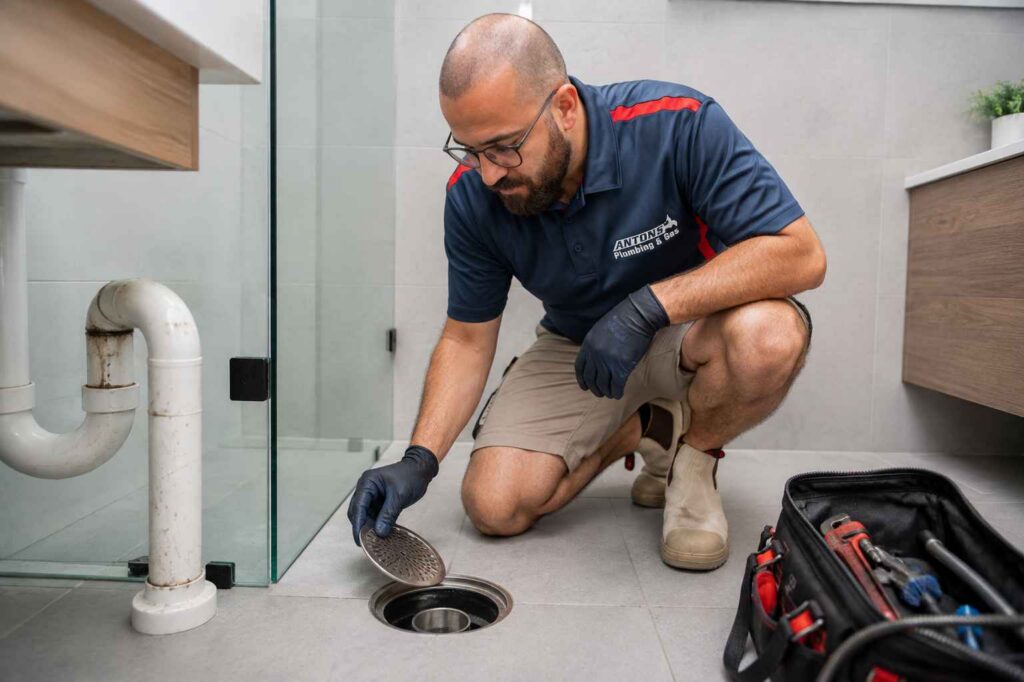
When you call a licensed plumber for a blocked floor drain, the process is methodical and transparent. We start by asking about symptoms — slow drainage, odours, or backflow — and any recent changes like new landscaping or heavy rain. This helps us narrow down the likely cause before we arrive.
On site, we inspect the drain cover, trap, and visible pipe sections for damage or debris. If the blockage is not obvious, we insert a CCTV drain camera through the access point to see inside the pipe. The camera reveals tree roots, grease buildup, cracks, or foreign objects in real time, and we record the footage for your records.
Once we identify the problem, we explain your options in plain English. For organic clogs and grease, hydro jetting uses high-pressure water to scour the pipe walls clean without chemicals or digging. For tree roots, we may combine jetting with mechanical cutting to remove the intrusion, then recommend pipe relining to seal cracks and prevent regrowth.
After clearing the blockage, we test drainage with a hose to confirm flow is restored. We clean up any mess, provide a written report of findings, and outline preventive steps to reduce future risk. Because we operate under NSW Lic. 210933C and comply with NSW Fair Trading requirements and Sydney Water’s plumbing rules, you can trust that every repair meets Australian Standards and is backed by our lifetime labour warranty.
Comparing DIY Methods and Professional Drain Cleaning
Choosing between a DIY clean and calling a plumber depends on the severity of the blockage and your comfort level with hands-on repairs. The table below compares the two approaches across key factors.
| Factor | DIY Cleaning | Professional Service |
|---|---|---|
| Cost | Low (materials under $20) | Varies by job; upfront quote provided |
| Time | 1–2 hours for simple clogs | Same-day service; most jobs under 2 hours |
| Tools | Basic household items | Hydro jetter, CCTV camera, pipe-relining gear |
| Effectiveness | Good for surface debris and light clogs | Clears deep blockages, roots, and structural faults |
| Safety | Risk of chemical burns or pipe damage | Licensed, insured, compliant with AS/NZS 3500 |
| Warranty | None | Lifetime labour warranty on all work |
For annual maintenance and minor clogs, DIY methods are cost-effective and straightforward. When you face recurring blockages, foul odours, or backflow, professional diagnosis and repair save you from trial-and-error fixes that can worsen the problem. Our team at Anton’s Plumbing & Gas brings 25 years of experience to every job, so you get solutions that last.
When to Call a Licensed Plumber for Floor Drain Issues

DIY cleaning works well for routine maintenance and minor clogs, but some situations demand professional expertise and equipment. Knowing when to stop and call a licensed Sydney plumber protects your home and saves you time. Here are the red flags that signal it is time to pick up the phone. If floor-drain backups affect a home or shared building in Concord or Breakfast Point, see our local drain services for booking, access and approval information.
If you have cleaned the drain twice and water still drains slowly, the blockage is deeper than your brush or plunger can reach. Tree roots, collapsed clay pipes, or hardened grease deposits require hydro jetting or mechanical cutting to clear. Attempting to force a drain snake through a damaged pipe can crack the line further, turning a simple job into an excavation project — this is exactly why NSW law requires this work to be carried out by a licensed plumber.
Sewer gas odours that persist after refilling the trap suggest a broken seal, faulty vent, or cross-connection in your plumbing system. These issues fall under AS/NZS 3500 plumbing standards and need a licensed professional to diagnose and repair safely. Ignoring sewer gas can expose your family to harmful bacteria and methane, which is flammable in high concentrations.
Backflow or flooding during rain points to a blocked stormwater line or an illegal connection between sewer and stormwater systems. This is common in older Sydney suburbs where original plumbing does not meet current codes, and it may need to be rectified in line with Sydney Water and NSW Fair Trading rules. We use CCTV cameras to trace the flow path and identify the fault, then recommend compliant solutions like backflow preventers or pipe separation.
Anton’s Plumbing & Gas (NSW Lic. 210933C) responds to drain emergencies 24/7 across Sydney, from the Inner West to the Sutherland Shire. Our vans carry hydro jetters, drain cameras, and pipe-relining equipment, so we can diagnose and fix most issues on the first visit. You get upfront pricing before we start, same-day service when you need it, and a lifetime labour warranty on all repairs. Call 0493 824 176 or book online to request a fast quote.
Conclusion
Regular floor drain cleaning prevents blockages, odours, and water damage that can disrupt your home and cost thousands of dollars to repair. Simple DIY steps keep most drains flowing smoothly, but persistent problems need professional diagnosis and compliant repairs. Call Anton’s Plumbing & Gas on 0493 824 176 for same-day drain cleaning across Sydney, backed by 25 years of licensed experience (NSW Lic. 210933C) and a lifetime labour warranty.
Anton’s Plumbing & Gas specialises in blocked drains and CCTV inspections across Sydney Metro. Our licensed team solves drainage issues with precision and upfront pricing in AUD. Get started with a call today. For a floor drain that repeatedly backs up, see our Lane Cove West drain service for shared-access booking considerations or our Marsden Park drain service for the symptom history to provide before assessment.
Related Articles
- How to Clear a Floor Drain With Standing Water Quickly and Safely
- How to Clear a Floor Drain Using Natural Cleaning Solutions
- What Does a Plunger Do? A Simple Guide for Homeowners
FAQs
How Do I Clean A Floor Drain?
To clean a floor drain, start by removing the drain cover and clearing out any visible debris. Use a plumbing snake or a stiff brush to dislodge any buildup inside the pipe. For a deeper clean, pour a mixture of bicarb soda and vinegar down the drain, followed by hot water to flush it out. If you encounter persistent blockages, contact Anton’s Plumbing & Gas for professional assistance, as our experienced, licensed team can provide effective solutions across Sydney.
What Tools Do I Need To Clean A Floor Drain?
You’ll need a few basic tools: a pair of gloves, a bucket, a plumbing snake or drain auger, a stiff brush, and possibly a wet/dry vacuum. If the task seems overwhelming or if you face tough clogs, our skilled plumbers at Anton’s Plumbing & Gas are equipped to handle it safely and efficiently.
How Often Should I Clean My Floor Drain?
It’s good practice to clean your floor drain at least once every few months to prevent clogs and bad odours. If you notice any slow drainage or unpleasant smells, it’s best to clean it sooner. For thorough inspections and maintenance, consider scheduling a service with Anton’s Plumbing & Gas, ensuring your drains remain in optimal condition.
What Causes Floor Drains To Clog?
Common causes of floor drain clogs include hair, soap residue, food particles, and foreign objects. Over time, these materials can build up and restrict water flow. Regular cleaning and maintenance can help prevent these issues. If you’re dealing with recurring problems, our expert team can diagnose the root cause and provide a tailored solution.
Can I Use Chemical Drain Cleaners On My Floor Drain?
While chemical drain cleaners can be effective, they may also damage your pipes and pose safety risks, particularly with older Sydney plumbing. It’s generally safer to use mechanical methods or natural solutions for cleaning. For stubborn clogs or concerns about pipe integrity, reach out to Anton’s Plumbing & Gas for a professional and safe cleaning service.
What Should I Do If My Floor Drain Is Backing Up?
If your floor drain is backing up, stop using water in nearby fixtures straight away to avoid further flooding. Check for visible clogs and remove any debris you can safely reach. If sewage is present, treat it as a biohazard, turn off the water at the mains, and keep pets and kids clear of the area. If the problem persists or sewage is involved, call Anton’s Plumbing & Gas on 0493 824 176 — we offer 24/7 emergency response across Sydney with no call-out fee.
How Much Does It Cost To Clean Or Unblock A Floor Drain In Sydney?
Cost depends on the cause and severity of the blockage, so we don’t quote a flat price sight unseen. What we can promise is a clear, upfront quote in AUD before any work begins, so there are no surprises on the invoice. Call 0493 824 176 or book online and we’ll assess your floor drain and confirm pricing on the spot.
Do You Charge A Call-Out Fee For Floor Drain Service In Sydney?
No. Anton’s Plumbing & Gas does not charge a call-out fee for floor drain and blocked drain callouts across Sydney. You’ll get an upfront price for the actual work before we start, with no hidden extras.
Can You Send Someone Out Today If My Floor Drain Is Blocked?
In most cases, yes — we offer same-day drain cleaning across Sydney Metro, and 24/7 emergency response if sewage is backing up or you have standing water. Call 0493 824 176 now and we’ll confirm the fastest available appointment for your suburb.
Is Anton’s Plumbing & Gas Licensed To Work On Floor Drains In NSW?
Yes. We hold NSW Lic. 210933C and carry out all drain and gas work in line with AS/NZS 3500, NSW Fair Trading requirements and Sydney Water’s plumbing rules. Every job is backed by a lifetime labour warranty.
Do You Provide 24/7 Emergency Floor Drain Service In Sydney?
Yes, we provide 24/7 emergency response for urgent floor drain and blocked drain issues, including sewage backups and flooding. Call 0493 824 176 any time, day or night, and we’ll dispatch a licensed plumber to you.
Which Sydney Suburbs Do You Cover For Drain Cleaning?
We service Sydney Metro broadly, including areas from the Eastern Suburbs to the Sutherland Shire, the Hills District, the Inner West and beyond. If you’re unsure whether we cover your suburb, call 0493 824 176 and we’ll confirm straight away.
Will I Get An Upfront Price Before You Start Work?
Yes. We always provide an upfront quote in AUD before any work begins on your floor drain, so you know exactly what you’re paying for and there’s no call-out fee to worry about.
Do You Use CCTV Cameras To Check Floor Drains Before Quoting?
Where the blockage isn’t obvious, our plumbers use CCTV drain cameras to see exactly what’s happening inside the pipe — tree roots, cracks, grease buildup or collapsed sections — before recommending a fix, so you’re not paying for guesswork.
Is Hydro Jetting Safe For Older Sydney Homes With Clay Pipes?
Hydro jetting is generally safe and effective, but pipe condition matters, especially in older Sydney homes with ageing clay pipework. That’s why our licensed plumbers inspect the pipe first (often with a CCTV camera) and adjust pressure and technique to suit the pipe’s condition.
My Floor Drain Smells Like Sewage – Can You Fix It The Same Day?
A persistent sewage smell can indicate a broken trap seal, faulty vent or blockage further down the line, and it should be treated as urgent. Call 0493 824 176 — we offer 24/7 emergency response and can often diagnose and fix the issue on the same visit.
Who Is Responsible For A Blocked Floor Drain – Me Or Sydney Water?
Generally, you’re responsible for the plumbing on your property, including floor drains, up to the boundary connection point, while Sydney Water maintains the sewer main beyond it. If we find the fault is actually in the main, we’ll let you know so you can report it to Sydney Water.
Do I Need Sydney Water Or Council Approval To Repair A Floor Drain?
Most internal floor drain repairs and cleaning don’t require separate approval, but certain drainage works (like reconnections or stormwater/sewer separation) do need to comply with Sydney Water and council requirements. Our licensed plumbers know which jobs need extra sign-off and handle that for you.
Do You Offer A Warranty On Floor Drain Repairs?
Yes, all repair work carried out by Anton’s Plumbing & Gas is backed by a lifetime labour warranty, giving you peace of mind that the job’s been done properly the first time.
How Do I Book A Licensed Plumber For Floor Drain Cleaning?
You can book online or call 0493 824 176 directly. Tell us what you’re seeing — slow drainage, odours, or backflow — and we’ll arrange a same-day or next-available appointment with an upfront price in AUD.
What Happens If The Blockage Is In The Sewer Main, Not My Floor Drain?
If our CCTV inspection shows the fault is in the shared sewer main rather than your internal plumbing, we’ll explain what we found and, where relevant, help you understand the next step with Sydney Water. If it’s within your property’s plumbing, we’ll quote the fix upfront and can usually clear it on the same visit.