

Pouring oil down the sink drain might seem harmless when it disappears down the plughole, but it’s one of the fastest ways to create a blocked drain in your kitchen sink. Across Sydney homes, fats, oils, and grease solidify inside pipes, forming stubborn clogs that can back up into your home, damage your plumbing, and cost hundreds to thousands of dollars (AUD) to repair. Sydney Water also asks residents to keep fats, oils, and grease (FOG) out of the wastewater network, since what goes down your sink eventually joins the shared sewer main under your street. Many homeowners don’t realise the damage is happening until wastewater starts pooling around their feet or a foul smell takes over the kitchen.
This article walks you through the five most common mistakes people make when dealing with oil in sink drains, explains why each one causes trouble, and shows you practical steps to protect your plumbing. You’ll also learn when to call a licensed Sydney plumber (Antons Plumbing & Gas is fully licensed under NSW law, Lic. 210933C) and how our team diagnoses and fixes drain blockages the right way.
Key Takeaways
- Pouring any amount of oil down the sink drain creates a coating that traps food particles and hardens over time.
- Hot water and detergent do not prevent grease from solidifying further down your pipes.
- Even small amounts of butter, dairy, and meat fat contribute to blockages and should never go down the drain.
- Sink strainers and proper disposal methods prevent most kitchen drain problems before they start.
- Professional CCTV drain inspection identifies hidden grease build-up and root causes you can’t see from the surface.
1. Pouring Oil in Sink Drain and Assuming Hot Water Dissolves It
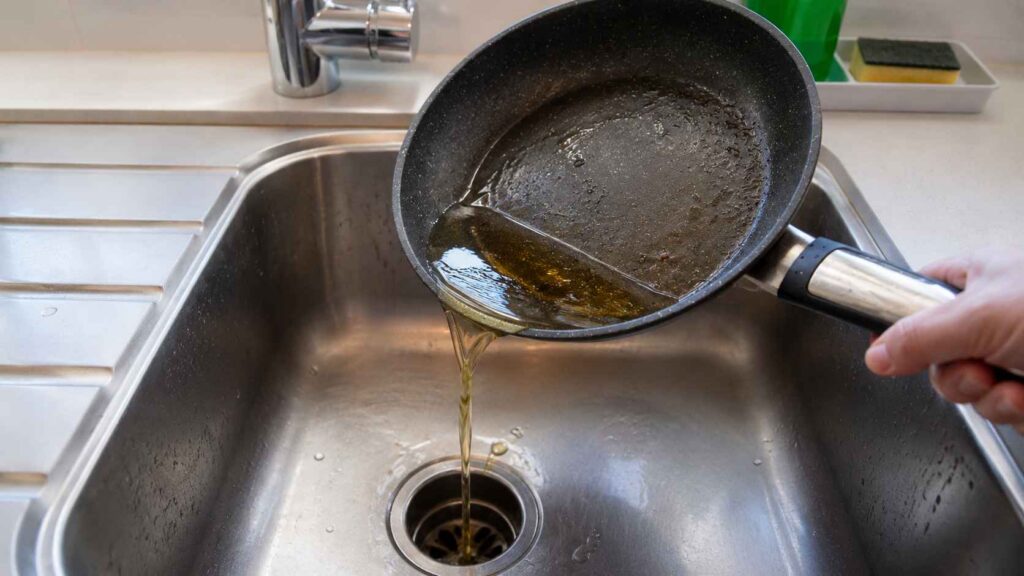
Many people believe that running hot water while pouring oil down the sink drain will keep the grease liquid long enough to flush it safely through the sewer. This is the single most common misunderstanding we hear from Sydney homeowners. Hot water does keep oil liquid for a short distance, but as soon as it cools inside your pipes, the grease solidifies and clings to the pipe walls.
Over weeks and months, this layer grows thicker. Food scraps, soap scum, and other debris stick to the grease, forming a dense clog that narrows the pipe diameter. Eventually, water drains slowly or stops altogether, and you’re left with a clogged kitchen sink drain that needs professional clearing.
The problem gets worse in older Sydney homes with cast-iron or clay pipes, common in suburbs built before the 1970s. These materials have rough interior surfaces that give grease an easy grip. Even modern PVC pipes aren’t immune because grease can travel far enough to reach Sydney Water’s shared sewer mains, where it combines with waste from other properties and forms massive blockages known as fatbergs. Left unchecked, this can affect the wider network and, in strata buildings, become a shared cost among owners.
Why Hot Water Doesn’t Solve the Problem
Temperature drops rapidly once water leaves your tap. By the time it reaches the bend under your sink or travels a few metres into your drainage system, it’s cool enough for fats and oils to start congealing. Adding detergent or dish soap doesn’t change this fact. Soap may emulsify some grease temporarily, but it doesn’t prevent solidification further downstream.
You might not notice any issue for weeks because the blockage builds gradually. Then one day, your sink fills with murky water that won’t drain, or you smell a sour odour rising from the plughole. At that point, the grease layer is usually thick enough to require mechanical clearing or high-pressure jetting.
What to Do Instead
Let cooking oil cool in the pan, then pour it into a sealed container and dispose of it in your general waste bin. Wipe greasy pans and plates with paper towel before rinsing them in the sink. This simple habit removes most of the fat before it ever reaches your drain.
If you cook with large volumes of oil, several Sydney councils offer household chemical clean-out or waste drop-off days where you can recycle cooking oil responsibly. Check your local council website for collection schedules and accepted materials.
2. Ignoring Small Amounts of Grease From Butter, Dairy, and Meat
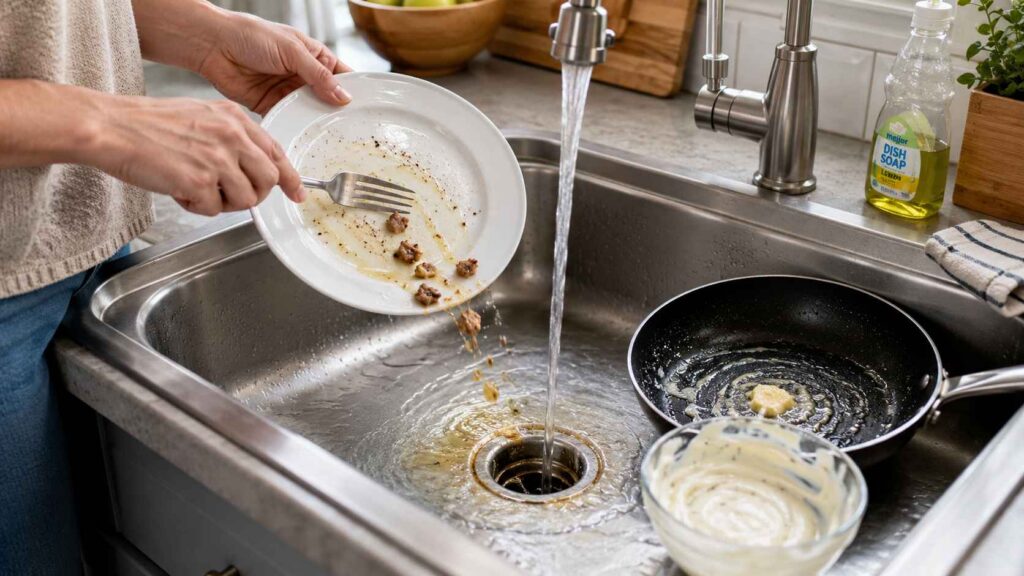
Most people know not to tip a litre of used frying oil down the sink, but they don’t think twice about rinsing a buttery pan or washing milk residue off a bowl. Butter, cream, cheese, meat drippings, salad dressings, mayonnaise, and even whole milk all contain fats that behave exactly like cooking oil once they enter your pipes.
These small amounts add up fast. A tablespoon of butter here, a splash of cream there, and within a few months you have a sticky film coating the inside of your bathroom drain, kitchen waste line, or the shared sewer. The film traps hair, soap, and food particles, accelerating blockage formation.
Common Sources You Might Overlook
- Gravy and sauce pans
- Roasting trays with meat fat
- Cheese graters and fondue pots
- Ice-cream bowls and milkshake cups
- Margarine tubs and butter dishes
Each of these items carries enough grease to contribute to a clog over time. Rinsing them directly into your sink is a mistake that compounds with every meal.
How to Handle Dairy and Meat Fats
Scrape plates and cookware into the bin before washing. Use paper towel or a silicone spatula to remove as much residue as possible. For meat trays, let the fat cool and solidify, then scoop it into the rubbish bin. If you’re cleaning an outdoor sink with a drain after a barbecue or camp trip, the same rules apply: never pour grease down it, even if you’re using a portable or temporary setup.
When you do wash greasy items, use cold or lukewarm water so any remaining fat doesn’t melt and travel further into your plumbing. Finish by running cold water for 30 seconds to help flush the pipes.
3. Relying on Chemical Drain Cleaners to Clear Grease Build-Up
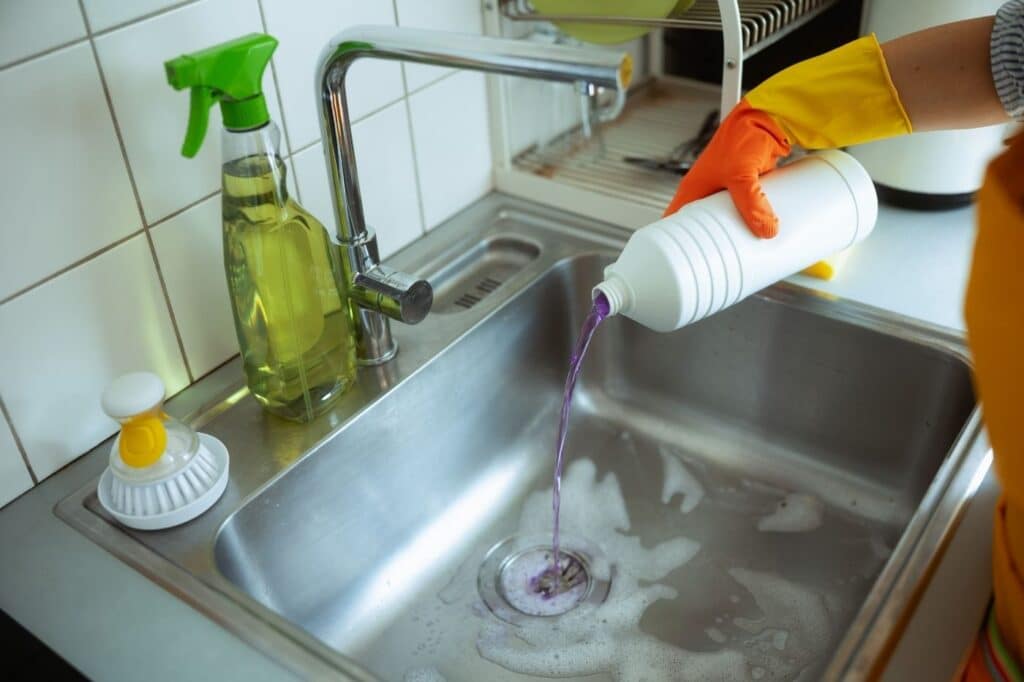
Supermarket drain cleaners promise fast relief from slow drains, and many homeowners reach for them as a first response to a clogged kitchen sink drain. These products contain caustic chemicals like sodium hydroxide or sulfuric acid that generate heat to dissolve blockages. While they can break through some organic matter, they’re rarely effective against hardened grease and often cause more harm than good.
Chemical cleaners can corrode metal pipes, damage rubber seals, and weaken PVC joints over time. If the blockage is severe, the liquid may sit in the pipe without draining, creating a pool of corrosive fluid that eats away at your plumbing. When you eventually call a plumber, that chemical residue becomes a safety hazard for the technician working on your system.
Worse still, these products don’t address the root cause. Even if they clear a partial blockage, the grease layer remains on the pipe walls, ready to trap more debris and re-form the clog within weeks.
A Safer, More Effective Approach
Professional drain clearing uses mechanical tools and high-pressure water jetting to physically remove grease, not just dissolve a small section of it. Our team at Antons Plumbing & Gas starts every blocked drain job with a CCTV drain inspection to see exactly what’s causing the problem. A small camera travels through your pipes, sending live video back to a monitor so we can identify grease build-up, tree roots, collapsed sections, or foreign objects.
Once we know the cause, we select the right tool: a motorised drain snake for localised clogs, or hydro jetting for heavy grease accumulation. Hydro jetting uses a high-pressure water stream to scour the inside of the pipe, removing grease, scale, and debris in one pass. It’s safe for most pipe materials when operated by a licensed plumber, and it restores full flow without chemicals.
We back our work with a lifetime labour warranty, so if a blockage returns due to our workmanship, we’ll fix it at no extra cost. That’s a level of accountability you won’t find in a bottle of drain cleaner.
4. Skipping Sink Strainers and Letting Food Scraps Mix With Oil in Sink Drain
A simple mesh or basket strainer sits over your plughole and catches food scraps, coffee grounds, and other solids before they enter the drain. It’s one of the cheapest and most effective tools for preventing blockages, yet many Sydney kitchens don’t use one. Without a strainer, rice grains, vegetable peels, tea leaves, and crumbs wash straight into your pipes.
When these solids meet a layer of grease, they stick. The grease acts like glue, binding particles together into a dense mass. Over time, this mass grows large enough to block the pipe completely. You end up with standing water in your sink, unpleasant odours, and the need for an emergency plumber visit.
Choosing and Using a Strainer
Look for a stainless-steel or silicone strainer that fits snugly over your drain opening. Stainless steel is durable and easy to clean. Silicone versions are flexible and less likely to scratch a drop-in sink or delicate basin.
Empty the strainer into your compost or general waste bin after each meal. Rinse it under the tap to remove any stuck-on bits. This takes five seconds and saves you from a costly repair bill down the track.
If you have a double-bowl sink, use a strainer in both basins. Grease and scraps can enter from either side, so protecting just one bowl leaves you vulnerable.
5. Waiting Until a Complete Blockage Before Calling a Licensed Plumber

Slow drainage is an early warning sign that something is building up inside your pipes. Water takes longer to empty from the sink. You hear gurgling noises from the plughole. A faint smell lingers even after you’ve cleaned the kitchen. These symptoms tell you that grease, soap scum, or debris is narrowing the pipe, but there’s still some flow.
Many homeowners ignore these signals and keep using the sink as normal. They assume the problem will resolve itself or that pouring boiling water down the drain will fix it. Weeks pass, the blockage worsens, and eventually the sink won’t drain at all. By that stage, wastewater may back up into other fixtures, overflow onto your bathroom floor drain, or even seep under cabinets and damage your flooring. This is exactly the point where you should call a licensed Sydney plumber, rather than risk further damage or breach NSW plumbing regulations by attempting invasive DIY repairs on fixed pipework.
We offer same-day service across Sydney, from the Inner West to the Northern Beaches, and our 24/7 emergency line means help is available any time on 0493 824 176. There’s no call-out fee between 7 am and 3 pm on weekdays, so you can get expert advice without worrying about extra charges.
Our process starts with a clear explanation of what we’ll do and an upfront quote in AUD before any work begins. We’ll run a CCTV camera through your drain to pinpoint the blockage, show you the footage, and explain your options: clearing, relining, or replacement. You decide what makes sense for your budget and timeline, and we handle the rest with clean, compliant workmanship under our NSW licence (210933C).
Preventing Future Problems With Oil in Sink Drain
A few simple habits will keep it that way. Never pour oil down the sink drain, even in small amounts. Wipe greasy cookware with paper towel before washing. Use a sink strainer to catch food scraps. Run cold water for 30 seconds after washing dishes to help flush the pipes.
Schedule a professional drain inspection every 12 to 24 months if you cook frequently or have an older property with clay or cast-iron pipes. Early detection of grease build-up, tree roots, or pipe deterioration saves you from emergency repairs and water damage, and helps keep your connection to Sydney Water’s network in good order.
If you’re renovating your kitchen or bathroom, ask about installing an in-line grease trap. Commercial kitchens use these devices to capture fats before they enter the sewer, and residential models are available for homes that generate large volumes of cooking waste. We can advise on sizing, installation, and maintenance to keep your system compliant with NSW plumbing standards and trouble-free.
Why Choose Antons Plumbing & Gas for Blocked Drains

We’ve served Sydney homeowners, strata managers, and local businesses for over 25 years. Our team holds full licensing under NSW law (Lic: 210933C) and stays current with Australian Standards for plumbing and gas-fitting, as well as NSW Fair Trading licensing requirements and Sydney Water compliance rules. We don’t cut corners, and we don’t leave a mess. Every job is approached with the same care we’d give our own homes.
You’ll always receive upfront pricing in AUD before work starts. No hidden fees, no surprises. If the scope changes, we’ll explain why and get your approval before proceeding. Our fixed-rate pricing means you know the total cost from the beginning, and our lifetime labour warranty gives you confidence long after we’ve finished.
Same-day service is standard across the Inner West, Eastern Suburbs, North Shore, Northern Beaches, Hills District, Western Sydney, South-Western Sydney, and Sutherland Shire. Emergency calls are answered 24/7 on 0493 824 176, and we’ll have a qualified, licensed plumber on-site as fast as traffic allows.
We believe plumbing is about people, not just pipes. Clear communication, punctual arrivals, and respectful service are non-negotiable. If you need help with a clogged kitchen sink drain, a bathroom floor drain that’s backing up, or any other plumbing issue, we’re ready to diagnose the root cause and fix it right the first time.
Conclusion
Avoiding these five mistakes will protect your drains, save you money, and keep your kitchen running smoothly. When problems do arise, a licensed Sydney plumber (NSW Lic. 210933C) with the right tools and experience can restore full flow and prevent future issues. Call 0493 824 176 or book online to schedule your inspection today.
Antons Plumbing & Gas specialises in blocked drain solutions backed by 25 years of experience. We diagnose root causes and provide safe, compliant fixes across Sydney Metro. Get started with same-day service today.
Related Articles
- Can Oil Clog a Sink? What Plumbers Wish You Knew
- You’ve Been Pouring Oil Down the Sink—But Does It Clog Drains?
- How to Get Oil Out of Sink Drain Without Damaging Pipes
FAQs
What Should I Do If I Accidentally Poured Oil Down The Sink?
If you accidentally poured oil down the sink, act quickly. Run hot water to help dissolve the oil, and follow with a generous amount of dish soap to break it down. If you notice any slow drainage or clogs, contact a licensed plumber like Antons Plumbing & Gas (NSW Lic. 210933C) for professional assistance.
Is It Safe To Pour Cooking Oil Down The Drain?
No, it is not safe to pour cooking oil down the drain. Oil can solidify and cause blockages in your plumbing over time, and can contribute to fatbergs in Sydney Water’s sewer network. Instead, dispose of cooking oil in a sealed container and throw it in the rubbish bin.
How Do You Remove Oil From A Sink Drain?
To remove oil from a sink drain, you can try using a mixture of hot water and dish soap to help break down the oil. For more stubborn clogs, it’s best to contact professionals like Antons Plumbing & Gas, who have the tools and expertise to clear blockages safely.
What Happens If You Pour Oil Down The Sink?
Pouring oil down the sink can lead to serious plumbing issues, including clogs and backups. Over time, the oil can solidify and accumulate, which can result in costly repairs. It’s best to avoid this practice altogether.
Can Oil Clog A Sink Drain?
Yes, oil can clog a sink drain. It can combine with other debris and food particles to create a blockage. To prevent this, always dispose of oil properly and consider reaching out to Antons Plumbing & Gas if you experience drainage issues.
How Much Does It Cost To Unblock A Kitchen Sink In Sydney?
Every blocked drain job starts with an obligation-free, fixed-rate quote in AUD, so you know the exact cost before we start any work. Call 0493 824 176 or book online and we’ll confirm your quote on the day.
Do You Offer Emergency Blocked Drain Plumbers In Sydney?
Yes, our emergency line is answered 24/7, and there’s no call-out fee between 7 am and 3 pm on weekdays. If your sink, floor drain, or toilet is backing up right now, call 0493 824 176 and we’ll get a licensed plumber on the way.
Is Antons Plumbing & Gas Licensed To Work In NSW?
Yes, we hold a full NSW plumbing licence (Lic: 210933C) and comply with Australian plumbing standards and Sydney Water requirements on every job, so you can book with confidence.
Which Sydney Suburbs Do You Service For Blocked Drains?
We provide same-day service across the Inner West, Eastern Suburbs, North Shore, Northern Beaches, Hills District, Western Sydney, South-Western Sydney, and Sutherland Shire. Contact us to confirm coverage for your address.
Can I Book A Plumber Online Instead Of Calling?
Yes, you can book a plumber online at any time, or call 0493 824 176 if you’d prefer to speak with our team directly about a blocked drain.
What Happens During A CCTV Drain Inspection?
We feed a small camera through your pipes and view live footage on a monitor to pinpoint grease build-up, tree roots, or damage. We’ll show you the footage and explain your options before any work begins, so you can book the right fix the first time.
Do You Provide A Warranty On Drain Clearing Work?
Yes, all drain clearing work is backed by our lifetime labour warranty. If a blockage returns due to our workmanship, we’ll come back and fix it at no extra cost. Book online or call 0493 824 176 to get started.
How Quickly Can A Plumber Get To My House In Sydney?
We offer same-day service across Sydney Metro, and our 24/7 emergency line means we can prioritise urgent blocked drains. Call 0493 824 176 now and we’ll give you a realistic arrival window.
What If My Blockage Is Caused By Tree Roots Instead Of Grease?
Our CCTV inspection identifies the exact cause, whether it’s grease, tree roots, or a collapsed pipe, so we can recommend the right solution, from hydro jetting to relining. Book an inspection and we’ll diagnose it properly before quoting.
Can You Install A Grease Trap For My Sydney Kitchen?
Yes, we install and maintain residential and commercial-style grease traps to keep fats out of your drains and Sydney Water’s network. Contact us to discuss sizing and installation for your kitchen renovation.
Is There A Call-Out Fee To Get A Quote?
There’s no call-out fee between 7 am and 3 pm on weekdays, so you can get a licensed plumber’s assessment and an upfront quote without extra cost. Call 0493 824 176 to book your appointment.
How Do I Book Antons Plumbing & Gas For A Blocked Drain?
Simply call 0493 824 176 or use our online contact form to book a licensed Sydney plumber. We’ll confirm a same-day appointment where possible and provide an upfront quote before starting work.
Will A Blocked Drain Affect My Strata Building Or Neighbours?
Blockages caused by grease can affect shared sewer lines in strata properties, sometimes impacting neighbouring units. If you manage a strata scheme, call us to arrange a CCTV inspection and get clarity on whether the issue is on your lot or the common property.
Do You Handle Both Plumbing And Gas Work?
Yes, Antons Plumbing & Gas is licensed for both plumbing and gas fitting in NSW (Lic: 210933C). If your blocked drain job uncovers a related gas or hot water issue, we can quote and fix it in the same visit.
What Should I Avoid Doing Before The Plumber Arrives?
Avoid pouring any more oil, chemical drain cleaner, or boiling water down the blocked sink, as this can make diagnosis harder and create hazards for our technicians. Simply stop using the sink and call 0493 824 176 so we can assess it safely.