

A fat clogged sink is one of the most common calls we get from kitchens right across Sydney. When you pour fats, oils, and grease down your drain, they cool and harden inside your pipes, creating sticky layers that trap food particles and build up over time. The result is slow drainage, unpleasant odours, and eventually a complete blockage that can disrupt your entire household.
This guide walks you through the causes of fat buildup in kitchen drains, the warning signs to watch for, and practical prevention steps you can start using today. You’ll also learn when to call a licensed plumber and how our team, fully licensed under NSW Lic. 210933C, diagnoses and clears stubborn blockages across the Sydney Metro in line with Sydney Water requirements.
Key Takeaways
- Fats, oils, and grease solidify in pipes, sticking to walls and trapping food debris to form hard clogs.
- Scrape plates into the bin, use a sink strainer, and run cold water during disposal to reduce buildup.
- Slow drainage, gurgling sounds, and foul odours signal early fat accumulation in your kitchen drain.
- CCTV drain inspections reveal the exact location and severity of grease blockages without guesswork.
- Professional drain cleaning removes hardened fat and restores full flow, backed by a lifetime labour warranty.
Why Fats, Oils, and Grease Create a Fat Clogged Sink
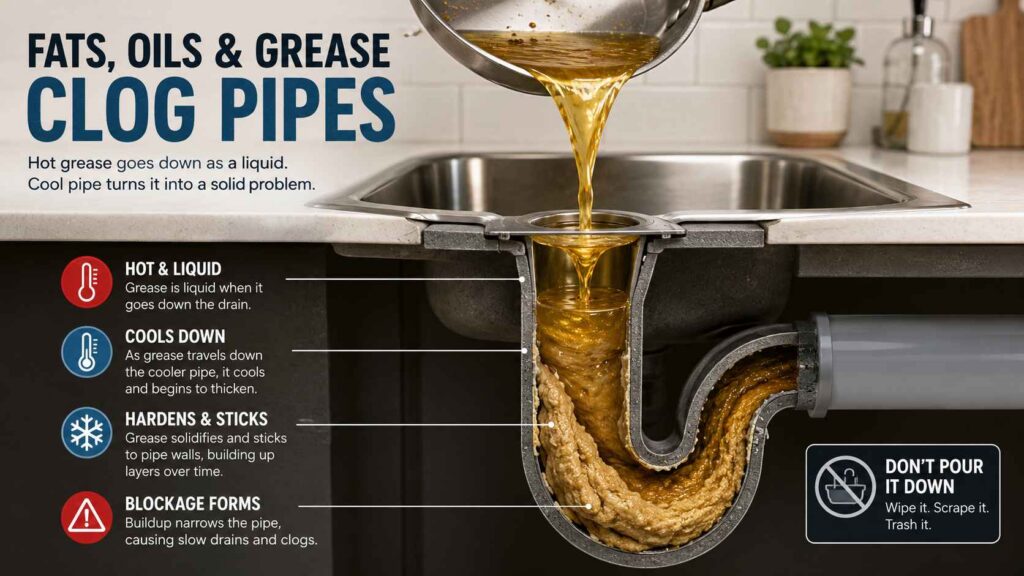
Fats, oils, and grease behave like liquids when hot, so it feels natural to rinse them down the sink. Once they enter your drain, the temperature drops quickly. The grease solidifies and clings to the inside of your pipes, forming a sticky coating that grows thicker with every wash.
Food scraps, soap residue, and mineral deposits stick to that greasy layer. Over weeks and months, the buildup narrows the pipe diameter. Water drains slower, and eventually the blockage becomes complete.
Common sources include butter, cooking oil, meat drippings, salad dressings, and dairy products. Even small amounts add up when rinsed daily.
Commercial kitchens are major contributors, but residential drains play a role too. A UK survey found that 48 percent of people pour fat down the drain despite 77 percent being aware of fatbergs. Sydney Water reports similar issues across the local sewer network, where FOG (fats, oils and grease) build-up is a leading cause of blockages and overflows. That gap between knowledge and action highlights the need for clear, practical prevention advice.
Early Warning Signs of a Fat Clogged Sink
Catching grease buildup early saves you time, money, and the inconvenience of a full blockage. Most fat clogs develop gradually, giving you several chances to intervene before the drain stops working altogether.
Watch for these common indicators in your kitchen sink.
- Slow drainage: Water takes longer to empty from the basin, pooling around the plughole even when the tap is off.
- Gurgling sounds: Air trapped behind the grease layer escapes in bubbles, creating a gurgling or sucking noise as water drains.
- Foul odours: Decomposing food particles stuck in the grease emit a rotten or sour smell, especially noticeable when you run hot water.
- Recurring clogs: You clear the drain with a plunger or chemical cleaner, but the blockage returns within days or weeks.
- Water backing up: In severe cases, wastewater rises into the sink or even into both bathroom sinks if the main line is affected.
If you notice any of these signs, it’s time to take action. Ignoring them usually leads to a complete blockage that requires professional intervention.s time to take action. Ignoring them usually leads to a complete blockage that requires professional intervention.
Practical Steps to Prevent a Fat Clogged Sink
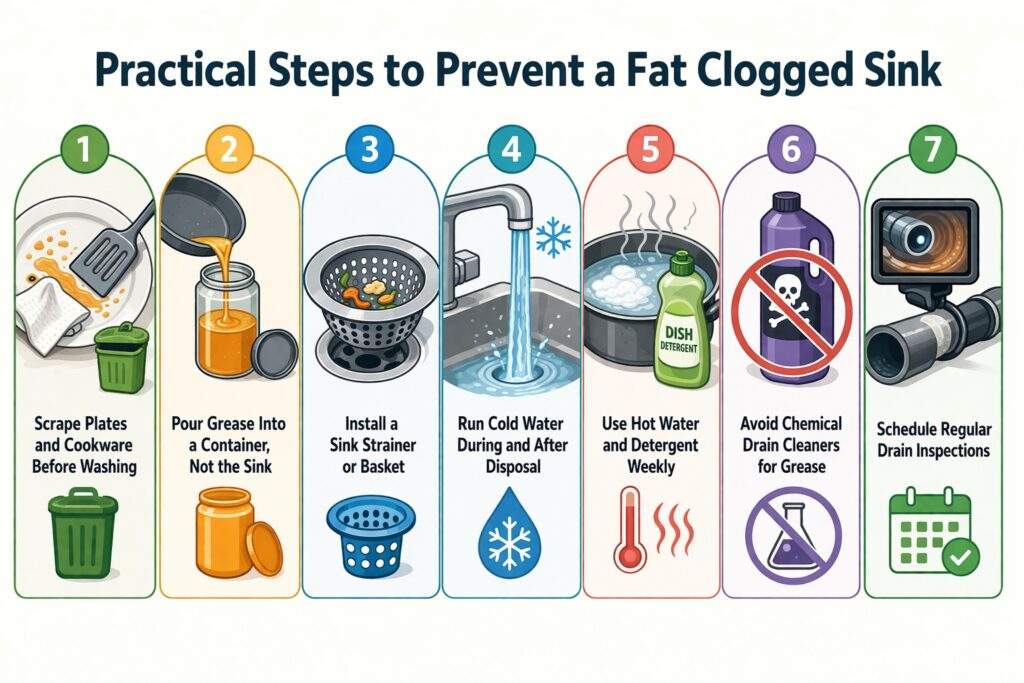
Prevention is simpler and cheaper than clearing a blocked drain. The goal is to stop fats, oils, and grease from entering your pipes in the first place. These steps work for any kitchen, from compact Inner West apartments to larger family homes in the Hills District.
Consistency matters more than perfection. Even small changes in your daily routine can make a big difference over time.
1. Scrape Plates and Cookware Before Washing
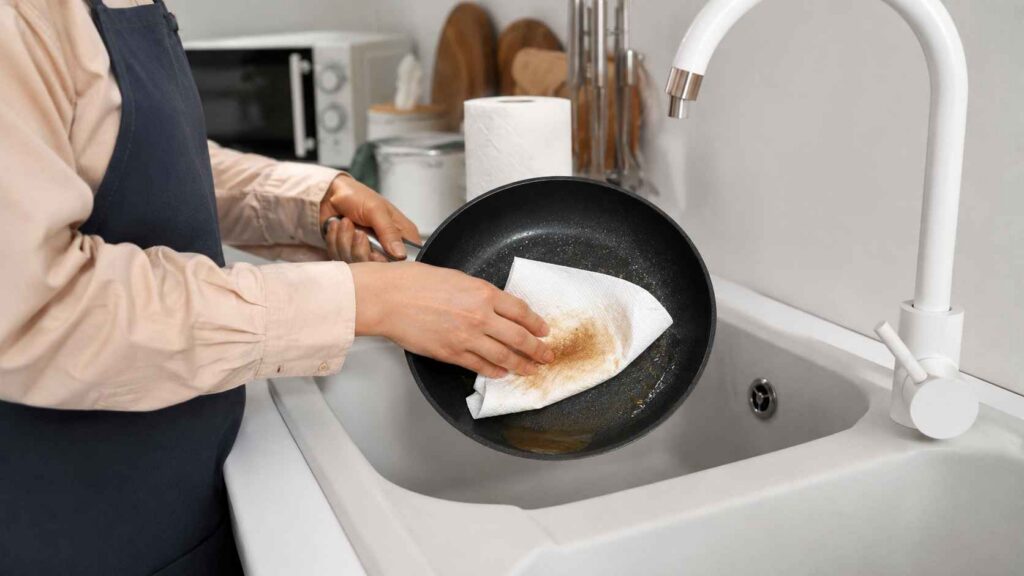
Use a spatula or paper towel to wipe excess grease and food scraps into your bin. This removes the bulk of fats before they reach the sink. It takes only a few seconds per plate and dramatically reduces the amount of grease entering your drain.
2. Pour Grease Into a Container, Not the Sink
Let cooking oil and meat drippings cool in the pan, then transfer them to an old can or jar. Once the container is full, seal it and throw it in your general waste. This method keeps liquid fat out of your plumbing entirely and out of the Sydney Water sewer network.
3. Install a Sink Strainer or Basket
A simple mesh strainer catches food particles before they enter the drain. Empty the strainer into your bin after each wash. This prevents solids from combining with grease to form clogs.
4. Run Cold Water During and After Disposal
If you must rinse small amounts of grease, use cold water instead of hot. Cold water helps solidify fats so they pass through the trap as solid chunks rather than coating the pipe walls. Run the tap for 15 to 20 seconds after the last dish to flush the drain.
5. Use Hot Water and Detergent Weekly
Once a week, fill your sink with very hot water and a squirt of dish detergent. Pull the plug and let the soapy water flush through the drain. This helps dissolve minor grease films before they harden. It’s not a cure for heavy buildup, but it’s a useful maintenance step.
6. Avoid Chemical Drain Cleaners for Grease
Caustic cleaners can melt some grease, but they also damage pipes over time and rarely clear the entire blockage. The grease often re-solidifies further down the line. Mechanical cleaning or professional hydro jetting, carried out by a licensed plumber in line with NSW plumbing standards, is safer and more effective.
7. Schedule Regular Drain Inspections
If you cook frequently or run a commercial kitchen, a yearly CCTV drain inspection can spot early buildup before it causes a blockage. Our team inserts a camera into your drain to assess pipe condition, grease levels, and any other issues like tree roots or cracked sections.
Long-Term Strategies to Keep Your Kitchen Drain Clear
Once your drain is flowing freely again, a few simple habits will keep it that way. Think of grease management as part of your regular kitchen routine, like wiping down benches or emptying the bin.
Education matters too. Make sure everyone in your household knows not to pour fats, oils, or grease down the sink. A quick reminder can prevent months of buildup.
- Keep a grease container near the stove for easy disposal of cooking oil and drippings.
- Wipe pans with paper towel before washing to remove residual fat.
- Run cold water whenever you use an in-sink waste disposal unit to help flush solids through the trap. Note that under Sydney Water’s plumbing rules, installing or altering a waste disposal unit should be done by a licensed plumber to ensure it complies with local trade waste requirements.
- Schedule an annual CCTV inspection if you cook frequently or have had recurring clogs in the past.
- Avoid putting fibrous or starchy foods like potato peels and pasta down the disposal, as they combine with grease to form dense clogs.
These steps cost little and take almost no time, but they add up to significant savings by preventing emergency call-outs and pipe damage.
When to Call a Licensed Plumber for a Fat Clogged Sink

You should call a professional if your kitchen sink drains very slowly despite using a plunger, if you notice water backing up into other fixtures, or if foul odours persist after cleaning the trap. These symptoms suggest a blockage deep in the drain line that home remedies won’t reach.
We also recommend calling us before attempting to dismantle traps or use chemical cleaners. Caustic products can burn skin, damage pipes, and create toxic fumes when mixed with other substances. DIY dismantling can lead to leaks if the trap isn’t reassembled correctly, and in some cases can breach NSW plumbing regulations if not done to code.
Our team will diagnose the problem with a CCTV inspection, explain your options in plain English, and provide a fixed-rate quote before starting work. You’ll know exactly what needs to be done and what it will cost, with no pressure and no jargon. As a fully licensed NSW plumber (Lic. 210933C), every job we complete is carried out to Sydney Water and NSW Fair Trading plumbing standards.
We serve the entire Sydney Metro, including the Inner West, Eastern Suburbs, North Shore, Northern Beaches, Hills District, Western Sydney, South-Western Sydney, and Sutherland Shire. Same-day service is our standard, and 24/7 emergency response means you’re never left waiting when a blockage strikes.
Call us on 0493 824 176 or book online. We’ll confirm a time window, arrive on schedule, and get your kitchen sink flowing again with minimal disruption to your day.
Real-World Example: Clearing a Stubborn Grease Clog in the Inner West
A homeowner in the Inner West contacted us after noticing slow drainage in her kitchen sink. She’d tried boiling water and a plunger, but the problem kept coming back. We scheduled a same-day visit and arrived within three hours.
Our plumber ran a CCTV camera through the drain and found a thick layer of hardened grease coating the pipe about four metres from the sink. The buildup had narrowed the pipe by more than half. We explained the findings, provided a fixed-rate quote for high-pressure water jetting, and received approval to proceed.
Within 30 minutes, the jetting nozzle had scoured the grease from the pipe walls and flushed it into the main sewer. A follow-up camera pass confirmed the pipe was clear and flowing at full capacity. We left the site clean, provided a written report, and advised the homeowner on simple prevention steps to avoid future buildup.
Conclusion
Preventing a fat clogged sink starts with small, consistent habits: scrape plates, pour grease into containers, and use a sink strainer. When blockages do occur, professional CCTV inspection and high-pressure jetting restore full flow and protect your pipes for the long term, backed by our lifetime labour warranty and same-day service across Sydney.
Antons Plumbing & Gas offers expert blocked drain services across Sydney Metro with same-day availability. Our licensed team (NSW Lic. 210933C) uses CCTV inspections to clear fat clogged sinks fast. Call 0493 824 176 to get started today.
Related Articles
- Understanding Why Your Sink Is Not Draining Well
- What to Do When Sink Water Won’t Go Down
- You’ve Been Pouring Oil Down the Sink—But Does It Clog Drains?
FAQs
What Causes A Fat Clogged Sink?
A fat clogged sink is primarily caused by the buildup of grease and food particles that solidify over time. When fats, oils, and grease are washed down the drain, they can congeal and create blockages, leading to slow drainage or complete clogs.
How Do You Unclog A Fat Clogged Sink?
To unclog a fat clogged sink, you can start by using a plunger to create pressure and dislodge the blockage. If that doesn’t work, a mixture of hot water and dish soap can help dissolve the grease. For persistent clogs, calling a licensed plumber like Antons Plumbing & Gas can ensure safe and effective removal without damaging your pipes.
Can Fat Clog A Kitchen Sink?
Yes, fat can definitely clog a kitchen sink. When fats and oils are poured down the drain, they can solidify and accumulate, leading to blockages that hinder proper drainage. It’s important to avoid disposing of fats directly in the sink.
What Are The Signs Of A Fat Clogged Sink?
Signs of a fat clogged sink include slow drainage, unusual odours, gurgling sounds, and water pooling around the sink. If you notice these symptoms, it’s best to address the issue promptly to avoid more severe plumbing problems.
How Can I Prevent A Fat Clogged Sink?
To prevent a fat clogged sink, avoid pouring grease, oils, and fatty foods down the drain. Instead, dispose of them in the bin or compost. Regularly flushing your drain with hot water and detergent can also help keep it clear, and scheduling routine inspections with a licensed plumber can catch potential issues before they become major problems.
Do You Service My Suburb In Sydney?
We service the entire Sydney Metro, including the Inner West, Eastern Suburbs, North Shore, Northern Beaches, Hills District, Western Sydney, South-Western Sydney, and Sutherland Shire. If you’re unsure whether we cover your suburb, call 0493 824 176 and we’ll confirm straight away.
Is Antons Plumbing & Gas Licensed To Work In NSW?
Yes. We hold NSW Lic. 210933C, meaning all work we carry out on your kitchen drain meets NSW Fair Trading plumbing standards and Sydney Water requirements. Always check a plumber’s licence before letting them work on your home.
Do You Offer Same-Day Service For A Blocked Kitchen Sink?
Yes, same-day service is our standard across the Sydney Metro, and we offer 24/7 emergency response for urgent blockages that can’t wait until tomorrow.
How Much Does It Cost To Clear A Fat Clogged Sink In Sydney?
Cost depends on the severity of the blockage and whether CCTV inspection or high-pressure jetting is required. We always provide a fixed-rate quote in AUD before any work begins, so you know the cost upfront with no hidden fees.
Do I Need To Be Home For The Plumber To Fix My Blocked Sink?
Yes, someone over 18 needs to be present to provide access and approve the fixed-rate quote before we start work. We’ll confirm a time window in advance so you can plan around it.
Can I Book A Plumber Online For A Blocked Kitchen Sink?
Yes, you can book online through our website or call 0493 824 176 directly. We’ll confirm a same-day or next available appointment based on your location in Sydney.
What Happens During A CCTV Drain Inspection?
Our plumber feeds a waterproof camera into your drain to locate the exact position and severity of the grease blockage, along with any other issues like tree root intrusion or cracked pipe. You’ll see the footage and get a clear explanation before we quote any repair work.
Is High-Pressure Water Jetting Safe For Older Sydney Homes?
When carried out by a licensed plumber, high-pressure jetting is calibrated to suit the age and condition of your pipes, making it a safe option for older Sydney homes as well as newer builds. We assess pipe condition with CCTV first to confirm jetting is appropriate.
Do You Provide A Warranty On Blocked Drain Repairs?
Yes, our blocked drain and drain cleaning work is backed by a lifetime labour warranty, giving you confidence the job is done right the first time.
Will Pouring Oil Or Fat Down The Sink Affect The Sydney Water Sewer Network?
Yes. FOG (fats, oils and grease) build-up is a major contributor to sewer blockages across the Sydney Water network, similar to the fatbergs reported overseas. Disposing of fat correctly in your bin rather than the sink helps protect both your own pipes and the wider network.
Can A Blocked Kitchen Sink Cause Damage To My Home?
If left unaddressed, a fat clogged sink can lead to overflow, water damage to cabinetry and flooring, and even sewage backing up into other fixtures. Booking a licensed plumber promptly reduces the risk of costly damage.
What Should I Do Right Now If My Kitchen Sink Is Blocked With Fat?
Stop running water into the sink, avoid pouring in chemical cleaners, and call 0493 824 176 or book online for same-day service. Our licensed plumbers will assess the blockage with a CCTV inspection and provide a fixed-rate quote before starting any work.
Do You Charge A Call-Out Fee To Inspect A Fat Clogged Sink?
Speak with our team when you book to confirm current call-out arrangements for your suburb. We always confirm pricing in AUD before any work begins so there are no surprises.
Can DIY Chemical Drain Cleaners Damage My Pipes?
Yes, caustic chemical cleaners can corrode older pipes over time and often fail to clear the full length of a grease blockage. If home remedies haven’t worked, it’s safer to call a licensed plumber for CCTV inspection and professional jetting.
How Quickly Can A Plumber Attend My Home In Sydney?
We aim for same-day attendance across the Sydney Metro, with 24/7 emergency response available if your kitchen sink is completely blocked or overflowing.
Do You Need To See The Blockage Before Quoting A Price?
We provide a fixed-rate quote after assessing the blockage on-site, often using a CCTV inspection to confirm the cause and severity. You approve the quote before any work begins, so there’s no obligation and no surprise costs.