

A sink that drains slowly or not at all is one of the most frustrating household problems for any Sydney home or business. Water pools in the basin, dishes pile up, and the smell can become unbearable. Most blockages start small—grease, hair, soap scum, and food scraps build up over time until water simply won’t go down. When your sink water won’t go down, you need to act quickly to prevent overflow, pipe damage, or contamination, especially in older homes across the Inner West, North Shore, and Eastern Suburbs where original clay pipework is still common.
This guide walks you through practical steps to diagnose and clear a blocked sink, explains when DIY methods are safe, and shows when it’s time to call a licensed Sydney plumber. You’ll also learn how to prevent future blockages and keep your NSW home running smoothly.
Key Takeaways
- Sink blockages are usually caused by grease, hair, soap residue, or foreign objects trapped in the drain or P-trap.
- Simple DIY methods like plunging, boiling water, or bicarb soda can clear minor clogs if used correctly.
- Chemical drain cleaners can damage pipes and should be avoided in older plumbing systems common across Sydney.
- If water backs up into other fixtures or drains slowly across multiple sinks, the blockage may be in your main sewer line.
- Licensed plumbers use CCTV cameras and high-pressure jetting to diagnose and clear stubborn blockages without guesswork.
- Same-day service is available across Sydney Metro with no call-out fee and fixed-rate pricing for blocked drain work.
- Any plumbing work carried out on your property must be done by a plumber licensed with NSW Fair Trading—always check the licence number before hiring.
- Blockages inside your boundary are your responsibility; blockages in the main beyond your boundary trap fall under Sydney Water.
Immediate Steps When Sink Water Won’t Go Down
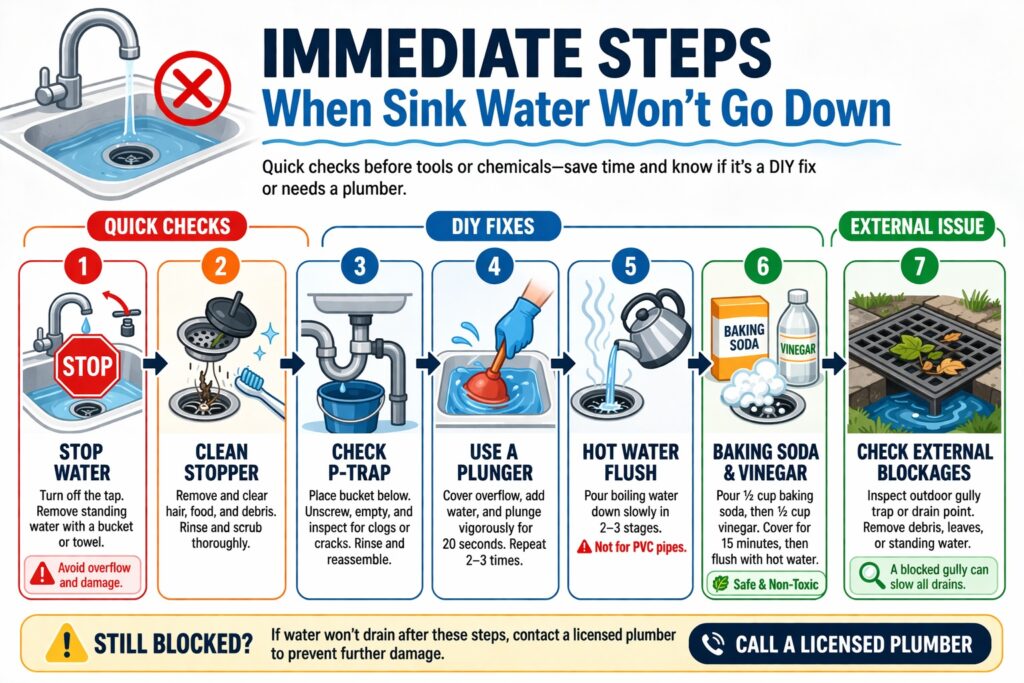
Before you reach for tools or chemicals, try these quick checks. They can save you time and help you decide whether the job is a DIY fix or requires professional help.
1. Stop Using the Sink
Don’t keep running water if it’s not draining. You risk overflow, water damage to cabinets, and cross-contamination if wastewater backs up into other fixtures. Turn off the tap and remove any standing water with a bucket or towel.
2. Check the Drain Stopper
Pop-up stoppers and strainers often trap hair, food, and debris. Lift out the stopper and clean it thoroughly. You might be surprised how much buildup hides just below the surface. Rinse it under hot water and scrub with an old toothbrush.
3. Inspect the P-Trap
Place a bucket under the curved pipe beneath your sink. Unscrew the slip nuts by hand or with a wrench, then remove the P-trap. Empty any water and debris into the bucket. Check for clogs, corrosion, or cracks. Rinse the trap, reassemble, and test the drain.
4. Try a Plunger
A standard cup plunger works for most sinks. Block the overflow hole with a wet cloth to create a seal, fill the basin with a few centimetres of water, and plunge vigorously for 20 seconds. Repeat two or three times. If the water drains, flush with hot water to clear residue.
5. Use Boiling Water
Boil a kettle and pour the water slowly down the drain in two or three stages, waiting a few seconds between pours. This method works well for grease clogs but should not be used on PVC pipes, which can soften or warp under high heat.
6. Bicarb Soda and Vinegar
Pour half a cup of bicarbonate (baking) soda down the drain, followed by half a cup of white vinegar. Cover the drain with a plug or wet cloth and let the mixture fizz for 15 minutes. Flush with hot water. This method is safe, non-toxic, and effective for light blockages.
7. Check for External Blockages
If you have an outdoor gully trap or inspection point, lift the grate and look for debris, leaves, or pooling water. A blocked gully can prevent wastewater from leaving your property, causing sink waters and toilets to drain slowly or not at all. If the blockage sits beyond your boundary trap, it may be a Sydney Water issue rather than something on your private property—our plumbers can confirm whose responsibility it is.
Taking these immediate steps can often solve simple drainage problems before they worsen. They also help identify whether the blockage is isolated to the sink or part of a larger drainage issue in your home. If the water still will not go down after these checks, calling a licensed Sydney plumber is the safest way to restore proper flow and avoid further damage.
When DIY Methods Don’t Work
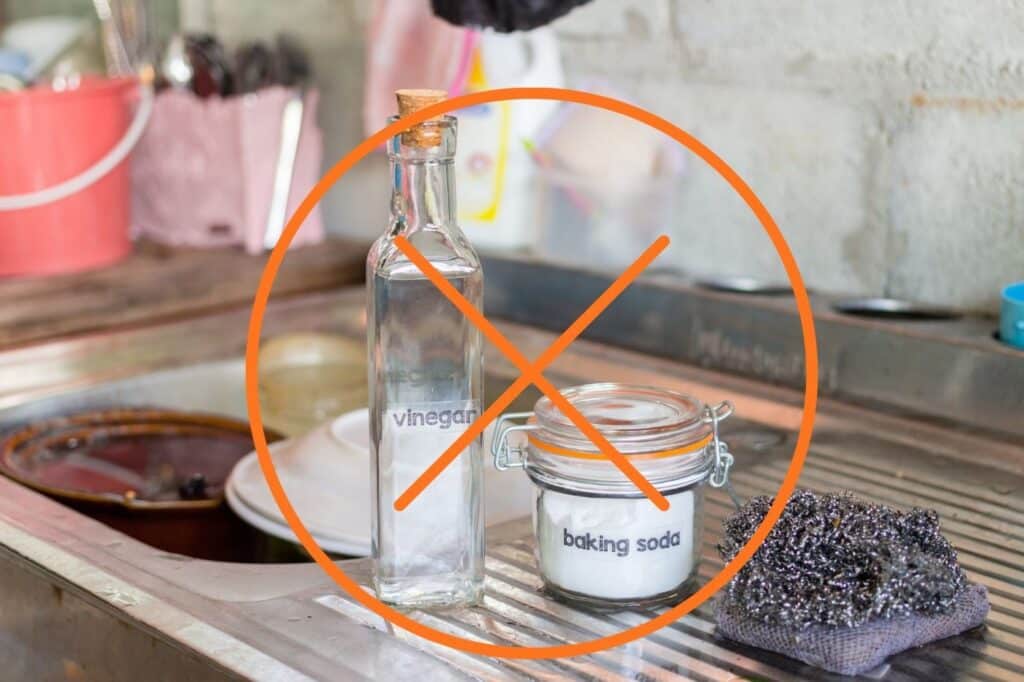
If your sink water won’t go down after trying the steps above, the blockage is likely deeper in the system or caused by a structural issue. Continuing to pour chemicals or force tools down the drain can damage pipes, create toxic fumes, or push the blockage further into your sewer line. At this point, a licensed plumber can diagnose the problem accurately and clear it safely.
We use CCTV drain cameras to inspect your pipes from the inside. This technology shows us exactly where the blockage is, what’s causing it, and whether there’s damage like cracks, root intrusion, or corrosion—common in the older sewer pipes found throughout Sydney’s established suburbs. Once we’ve identified the issue, we explain your options in plain English—whether that’s high-pressure water jetting, manual rodding, or pipe repair.
Our team responds same-day across Sydney, from the Inner West to the Northern Beaches, with no call-out fee. We charge a fixed rate for blocked drain work, so you know the cost upfront in AUD before anything starts. If the job requires more than a simple clear-out, we’ll provide a detailed quote before we proceed.
How Professional Plumbers Clear Blocked Sinks
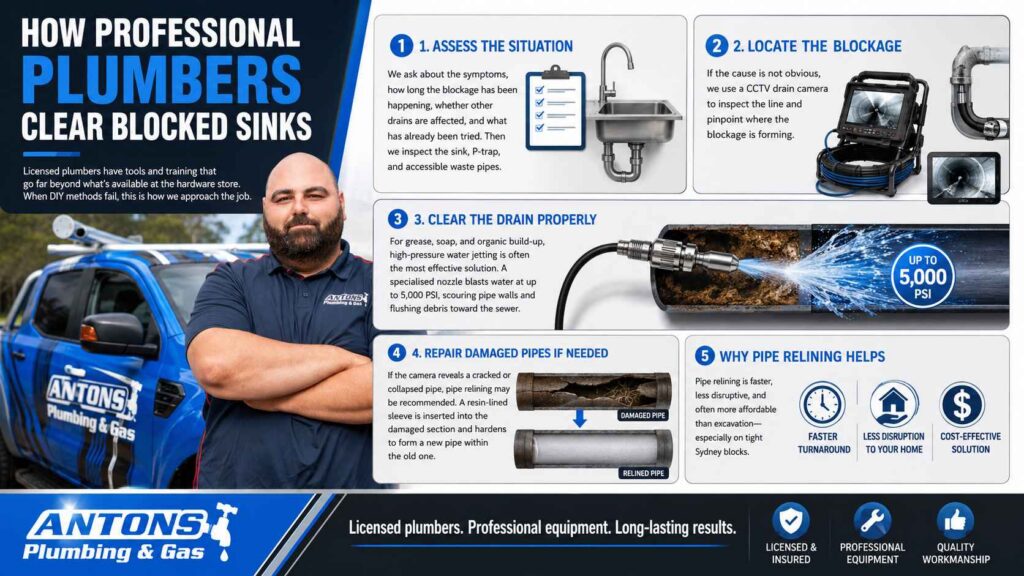
Licensed plumbers have tools and training that go far beyond what’s available at the hardware store. When your sink water won’t go down and DIY methods have failed, here’s how we approach the job.
First, we assess the situation. We ask about symptoms—how long the problem has been happening, whether other drains are affected, and what you’ve already tried. Then we inspect the sink, P-trap, and any accessible waste pipes. If the blockage isn’t obvious, we’ll use a CCTV drain camera to locate it.
Once we’ve identified the cause, we choose the right clearing method. For grease, soap, and organic buildup, high-pressure water jetting is the most effective solution. This process uses a specialised nozzle that blasts water at up to 5,000 PSI, scouring the inside of your pipes and flushing debris toward the sewer. It’s safe for most pipe materials and leaves your drains cleaner than new.
If the camera reveals a cracked or collapsed pipe, we’ll discuss repair options. In many cases, pipe relining is a cost-effective alternative to excavation. This process involves inserting a resin-lined sleeve into the damaged section, which hardens to form a new pipe within the old one. It’s faster, less disruptive, and often more affordable than digging up your yard or breaking through concrete—an important consideration on tight Sydney blocks.
When to Call a Licensed Plumber in Sydney

You should contact a professional plumber if any of the following apply:
- Water backs up into other sinks, showers, or toilets when you run the tap.
- You’ve tried plunging, cleaning the P-trap, and flushing with hot water, but the sink still won’t drain.
- You hear gurgling noises from other drains when you use the sink.
- There’s a foul smell coming from the drain that doesn’t go away after cleaning.
- You notice water pooling around the base of the sink cabinet or under the floor.
- Your home has older clay or terracotta sewer pipes, or you’ve had tree root problems in the past—common across many established Sydney suburbs.
- The blockage appears to be beyond your boundary trap, which may need to be reported to Sydney Water as well as your plumber.
Under NSW law, any plumbing work connected to the water and sewer network must be carried out by a licensed plumber. We’re available 24/7 across Sydney, including the Inner West, Eastern Suburbs, North Shore, Northern Beaches, Hills District, Western Sydney, South-Western Sydney, and Sutherland Shire. Our team arrives with all the tools and equipment needed to diagnose and fix blocked drains on the spot. We charge a fixed rate in AUD, so there are no surprises, and we back our work with a lifetime labour warranty.
Every job is completed to Australian Standards (AS/NZS 3500) and NSW plumbing regulations, and we document our findings with photos and video footage from the CCTV inspection. If you need a report for insurance or strata purposes, we provide clear, detailed documentation. Our plumbers are licensed with NSW Fair Trading (Lic: 210933C), insured, and trained to handle everything from minor blockages to complex sewer repairs.
Why Choose Us for Blocked Drain Work
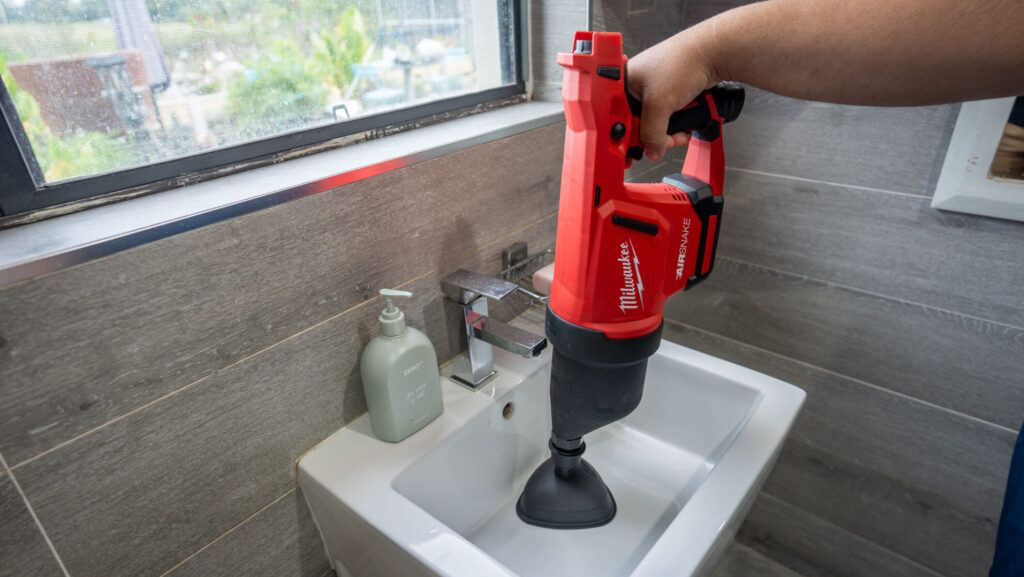
We’ve been clearing blocked drains across Sydney for more than 25 years, including urgent blocked drain North Shore callouts for homes and businesses. Our team knows the local plumbing landscape—from heritage homes in the Inner West to modern apartments on the Northern Beaches. We don’t just treat symptoms; we diagnose the root cause and provide solutions that last.
Every job starts with a clear explanation of what we’ve found and what needs to be done. We present your options, answer your questions, and give you a fixed-rate quote in AUD before we begin. There are no hidden fees, no call-out charges, and no pressure to proceed until you’re ready. Our work complies with NSW Fair Trading licensing requirements and relevant Australian Standards, and we leave your property clean and tidy.
If you need urgent help, we offer same-day service and 24/7 emergency response. Call 0493 824 176 or book online, and we’ll dispatch a licensed Sydney plumber (NSW Lic. 210933C) to your location. Whether your sink water won’t go down, you have a toilet leaking water at the base, or you’re dealing with a water leak at the base of a toilet, we’re ready to help.
Conclusion
A blocked sink disrupts your routine and can lead to costly damage if ignored. Start with simple checks—clean the stopper, inspect the P-trap, and try a plunger. If water still won’t go down, contact a licensed Sydney plumber who can diagnose the issue with CCTV and clear it safely. We’re here to help Sydney homeowners and businesses with fast, reliable, and compliant plumbing solutions—day or night.
Antons Plumbing & Gas specialises in blocked drain solutions across Sydney Metro with same-day service available. Our NSW-licensed team (Lic: 210933C) uses CCTV inspections to diagnose the problem fast. Get started with a no call-out fee quote today.
Related Articles
- 5 Common Reasons Why Isn’t My Kitchen Sink Draining Properly?
- How to Unclog Bathroom Sink Clogged With Hair Using Simple Tools You Already Own
- Understanding Why Your Sink Is Not Draining Well
FAQs
What Causes Sink Water To Not Drain?
Sink water may not drain due to a clogged pipe, buildup of grease and debris, foreign objects trapped in the drain, or issues with the venting system. Over time, these factors can hinder water flow, leading to frustrating backups. Our experienced team at Antons Plumbing & Gas can accurately diagnose the issue and provide effective solutions.
How Do You Fix A Sink That Won’t Drain?
To fix a sink that won’t drain, you can start by removing any visible debris or food particles from the sink and drain. A plunger can help dislodge minor clogs, while a mixture of bicarb soda and vinegar may break down buildup. However, for persistent or complex issues, it’s best to call our skilled plumbers for a professional assessment and resolution.
Can A Clogged Sink Fix Itself?
While some minor clogs might resolve over time as water continues to flow, it’s unlikely that a significant blockage will fix itself. Ignoring a clogged sink can lead to more severe plumbing issues. If you notice ongoing drainage problems, contact Antons Plumbing & Gas for a thorough inspection and prompt service.
What Should I Do If My Sink Is Backing Up?
If your sink is backing up, first stop using the sink to prevent further overflow. You can then try to clear visible debris or use a plunger. If the problem persists, it’s crucial to call our expert team for immediate assistance, as we specialise in resolving such plumbing emergencies efficiently and effectively.
How Do You Unclog A Sink Without A Plumber?
To unclog a sink without a plumber, you can try using a plunger, bicarb soda and vinegar, or a plumbing snake to remove blockages. Be cautious with chemical drain cleaners, as they can damage pipes, especially in older Sydney homes. If these methods fail, contacting Antons Plumbing & Gas is your best bet for a reliable and professional solution.
How Much Does It Cost To Unblock A Sink In Sydney?
We charge a fixed rate for blocked drain work, confirmed in AUD before we start, so you always know the cost upfront with no surprises. The exact price depends on the cause and location of the blockage, which we’ll confirm on-site during your free assessment. Book online or call us for a fixed-rate quote.
Do You Charge A Call-Out Fee For Blocked Sink Jobs?
No. Antons Plumbing & Gas does not charge a call-out fee for blocked sink or blocked drain jobs anywhere in Sydney Metro. You only pay the fixed-rate price we quote you before any work begins.
Is Antons Plumbing & Gas Licensed To Work In NSW?
Yes. We are fully licensed with NSW Fair Trading (Lic: 210933C) and insured to carry out plumbing and drainage work across Sydney. Always check a plumber’s licence before letting them work on your property, as NSW law requires it.
Can I Get Same-Day Blocked Sink Repair In Sydney?
Yes, we offer same-day service across Sydney Metro, including 24/7 emergency response for urgent blockages. Call 0493 824 176 or book online and we’ll dispatch a licensed plumber to your address as soon as possible.
Which Sydney Suburbs Do You Service For Blocked Drains?
We cover the Inner West, Eastern Suburbs, North Shore, Northern Beaches, Hills District, Western Sydney, South-Western Sydney, and Sutherland Shire. If you’re unsure whether we service your suburb, contact us and we’ll confirm straight away.
How Quickly Can A Plumber Arrive After I Call?
In most cases we can arrange same-day attendance across Sydney, and we offer 24/7 emergency callouts for urgent issues like sink water not draining at all or sewage backing up. Call us or book online to get the earliest available time slot.
Do You Offer A Warranty On Blocked Drain Repairs?
Yes, all our blocked drain and sink repair work is backed by a lifetime labour warranty, giving you peace of mind that the job is done properly the first time.
Can You Provide A CCTV Report For My Insurer Or Strata?
Yes. Every CCTV drain inspection we carry out is documented with photos and video footage, which we can provide as a report for insurance claims or strata records upon request.
Do You Give A Quote Before Starting Work?
Always. We inspect the issue, explain what we’ve found in plain English, and provide a fixed-rate quote in AUD before any work begins. You won’t be charged for anything you haven’t agreed to.
Is It Safe To Use Chemical Drain Cleaners In Older Sydney Homes?
We generally recommend against chemical drain cleaners in older Sydney properties, as many still have original clay, copper, or cast iron pipework that can be damaged by harsh chemicals. A licensed plumber can clear the blockage safely without risking your pipes.
Who Is Responsible For A Blocked Sewer Main — Me Or Sydney Water?
Generally, you are responsible for plumbing and drains within your property boundary, while Sydney Water is responsible for the main sewer beyond your boundary trap. Our plumbers can inspect the blockage and advise you on whether it needs to be reported to Sydney Water.
Do You Work After Hours Or On Weekends?
Yes, we provide 24/7 emergency plumbing services across Sydney, including nights, weekends, and public holidays, for urgent issues like a sink that won’t drain or a backed-up toilet.
What Should I Do While I Wait For The Plumber To Arrive?
Stop using the affected sink and any connected fixtures, mop up standing water, and avoid pouring anything else down the drain. If you can safely access it, check whether an outdoor gully trap is overflowing and let us know when you call so we can prepare the right equipment.
How Do I Book A Licensed Plumber For A Blocked Sink In Sydney?
You can book online through our website or call us directly on 0493 824 176. We’ll confirm the earliest available appointment, talk through the symptoms, and dispatch a licensed, insured plumber to clear your blocked sink.
Will A Licensed Plumber Damage My Pipes While Clearing The Blockage?
No. Licensed plumbers use methods matched to your pipe material and condition, such as CCTV inspection before jetting, to avoid causing further damage. This is one of the main reasons to avoid DIY tools like unsuitable augers or strong chemicals on older Sydney plumbing.