

A kitchen sink that won’t drain properly is one of the most frustrating household problems you’ll face. Water pools in the basin, dishes pile up, and the smell of stagnant water starts creeping through your kitchen. Understanding why your kitchen sink isn’t draining helps you decide whether to tackle the problem yourself or call in professional help.
This article breaks down the five most common reasons behind a slow or blocked kitchen sink and shows you practical ways to address each one. You’ll learn what causes these blockages, how to prevent them, and when it’s time to reach out to a licensed Sydney plumber for a permanent fix.
Key Takeaways
- Grease and fat build-up is the leading cause of kitchen sink blockages in Sydney homes.
- Food particles, coffee grounds, and foreign objects frequently obstruct drainage systems.
- Damaged or corroded pipes may require professional CCTV inspection and pipe relining.
- Simple DIY methods like plunging or cleaning the P-trap can resolve minor clogs.
- Professional diagnosis prevents recurring blockages and protects your plumbing investment.
Why Isn’t My Kitchen Sink Draining: Understanding the Root Causes
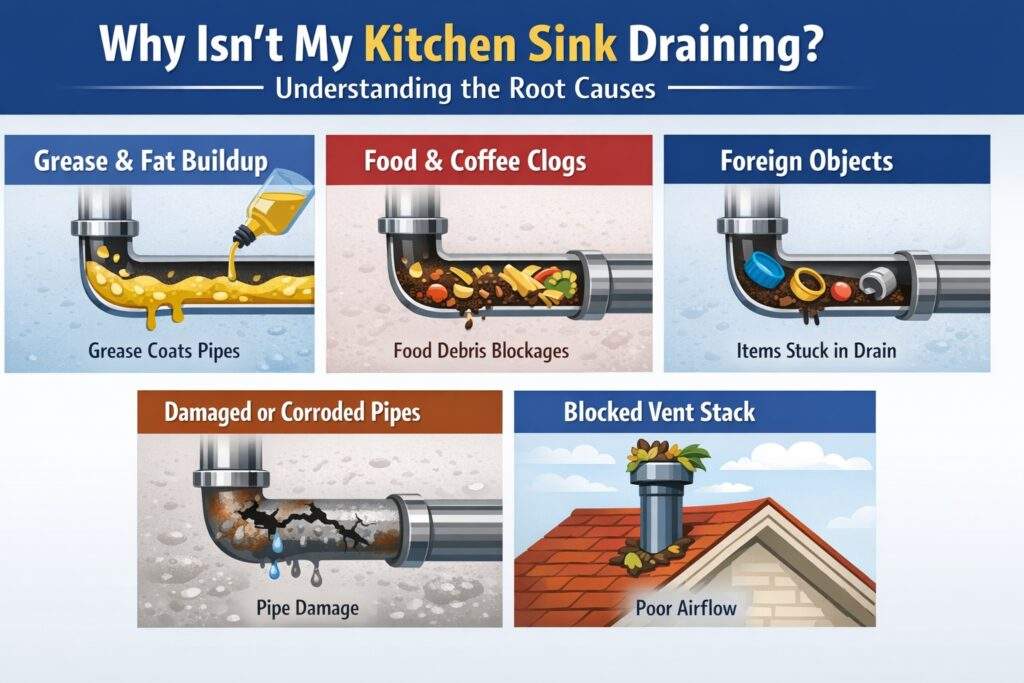
When your kitchen sink refuses to drain, the problem usually sits somewhere between the drain opening and the main sewer line. Most blockages happen within the first few metres of pipe, right under your sink or in the trap. Knowing where and why these clogs form helps you choose the right solution.
Sydney homes face unique drainage challenges due to older clay pipes, tree root intrusion, and hard water deposits. We see these issues daily across the Inner West, Eastern Suburbs, and North Shore. Each home has its own plumbing history, and what works for one property might not suit another.
The good news is that most kitchen sink drainage problems fall into five predictable categories. Let’s walk through each one.
1. Grease and Fat Buildup in Your Drain Pipes
Grease is the number one enemy of kitchen drains. When you pour cooking oil, butter, or fatty liquids down the sink, they might flow smoothly at first. But as they cool inside your pipes, they solidify and coat the inner walls. Over time, this sticky layer traps food particles and builds up until water can barely pass through.
Many homeowners don’t realise that even small amounts of grease accumulate over weeks and months. A quick rinse of a frying pan or a splash of salad dressing adds to the problem. The grease layer grows thicker, narrowing the pipe diameter and slowing drainage. Eventually, you’re left with a completely blocked sink.
Hot water doesn’t solve the issue either. It might push the grease further down the pipe, but it will re-solidify once it cools. This just moves the blockage deeper into your drainage system, making it harder to reach. Sydney Water actively discourages pouring fats, oils, and grease down the kitchen sink, as it’s one of the leading causes of sewer blockages across the Sydney network, so keeping grease out of your drain also helps protect the wider system your home connects to.
Prevention tips:
- Scrape plates and pans into the bin before washing
- Wipe greasy cookware with paper towel first
- Never pour cooking oil or fat down the drain
- Run cold water for 30 seconds after each use to help flush residue
- Use a sink strainer to catch food scraps
If grease has already caused a blockage, boiling water alone rarely clears it. A mixture of bicarb soda and vinegar can help break down light build-up, but stubborn clogs need mechanical removal. Our team uses high-pressure water jetting to strip grease from pipe walls, restoring full flow. We diagnose the extent of build-up with CCTV drain inspection, so you know exactly what you’re dealing with.
2. Food Particles and Coffee Grounds Clogging the System
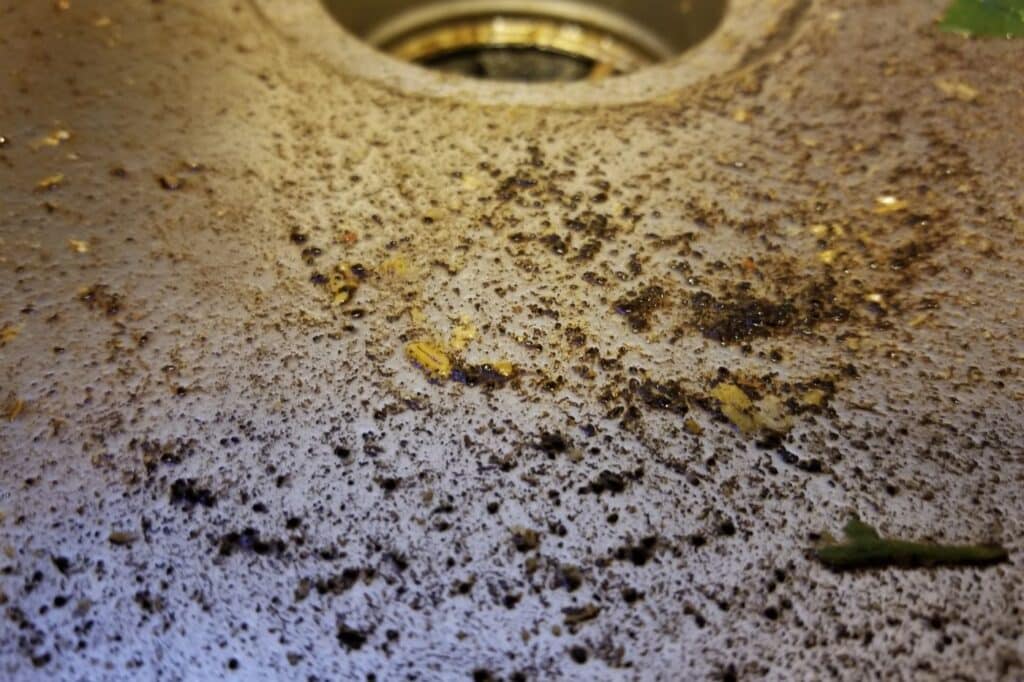
Food scraps are the second most common culprit behind slow kitchen drains. Even if you have a waste disposal unit, certain foods should never go down the sink. Coffee grounds, pasta, rice, and fibrous vegetables like celery or potato peels don’t break down easily. They clump together and create dense blockages in the trap or drainpipe.
Coffee grounds are particularly troublesome. They feel fine and harmless, but they behave like wet sand once they settle in your pipes. They compact tightly and resist water flow. Pasta and rice expand when wet, turning a small amount into a swollen mass that grips the pipe walls.
We’ve cleared hundreds of Sydney sinks where the blockage was nothing more than a week’s worth of breakfast coffee grounds mixed with cooking scraps. It’s a simple fix when caught early, but left unchecked, it can back up into your dishwasher or overflow onto your kitchen floor.
What to avoid putting down your sink:
- Coffee grounds and tea leaves
- Pasta, rice, and other starchy foods
- Eggshells and nutshells
- Fibrous vegetables (celery, corn husks, onion skins)
- Flour and baking ingredients
If you suspect food build-up, start by checking the P-trap. This is the curved pipe under your sink that holds a small amount of water to block sewer gases. It also catches debris. Place a bucket underneath, unscrew the trap, and clear out any gunk. If the blockage sits further down, a drain snake or auger can reach deeper into the pipe.
When DIY methods don’t work, we use professional-grade equipment to clear the line completely. Same-day service means we can have your sink draining properly before dinner time. No call-out fee, just upfront pricing and a clean finish.
3. Foreign Objects Stuck in the Drain Line
Sometimes the problem isn’t food or grease at all. Small objects fall into the sink and lodge in the drainpipe. Bottle caps, twist ties, small toys, and even jewellery can block the flow. If you have young children, the risk increases. Kids are curious, and sinks are tempting places to experiment.
We’ve retrieved everything from teaspoons to hair clips from kitchen drains. These objects don’t dissolve or break down, so they sit in the pipe and catch other debris. Water slows to a trickle, and you’re left puzzled because you haven’t poured grease or food down the drain. The blockage might sit just past the trap, or it could be wedged further along the line.
If you know something has fallen down the sink, act quickly. Turn off the tap and don’t run water, as this can push the object deeper. If it’s close to the surface, you might retrieve it by removing the P-trap. For objects lodged further down, a plumbing snake or professional retrieval is the safest option.
Trying to flush the object through with more water rarely works and can make the situation worse. You might be wondering whether to take apart your kitchen sink yourself or call for help. If you’re comfortable with basic plumbing and have a bucket and wrench handy, removing the trap is straightforward. If the object is out of reach or you’re unsure, we can locate it with a camera inspection and extract it without damaging your pipes.
Our CCTV drain inspection service shows exactly where the blockage sits. We then use the right tool, whether that’s a retrieval hook, magnet, or auger, to pull it out. We leave your kitchen clean and your pipes clear, backed by our lifetime labour warranty on all workmanship.
4. Damaged or Corroded Pipes Affecting Drainage
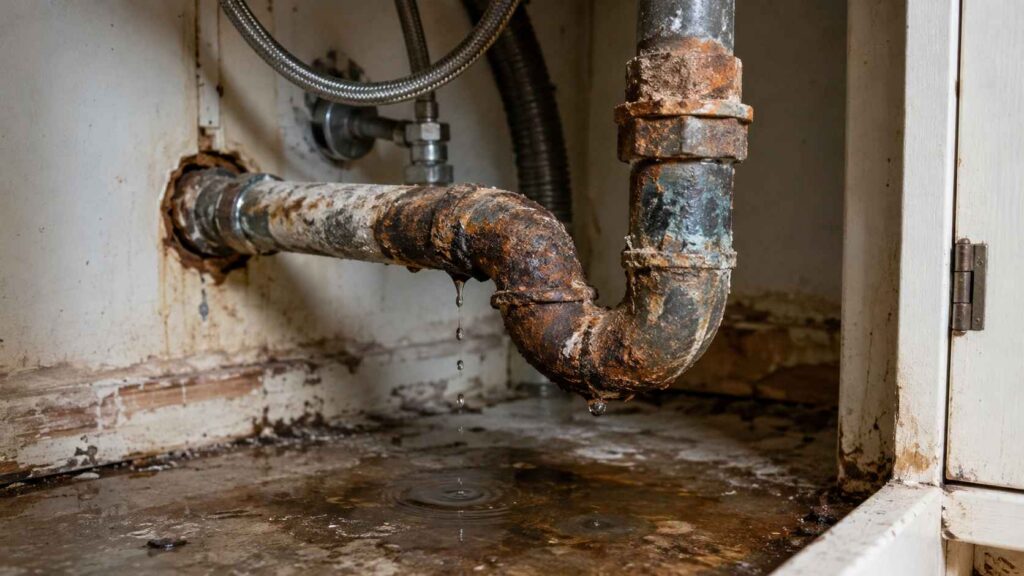
Older Sydney homes often have galvanised steel or clay pipes that degrade over time. Corrosion, rust, and cracks create rough surfaces inside the pipe, catching debris and slowing water flow. Tree roots can also invade cracked pipes, growing into the line and forming dense blockages. If your kitchen sink drains slowly despite regular cleaning, the problem might be structural.
Corrosion narrows the pipe diameter and creates uneven surfaces that trap grease and food. Clay pipes, common in pre-1980s homes across suburbs like Northbridge and Carlingford, are prone to cracking and root intrusion. Once roots enter the pipe, they grow quickly and block the entire line. You might notice gurgling sounds, slow drainage in multiple fixtures, or even sewage odours.
Diagnosing pipe damage requires a camera inspection. We insert a small CCTV camera into your drain to see the condition of the pipe walls, identify cracks, and locate root intrusion. This gives us a clear picture of what’s happening underground, without digging up your yard or kitchen floor.
If the damage is localised, we can often repair it with pipe relining. This is a no-dig solution where we insert a resin-lined sleeve into the existing pipe and cure it in place. The result is a smooth, durable new pipe inside the old one. It’s faster and less disruptive than traditional excavation, and it’s ideal for Sydney properties with limited access or heritage concerns.
For severe damage or collapsed pipes, replacement might be necessary. We’ll walk you through your options, explain the pros and cons of each, and provide a clear, fixed-rate quote in AUD. Our work complies with AS/NZS 3500 plumbing standards and the NSW Plumbing and Drainage Regulation, and any work affecting the Sydney Water sewer network must be carried out by a licensed plumber. We document everything for your records.
5. Faulty or Blocked Vent Stack Impacting Sink Drainage
Your kitchen sink doesn’t drain by gravity alone. It needs air to flow smoothly, and that air comes from the vent stack, a vertical pipe that runs from your drainage system up through your roof. If the vent is blocked by leaves, bird nests, or debris, air can’t enter the system. This creates a vacuum that slows drainage and causes gurgling sounds.
A blocked vent is less common than grease or food build-up, but it’s often overlooked. You might notice that your sink drains slowly even after clearing the trap and snaking the line. Other fixtures in your home might also drain poorly, especially if they share the same vent stack. The gurgling sound is a telltale sign that air is struggling to enter the system.
Clearing a vent blockage usually requires roof access. We inspect the vent opening, remove debris, and check for damage or nesting animals. In some cases, the vent pipe itself is damaged or incorrectly installed. We’ll assess the entire system and recommend repairs that meet Australian Standards.
Vent issues are more common in older homes or properties with large trees nearby. If you’ve recently had roof work done, it’s worth checking that the vent wasn’t accidentally covered or damaged. We provide same-day service across Sydney, so you don’t have to wait days for a diagnosis.
When to Call Anton’s Plumbing & Gas for Professional Help

Some drainage problems are beyond DIY fixes. If you’ve tried the methods above and your sink still won’t drain, or if the blockage keeps coming back, it’s time to call a licensed plumber. Recurring blockages often signal a deeper issue like pipe damage, root intrusion, or a faulty vent system.
Under NSW law, only a licensed plumber can legally carry out permanent drain repairs, pipe relining, or work on pipework connected to the Sydney Water network. Anton’s Plumbing & Gas holds current NSW Lic. 210933C, so you can call knowing the work is compliant, documented, and covered by our lifetime labour warranty.
We diagnose the root cause with CCTV drain inspection, giving you a clear view of what’s happening inside your pipes. This saves time, money, and guesswork. Once we know the problem, we’ll present your options, explain the pros and cons, and provide a fixed-rate quote in AUD. No hidden fees, no surprises.
| Problem | DIY Solution | Professional Solution |
|---|---|---|
| Light grease build-up | Boiling water, bicarb soda & vinegar | High-pressure water jetting |
| Food particles in trap | Remove and clean P-trap | Drain snake, CCTV inspection |
| Foreign object lodged | Remove trap, retrieve if accessible | Camera location, professional retrieval |
| Damaged or corroded pipes | Not suitable for DIY | CCTV inspection, pipe relining or replacement |
| Blocked vent stack | Not suitable for DIY | Roof access, vent clearing and repair |
Our services include blocked drain clearing, pipe relining, leak detection, and full drainage system repairs. We work to Australian Standards and hold current NSW licensing (Lic: 210933C). Same-day service and 24/7 emergency response mean you don’t have to wait. Call 0493 824 176 or book online, and we’ll have a qualified plumber at your door fast.
We serve the entire Sydney Metro, from the Inner West and Eastern Suburbs to the North Shore, Northern Beaches, Hills District, and beyond. Whether you’re a homeowner dealing with a stubborn blockage or a strata manager needing compliance reports, we’re here to help. We respect your property, communicate in plain English, and leave your space clean.
Conclusion
A kitchen sink that won’t drain is more than an inconvenience; it disrupts your daily routine and can signal deeper plumbing issues. Understanding the five common causes, from grease build-up to damaged pipes, empowers you to take action early and prevent costly repairs. When DIY methods fall short, our licensed team is ready to diagnose the root cause, present clear options, and restore your drainage system to full function.
Anton’s Plumbing & Gas offers expert blocked drain solutions and CCTV inspections across Sydney Metro. Our licensed team (NSW Lic. 210933C) diagnoses the root cause and fixes it right the first time. Get started with same-day service today.
Related Articles
- Kitchen Drain Clogged? Here’s How to Fix It Quickly and Safely
- Why Commercial Kitchens Need Regular Blocked Drains Services to Stay Compliant
- Why Is the Water in My Sink Not Going Down?
FAQs
What Causes A Kitchen Sink To Not Drain?
Common causes of a kitchen sink not draining include food debris, grease build-up, foreign objects lodged in the drain, or issues with the plumbing vent system. At Anton’s Plumbing & Gas, we can quickly diagnose the root cause and provide reliable solutions to restore proper drainage.
How Do I Unclog My Kitchen Sink?
You can try unclogging your kitchen sink by using a plunger, a mixture of bicarb soda and vinegar, or a plumber’s snake. However, for persistent clogs or complicated issues, it’s best to call our experienced team for professional assistance.
Can A Clogged Kitchen Sink Fix Itself?
While some minor clogs may clear on their own, most will require intervention. If your kitchen sink is clogged, it’s advisable to act promptly rather than wait for it to resolve itself, as delays can lead to more significant plumbing issues. Our experts can help ensure a thorough fix.
What Should I Do If My Kitchen Sink Is Draining Slowly?
If your kitchen sink is draining slowly, first check for visible obstructions in the drain or trap. If the issue persists, it may indicate a more serious blockage or plumbing problem. Contact Anton’s Plumbing & Gas for a comprehensive inspection and effective solutions to restore optimal drainage.
How Can I Tell If My Kitchen Sink Is Clogged?
Signs of a clogged kitchen sink include water pooling in the basin, unusual gurgling noises, or slow drainage. If you notice these symptoms, it’s best to consult our skilled team for a timely diagnosis and professional plumbing services.
Are You A Licensed Plumber In Sydney, NSW?
Yes, Anton’s Plumbing & Gas holds current NSW plumbing licence 210933C. Every blocked drain and kitchen sink repair we carry out complies with AS/NZS 3500 and NSW plumbing regulations, so you can book with confidence.
Do You Offer Emergency Plumbing For A Blocked Kitchen Sink In Sydney?
Yes, we provide 24/7 emergency plumbing across Sydney Metro. If your kitchen sink has backed up and won’t drain, call 0493 824 176 and we’ll get a licensed plumber to you fast.
How Quickly Can You Get To My Home For A Blocked Kitchen Sink?
We offer same-day service across Sydney, including the Inner West, Eastern Suburbs, North Shore, Northern Beaches, and Hills District. Book online or call now and we’ll confirm the fastest available appointment.
Do You Charge A Call-Out Fee To Inspect A Blocked Kitchen Sink?
No, we don’t charge a call-out fee. We provide upfront, fixed-rate pricing in AUD before any work begins, so there are no surprises on your invoice.
Will I Get A Fixed Price Before The Work Starts?
Yes. After diagnosing the blockage, our licensed plumber explains your options and provides a fixed-rate quote in writing before starting any work.
Do You Service My Suburb?
We cover the entire Sydney Metro area, including Northbridge, Carlingford, Chatswood, the Eastern Suburbs, Northern Beaches, and Hills District. Contact us to confirm coverage for your address.
Is CCTV Drain Inspection Included When You Clear A Blocked Kitchen Sink?
We use CCTV drain inspection whenever a blockage is recurring or the cause isn’t obvious, so we can show you exactly what’s happening inside your pipes before recommending a fix.
Can You Fix My Drains Without Digging Up My Kitchen Floor Or Yard?
In many cases, yes. We use pipe relining, a no-dig repair method, to restore damaged or cracked pipework without excavation, which is ideal for Sydney homes with limited access or heritage restrictions.
What If My Sink Blockage Is Actually A Problem With The Sydney Water Sewer Main?
If our inspection shows the blockage is on the Sydney Water side of the network, we’ll advise you and explain the next steps, including who to notify, so the issue gets resolved correctly.
Can I Book A Plumber Online Right Now?
Yes, you can book online through our website or call 0493 824 176 directly, and we’ll schedule a licensed plumber for same-day service where available.
Do You Work Weekends And After Hours?
Yes, we offer 24/7 emergency plumbing across Sydney, including weekends and after-hours call-outs, for urgent blocked drains and kitchen sink issues.
What Payment Methods Do You Accept?
We keep payment simple and provide a clear invoice once your fixed-rate quote is agreed. Ask our team about available payment options when you book.
Will The Repair Be Covered By A Warranty?
Yes, all our workmanship is backed by a lifetime labour warranty, giving you peace of mind that the fix will last.
Do You Provide Compliance Reports For Strata Or Landlords?
Yes, we provide compliance documentation and CCTV inspection reports for strata managers, landlords, and homeowners who need records for their property.
How Do I Book Anton’s Plumbing & Gas For My Blocked Kitchen Sink?
Simply call 0493 824 176 or book online. Our licensed Sydney plumbers (NSW Lic. 210933C) offer same-day service, upfront pricing in AUD, and a lifetime labour warranty on all workmanship.