

A bathroom sink that drains slowly or not at all can throw out your morning routine and signal a deeper plumbing issue. Recognising the early warning signs helps you act before a minor inconvenience turns into a costly repair. From standing water to strange odours, these symptoms tell you exactly when your bathroom sink drain needs the attention of a licensed plumber.
This guide walks you through the five most common signs of a clogged sink drain, explains what causes blockages in Sydney homes, and shows you when DIY methods fall short. You’ll also learn how our team at Anton’s Plumbing & Gas (NSW Lic. 210933C) diagnoses root causes and delivers same-day solutions across the Sydney Metro.
Key Takeaways
- Standing water in your basin after washing hands indicates a partial or complete blockage in the bathroom sink drain.
- Slow drainage often results from hair, soap scum, and toothpaste residue building up inside the pipe over time.
- Gurgling sounds point to trapped air caused by a clog further down the line or inadequate venting.
- Foul odours emerge when organic matter decomposes inside the drain or when sewer gas escapes through a damaged trap.
- Water backing up into nearby fixtures suggests a shared waste line is blocked, requiring CCTV inspection and professional clearing.
Recognising the Warning Signs of a Bathroom Sink Clogged
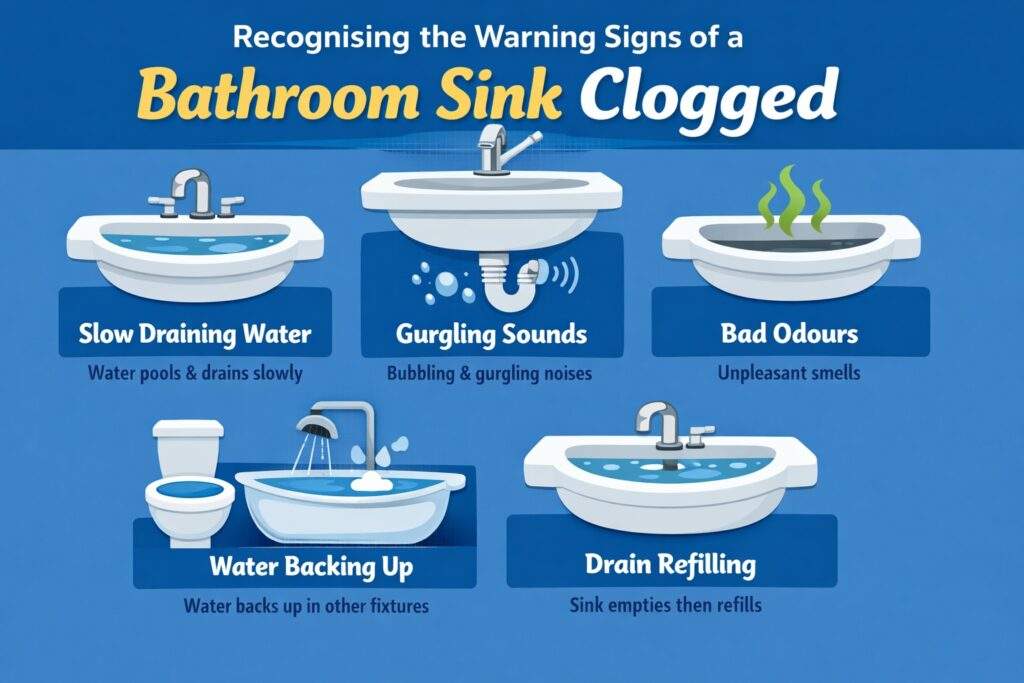
Recognising the warning signs of a bathroom sink clogged early can help you avoid more serious drainage issues and unnecessary damage to your plumbing. Most sink blockages develop gradually, which means the symptoms often appear well before the drain stops working completely. Paying attention to these early changes makes it easier to act quickly and choose the right fix before the problem worsens — especially important in older Sydney homes with ageing pipework.
1. Water Pools in the Basin and Drains Slowly
If water lingers in the basin for several seconds after use, a partial blockage has likely started to form inside the drain. Hair, soap scum, and everyday residue begin to narrow the pipe, slowing the movement of water more and more over time. While hot water or plunging may offer temporary relief, a recurring slow drain usually means the clog extends deeper than the visible trap and needs a more thorough clear.
2. Gurgling Noises Come From the Drain
A gurgling sink drain often means air is trapped behind a developing obstruction. As water tries to pass through the narrowed section of pipe, it pushes bubbles back up through the drain and creates that noticeable sound. In some cases, this can also point to a venting issue, which is why both the waste line and vent system may need to be checked.
3. Unpleasant Smells Rise From the Sink
Bad odours from the sink usually come from decomposing buildup inside the pipe, including hair, toothpaste, soap residue, and other organic matter. Bacteria feed on this material and release unpleasant gases that become more noticeable in warm conditions or when hot water is used. A dry P-trap can also cause similar smells, but if the odour continues after restoring water to the trap, the issue may be a deeper clog or damaged pipework.
4. Water Backs Up Into Other Fixtures
If using one bathroom fixture causes bubbling or backup in another, the blockage may be in a shared waste line rather than the sink alone. This means the obstruction is further down the system, forcing water to redirect toward connected fixtures such as the sink or shower. This is a more serious warning sign and usually requires prompt inspection to locate the blockage and prevent broader drainage problems.
5. The Sink Drains Completely Then Refills
A sink that appears to empty but then slowly fills again often points to a partial blockage, siphoning issue, or foreign object lodged in the line. Water can pass temporarily, but not freely enough to prevent it from returning into the basin. Items such as jewellery, bottle caps, or small bathroom objects can easily cause this kind of problem and usually require proper inspection for accurate removal.
These warning signs should not be ignored, especially when they begin appearing together or keep returning after basic cleaning. What starts as a minor inconvenience can quickly become a larger blockage affecting other parts of your plumbing system. When the symptoms suggest more than simple surface buildup, Anton’s Plumbing & Gas can inspect the line properly and clear the issue with the right tools for a lasting result.
What Causes a Clogged Sink Drain in Sydney Homes
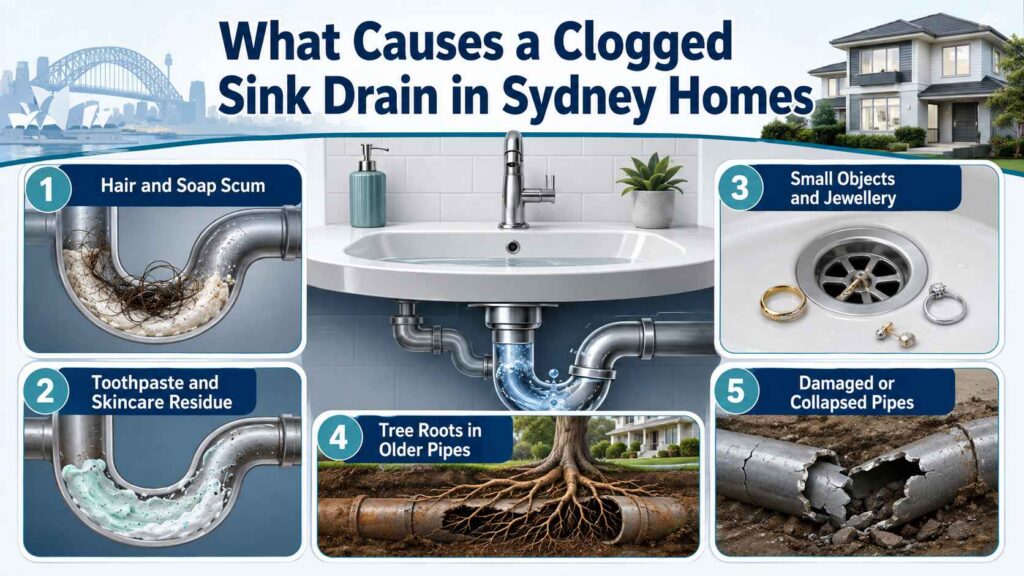
What causes a clogged sink drain in Sydney homes often comes down to a gradual buildup of everyday materials or damage hidden deeper in the pipework. While some blockages form near the drain opening, others develop further along the line and become harder to detect without professional inspection. Knowing the most common causes helps homeowners act early, reduce repeat issues, and choose the most effective solution.
Hair and Soap Scum
Hair and soap scum are among the most common causes of a blocked bathroom sink drain. Loose hair washes into the pipe and combines with soap residue to form a sticky layer that clings to the pipe walls and traps more debris over time. A simple mesh screen can catch most hair before it enters the drain, and cleaning that screen weekly can significantly reduce the risk of recurring clogs.
Toothpaste and Skincare Residue
Toothpaste, shaving cream, facial cleansers, and thick skincare products often leave behind a film inside the drain. This buildup may not be as obvious as hair, but it creates a tacky surface that makes it easier for other particles to stick and accumulate. Rinsing with hot water after use can help reduce residue, although extra care is needed with older PVC pipes that may not tolerate very high heat.
Small Objects and Jewellery
Small items such as rings, earrings, contact lenses, bottle caps, and children’s toys can easily fall into an open sink drain. Once lodged in the trap or pipe, these objects can block water flow immediately or catch other debris that turns into a larger clog. If something valuable falls into the drain, it is best to stop using the sink and arrange professional retrieval before the object is pushed deeper into the system.
Tree Roots in Older Pipes
Many older Sydney homes, particularly heritage terraces in the Inner West and Eastern Suburbs, still have clay or earthenware pipes that are vulnerable to root intrusion. Tree roots are naturally drawn to moisture and can enter through tiny cracks, where they continue to expand and obstruct the pipe. Anton’s Plumbing & Gas uses CCTV drain inspections to identify this issue quickly and can recommend either root clearing or pipe relining, depending on the severity of the damage.
Damaged or Collapsed Pipes
A damaged or partially collapsed pipe can slow drainage and create rough internal surfaces where debris collects more easily. These issues often develop because of age, ground movement, or poor installation, and they tend to worsen gradually rather than appear all at once. Our team uses acoustic leak detection and camera inspections to pinpoint the problem and provide clear repair options, including replacement or resin relining, depending on the pipe’s condition.
A clogged sink drain is not always caused by surface-level buildup, which is why repeated blockages should never be ignored. Identifying the true cause early can help prevent more serious drainage problems and reduce the likelihood of costly repairs later. When the issue goes beyond a simple cleanout, Anton’s Plumbing & Gas can inspect the line properly and provide the right solution for long-term results.
DIY Methods and When They Work
Many homeowners try simple home remedies first when dealing with a slow or clogged sink drain. Some methods can be effective for minor buildup near the surface, but others only provide temporary relief or risk causing more damage. Knowing which DIY options are safe — and when to stop — can help you avoid making the blockage worse before professional help arrives.
| DIY Method | When It Works | Important Notes |
|---|---|---|
| Boiling water | Effective for dissolving soap scum and light grease buildup | Pour slowly in two or three stages and avoid this method if you have PVC pipes older than ten years |
| Baking soda and vinegar | Works for light organic buildup inside the drain | Let the mixture fizz for an hour before flushing with hot water, but do not expect it to remove solid objects or heavy grease |
| Plunger | Best for partial clogs near the trap | Block the overflow hole with a damp cloth and stop if water does not improve after about a dozen plunges |
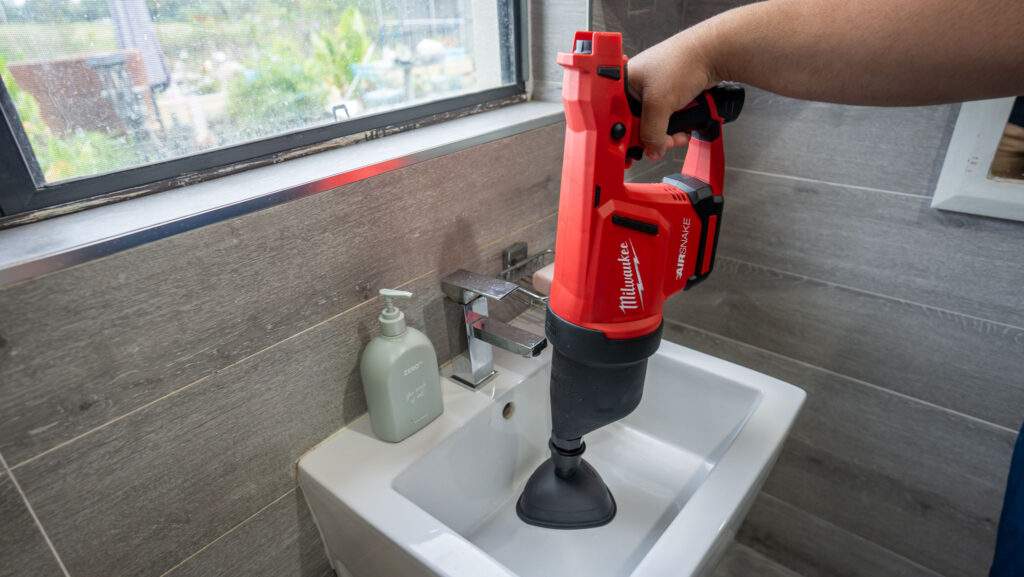
| Drain snake | Useful for breaking up or pulling out clogs close to the drain line | Feed it in gently and avoid forcing it, especially in older pipes that may scratch or puncture easily |
| Chemical drain cleaners | Not recommended | These products can crack pipes, damage seals and fittings, and create hazards if professional repair is later needed |
DIY methods can be helpful when the blockage is minor and located close to the fixture, but they have clear limits. If the drain still runs slowly, backs up again within a week, or does not respond after a reasonable attempt, the issue is likely deeper in the line. In those cases, Anton’s Plumbing & Gas can provide same-day service with camera inspections and professional equipment to identify the cause and clear the blockage properly.
When to Call a Licensed Sydney Plumber (NSW Lic. 210933C) for a Clogged Bathroom Sink

Some blockages need professional equipment and expertise. Knowing when to stop DIY attempts saves you time, money, and potential damage to your plumbing. Call a licensed plumber if you notice any of the following.
Water backs up into the shower drain or toilet when you run the bathroom sink. This cross-connection indicates a blockage in the shared waste line, which sits beyond the reach of a household plunger or snake. We use a motorised auger and camera inspection to locate and clear the obstruction.
The clog returns within a few days of clearing it yourself. Recurring blockages mean the problem sits deeper in the line or involves damaged pipe. Our CCTV camera pinpoints the cause, whether it’s a collapsed section, tree roots, or a foreign object lodged in the trap.
You smell sewer gas even after flushing the drain with hot water. A persistent odour suggests a cracked pipe, a dry trap, or a venting issue. We test the system with smoke or dye to trace the source and repair it to Australian Standards.
Water drains slowly in multiple fixtures throughout your home. This symptom points to a main sewer line blockage rather than a single sink. Note that Sydney Water is only responsible for the main pipe network beyond your property boundary — anything on your side of the water meter, including internal drains and the sewer connection under your home, is your responsibility and legally must be worked on by a licensed plumber. We inspect the line with a camera, clear the obstruction, and check for damage that could cause future problems.
You’ve dropped jewellery or a valuable item down the drain. Don’t run water or attempt to flush it. We retrieve lost items with specialised tools or by dismantling the trap, depending on how far the object has travelled.
Our licensed team operates 24/7 across the Sydney Metro, from the Inner West to the Sutherland Shire. Same-day service means we can inspect and clear your clogged sink drain within hours of your call. We charge a fixed rate, not an hourly fee, so you know the cost upfront in AUD before we start. No call-out fee applies, even for emergency work.
Real-World Example: A Recurring Clog in an Inner West Terrace
Last month we visited a heritage terrace in the Inner West. The homeowner had been plunging the bathroom sink every few weeks for six months. Hot water and vinegar provided temporary relief, but the clog always returned within days.
Our camera inspection revealed a section of cast-iron pipe that had corroded and developed a rough interior surface. Hair and soap scum were catching on the corrosion and forming a mat. The pipe was more than eighty years old and showed signs of rust throughout.
We presented two options: excavate and replace the damaged section with PVC, or install a resin liner to create a smooth, corrosion-resistant interior. The homeowner chose relining to avoid disturbing the original floorboards and heritage tiles. We completed the work in four hours, and the drain has flowed freely ever since.
This case shows why recurring clogs need professional diagnosis. No amount of plunging or chemical cleaner would have fixed the corroded pipe. The camera revealed the root cause, and relining delivered a permanent solution without the cost and disruption of excavation.
How Anton’s Plumbing & Gas Supports Sydney Homeowners and Businesses
We’ve spent more than twenty-five years diagnosing and fixing drainage issues across the Sydney Metro. From blocked bathroom sinks in apartment blocks to main sewer line failures in commercial properties, we’ve seen it all. Our approach is simple: arrive fast, diagnose accurately, explain clearly, and repair to the highest standard.
Every job starts with a camera inspection so you see exactly what’s happening inside your pipes. We then provide a fixed-rate quote in AUD and walk you through your options. Whether you need a quick drain clearing, pipe relining, or a full section replacement, we tailor the solution to your property, timeline, and budget.
Our work is carried out under NSW Lic. 210933C and complies with NSW Fair Trading licensing requirements and AS/NZS plumbing standards adopted across NSW, including Sydney Water’s requirements for work connecting to the sewer network. We use quality parts from trusted brands, document our findings, and back our workmanship with a lifetime labour warranty. You can feel confident long after we leave.
We serve the greater Sydney region: Inner West, Eastern Suburbs, North Shore, Northern Beaches, Hills District, Western and South-Western Sydney, and Sutherland Shire. Same-day service and 24/7 emergency response mean help is always a phone call away on +61 4 9382 4176. No call-out fee applies, even for urgent work.
If you need a dependable, licensed Sydney plumber who turns up when promised, respects your home, and communicates in plain English, we’re ready to help. Call us or book online for a fast quote and same-day service.
Conclusion
A clogged bathroom sink rarely fixes itself. Recognising the warning signs early and acting quickly prevents damage and keeps your plumbing safe. When DIY methods fail or the problem returns, our licensed team (NSW Lic. 210933C) delivers root-cause diagnosis and compliant repairs across Sydney — same day, every day.
Anton’s Plumbing & Gas offers expert blocked drain solutions backed by 25 years of experience. We provide same-day service across Sydney with upfront AUD pricing. Contact us today to get started.
Related Articles
- How to Unclog Bathroom Sink Clogged With Hair Using Simple Tools You Already Own
- Tips for Unclogging a Kitchen Sink
- How to Snake a Bathroom Sink Like a Pro (Easy DIY Guide)
FAQs
What Causes A Bathroom Sink To Clog?
Bathroom sinks can clog due to a buildup of hair, soap scum, toothpaste, and other debris over time. These materials can accumulate in the drain, leading to slow drainage or complete blockages. Regular maintenance and mindful usage can help prevent clogs from occurring.
How Do You Unclog A Bathroom Sink?
To unclog a bathroom sink, start by removing any visible debris from the drain. You can use a plunger or a wet/dry vacuum for minor clogs. If these methods don’t work, consider using a plumber’s snake, but be cautious with chemical drain cleaners as harsh chemicals can damage pipes. For persistent issues, it’s best to contact a professional plumber.
What Can I Use To Unclog My Bathroom Sink?
You can use a mixture of baking soda and vinegar to help break down minor clogs naturally. Additionally, a plunger or a plumber’s snake can effectively clear blockages. If these methods fail, it’s wise to seek assistance from a licensed plumber like Anton’s Plumbing & Gas, who can provide a tailored solution.
How Do You Prevent A Bathroom Sink From Clogging?
To prevent clogs, regularly clean the sink and drain, avoid rinsing hair and large particles down the drain, and consider using a drain strainer. Periodic professional inspections can also help identify any potential issues before they become serious blockages.
When Should I Call A Plumber For A Clogged Bathroom Sink?
If your bathroom sink is draining slowly, making gurgling sounds, or if you’ve tried DIY methods without success, it’s time to call a plumber. At Anton’s Plumbing & Gas, we offer 24/7 emergency services across Sydney to ensure your plumbing issues are addressed promptly and effectively.
Are You Licensed To Fix Blocked Bathroom Sinks In NSW?
Yes. Anton’s Plumbing & Gas holds NSW Lic. 210933C and our team is fully qualified to carry out drainage, plumbing, and gas work across Sydney in line with NSW Fair Trading requirements. You can book us with confidence knowing the work is compliant and insured.
Do You Charge A Call-Out Fee For A Blocked Sink In Sydney?
No. We don’t charge a call-out fee, even for emergency and after-hours work. We provide a fixed-rate quote in AUD before any work begins, so there are no surprises on your invoice.
How Quickly Can A Plumber Come To Fix My Clogged Bathroom Sink In Sydney?
We offer same-day service and 24/7 emergency response across the Sydney Metro. In most cases, we can have a licensed plumber at your door within hours of your call.
What Sydney Suburbs Do You Service For Blocked Bathroom Sinks?
We service the greater Sydney region, including the Inner West, Eastern Suburbs, North Shore, Northern Beaches, Hills District, Western and South-Western Sydney, and the Sutherland Shire. Call us to confirm coverage for your address.
Do You Provide Upfront Pricing Before Starting Work?
Yes. Every job starts with a diagnosis, often including a camera inspection, followed by a fixed-rate quote in AUD. You’ll know the exact cost before we start any repair.
Is My Blocked Bathroom Sink My Responsibility Or A Strata Issue?
Generally, fixtures and drains inside your unit or home are your responsibility, while shared stacks and common-property pipework are usually a strata matter. If you’re unsure, our team can inspect the line and advise whether the issue sits within your property or the building’s shared plumbing.
Do I Need To Contact Sydney Water For A Blocked Bathroom Sink?
No. Sydney Water is responsible for the water and sewer mains beyond your property boundary. Anything on your side of the meter, including your bathroom sink drain and internal pipework, needs to be fixed by a licensed plumber like Anton’s Plumbing & Gas.
Can A Blocked Bathroom Sink Cause Water Damage To My Home?
Yes. Overflowing or backed-up water from a clogged sink can damage cabinetry, flooring, and even ceilings below if left unaddressed. Acting on early warning signs and booking a licensed plumber promptly helps avoid costlier water damage repairs.
Do You Offer Emergency Plumbing On Weekends And Public Holidays In Sydney?
Yes. We operate 24/7, including weekends and public holidays, with no call-out fee, so you can get your blocked bathroom sink sorted whenever it happens.
Will You Provide A Warranty On Blocked Drain Work?
Yes. All our workmanship, including blocked drain clearing and pipe relining, is backed by a lifetime labour warranty, giving you confidence the fix will last.
How Do I Book A Plumber For A Clogged Bathroom Sink Today?
You can call us directly on +61 4 9382 4176 or book online for same-day service across Sydney. We’ll confirm a time window and arrive with the equipment needed to diagnose and fix the clog on the first visit.
Can You Inspect My Drain With A Camera Before Quoting?
Yes. We use CCTV camera inspections to see exactly what’s happening inside your pipes before recommending a fix, so you get an accurate diagnosis and a fixed-rate quote rather than guesswork.
Do You Work On Both Bathroom And Kitchen Sink Blockages?
Yes. Our team handles blocked bathroom sinks as well as kitchen drains. If your kitchen sink is also giving you trouble, see our tips for unclogging a kitchen sink or book us to fix both in one visit.
What Happens If The Clog Is Actually In The Main Sewer Line?
If slow drainage affects several fixtures at once, the blockage is likely in the main line rather than a single sink. We’ll run a camera through the line to confirm the cause and location, then clear it and check for any damage that could lead to repeat problems.
Is It Safe To Use Chemical Drain Cleaners Before You Arrive?
We recommend avoiding chemical drain cleaners. They can damage pipes, seals, and fittings, and can create a hazard for whoever handles the pipe next, including our plumbers if further work is needed. Stick to hot water, a plunger, or a drain snake, and call us if the clog doesn’t clear.