
A blocked toilet can disrupt your entire day, leaving you scrambling for the right tool and a fast fix. Most Sydney homeowners reach for a plunger first, but when that fails, a toilet auger might be the next step—or a call to a licensed plumber. Knowing which tool to use, when to use it, and what each one can realistically achieve helps you save time, avoid mess, and prevent damage to your plumbing.
This guide compares the toilet auger vs plunger in practical terms: how they work, what blockages they handle, and when DIY stops being cost-effective. You’ll also learn when to bring in a professional, what to expect from same-day plumbing support across Sydney, and how to keep your toilet bidet, bidet toilet seat, or standard toilet running smoothly without recurring clogs.
Key Takeaways
- A plunger works best for soft blockages near the trap, while a toilet auger tackles deeper, harder obstructions.
- Using the wrong tool can scratch porcelain, push debris further, or damage internal seals.
- Recurring clogs often signal underlying issues like tree roots, collapsed pipes, or incorrect waste disposal.
- Professional CCTV drain inspection reveals the root cause, saving you from repeat blockages and costly repairs.
- We offer same-day service, upfront pricing, and a lifetime labour warranty across the Sydney Metro.
- Anton’s Plumbing & Gas is fully licensed (NSW Lic. 210933C), so any work carried out on your drains or sewer connection meets NSW plumbing regulations and Sydney Water requirements.
Understanding the Toilet Auger vs Plunger: What Each Tool Does
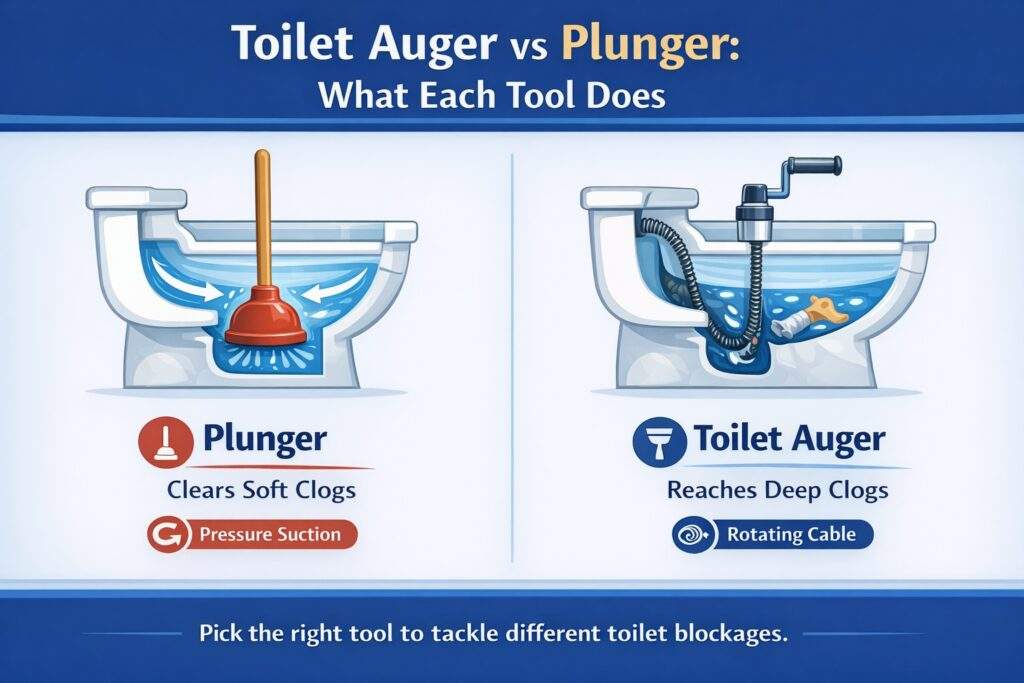
A plunger and a toilet auger serve the same goal—clearing a blocked toilet—but they work in completely different ways. A plunger uses suction and pressure to dislodge soft blockages close to the bowl’s outlet. A toilet auger, also called a closet auger, is a flexible cable tool designed to reach deeper into the trap and drainpipe, breaking up or hooking stubborn obstructions that a plunger can’t shift.
How a Plunger Works
A plunger creates a seal around the toilet drain and uses repeated up-and-down motion to generate pressure waves. These waves push water and air against the blockage, often loosening soft materials like toilet paper, waste, or lightweight debris. The suction on the upstroke can also pull the obstruction back toward the bowl, making it easier to flush away.
Plungers are inexpensive, easy to store, and effective for minor clogs that sit within the first few bends of the trap. You’ll find two main types: a cup plunger (flat, designed for sinks) and a flange plunger (with an extended rubber sleeve, shaped for toilets). Always use a flange plunger for toilets to get a proper seal.
How a Toilet Auger Works
A toilet auger features a long, flexible metal cable housed inside a tube, with a crank handle at one end and a corkscrew or hook tip at the other. You insert the tip into the toilet drain, extend the cable by turning the handle, and push it through the trap until it reaches the blockage. The rotating motion breaks up hard materials or snags items like toys, wipes, or foreign objects so you can pull them out.
Augers can reach 1 to 2 metres into the drainpipe, making them ideal for clogs that sit beyond the toilet’s internal trap. They’re more expensive than plungers but still affordable for homeowners who want a step-up tool before calling a plumber.
Both tools have their place in a home toolkit. Choosing the right one depends on the type of blockage, how far down the pipe it sits, and whether you’re dealing with a one-off issue or a recurring problem.
When to Use a Plunger for Blocked Toilets

A plunger is your first line of defence when water rises in the bowl but drains slowly or not at all. It works best when the blockage is fresh, soft, and located in the trap—the curved section directly below the toilet bowl. If you’ve just flushed and noticed the water backing up, a plunger can often solve the problem in a few minutes.
Best Scenarios for Plunger Use
Use a plunger when the toilet is blocked by standard waste and toilet paper. These materials are designed to break down in water, so repeated plunging often dislodges them without damage to your plumbing. Plungers also work well for minor clogs in homes with older, low-flow toilets that lack strong flushing pressure.
Avoid using a plunger if you’ve flushed non-flushable items like wet wipes, sanitary products, cotton buds, or dental floss. These materials don’t disintegrate and can compact further down the pipe, making the blockage worse. Similarly, if you have a bidet toilet seat or bidet toilet attachment, be cautious with plunging—excessive force near electronic components or water supply lines can cause leaks.
Limitations of a Plunger
Plungers can’t reach blockages that sit beyond the trap. If the clog is in the branch drain, stack, or sewer line, plunging will have little to no effect. Repeated plunging can also splash contaminated water onto floors, walls, and fixtures, creating a hygiene risk and potential water damage.
Overuse of a plunger can damage the seal (often a wax ring or rubber pan connector, depending on your toilet’s age) between the toilet and the floor flange, leading to leaks and odours. If you’ve plunged more than 10 to 15 times without progress, it’s time to try a different tool or call a licensed plumber.
You’ll know a plunger is the right choice if the water level drops slightly with each plunge, indicating the blockage is loosening. If the water doesn’t move at all, or if it drains but returns within hours, the clog is likely deeper or more stubborn than a plunger can handle.
When to Use a Toilet Auger for Stubborn Clogs

A toilet auger becomes necessary when a plunger fails to clear the blockage or when you suspect a hard object is lodged in the drainpipe. Augers are designed to navigate the toilet’s internal curves without scratching the porcelain, provided you use them carefully and avoid forcing the cable.
How to Use a Toilet Auger Safely
Insert the auger’s rubber-coated tip into the toilet drain, keeping the protective sleeve against the porcelain to prevent scratches. Extend the cable slowly by turning the handle clockwise, feeding it through the trap until you feel resistance. Once you hit the blockage, continue cranking to break it up or hook it, then pull the cable back carefully.
If the auger brings up a solid object, dispose of it in the bin—never re-flush it. If the blockage breaks apart, flush the toilet to confirm the drain is clear. Always wear gloves and clean the auger thoroughly after use to prevent cross-contamination.
When an Auger Isn’t Enough
Augers have a limited reach, typically 1 to 2 metres. If the blockage sits further down the line—say, in the branch drain or sewer lateral—an auger won’t reach it. You’ll know this is the case if multiple fixtures in your home are draining slowly, if you notice sewage odours, or if water backs up into your shower or sink when you flush.
Tree roots, collapsed pipes, and heavy scale buildup also lie beyond the scope of a handheld auger. These issues require professional equipment like a CCTV drain camera, high-pressure water jetter, or electric drain snake. Attempting to force an auger past its effective range can damage your pipes or push the blockage deeper. It’s also worth knowing that once a blockage sits beyond your property’s boundary trap, it becomes part of the shared sewer network that Sydney Water manages—any work here must be carried out by a licensed plumber under NSW plumbing regulations.
You’ll need an auger if the toilet flushes slowly even after plunging, if you hear gurgling sounds from other drains, or if you know a foreign object has been flushed. Augers are also useful for homes with recurring clogs in the same toilet, as they can reach further and dislodge buildup that a plunger can’t touch.
Comparing Costs: Toilet Auger vs Plunger and Professional Help

A basic flange plunger costs between $10 and $30 AUD at most Sydney hardware stores. A quality toilet auger ranges from $40 to $150 AUD, depending on cable length and build quality. Both tools are one-time purchases that can last for years with proper care, making them cost-effective for occasional use.
| Tool / Service | Typical Cost | Effective Range | Best For |
|---|---|---|---|
| Plunger | $10–$30 | Toilet trap only | Soft, fresh blockages |
| Toilet Auger | $40–$150 | Up to 2 metres | Stubborn clogs, foreign objects |
| Professional Service | Varies (fixed rate) | Entire drain system | Recurring clogs, root intrusion, pipe damage |
DIY becomes more expensive when the blockage is deeper than the trap or when there’s an underlying issue that tools can’t reach. Forcing an auger or over-plunging can crack porcelain, damage seals, or trigger leaks that turn into emergency repairs and water damage costs. If you’re dealing with repeat clogs every few weeks, that’s a strong sign it’s time for professional diagnosis and a proper fix rather than another temporary clear.
When to Call a Licensed Sydney Plumber Instead of Using a Toilet Auger or Plunger
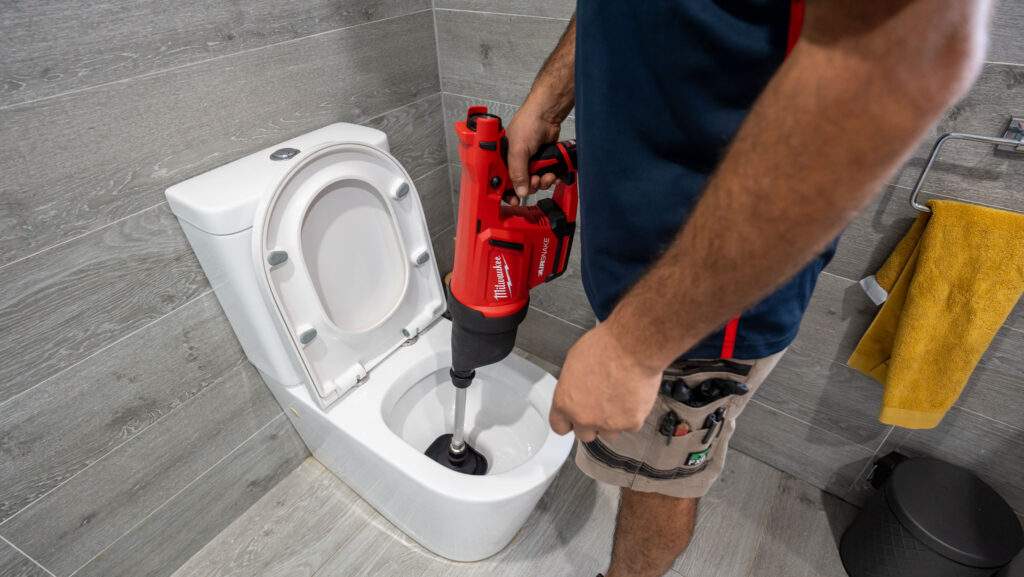
DIY tools have their limits, and knowing when to stop can save you time, damage, and repeat frustration. If you’ve tried both a plunger and a toilet auger without success—or you notice warning signs of a deeper issue—it’s time to call a licensed Sydney plumber. Backups into other fixtures, sewage smells inside the home, or repeated overflows usually point to a blockage in the main drain or sewer line that needs professional equipment to resolve safely, and often falls under Sydney Water’s jurisdiction rather than a simple household fix.
When you book us, we start with a focused assessment: we ask about the symptoms, inspect the affected fixtures, and use a CCTV drain camera when needed to pinpoint the blockage and confirm the cause. You’ll see what we see, and we’ll explain the findings in plain English before quoting any work. From there, we clear most obstructions with high-pressure jetting or an electric drain snake, and if we find tree roots or pipe damage, we’ll walk you through options like pipe relining or section replacement with clear pros, cons, and realistic timelines.
Anton’s Plumbing & Gas holds NSW Licence 210933C, so every repair we carry out meets Australian Standards (AS/NZS 3500) as well as Sydney Water and NSW Fair Trading requirements. We also offer 24/7 emergency response with no call-out fee and same-day service across the Sydney Metro, including the Inner West, Eastern Suburbs, North Shore, Northern Beaches, Hills District, Western and South-Western Sydney, and Sutherland Shire. Call 0493 824 176 or book online, and we’ll confirm a time window, arrive on schedule, and provide upfront fixed-rate pricing in AUD before we begin. Every job is completed to Australian Standards, backed by a lifetime labour warranty, and finished with a clean workspace when we leave.
Real-World Example: Recurring Blockages in an Inner West Terrace
Sarah, a homeowner in the Inner West, called us after her toilet blocked for the third time in two months. She’d used a plunger and a toilet auger each time, clearing the blockage temporarily, but it kept coming back. Frustrated and worried about damage, she booked a same-day inspection.
Our CCTV camera revealed tree roots penetrating a cracked section of her clay drainpipe, about 4 metres from the house. The roots were catching toilet paper and waste, creating a recurring clog. We explained two options: dig up and replace the damaged section, or use trenchless pipe relining to seal the crack and exclude roots without excavation.
Sarah chose pipe relining. We completed the work in one day, with minimal disruption to her garden and no need to break concrete. The repair is backed by our lifetime labour warranty, and she hasn’t had a blockage since. This case shows why recurring clogs need professional diagnosis—DIY tools treat the symptom, not the cause.
Conclusion
Understanding when to use a toilet auger vs plunger saves you time, mess, and money. Both tools have their place, but neither replaces professional diagnosis when clogs recur or sit beyond reach. We’re ready to help—call 0493 824 176 or book online for same-day service across Sydney.
Antons Plumbing & Gas offers expert blocked drain solutions backed by 25 years of experience. We provide same-day service across Sydney with upfront pricing and no call-out fee, and we’re fully licensed under NSW Lic. 210933C. Contact us today to get started.
Related Articles
- Toilet Drain Cleaning Services: What’s Included & Why It Matters
- How to Clear Toilet Drain Safely and Prevent Future Clogs
- How to Snake a Toilet with a Hanger Effectively
FAQs
What do plumbers recommend to unclog a toilet?
PWhat do plumbers recommend to unclog a toilet?
Plumbers usually recommend starting with a toilet flange plunger. If that does not work, a toilet auger may help clear a deeper blockage. Avoid repeated flushing because it can cause the toilet to overflow.
Can a toilet auger damage a toilet?
Yes, a toilet auger can scratch the porcelain if it is used incorrectly. The risk is higher when the protective sleeve is damaged or the cable is forced. Use slow, controlled movements and a toilet-specific auger.
Which is better, a plunger or a snake?
A plunger is better for soft, shallow clogs caused by toilet paper or waste. A toilet snake or auger is more suitable for deeper and more stubborn blockages. Start with a flange plunger before moving to an auger.
Can you damage pipes with an auger?
Yes, an auger can damage pipes when excessive force or the wrong tool is used. Older, corroded or poorly joined pipes may be particularly vulnerable. Stop if the cable becomes stuck and contact Anton’s Plumbing & Gas for professional assistance.
What is the best tool to unblock a toilet?
A toilet flange plunger is usually the best first tool. It creates a stronger seal than a flat sink plunger and works well on common clogs. Use a toilet auger when plunging does not clear the blockage.
How do you unblock a very badly blocked toilet?
Stop flushing and remove excess water if the bowl is close to overflowing. Try a flange plunger, followed carefully by a toilet auger. If the blockage remains, Anton’s Plumbing & Gas can inspect and clear the toilet safely.
How do you clean a toilet auger after use?
Rinse the cable and protective tube thoroughly with clean water. Wash them with a suitable disinfectant, then dry the tool completely. Store the auger in a dry place to help prevent rust and contamination.
Can vinegar unclog a toilet?
Vinegar may help loosen minor organic buildup, but it is unlikely to clear a serious blockage. It should not replace a plunger or toilet auger. Never mix vinegar with bleach or other chemical cleaners.
What is the best toilet auger to buy?
Choose a toilet-specific auger with a protective sleeve and a strong, flexible cable. A comfortable crank handle can make the tool easier to control. Select a reputable model designed for residential toilets rather than a general drain snake.
Why is my toilet still clogged after snaking?
The blockage may be farther down the drainage line than the auger can reach. A solid object, damaged pipe or wider sewer problem may also be responsible. Anton’s Plumbing & Gas can diagnose the cause and recommend the appropriate solution.
Can a drain snake break a PVC pipe?
A drain snake can damage PVC pipe if it is forced through a weak joint or sharp bend. Powered equipment and unsuitable cables can increase the risk. Contact Anton’s Plumbing & Gas if the snake meets strong resistance or becomes stuck.
What is the strongest thing to unclog a toilet?
There is no single product that is safest and strongest for every blockage. A flange plunger followed by a toilet auger is usually the safest practical approach. Avoid harsh chemical drain cleaners because they may damage plumbing and create safety risks.
What is a good alternative to a toilet auger?
A flange plunger is the best alternative for common soft clogs. Persistent blockages may require professional drain-clearing equipment rather than another household tool. Anton’s Plumbing & Gas can assess deeper or recurring toilet blockages.
Will letting a clogged toilet sit unclog it?
A minor paper blockage may soften and drain after some time. However, waiting will not usually remove a solid object or serious obstruction. Do not flush again until the water level has dropped.
What is the difference between a toilet auger and a plunger?
A plunger uses pressure and suction to loosen a blockage. A toilet auger uses a flexible cable to reach deeper into the toilet trap. The auger is generally more effective when plunging has failed.
What does a toilet auger look like?
A toilet auger has a long handle, a curved protective tube and a flexible cable. The cable extends into the toilet when the handle is pushed or turned. Its protective tube helps reduce the risk of scratching the bowl.
Is a toilet auger the same as a closet auger?
Yes, a toilet auger and a closet auger are the same type of tool. Both are designed specifically for clearing blockages inside a toilet trap. They are generally safer for toilets than exposed general-purpose drain snakes.
Should I use a plunger before a toilet auger?
Yes, a flange plunger should usually be tried first. It can clear many common blockages without inserting a cable into the toilet. Use an auger when careful plunging does not work.
What is a toilet flange plunger?
A toilet flange plunger has an extended rubber flap beneath the main cup. The flange fits into the toilet outlet and creates a tighter seal. This makes it more effective for toilets than a flat cup plunger.
When should I call a plumber for a blocked toilet?
Call a plumber when a plunger and toilet auger do not clear the blockage. You should also seek help when several drains are blocked, sewage backs up or the toilet repeatedly clogs. Anton’s Plumbing & Gas, NSW Lic. 210933C, can inspect your drainage system, confirm whether Sydney Water infrastructure is involved, and clear the underlying problem with same-day service across Sydney. Call 0493 824 176 to book.