Standing under a cold shower while you wait for warm water is frustrating, especially on a chilly Sydney morning before work. You turn the tap, step back, and count the seconds—sometimes minutes—before the temperature becomes comfortable. This delay is more than an inconvenience. It signals underlying issues in your hot water system, pipework, or fixtures that waste water, drive up your energy bills, and disrupt your morning routine.
In this guide, we walk you through the five most common reasons your shower takes long to heat up in Sydney and NSW homes. You’ll learn what causes the delay, how to spot the warning signs, and when to call a licensed plumber. By the end, you’ll know exactly what to check and how Antons Plumbing & Gas (NSW Lic. 210933C) can diagnose and fix the root cause—quickly, safely, and in line with Australian Standards and Sydney Water requirements.
Key Takeaways
- Sediment build-up in your hot water tank reduces heating efficiency and slows delivery.
- Long pipe runs between your heater and shower mean water sits cold in the line.
- Faulty or undersized hot water systems struggle to keep up with household demand.
- Mixing valve problems can restrict hot water flow or cause temperature fluctuations.
- Poor insulation on hot water pipes allows heat to escape before it reaches your tap.
Understanding What Is Specific Heat and Why Your Shower Takes Long to Heat Up
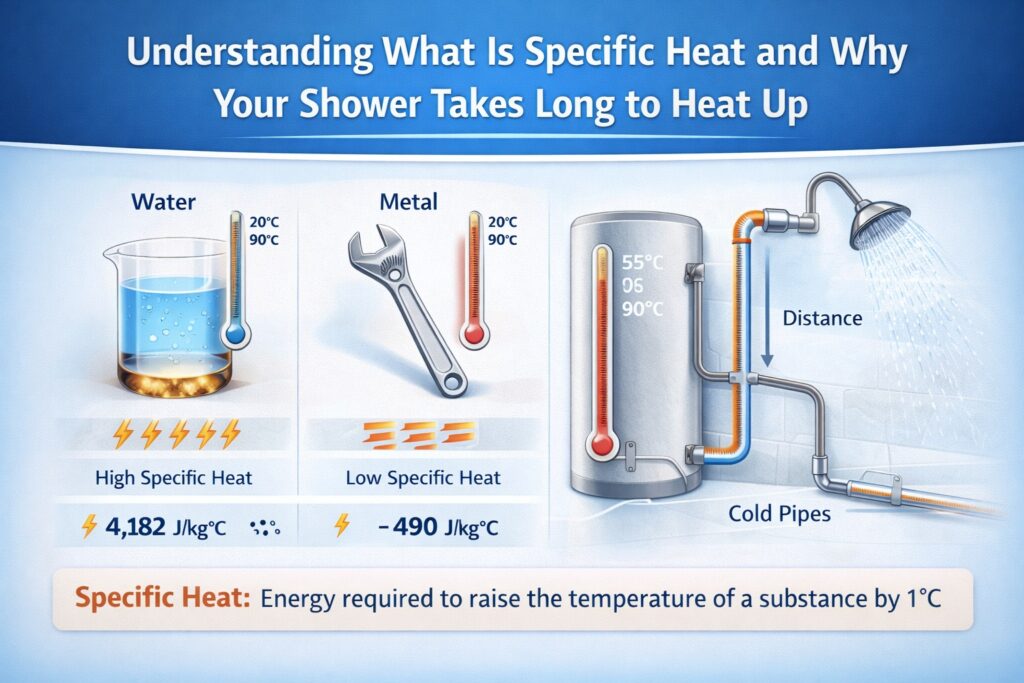
Water has a high specific heat capacity—around 4,182 joules per kilogram per degree Celsius. That means it absorbs a lot of energy before its temperature rises. In practical terms, your hot water system must work harder and longer to heat a large volume of water compared to other liquids or materials. This property explains why a full tank takes time to warm up after heavy use, and why distance matters when hot water travels through cold pipes.
Specific heat is the amount of energy required to raise one kilogram of a substance by one degree. Heat capacity, on the other hand, refers to the total energy needed to change the temperature of an entire object or system. When your shower takes long to heat up, both concepts are at play: the water itself resists rapid temperature change, and the metal pipes, fittings, and air around them absorb some of that thermal energy along the way.
If you’ve noticed your shower running cold for longer than usual, the issue may not be the heater alone. Pipe layout, insulation, and even the type of mixing valve all influence how quickly hot water arrives at your showerhead. Let’s look at the five most common causes.
1. Sediment and Scale Build-Up in Your Hot Water Tank
Over time, minerals in Sydney’s water supply settle at the bottom of storage tanks, forming a sediment layer that sits between the heating source and the water above. This layer reduces heat transfer efficiency, forcing the system to work harder and longer to deliver the same amount of hot water. Homeowners often notice longer wait times, unusual rumbling sounds during heating cycles, and gradually rising electricity or gas bills as the system struggles to maintain performance.
Electric tanks are especially vulnerable because their heating elements are positioned near the base where sediment accumulates, while gas units can also lose efficiency as heat struggles to transfer through the tank floor. As buildup worsens, temperature consistency drops and corrosion may begin, leading to discoloured water or metallic odours. Routine flushing and inspection remove sediment, restore heating efficiency, and help extend the service life of the unit.
2. Long Pipe Runs Between Heater and Shower
When the hot water system is located far from the bathroom, long pipe runs mean a significant volume of cold water must be pushed out before hot water reaches the shower. In many Sydney homes—particularly those with extensions or multi-storey layouts—pipes may travel through roof spaces, walls, or subfloors, increasing the time it takes for heated water to arrive. This delay results in both water waste and daily inconvenience for occupants.
Distance also increases heat loss, especially when pipework is uninsulated or routed through colder structural areas. Even when the heater is working efficiently, water can cool noticeably before reaching the tap, extending heating wait times. Solutions such as pipe insulation, recirculation systems, or localised point-of-use heaters can significantly reduce delivery delays depending on the home’s layout and budget.
3. Undersized or Failing Hot Water System
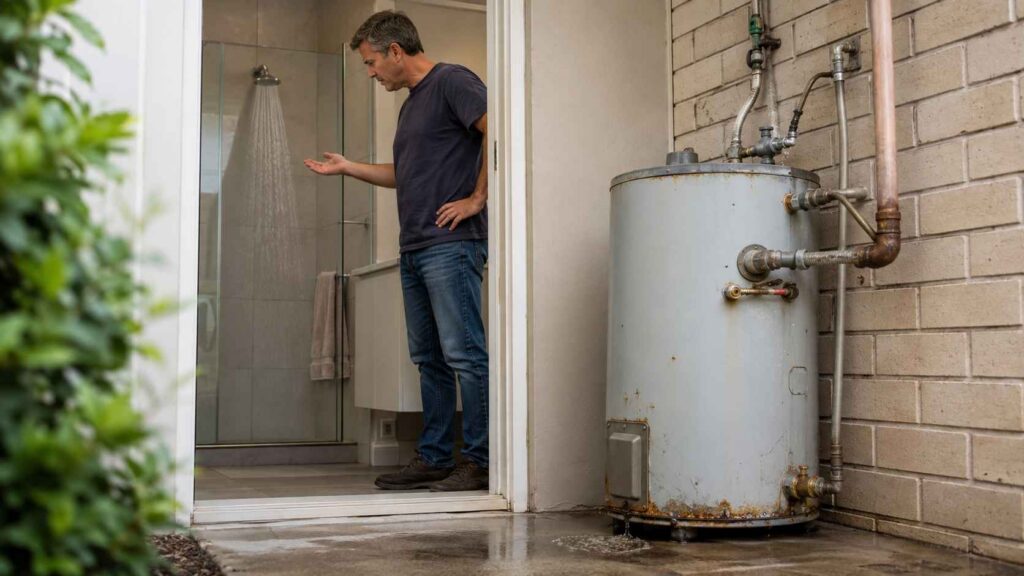
A hot water system that is too small for household demand will struggle to deliver consistent performance, particularly during peak usage periods such as mornings when multiple fixtures operate simultaneously. Changes such as family growth, renovations, or additional bathrooms can increase demand beyond the original system capacity, causing longer heating times, fluctuating temperatures, and reduced availability of hot water.
Age also contributes to declining performance, as components such as thermostats, heating elements, and burners gradually wear down and lose efficiency. Even properly sized systems may begin to underperform after years of use, leading to slower recovery times and inconsistent water temperature. Assessing household demand and upgrading to a correctly sized, energy-efficient system restores reliable delivery and improves long-term operating efficiency.
4. Faulty or Incorrectly Adjusted Mixing Valve
Thermostatic mixing valves regulate the blend of hot and cold water to deliver a safe outlet temperature at taps and showers. When these valves become worn, clogged with mineral deposits, or incorrectly adjusted, they can restrict hot water flow or dilute the temperature excessively, resulting in lukewarm water even when the heater is functioning correctly.
Over time, internal seals and calibration settings can drift, causing inconsistent output or delayed heating at the showerhead. Professional testing and recalibration can usually restore proper performance, while replacement may be required if the valve is heavily worn or blocked. Maintaining properly functioning mixing valves ensures both safety and consistent hot water delivery throughout the home, and is required under NSW plumbing regulations for scald protection.
5. Poor Insulation on Hot Water Pipes
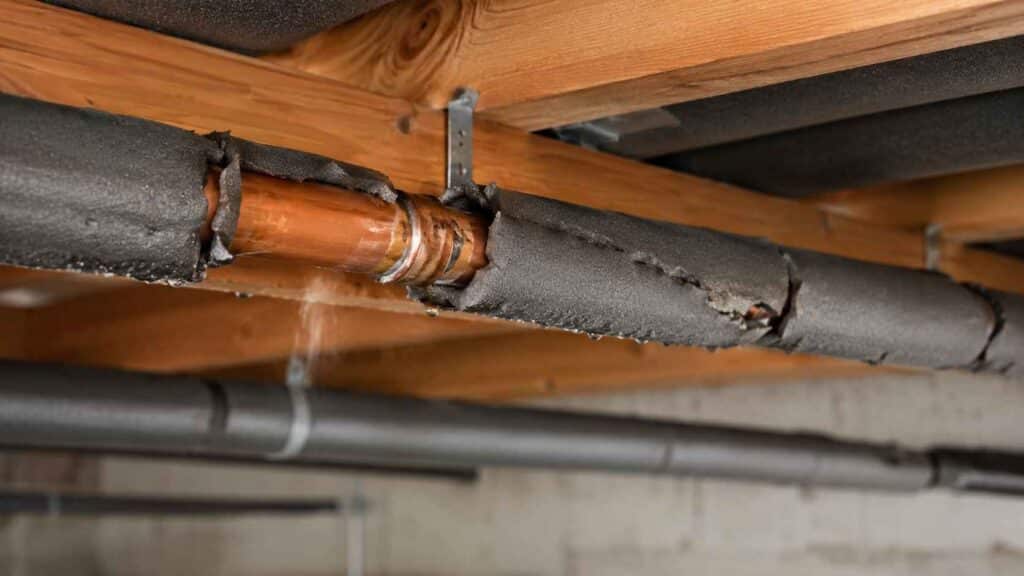
Hot water travelling through uninsulated pipes loses heat quickly, especially when pipes pass through roof cavities, subfloors, or exterior walls exposed to lower temperatures—common in older Sydney weatherboard and brick homes. As a result, the first litres of water reaching the shower may be significantly cooler, extending the time required to reach a comfortable temperature and increasing both water and energy waste.
Installing pipe insulation helps retain heat within the system, allowing hotter water to reach fixtures faster while reducing energy consumption. Modern insulation materials are inexpensive, easy to install, and can significantly improve delivery performance, making them one of the most cost-effective upgrades for improving hot water efficiency in residential properties.
How Specific Heat and Latent Heat Affect Your Hot Water System
Specific heat tells you how much energy is needed to warm water, but latent heat matters too—especially in heat-pump and solar systems. Latent heat is the energy absorbed or released during a phase change, like water turning to steam or refrigerant evaporating in a compressor. These systems move heat rather than generate it, so their performance depends on ambient temperature, humidity, and the specific heat capacity of the working fluid.
| System Type | Typical Recovery Time | Energy Source | Best For |
|---|---|---|---|
| Electric storage | 1–2 hours | Grid electricity | Small to medium households, off-peak tariff |
| Gas storage | 30–60 minutes | Natural gas or LPG | Families, faster recovery needed |
| Continuous flow (gas) | Instant | Natural gas or LPG | High-demand homes, limited space |
| Heat pump | 2–4 hours | Ambient air + electricity | Energy-conscious, mild climates |
| Solar + booster | Variable | Solar + gas or electric | Sunny sites, long-term savings |
In practical terms, a heat-pump hot water system may take longer to recover on cold mornings because the refrigerant absorbs less energy from chilly outdoor air. Solar systems rely on the sun’s radiant energy, which varies by season and cloud cover—something worth factoring in given Sydney’s variable winter conditions. If your shower takes long to heat up and you have one of these systems, the issue may be environmental rather than mechanical. We check sensor calibration, refrigerant charge, and collector orientation to ensure your unit is working as efficiently as possible given the conditions.
Why Water’s Heat Capacity Ratio Matters in System Design
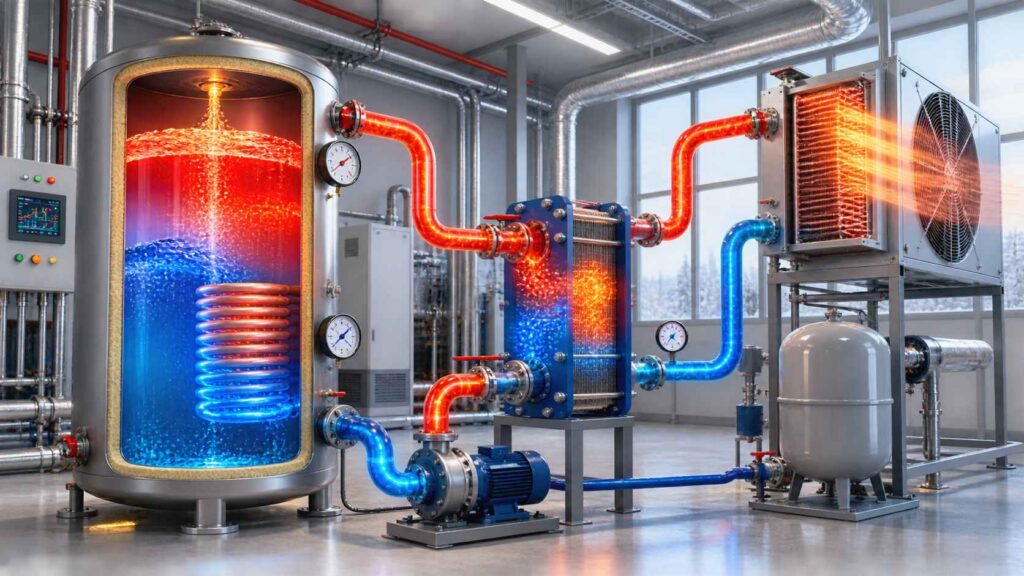
The heat capacity ratio compares how much energy a substance can store relative to its mass or volume. Water’s high specific heat capacity makes it an excellent thermal store—once heated, it stays warm for hours if insulated properly. That’s why storage tanks work well for most households: you heat a large volume overnight on an off-peak electricity tariff, then draw from that reserve throughout the day.
Continuous-flow systems take the opposite approach. They heat only what you use, when you use it, so there’s no standing loss. But they require high gas or electrical input to raise temperature instantly, and flow rate is limited by burner or element capacity. Understanding these trade-offs helps you choose the right system for your usage pattern, fuel availability, and budget.
We talk through your daily routine—how many people shower back-to-back, whether you run appliances simultaneously, and whether you’re home during off-peak hours. That real-world context shapes our recommendation, ensuring the system we install matches how you actually live.
Preventive Maintenance to Keep Hot Water Flowing Fast
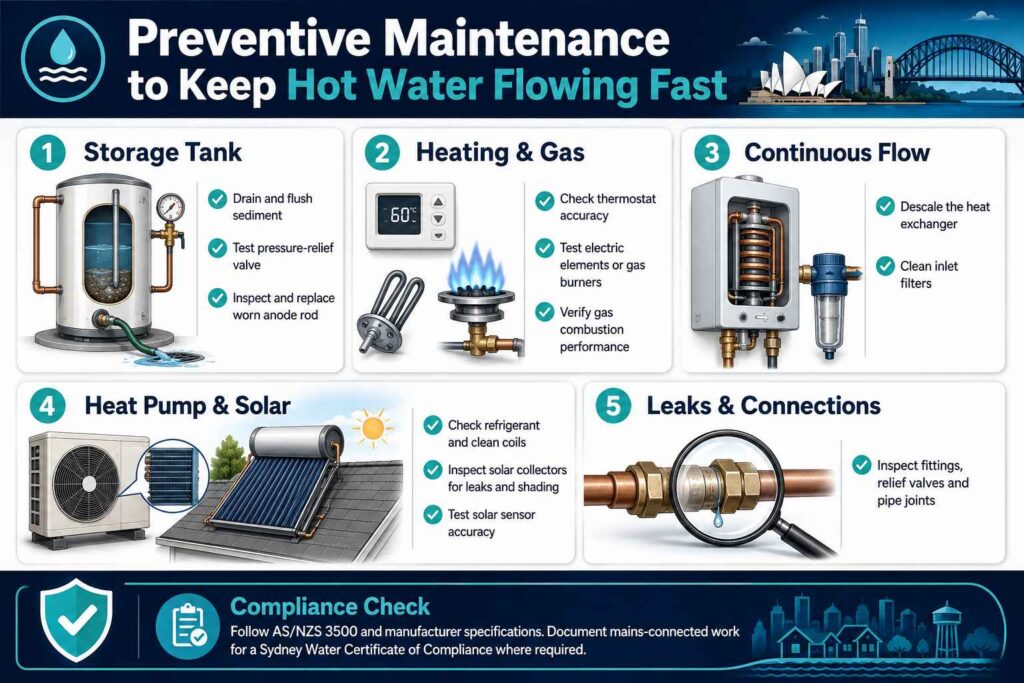
Preventive maintenance helps keep hot water delivery fast by reducing scale build-up, catching failing parts early, and keeping safety controls working properly. A routine service is often the difference between a stable, efficient system and one that slowly becomes unreliable. It also supports warranty conditions and reduces the risk of sudden leaks or breakdowns.
- Drain and flush storage tanks to remove sediment.
- Test pressure-relief valves for safe operation.
- Inspect the anode rod and replace it if worn to extend tank life.
- Check thermostat accuracy and test heating elements (electric) or burners (gas).
- Verify gas burner operation and basic combustion performance (gas systems).
- Descale the heat exchanger and clean inlet filters (continuous-flow systems).
- Check refrigerant performance and clean coils (heat pumps).
- Inspect solar collectors for leaks, shading, and sensor accuracy (solar systems).
- Check for leaks around fittings, relief valves, and pipe joints.
- Confirm compliance with AS/NZS 3500 and manufacturer specifications, and ensure any mains-connected work is documented for a Sydney Water Certificate of Compliance where required.
Most systems run more efficiently after servicing because heat transfer improves and controls operate more accurately. Keeping a service record also helps with warranty claims and can be useful if insurance ever requests proof of maintenance after water damage. A written report makes it easy to track what was checked, what needs attention next, and when the next service should be scheduled, so you can keep proper records and feel confident your hot water system is safe and reliable.
When to Call a Licensed Sydney Plumber

If flushing the tap for more than 60 seconds still leaves you with cold or lukewarm water, it’s time for a professional diagnosis. DIY troubleshooting can identify simple issues like a tripped breaker or closed valve, but sediment, failing elements, valve faults, and pipe layout problems require tools, training, and compliance with Australian Standards. Attempting repairs on gas or electric systems without the right licence is illegal in New South Wales and dangerous.
In NSW, plumbing and gas fitting work—including hot water system repairs, replacements, and anything connected to the Sydney Water network—must legally be carried out by a licensed practitioner under NSW Fair Trading regulations. Non-compliant work may need to be redone before Sydney Water will issue a Certificate of Compliance for the property, so it pays to get it right the first time.
Antons Plumbing & Gas holds full plumbing and gas-fitting licences (NSW Lic. 210933C) and more than 25 years of hands-on experience across Sydney. We arrive with diagnostic equipment—thermometers, pressure gauges, inspection cameras—and a van stocked with common parts. Our process is straightforward: we listen to your concerns, inspect the system, explain what we find in plain English, and present clear options with fixed-rate pricing. No hidden fees, no surprises.
Same-day service is our standard. Call us on +61 493 824 176 and we’ll schedule a visit that fits your day. Emergency callouts are available 24/7 with no call-out fee, so if your hot water fails overnight or on a weekend, help is just a phone call away. We serve the entire Sydney Metro—Inner West, Eastern Suburbs, North Shore, Northern Beaches, Hills District, Western and South-Western Sydney, and Sutherland Shire.
Conclusion
A shower that takes long to heat up is more than a minor annoyance—it signals inefficiency, wasted water, and potential system faults. Sediment build-up, long pipe runs, undersized heaters, faulty valves, and poor insulation are the five most common causes, and each has a clear, cost-effective solution. Whether you need a simple flush, a mixing valve adjustment, or a full system upgrade, Antons Plumbing & Gas delivers fast diagnosis, transparent pricing, and workmanship you can trust.
Antons Plumbing & Gas diagnoses and repairs hot water system issues across Sydney with same-day service. Our licensed team fixes slow-heating showers fast, with upfront pricing in AUD and no hidden extras. Get started with a call today.
Related Articles
- Top 5 Reasons Your Shower Water Pressure Is Suddenly Low
- 5 Essential Tips for Choosing Different Kinds of Shower Drains
- How to Change Hot Water Heating Times Safely If You’re Not ‘Techy’ or Handy
FAQs
Why Does My Shower Take So Long to Get Hot?
Your shower may take a long time to heat up due to several factors, such as distance from the hot water heater, a malfunctioning thermostat, or pipe insulation issues. At Antons Plumbing & Gas, we can quickly diagnose the problem and recommend the best solution to improve your hot water delivery.
How Can I Make My Shower Heat Up Faster?
Your shower may heat up slowly because hot water is losing heat in long or uninsulated pipe runs, sediment is reducing your heater’s efficiency, or a mixing valve/system component is restricting proper flow. To speed it up, insulate exposed hot water pipes, flush and service the hot water unit (including thermostat/element or burner checks), and have the mixing valve tested and recalibrated if temperatures are inconsistent. For homes with long distances between the heater and bathroom, the fastest improvement usually comes from a hot water recirculation pump or a point-of-use unit near the shower.
What Causes a Shower to Take a Long Time to Heat Up?
Several factors can cause your shower to take longer to heat up, including outdated plumbing, low water pressure, or a malfunctioning hot water system. With over 25 years of experience, Antons Plumbing & Gas can help identify the root cause and provide a reliable solution.
Is It Normal for a Shower to Take a Long Time to Warm Up?
While some delay is normal, excessive wait times for hot water can indicate an underlying issue. If you find that your shower consistently takes too long to warm up, it’s best to consult with our licensed professionals at Antons Plumbing & Gas for a thorough assessment.
How Long Should It Take for a Shower to Get Hot?
Typically, a shower should take about 30 seconds to a few minutes to get hot, depending on your plumbing layout and water heater. If your shower exceeds this timeframe, it may be time for a check-up by our experienced team to ensure optimal performance.
Do You Offer Emergency Hot Water Repairs in Sydney?
Yes. Antons Plumbing & Gas provides 24/7 emergency callouts across Sydney with no call-out fee. If your hot water fails overnight or on a weekend, call +61 493 824 176 and we’ll get a licensed plumber to you as soon as possible.
Is Antons Plumbing & Gas Licensed to Work on Gas Hot Water Systems in NSW?
Yes. We hold full plumbing and gas-fitting licences (NSW Lic. 210933C), so our team is legally qualified to install, service, and repair gas and electric hot water systems in accordance with NSW regulations and Australian Standards.
How Quickly Can You Get a Plumber to My Sydney Home?
Same-day service is our standard across the Sydney Metro area. Call us on +61 493 824 176 and we’ll book a visit that suits your schedule, or arrange an emergency callout if your hot water has failed completely.
Do You Charge a Call-Out Fee for Hot Water Diagnostics?
We provide clear, fixed-rate pricing before any work begins, so you know the cost upfront with no hidden fees. Emergency callouts are available 24/7 with no call-out fee. Ask our team for full pricing details when you book.
What Areas of Sydney Do You Service for Hot Water Repairs?
We service the entire Sydney Metro area, including the Inner West, Eastern Suburbs, North Shore, Northern Beaches, Hills District, Western and South-Western Sydney, and Sutherland Shire. Call us to confirm coverage for your suburb.
Can You Repair or Replace Hot Water Systems on the Same Day?
In most cases, yes. Our vans are stocked with common parts and our licensed plumbers carry diagnostic equipment to identify and fix the issue on the first visit wherever possible, including full system replacements when needed.
Do I Need Council or Sydney Water Approval to Replace My Hot Water System?
Depending on the system and location, mains-connected replacements may need to be documented via a Sydney Water Certificate of Compliance. As a licensed plumbing and gas-fitting business, we handle this compliance paperwork for you as part of the job.
How Do I Book a Hot Water System Inspection With Antons Plumbing & Gas?
Simply call +61 493 824 176 or use our online booking link to arrange a visit. We’ll ask a few questions about your system and symptoms, then schedule a licensed plumber to inspect and diagnose the issue.
What Should I Do If My Hot Water System Is Leaking Right Now?
If safe to do so, turn off the water supply and power or gas to the unit, then call us immediately on +61 493 824 176. We offer 24/7 emergency callouts across Sydney with no call-out fee to prevent further water damage.
Do You Provide Upfront, Fixed-Rate Pricing for Hot Water Repairs?
Yes. We explain what we find in plain English and present clear options with fixed-rate pricing in AUD before starting any work, so there are no surprises on your invoice.
Can You Help Me Choose the Right Size Hot Water System for My Sydney Home?
Absolutely. We assess your household’s hot water demand, budget, and fuel availability, then recommend a correctly sized, energy-efficient system—electric, gas, continuous flow, heat pump, or solar—suited to how you actually live.
Do You Service Both Electric and Gas Hot Water Systems?
Yes. Our licensed plumbers and gas fitters service, repair, and install electric storage, gas storage, continuous-flow, heat pump, and solar hot water systems across Sydney.
What Happens During a Hot Water System Service Visit?
We inspect the tank, valves, elements or burners, and pipework, test for sediment and leaks, and check compliance with AS/NZS 3500 and manufacturer specifications. You’ll get a plain-English explanation and a written report you can keep for warranty or insurance purposes.
Are Your Plumbers Insured and Compliant With Australian Standards?
Yes. Antons Plumbing & Gas operates under NSW Lic. 210933C, and all work is carried out in line with AS/NZS 3500 and relevant Sydney Water requirements.
How Do I Get a Quote for Pipe Insulation or a Recirculation Pump Installation?
Call +61 493 824 176 to arrange an on-site assessment. We’ll look at your pipe layout and hot water usage, then provide a fixed-rate quote for insulation, a recirculation pump, or a point-of-use unit to speed up hot water delivery.