

Stepping into a shower only to be met with a weak trickle instead of a strong stream is frustrating. A shower head with no pressure can turn your morning routine into a drawn-out ordeal, leaving you wondering what went wrong. Most pressure problems in Sydney homes stem from a handful of common issues—some you can tackle yourself, others that need a licensed NSW plumber to diagnose and repair properly.
This article walks you through the main reasons why your shower head has no pressure, how to troubleshoot simple fixes, and when to call in the professionals. You’ll learn which problems are quick DIY jobs and which ones require the tools, training, and compliance knowledge that only a licensed Sydney plumbing team can provide.
Key Takeaways
- Mineral buildup in the shower head is the most frequent cause of low pressure and can often be cleaned at home with vinegar.
- Faulty mixing valves, partially closed stop valves, and worn pressure regulators require professional inspection and replacement.
- Leaking pipes or tree root intrusion can silently rob your shower of pressure and may need CCTV diagnosis and pipe relining.
- Low-flow restrictors are designed to save water under Sydney Water and WELS efficiency rules but can be mistaken for a pressure fault if you prefer a stronger spray.
- Same-day service from a licensed Sydney plumber ensures accurate diagnosis, compliant repairs, and lasting results.
What Causes No Water Pressure from Your Shower Head?
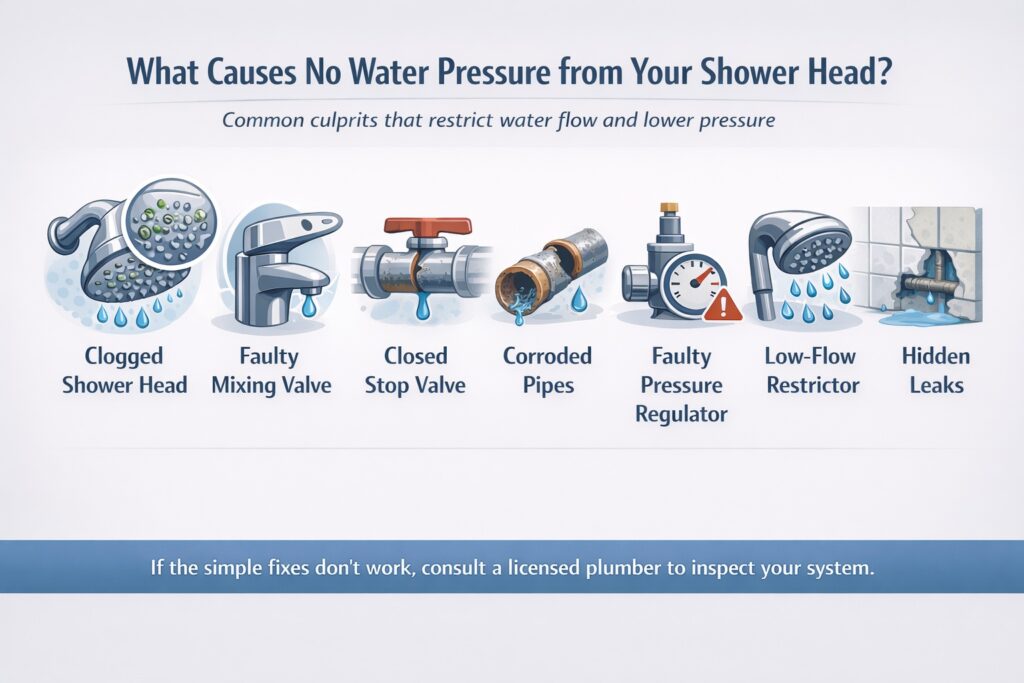
When you notice no water pressure in your shower, the culprit is usually hiding in plain sight. Mineral deposits, a clogged shower head, valve faults, or supply line restrictions are the top offenders. Each one affects water flow differently, but all share the same result—a disappointing dribble instead of a refreshing spray.
Understanding the root cause saves time and prevents repeat problems. Some issues resolve with a quick clean, while others point to wear in your plumbing that only gets worse if ignored.
1. Clogged Shower Head from Hard Water Minerals
Sydney’s water supply carries dissolved minerals—calcium and magnesium—that leave behind scale inside your shower head. Over time, these deposits block the tiny nozzles, reducing flow and creating uneven spray patterns. You might see white or greenish crust around the face plate, or notice some holes spraying sideways while others stay dry.
Soaking the head in white vinegar for a few hours usually dissolves light buildup. For heavier blockages, remove the head, disassemble it if possible, and scrub the nozzles with an old toothbrush dipped in a baking soda paste.
2. Faulty or Worn Mixing Valve
The mixing valve—also called a tempering valve or thermostatic cartridge—blends hot and cold water to deliver a safe, comfortable temperature. When the internal seals wear out or sediment jams the valve body, water flow drops sharply. You may also experience sudden temperature swings, cloudy hot water from tap outlets, or find that adjusting the handle has little effect.
Replacing a mixing valve involves shutting off the water supply, removing the trim and cartridge, and fitting a new unit that matches your tapware brand and model. Because the work sits behind the wall and affects both pressure and safety, a licensed plumber ensures the job meets AS/NZS 3500 plumbing standards and prevents scalding risks.
3. Partially Closed Stop Valve or Isolator
Every bathroom has isolation valves—small taps under the vanity or behind an access panel—that let you shut off water for repairs. If someone turned the valve partway during earlier work and forgot to reopen it fully, your shower will run at a fraction of its normal pressure. The same applies to the main stop tap outside your house.
Check each valve by turning it fully anticlockwise until it stops. If the handle feels stiff or gritty, the valve may be corroded inside and need replacement to restore full flow.
4. Blocked or Corroded Pipes
Older Sydney homes—especially those with galvanised steel or original clay sewer lines—can develop internal rust and scale that narrows the pipe bore. Tree roots also invade cracked joints, creating partial blockages that reduce pressure throughout the house. You might notice the problem worsens over time or affects multiple taps, not just the shower.
A CCTV drain inspection lets our team see exactly what’s happening inside your pipes. If we find heavy corrosion or root intrusion, pipe relining offers a no-dig repair that restores flow and adds decades of life without tearing up your yard or bathroom floor.
5. Faulty Pressure Regulator
A pressure regulator—or pressure-reducing valve—sits on your main water line and keeps supply pressure within safe limits for your home’s plumbing. When the diaphragm inside fails or sediment clogs the valve seat, downstream pressure drops, affecting every fixture. You’ll notice weak flow at the shower, kitchen tap, and garden hose all at once.
Testing and adjusting a regulator requires a pressure gauge and knowledge of safe operating ranges. If the unit is old or damaged, replacement is the only reliable fix, and it must be installed to code to protect your hot water system and appliances from pressure spikes.
6. Low-Flow Shower Head or Restrictor
Many modern shower heads include a flow restrictor—a small plastic disc or washer—that limits water use to meet Australian water efficiency standards, including those set under the Water Efficiency Labelling and Standards (WELS) scheme and Sydney Water guidelines. While these devices help reduce bills and environmental impact, they can feel underwhelming if you’re used to older, high-flow models. Some restrictors are removable, but doing so may increase your water consumption and isn’t always compliant with Sydney Water regulations.
Before removing a restrictor, check whether your pressure problem is actually caused by a blockage or valve fault. If the restrictor is the issue and you want more flow, upgrading to a quality high-pressure shower head that balances WELS-compliant efficiency with performance is a smarter, compliant choice.
7. Leaking Pipes or Hidden Water Loss
A concealed leak—behind a wall, under the slab, or in your roof space—diverts water before it reaches the shower head. You might hear running water when all taps are off, see damp patches on ceilings or walls, or notice your water meter spinning even when the house is quiet. Leaks not only rob pressure but also waste water and risk structural damage.
Acoustic leak detection pinpoints the exact location without demolition. Once we’ve found the leak, we repair or replace the damaged section, test the system, and confirm that pressure returns to normal across all fixtures; if you are wondering does home insurance cover plumbing, we can also provide documentation to support your claim where applicable.
When simple cleaning doesn’t restore your shower pressure, it’s time to look deeper into your plumbing system.
How to Fix No Water Pressure in Your Shower: DIY Steps

Some pressure problems are straightforward enough to handle at home with basic tools and a little patience. These steps cover the most common fixes that don’t require a plumber’s licence or specialised equipment. If you’re comfortable working with hand tools and following safety precautions, you can often restore flow in under an hour.
Always turn off the water supply before starting any repair. If a step feels unclear or you discover damage beyond a simple clean, stop and call a professional to avoid making the problem worse.
Step 1: Clean the Shower Head
Unscrew the shower head by hand or with a wrench wrapped in a cloth to protect the finish. Fill a bowl or plastic bag with white vinegar, submerge the head, and let it soak for two to four hours. For stubborn deposits, add a tablespoon of baking soda to create a fizzing action that lifts scale.
After soaking, rinse the head under running water and use a toothpick or pin to clear any blocked nozzles. Reattach the head, turn on the water, and check whether pressure has improved.
Step 2: Inspect and Open All Isolation Valves
Locate the stop valves for your bathroom—usually under the vanity, behind an access panel, near the hot water system, or beside the hot water shut off valve. Turn each valve fully anticlockwise to ensure it’s wide open. Do the same with the main stop tap outside, which controls water supply to the entire house.
If a valve won’t turn smoothly or feels seized, don’t force it. A stuck valve can snap off inside the wall, causing a flood that requires emergency repairs.
Step 3: Remove or Replace the Flow Restrictor
If your shower head is relatively new and you’ve ruled out blockages, check for a flow restrictor. Unscrew the head, look inside the threaded connection, and you’ll see a small plastic washer or disc with a centre hole. Gently pry it out with a flat-head screwdriver.
Keep in mind that removing the restrictor may increase water use and could breach Sydney Water’s water efficiency rules under the WELS scheme. If you’re unsure, ask a plumber whether a higher-flow, compliant model is a better option.
Step 4: Check for Visible Leaks
Walk through your home and look for damp spots on walls, ceilings, or floors. Listen for the sound of running water when all taps are off. Check your water meter—if the dial is moving and no one is using water, you have a leak somewhere in the system.
Small drips under the vanity or at pipe joints can often be tightened or resealed with plumber’s tape. Anything more serious—like water stains spreading across a ceiling—needs immediate professional attention to prevent structural damage and mould growth.
If these steps don’t solve the problem, the issue likely sits deeper in your plumbing—behind walls, under the slab, or inside a valve body you can’t reach.
When to Call a Licensed Plumber for Shower Head Pressure Problems

DIY troubleshooting has its limits, especially when shower pressure problems involve hidden valves, failing regulators, or pipe restrictions you can’t access safely. Some faults require specialised gauges, CCTV cameras, and compliant repair methods that go beyond basic home tools. If in doubt, call a licensed Sydney plumber such as Antons Plumbing & Gas (NSW Lic. 210933C) rather than risk further damage or non-compliant work. Knowing when to stop DIY protects your plumbing system, prevents water damage, and ensures the fix actually lasts.
Mixing Valve Replacement
If cleaning and basic checks don’t improve pressure, a worn or jammed mixing valve may need professional replacement and compliance testing.
Pressure Regulator Testing and Replacement
House-wide pressure issues often trace back to a faulty regulator on the main line, which must be tested with a gauge and serviced by a licensed plumber.
Pipe Inspection and Relining
When multiple fixtures lose pressure or a deep blockage is suspected, CCTV inspection can confirm cracks, roots, or scale, and relining can restore flow without major demolition.
Leak Detection and Repair
Low pressure can be caused by hidden leaks, which require acoustic detection tools and pressure testing to locate and repair correctly.
Calling a licensed plumber means the right diagnosis happens first, so you don’t waste time replacing parts that aren’t causing the problem. Professional repairs also protect your home by addressing upstream causes—like regulators, pipe damage, or concealed leaks—before they escalate. Most importantly, compliant workmanship ensures your system stays safe, watertight, and backed by a warranty you can rely on.
Comparing DIY Fixes and Professional Repairs for Shower Pressure
This table helps you decide which repairs you can handle and which ones need the tools, training, and compliance knowledge that only a licensed plumber brings.
| Issue | DIY Fix | Professional Repair | When to Choose Professional |
|---|---|---|---|
| Clogged shower head | Soak in vinegar, scrub nozzles | Deep clean or replace with high-flow model | Heavy scale, damaged threads, or recurring blockages |
| Partially closed valve | Turn valve fully open | Replace seized or corroded valve | Valve won’t turn, leaks, or is stuck inside wall |
| Flow restrictor | Remove plastic disc | Install compliant high-pressure head | Want better flow without breaching Sydney Water/WELS rules |
| Faulty mixing valve | Not recommended | Replace cartridge, test temperature and flow | Always—requires wall access, compliance, and testing |
| Pressure regulator fault | Not safe | Test, adjust, or replace regulator on main line | Always—affects whole house and hot water safety |
| Hidden leak or blockage | Visual check only | CCTV inspection, acoustic detection, targeted repair | Pressure loss across multiple taps, damp patches, or high water bills |
Understanding the limits of DIY work saves you time, money, and the risk of a bigger repair bill down the track.
How Antons Plumbing & Gas Diagnoses and Fixes Shower Pressure Problems

When you call Antons Plumbing & Gas about no water pressure in your shower, we follow a step-by-step process that targets the root cause instead of masking symptoms. Our licensed team arrives with calibrated diagnostic tools, common replacement parts, and the compliance knowledge needed to fix the issue properly. In many cases, we can restore pressure and performance on the same day.
- Step 1: On-site inspection and pressure testing – We test pressure at multiple points (outdoor tap, kitchen tap, and the affected shower) to confirm whether the issue is isolated or system-wide, then check visible pipes, valves, and fittings for corrosion, leaks, or damage.
- Step 2: CCTV drain and pipe inspection – If pressure loss affects multiple fixtures or worsens over time, we use a flexible camera to capture HD footage of blockages, root intrusion, cracks, or heavy scale buildup—so you can see exactly what we see.
- Step 3: Clear diagnosis and upfront quote – We explain repair vs replacement vs relining options in plain English, including pros, cons, and expected lifespan, then provide a fixed-price quote with no hidden fees, no call-out charges, and no pressure to proceed.
- Step 4: Same-day repair or scheduled work – Most repairs (cleaning, valve replacement, regulator adjustment) are handled same day; larger jobs (relining, slab leak repairs) are scheduled to suit you, with minimal disruption and full clean-up after completion.
- Step 5: Lifetime labour warranty and follow-up – Every job is backed by a lifetime labour warranty, plus written documentation (photos, CCTV footage, test results) for insurance, strata, or future maintenance needs.
This structured approach prevents repeat call-outs because the problem is verified, measured, and fixed at the source. You also get full transparency—what’s wrong, why it happened, and what solution will last the longest for your budget. Most importantly, every repair is completed to AS/NZS 3500 standards and NSW Fair Trading requirements, so your home stays safe, compliant, and protected.
Preventing Low Shower Pressure: Maintenance Tips

A little regular care keeps your shower running at full pressure, and knowing basics like how to clean a shower drain can help you catch small problems before they turn into expensive repairs. These simple habits take minutes but can add years to the life of your fixtures and pipes.
- Clean your shower head every three months: Soak it in vinegar overnight to dissolve mineral buildup and keep nozzles clear.
- Check isolation valves annually: Turn each valve fully off and back on to prevent seizing and ensure smooth operation when you need it.
- Monitor your water meter: A spinning dial when no taps are running signals a hidden leak that’s stealing pressure and wasting water.
- Flush your hot water system: Sediment settles in the tank and can block the outlet, reducing flow to your shower and shortening the system’s lifespan.
- Inspect visible pipes: Look for rust stains, damp patches, or white mineral deposits that indicate a slow leak or failing joint.
- Book a CCTV inspection if you live in an older home: Tree roots and corroded pipes are common in Sydney’s older suburbs and often go unnoticed until pressure drops sharply.
If you’re unsure what maintenance your plumbing needs, our team can assess your system during a routine service call and recommend a schedule that fits your home’s age and condition. Proactive care costs far less than emergency repairs and gives you peace of mind that your plumbing is safe and compliant.
Why Choose Antons Plumbing & Gas for Shower Pressure Repairs?

When your shower head has no pressure, you need a plumber who can diagnose the real problem, explain your options clearly, and deliver a repair that lasts. We’ve spent more than 25 years solving pressure faults across Sydney—from quick fixes to complex pipe relining—and we back every job with a lifetime labour warranty.
Our team is fully licensed under NSW law (Lic: 210933C), trained to current Australian Standards, and equipped with CCTV cameras, acoustic leak detectors, and a full range of quality parts. We arrive on time, work cleanly, and communicate in plain English—no jargon, no surprises, no mess left behind.
We serve the entire Sydney Metro—Inner West, Eastern Suburbs, North Shore, Northern Beaches, Hills District, Western and South-Western Sydney, Sutherland Shire, and beyond. Same-day service and 24/7 emergency response mean help is always close when you search for an emergency plumber near me, whether you’re dealing with a weak shower or a burst pipe flooding your bathroom.
Call 0493 824 176 or book online for a fixed-price quote and same-day repair. No call-out fee, no hidden charges, just honest plumbing done right.
Conclusion
A shower head with no pressure is more than an inconvenience—it’s a sign that something in your plumbing needs attention. Simple blockages can be cleaned at home, but valve faults, leaks, and pipe corrosion require the tools and compliance knowledge that only a licensed plumber can provide. Antons Plumbing & Gas delivers accurate diagnosis, transparent pricing, and repairs that last, backed by a lifetime labour warranty and more than 25 years of trusted service across Sydney.
Antons Plumbing & Gas specialises in leak detection and tap repairs across Sydney Metro. Our licensed team (NSW Lic. 210933C) diagnoses low-pressure issues fast, with same-day service available. Get started with a no call-out fee quote today.
Related Articles
- Why Do Shower Drains Smell? Common Causes and Solutions
- Top 5 Reasons Your Shower Head Is Dripping and How to Fix It
FAQs
Why Is My Shower Head Pressure So Low?
Low shower head pressure is often caused by mineral buildup, a clogged shower head, a faulty mixer, or a partially blocked water line. Many homeowners first notice it when the shower feels weak even though other taps in the house still work normally. Antons Plumbing & Gas can check whether the issue is with the shower head itself or a deeper plumbing problem.
Can Cleaning The Shower Head Improve Water Pressure?
Yes, cleaning the shower head can improve water pressure if the spray holes are blocked by limescale, sediment, or debris. You can remove the shower head and soak it to help loosen buildup, then rinse the nozzles before reinstalling it. If the pressure is still weak after cleaning, the problem may be inside the tapware, mixer, or pipework.
Should I Replace My Shower Head To Get Better Pressure?
Replacing the shower head may help if the current one is old, clogged, damaged, or not suited to your home’s water flow. Some shower heads are designed to make the spray feel stronger, but they will not fix leaks, blockages, or pressure problems in the plumbing system. A plumber can confirm whether replacement is enough or if another repair is needed.
Can A Plumbing Leak Cause Low Shower Pressure?
Yes, a leak can reduce shower pressure, especially if water is escaping behind a wall, under the floor, or somewhere in the pipework. Signs may include weak flow, damp areas, higher water bills, or pressure that keeps getting worse. Antons Plumbing & Gas can inspect the issue and provide photos or repair details if you need information for an insurance claim.
Does home insurance cover plumbing leaks that cause low shower pressure?
Home insurance cover plumbing damage may apply if the leak is sudden and accidental, but policies often exclude gradual wear, poor maintenance, or pre-existing issues. Antons Plumbing & Gas can inspect the issue and provide photos, reports, and repair details to help support your insurance claim.
How quickly can you fix low shower pressure in Sydney?
In many cases, Antons Plumbing & Gas can diagnose and repair shower pressure problems the same day you call, provided parts are on hand. Call 0493 824 176 to check availability in your suburb.
Do you charge a call-out fee to assess shower pressure problems?
No—Antons Plumbing & Gas offers no call-out fee and provides a fixed-price quote before any work begins, so you know the cost upfront.
Are your plumbers licensed to replace mixing valves and pressure regulators?
Yes, our team is fully licensed under NSW law (Lic: 210933C) and trained to current AS/NZS 3500 standards, so mixing valve and pressure regulator replacements are carried out safely and compliantly.
Which Sydney suburbs do you service for shower pressure repairs?
We service the entire Sydney Metro area, including the Inner West, Eastern Suburbs, North Shore, Northern Beaches, Hills District, Western and South-Western Sydney, and Sutherland Shire.
Can you fix low pressure in older Sydney homes with galvanised pipes?
Yes, our licensed plumbers regularly diagnose and repair corroded galvanised pipework common in older Sydney homes, using CCTV inspection and pipe relining where needed.
Do you offer emergency plumbing if my shower pressure suddenly drops?
Yes, we provide 24/7 emergency plumber response across Sydney, so if your shower pressure drops suddenly or you suspect a burst pipe, help is available any time.
What warranty comes with your shower pressure repairs?
Every repair completed by Antons Plumbing & Gas is backed by a lifetime labour warranty, giving you peace of mind that the fix will last.
Can you use a CCTV camera to check my pipes before quoting?
Yes, we offer CCTV drain and pipe inspections to confirm the cause of pressure loss before providing a fixed-price quote, so there are no surprises.
How do I book a plumber for a shower pressure inspection in Sydney?
You can book online or call 0493 824 176 to arrange a same-day inspection with one of our licensed Sydney plumbers.
Do you work with strata properties for plumbing repairs?
Yes, we regularly work with strata managers and owners corporations across Sydney apartment buildings to diagnose and repair shared pressure and plumbing issues.
Will you provide documentation if a leak affects my insurance claim?
Yes, we can supply photos, CCTV footage, and repair reports to support a home insurance claim where a sudden leak has affected your shower pressure.
Do I need Sydney Water or council approval for pipe relining or valve replacement?
Most internal repairs don’t require council approval, but our licensed plumbers ensure all work complies with Sydney Water requirements and NSW Fair Trading regulations.
Can you match my existing tapware brand when replacing a mixing valve?
Yes, our plumbers carry a range of common cartridge and valve parts and can source a matching replacement for most tapware brands.
What should I do before your plumber arrives?
Simply ensure the isolation valve or main stop tap is accessible, and note when the low pressure started and whether it affects other taps—this helps us diagnose the issue faster.
How do I get a fixed-price quote for my shower pressure problem?
Call 0493 824 176 or book online, and one of our licensed Sydney plumbers (NSW Lic. 210933C) will inspect the issue and provide a fixed-price quote with no call-out fee and no hidden charges.