

A slow shower drain ruins your morning routine in any Sydney household. Water pools around your feet, soap scum builds up, and the smell gets worse each day. Most blockages start with hair tangled around soap residue, but some clogs hide deeper in the pipe where DIY tools can’t reach. Knowing the best way to unclog a shower drain saves time and prevents damage to your plumbing—and knowing when to call a licensed Sydney plumber stops a simple clog turning into an expensive repair.
This guide compares household methods, hardware-store tools, and professional drain services for homes across Sydney and NSW. You’ll see what works for light clogs, when a DIY fix makes things worse, and how licensed plumbers restore full flow without harming your pipes. We’ll also explain how our team at Anton’s Plumbing & Gas (NSW Lic. 210933C) tackles stubborn blockages across Sydney—using CCTV cameras, high-pressure jets, and compliance-backed techniques that meet AS/NZS 3500 and Sydney Water requirements.
Key Takeaways
- Manual hair removal and boiling water clear light surface clogs but won’t fix deeper blockages.
- Drain snakes and coat-hanger hooks work for mid-pipe obstructions if you avoid scratching chrome or damaging seals.
- Bicarb soda and vinegar fizz away soap scum yet struggle with compacted hair mats.
- Chemical drain cleaners can corrode old pipes and harm septic systems and Sydney’s waterways if used incorrectly.
- CCTV inspection reveals root causes—tree intrusion, pipe sag, or grease buildup—that DIY can’t diagnose.
- High-pressure water jetting removes years of buildup without digging or replacing pipes.
- Licensed plumbers provide upfront quotes in AUD, comply with AS/NZS 3500 and NSW Fair Trading requirements, and back work with a lifetime labour warranty (Anton’s Plumbing & Gas, NSW Lic. 210933C).
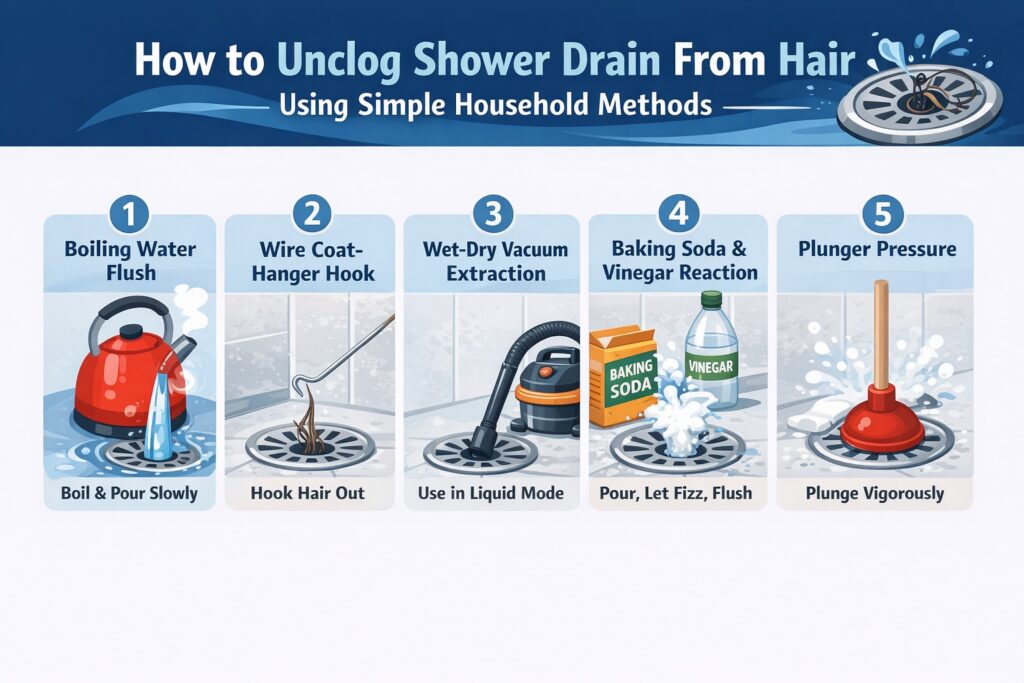
How to Unclog Shower Drain From Hair Using Simple Household Methods
Hair is the number-one culprit in shower blockages. Strands wrap around soap particles and form a sticky mat that traps more debris over time. If water drains slowly but hasn’t stopped completely, these basic techniques can help you clear the obstruction without calling a plumber—yet.
1. Boiling Water Flush
Boil a full kettle and pour it straight down the drain in a steady stream. Hot water melts soap scum and loosens grease that binds hair to the pipe walls. Wait five minutes, then run the shower to test flow. This method works best for fresh clogs and regular maintenance, but it won’t dissolve a dense hair plug.
2. Wire Coat-Hanger Hook
Straighten a wire coat hanger and bend one end into a small hook. Feed it past the drain cover and twist gently to snag hair. Pull upward slowly to avoid pushing the blockage deeper. Rinse the hook between passes and repeat until you stop retrieving material. This trick is free and surprisingly effective for clogs within 30 centimetres of the surface.
3. Wet-Dry Vacuum Extraction
Set a wet-dry vacuum to liquid mode and create a tight seal over the drain opening. The suction can pull loose hair and soap globs up through the pipe. Empty the vacuum canister immediately and rinse the filter. This approach works when the clog sits close to the drain entry but won’t reach obstructions further along the trap.
4. Bicarb Soda and Vinegar Reaction
Pour half a cup of bicarb soda into the dry drain, followed by half a cup of white vinegar. Cover the opening with a wet cloth to contain the fizzing action. After 15 minutes, flush with boiling water. The chemical reaction breaks down soap residue and light organic matter, but it struggles with compacted hair mats or mineral scale.
5. Plunger Pressure
Block the overflow vent with a damp cloth, then place a cup plunger over the drain. Push down firmly and pull up sharply ten times. The pressure wave can dislodge hair clumps stuck in the trap. Run hot water afterward to wash debris into the main line. Plunging works for partial blockages but won’t clear a fully stopped drain.
These household methods handle minor slowdowns and surface-level hair. If water still pools after two attempts, the blockage likely sits beyond the trap or involves mineral buildup that DIY can’t shift. Continuing to pour chemicals or force tools risks cracking old pipes or damaging seals—especially in Sydney’s heritage homes with clay or cast-iron drains. At that point, stop and call a licensed Sydney plumber (Anton’s Plumbing & Gas, NSW Lic. 210933C, ph 0493 824 176) rather than risking costly damage.
How to Unclog the Shower Drain From Hair With Professional CCTV and Hydro-Jetting

Professional drain clearing goes beyond pushing a snake through your pipe. We use camera inspection to diagnose the blockage type, location, and underlying cause—then choose the right tool to restore full flow without damaging your plumbing. This approach fixes the problem once, rather than masking symptoms until the next backup.
CCTV drain inspection involves threading a waterproof camera on a flexible cable through your shower waste. The high-definition feed shows us hair mats, soap buildup, tree roots, pipe cracks, and joint misalignment in real time. We record the footage and measure the blockage depth so you see exactly what we see. This transparency helps you understand whether you need a simple jet clean, a pipe reline, or a full replacement—and why.
High-Pressure Water Jetting Process
Once we’ve identified the obstruction, we deploy a hydro-jetter—a machine that pumps water at high pressure through a purpose-built nozzle. Forward jets blast debris loose while rear jets propel the hose deeper into the pipe. The process scours pipe walls clean, removing years of soap scum, hair, grease, and mineral scale without chemicals or abrasive tools. Jetting works on PVC, copper, cast iron, and clay pipes, and it’s safe for septic systems because we control pressure and flow.
Root Cutting and Descaling
If the camera reveals tree roots threading through joints, we switch to a root-cutting nozzle that slices invasive growth flush with the pipe wall. For heavy mineral deposits—common in Sydney’s hard-water areas—we use a rotating chain flail that chips away scale without gouging the pipe surface. Both techniques restore full diameter and prevent rapid re-clogging. Note that pipework inside your property boundary, including the boundary trap, is the homeowner’s responsibility, while the sewer main beyond it is owned and maintained by Sydney Water; if our inspection shows the issue sits in Sydney Water’s infrastructure, we’ll advise you on the next steps.
Post-Clean Inspection and Reporting
After jetting, we run the camera through again to confirm the blockage is gone and check for hidden damage. You receive a written report with before-and-after images, the location of any problem zones, and maintenance recommendations. If we spot a crack or sag, we’ll discuss repair options—dig-and-replace versus trenchless relining—with transparent pros, cons, and costs in AUD for each.
Compliance and Safety Standards
All our work meets AS/NZS 3500 plumbing standards and NSW Fair Trading requirements, and complies with Sydney Water regulations where drains connect to the sewer main. We carry public liability insurance, use branded parts from reputable suppliers, and document every step for strata managers and insurance claims. Our plumbers hold a current NSW licence (Lic. 210933C), complete ongoing training, and follow safe-work protocols—especially when working near electrical outlets or gas lines in your bathroom.
Professional drain clearing typically takes one to two hours from arrival to clean-up. We protect your floors with drop sheets, contain wastewater, and leave your bathroom cleaner than we found it. Same-day service means you’re back to normal showers by evening, not waiting days for an appointment or gambling on another DIY attempt.
How to Unclog a Drain of Hair and Prevent Future Blockages

Clearing a clog is only half the job. Preventing the next one saves money and keeps your shower draining fast for years. Simple habits and inexpensive hardware stop hair from reaching your pipes in the first place.
Install a drain cover or hair catcher over your shower grate. Mesh screens, silicone inserts, and stainless-steel strainers trap hair before it enters the waste line. Clean the cover after every shower—just lift it out, wipe off the hair, and rinse. This two-second task eliminates most blockages and costs next to nothing.
- Brush hair before showering: Loose strands fall onto the floor instead of washing down the drain. Sweep or vacuum them up rather than rinsing them away.
- Run hot water for 30 seconds after each shower: The flow pushes soap residue and small hairs through the trap before they bond into a sticky mat.
- Monthly enzyme treatment: Pour a maintenance dose of enzyme cleaner down the drain once a month. The bacteria digest organic buildup slowly, keeping pipes clear without harsh chemicals.
- Avoid bar soap: Solid soap leaves more residue than liquid body wash. If you prefer bar soap, rinse the drain with hot water immediately after use.
- Check your P-trap annually: Unscrew the trap under your shower base (if accessible) and rinse out accumulated sludge. This quick inspection catches problems before they become full blockages.
For homes with long drain runs, clay pipes, or mature trees nearby, annual professional jetting keeps roots and scale under control. We offer scheduled maintenance plans for Sydney strata properties and busy homeowners who want peace of mind. A yearly clean typically costs less than an emergency call-out and extends the life of your plumbing by years.
Professional Tools That Deliver the Best Way to Unclog a Shower Drain

When home remedies fail, hardware-store tools offer more reach and power. Drain snakes, augers, and enzyme treatments target mid-pipe obstructions, but they require careful handling to avoid scratching chrome fittings or puncturing flexible hoses. Understanding each tool’s limits helps you decide whether to hire equipment or call a licensed plumber.
| Tool | Effective Range | Best For | Risk If Misused |
|---|---|---|---|
| Wire coat hanger | 0–30 cm | Surface hair clogs | Scratched chrome, pushed blockage deeper |
| Hand-crank snake | 1–3 m | Mid-pipe obstructions | Gouged porcelain, damaged seals |
| Motorised auger | 3–10 m | Long horizontal runs | Snapped cable, cracked joints |
| Enzyme cleaner | Entire drain | Regular maintenance | Ineffective on mineral scale |
| Chemical opener | Trap to stack | Grease and soap | Corroded pipes, toxic fumes |
| Pressure washer | 3–15 m | Stubborn buildup | Split joints, bathroom flooding |
Flexible Drain Snake
A hand-crank drain snake—also called a drum auger—extends a coiled cable up to three metres into your pipe. You feed the tip past the trap, then rotate the handle to hook hair and pull it back. Snakes work well for clogs in the vertical waste pipe, but they can scratch porcelain or gouge soft plastic if you push too hard. Always wear gloves and eye protection because retrieved material often carries bacteria.
Motorised Auger
Electric drain augers spin a heavy-duty cable at high speed, cutting through compacted hair and soap. Plumbers use them for commercial drains and long residential runs, but hire models often lack torque limiters—meaning you can snap the cable or crack a pipe joint if you hit a sharp bend. We see DIY auger damage regularly across Sydney’s Inner West, where old terracotta pipes can’t handle aggressive spinning.
Enzyme-Based Drain Cleaner
Enzyme products use bacteria cultures to digest organic matter over 8–12 hours. They’re safer than caustic chemicals and won’t harm septic systems, but they only work on soap scum and hair—not mineral scale, tree roots, or foreign objects. Pour the recommended dose before bed, then flush with warm water in the morning. Enzyme cleaners suit regular maintenance rather than emergency unblocking.
Chemical Drain Opener
Sodium hydroxide or sulphuric acid formulas generate heat to dissolve hair and grease. They clear some clogs fast, but repeated use corrodes galvanised steel, weakens PVC joints, and harms Sydney’s waterways if poured in large quantities, potentially breaching trade waste discharge rules enforced by Sydney Water. Never mix chemical cleaners—combining products releases toxic fumes. If the first bottle doesn’t work, stop and call a plumber rather than pouring more.
High-Pressure Water Blaster
Consumer-grade pressure washers attach to your garden hose and blast water at high pressure. The jet can scour pipe walls and push debris into the main sewer, but it also risks splitting old joints or flooding your bathroom if backpressure builds. Professional hydro-jetters run at much higher pressure with variable nozzles and safety cutoffs—equipment that requires a plumbing licence to operate in New South Wales.
Each tool has a place, but none diagnose the root cause. A recurring clog often signals a deeper issue—pipe sag, tree-root intrusion, or a collapsed section that no amount of snaking will fix. That’s where professional CCTV inspection and hydro-jetting come in.
Why Licensed Plumbers Deliver Better Results Than DIY for Stubborn Clogs

DIY methods can clear simple hair clogs near the surface, but stubborn blockages usually need more than a plunger or a chemical pour. When water keeps backing up, repeated snaking and harsh cleaners can waste time and damage pipes, seals, or joints. Licensed plumbers deliver better results because they combine diagnostic accuracy, professional-grade equipment, and proven experience to solve the problem safely and permanently.
Instead of guessing, we pinpoint the exact obstruction using CCTV drain inspections, showing the clog type, depth, and any pipe defects contributing to the backup. That allows us to fix the root cause—cutting and treating tree roots, clearing heavy buildup, and recommending repairs like relining or regrading when a pipe is damaged or sagging. We use professional hydro-jetting to strip away hair mats, grease, soap scum, and mineral scale that snakes can’t fully remove, adjusting pressure to suit the pipe material and age to avoid cracked joints or blowouts.
You also get clear protection and transparency that DIY can’t offer, including fixed-rate upfront pricing in AUD before work begins and options explained in plain English. Our work is completed to AS/NZS 3500 and NSW Fair Trading requirements and backed by a lifetime labour warranty under Anton’s Plumbing & Gas, NSW Lic. 210933C. With same-day response across Sydney and 24/7 emergency availability, you’re not left living with a blocked drain—or the risk of making it worse.
Conclusion
The best way to unclog a shower drain depends on the blockage type and location. Surface hair responds to manual removal and boiling water, while deeper clogs need professional jetting and camera diagnosis. Knowing when to stop DIY attempts protects your pipes and saves money. For fast, damage-free results backed by a lifetime warranty, trust our licensed team (NSW Lic. 210933C) to restore full flow and keep your Sydney home running smoothly.
Anton’s Plumbing & Gas brings over 25 years of experience to every blocked drain job across Sydney. Our licensed team uses CCTV inspections and proven techniques to clear shower drains fast. Call us on 0493 824 176 to get started today.
Related Articles
- 5 Proven Ways How to Clear a Clogged Shower Drain Fast
- Plumbing Quotes: Big vs Small Plumbing Companies
FAQs
What Is The Best Way To Unclog A Shower Drain Naturally?
The best way to unclog a shower drain naturally is to use a mixture of hot water and bicarb soda. Pour half a cup of bicarb soda down the drain, followed by half a cup of vinegar. Allow it to sit for about 30 minutes, then flush with hot water. This method is effective for minor clogs and is safe for your plumbing.
How Do You Unclog A Shower Drain With Bicarb Soda And Vinegar?
To unclog a shower drain with bicarb soda and vinegar, start by pouring half a cup of bicarb soda into the drain. Next, add half a cup of vinegar. Cover the drain with a cloth to keep the reaction contained and let it sit for about 30 minutes. Finally, flush the drain with hot water to clear any remaining debris. This technique is a great, eco-friendly option for addressing minor clogs.
What Tools Do I Need To Unclog A Shower Drain?
To unclog a shower drain, you may need a few basic tools such as a plunger, a plumber’s snake, or a drain auger. Having a bucket, some gloves, and a torch can also help when inspecting the drain and removing any visible blockages. If you encounter a stubborn clog, our experienced, licensed team at Anton’s Plumbing & Gas (NSW Lic. 210933C) is always ready to assist.
How Can I Prevent My Shower Drain From Clogging?
To prevent your shower drain from clogging, regularly clean the drain cover and remove hair and soap scum build-up. Consider using a drain strainer to catch debris before it goes down the drain. Running hot water through the drain weekly can also help dissolve any potential build-up. If you need advice on long-term maintenance, our team is here to help.
When Should I Call A Plumber For A Clogged Shower Drain?
You should call a plumber for a clogged shower drain if you’ve tried DIY methods without success, if the clog is causing water to back up significantly, or if you notice persistent drainage issues. Our licensed experts at Anton’s Plumbing & Gas are available 24/7 to provide prompt and professional assistance, ensuring your plumbing problems are resolved efficiently.
Is Anton’s Plumbing & Gas Licensed To Work On Shower Drains In NSW?
Yes. Anton’s Plumbing & Gas holds NSW Lic. 210933C, and every drain clearing job is completed to AS/NZS 3500 and NSW Fair Trading requirements. Call 0493 824 176 to book a licensed plumber for your Sydney home.
Do You Offer Emergency Or Same-Day Plumbing For Blocked Shower Drains In Sydney?
Yes, we provide 24/7 emergency response and same-day service across Sydney suburbs. If your shower drain is backing up right now, call 0493 824 176 and we’ll get a licensed plumber to you fast.
How Much Does It Cost To Unclog A Shower Drain In Sydney?
Costs vary depending on the blockage type, depth, and whether CCTV inspection or hydro-jetting is needed. We provide a fixed-rate, obligation-free quote in AUD before any work begins, so you know the price upfront—call us for an exact quote for your property.
Do You Provide Upfront Quotes Before Starting Work?
Yes. We inspect the drain, explain what’s causing the blockage, and give you a fixed-rate quote in plain English before we start—no surprise call-out fees.
Which Sydney Suburbs Does Anton’s Plumbing & Gas Service?
We service homes and strata properties across greater Sydney, including Carlingford, Mosman, the Inner West, and surrounding suburbs. Contact us on 0493 824 176 to confirm coverage for your address.
Do You Offer A Warranty On Shower Drain Unblocking Work?
Yes, our drain clearing work is backed by a lifetime labour warranty under Anton’s Plumbing & Gas, NSW Lic. 210933C, giving you peace of mind after we leave.
What Happens If The Blockage Comes Back After Your Team Clears It?
Recurring blockages usually point to a deeper issue like tree roots, pipe sag, or scale buildup. Under our lifetime labour warranty, we’ll return to reassess with CCTV inspection and recommend a permanent fix, such as jetting, relining, or root cutting.
Can I Book Anton’s Plumbing & Gas Online, Or Do I Need To Call?
You can book online via our website or call 0493 824 176 directly. For urgent blocked drains, calling gets you the fastest response.
Do You Work After Hours, On Weekends, Or Public Holidays?
Yes, our licensed plumbers are available 24/7, including weekends and public holidays, for urgent shower drain blockages across Sydney.
Will You Inspect My Drain With CCTV Before Quoting For Repairs?
Yes. We use CCTV drain inspection to confirm the exact cause and location of the blockage before recommending jetting, root cutting, or pipe repair, so you’re never quoted for guesswork.
Do Blocked Shower Drains Ever Involve Sydney Water’s Sewer Main?
Sometimes. Pipework inside your property boundary, including your shower waste and boundary trap, is your responsibility, while the sewer main beyond it belongs to Sydney Water. If our camera inspection shows the blockage sits in Sydney Water’s infrastructure, we’ll let you know and advise on next steps.
Are Your Plumbers Insured And Compliant With AS/NZS 3500?
Yes, every job is completed to AS/NZS 3500 plumbing standards and NSW Fair Trading requirements, and we carry public liability insurance for your protection.
What Should I Do Before Your Plumber Arrives?
Avoid pouring any more chemical cleaners down the drain, clear the area around the shower, and try to note when the slow drainage or backup started—this helps us diagnose the issue faster.
Can DIY Drain Cleaning Chemicals Damage My Pipes Before You Arrive?
Yes, repeated use of caustic or acid-based cleaners can corrode older pipes and galvanised fittings, and mixing products can release toxic fumes. If a chemical cleaner hasn’t worked after one attempt, stop and call a licensed Sydney plumber rather than pouring more down the drain.
How Do I Book Anton’s Plumbing & Gas For A Blocked Shower Drain?
Call 0493 824 176 or book online through our website. We’ll confirm a same-day or emergency appointment, diagnose the blockage with CCTV if needed, and clear it using professional-grade equipment backed by our lifetime labour warranty.