


If you want to know how to clear a clogged shower drain, start by removing visible hair, flushing the drain with hot water, using bicarb soda (baking soda) and vinegar, trying a plunger, or using a drain snake for deeper buildup. Most shower clogs in Sydney homes are caused by hair, soap scum, shampoo residue, and mineral buildup collecting inside the drain — often worse in older Federation and post-war homes across the Inner West and Eastern Suburbs where original clay or galvanised pipework is still in use.
However, if the shower drain keeps blocking, smells bad, gurgles, or backs up into other fixtures, the issue may be deeper in the plumbing line — potentially even in the Sydney Water sewer main beyond your property boundary. This guide walks you through five proven methods to clear a clogged shower drain quickly and safely. You’ll learn techniques on how to clear a clogged shower drain, when to call a professional plumber, and how to prevent future clogs from disrupting your home.
Key Takeaways
- Boiling water can dissolve soap residue and grease but should never be used on PVC pipes.
- Bicarb soda and vinegar create a natural fizzing action that loosens hair and grime without harsh chemicals.
- Manual removal with a drain snake or wire coat hanger reaches clogs that surface methods cannot clear.
- A standard plunger can dislodge blockages when used correctly with enough water to seal the cup.
- Recurring clogs often signal deeper drainage issues that require CCTV inspection and professional intervention from a licensed plumber.
Quick answer: To clear a clogged shower drain, remove visible hair and debris first, then try hot tap water, bicarb soda and vinegar, a plunger or a small drain snake. Avoid boiling water when you have PVC pipes, and do not force tools deeper if you meet firm resistance. Under NSW regulations, drain repairs and any gas or major plumbing work must be carried out by a licensed plumber — call a licensed Sydney plumber such as Anton’s Plumbing & Gas (NSW Lic. 210933C) on 0493 824 176 if the drain keeps blocking, smells bad, gurgles or causes water to back up into other fixtures.
1. How to Clear a Clogged Shower Drain With Hot Water
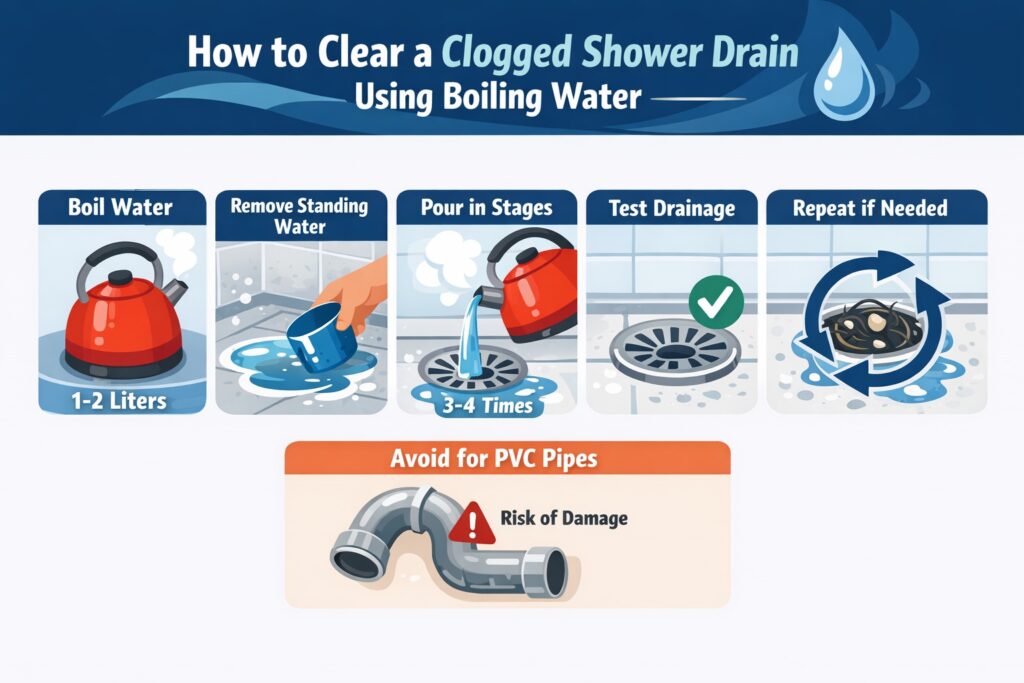
Boiling water is one of the simplest ways to tackle a clogged shower drain. Heat melts soap scum and grease that bind hair and debris together. This method works best for partial blockages caused by buildup rather than solid obstructions.
Before you start, check your pipe material and know where your hot water shut-off valve is in case you need to stop water flow quickly. PVC pipes can warp or crack when exposed to high temperatures. If your home has metal pipes, such as the copper or galvanised runs found in many older Sydney terraces, this technique is safe and effective.
1. Boil One to Two Litres of Water
Fill a kettle or large pot with water and bring it to a rolling boil. The amount depends on the severity of the clog — start with one litre for minor slowdowns.
2. Remove Standing Water From the Shower Base
Use a cup or towel to clear any pooled water. Direct contact between boiling water and the drain opening delivers the best results.
3. Pour Slowly in Stages
Pour the boiling water directly into the drain in three or four increments. Wait 60 seconds between pours to allow heat to penetrate the clog and soften the buildup.
4. Test the Drainage
Run cold water for 30 seconds to see if flow has improved. If water still drains slowly, repeat the process or move to a different method.
5. Avoid This Method for PVC Pipes
PVC softens at around 60°C. Boiling water can cause joints to loosen or pipes to deform. Check your plumbing material before using this technique.
Boiling water works well for light clogs but won’t clear dense hair masses or foreign objects. If you’re unsure about your pipe type or the clog persists, our team at Anton’s Plumbing & Gas can inspect your drainage system with a CCTV camera to identify the root cause — same-day service across Sydney, no call-out fee.
2. How to Clear a Clogged Shower Drain With Baking Soda and Vinegar

This natural method uses a chemical reaction to break down organic matter inside your drain. Bicarb soda and vinegar create carbon dioxide bubbles that can help dissolve hair in drain buildup and loosen soap residue without the corrosive effects of commercial cleaners. It’s safe for all pipe materials and costs less than shop-bought products.
You’ll need half a cup of bicarb soda, one cup of white vinegar, and hot tap water. Some homeowners add a quarter cup of table salt to boost the cleaning power.
Step 1: Remove the Drain Cover
Unscrew or lift the drain cover to expose the opening. Wipe away any visible hair or debris from the surface.
Step 2: Pour Bicarb Soda Down the Drain
Measure half a cup of bicarb soda and pour it directly into the drain. If you’re using salt, mix it with the bicarb soda before pouring.
Step 3: Add Vinegar
Pour one cup of white vinegar into the drain immediately after the bicarb soda. The mixture will fizz and bubble as the acid reacts with the base.
Step 4: Cover the Drain
Place the drain cover back on or use a wet cloth to seal the opening. This traps the reaction inside the pipe where it can work on the clog.
Step 5: Wait 15 to 30 Minutes
Let the mixture sit for at least 15 minutes. For stubborn clogs, extend the wait time to 30 minutes to allow deeper penetration.
Step 6: Flush With Hot Water
Run hot tap water for 30 seconds to rinse away loosened debris. If drainage improves but isn’t fully clear, repeat the process once more.
This method works best for clogs caused by soap scum, hair, and light organic buildup. It won’t dissolve solid objects or mineral deposits. If you notice slow drainage in multiple fixtures, foul odours, or cloudy hot water from the tap, the issue may be further down the plumbing system. We offer CCTV drain inspections to locate hidden clogs and recommend solutions like pipe relining or hydro jetting — services backed by our lifetime labour warranty.
3. How to Clear Hair From a Shower Drain With a Drain Snake

Sometimes surface treatments aren’t enough. Hair clogs often form just below the drain cover where they catch onSometimes surface treatments aren’t enough. Hair clogs often form just below the drain cover where they catch on crossbars or rough pipe edges. A drain snake or improvised wire coat hanger lets you physically pull out the blockage.
This hands-on approach is more effective than chemical cleaners for dense hair masses. You’ll need a drain snake (available at hardware stores), or a wire coat hanger, rubber gloves, and a bucket or towel.
- Remove the drain cover: Unscrew or pry off the cover to access the drain opening. Set screws aside in a safe place.
- Straighten a wire coat hanger if needed: If you don’t have a drain snake, unwind a wire coat hanger and create a small hook at one end using pliers.
- Insert the tool slowly: Feed the snake or hanger into the drain, pushing gently past any resistance. Rotate the tool as you go to catch hair and debris.
- Pull out the clog: When you feel resistance, twist the tool and pull upward slowly. Expect to retrieve clumps of hair, soap, and grime.
- Repeat until clear: Continue inserting and removing the tool until you no longer pull out debris. Flush the drain with hot water to confirm flow has improved.
- Clean and replace the cover: Wipe down the drain cover and surrounding area before reinstalling. Dispose of the clog material in the bin, not back down the drain.
Manual removal gives you immediate feedback. You can see what’s causing the blockage and confirm it’s been cleared. If the clog is deeper than arm’s length or you encounter hard resistance, the issue may be in the main drainage line. Our plumbers use professional-grade drain snakes and hydro jetting equipment to clear blockages up to 30 metres from the access point — same-day service available across the Inner West, Eastern Suburbs, and beyond.
4. How to Unclog a Shower Drain With a Plunger

A standard cup plunger can dislodge clogs that are close to the drain opening. This method uses air pressure and suction to break up blockages and push debris through the pipe. It’s most effective when the clog is within the trap or just beyond.
You don’t need a special toilet plunger — the flat-bottomed cup plunger used for sinks works just as well. Make sure the drain cover is removed and there’s enough water to seal the plunger cup.
1. Remove the Drain Cover
Take off the drain cover to expose the full opening. This allows the plunger to create a tight seal against the drain.
2. Add Water to Cover the Plunger Cup
Run a small amount of water into the shower base — just enough to cover the bottom of the plunger cup. This helps create suction and prevents air from escaping around the edges.
3. Position the Plunger Over the Drain
Place the plunger directly over the drain opening. Press down firmly to create a seal. The cup should be fully in contact with the shower floor.
4. Plunge With Quick, Forceful Strokes
Push down sharply, then pull up without breaking the seal. Repeat 10 to 15 times. You should feel resistance as pressure builds inside the pipe.
5. Check for Improved Drainage
Remove the plunger and run water to test the flow. If the clog has moved, water should drain freely. If not, repeat the plunging process or try a different method.
Plungers work well for soft clogs but struggle with dense hair masses or foreign objects. If you’re dealing with a stubborn blockage or notice gurgling sounds from other drains, the problem may be in the main sewer line. We use CCTV cameras to inspect pipes and locate blockages without guesswork — upfront pricing in AUD, no hidden fees, and a clear explanation of what’s needed to fix it.
5. When You Cannot Clear a Clogged Shower Drain Yourself

Not every clog responds to home remedies. Recurring blockages, slow drainage in multiple fixtures, and foul odours often point to deeper issues that require professional diagnosis. Ignoring these signs can lead to pipe damage, water backups, and costly repairs.
Here are the warning signs that it’s time to call a licensed Sydney plumber.
Multiple Drains Are Slow or Blocked
If your shower, sink, and toilet all drain slowly, the blockage is likely in the main sewer line. Tree roots, collapsed pipes, and sediment buildup are common causes, particularly in older Sydney suburbs with mature street trees. Note that the section of pipe running from your property boundary to the street is generally Sydney Water’s responsibility, while everything inside your boundary is yours to maintain — and any repair work on it must be carried out by a licensed plumber. DIY methods won’t reach these deep clogs.
Water Backs Up Into Other Fixtures
If you are searching for how to fix a toilet that won’t flush and water rises in the shower when flushing, the drainage system may be compromised. This cross-contamination is a health risk and requires immediate attention.
Foul Odours Persist After Cleaning
Unpleasant smells that linger even after you’ve cleared surface debris suggest organic matter is trapped deeper in the pipe. Bacteria feeding on this buildup release gases that seep back into your home.
Gurgling Sounds From Drains or Toilets
Air trapped in the pipes causes gurgling noises. This happens when a blockage prevents proper venting. Left unchecked, it can lead to sewer gas leaks and pressure imbalances.
Clogs Return Within Days or Weeks
If you’re clearing the same drain repeatedly, the root cause hasn’t been addressed. Partial blockages, pipe damage, or incorrect pipe fall can all cause chronic clogs.
Visible Water Damage or Damp Spots
Stains on ceilings, floors, or plaster may point to a leak in the wall near hidden plumbing fixtures. Clogs can increase pressure inside pipes and cause joints to fail or cracks to widen.
At Anton’s Plumbing & Gas, we diagnose drainage problems with CCTV inspections and acoustic leak detection. Our team can pinpoint blockages, cracks, and root intrusion without digging up your property. Every job is completed to Australian Standards and NSW plumbing regulations, with clear options and upfront pricing in AUD.
Preventing Future Clogs: Simple Habits to Protect Your Shower Drain

Preventing shower clogs is far easier and cheaper than dealing with a blocked drain after it backs up. Most blockages come from the same culprits — hair, soap scum, and product residue — slowly building up inside the waste line. A few simple habits done consistently can keep your drain flowing freely and reduce the need for emergency call-outs.
- Install a fine-mesh drain cover or hair catcher. It traps hair before it enters the pipe, and you can clean it weekly in seconds.
- Rinse the drain with hot water after each shower. A quick 30-second flush helps melt soap residue and move loose debris before it binds together.
- Keep oils and thick products out of the drain. Avoid rinsing heavy conditioners, lotions, or oily residue directly down the waste, as they can harden into waxy clogs.
- Do a monthly bicarb soda and vinegar maintenance flush. This helps loosen early buildup and reduces the chance of sudden blockages forming.
- Brush long hair before showering. Removing loose strands beforehand dramatically reduces the amount of hair that reaches the drain.
- Dispose of hair in the bin, not the toilet or sink. This prevents clogs from shifting to other parts of your plumbing system.
- Book an annual drain inspection for older homes or properties with established trees. CCTV inspections can detect early root intrusion or pipe issues before they become recurring clogs or emergencies — especially important for older Sydney homes with original clay stormwater and sewer pipes.
These small steps add up, keeping your shower drain clear and your bathroom routine hassle-free. If your home has recurring slow drains, older clay pipes, or nearby trees, early inspection can save you from major repairs later. Our team provides CCTV drain inspections across Sydney with clear reports and practical recommendations you can rely on.
Why Sydney Homeowners Choose Anton’s Plumbing & Gas for Drain Clearing

Sydney homeowners choose Anton’s Plumbing & Gas for drain clearing because blocked drains don’t wait for business hours, and neither do we. We provide 24/7 emergency response across Sydney Metro with same-day service, no call-out fee, and upfront pricing in AUD before work begins. Whether it’s a slow shower drain or a full sewer backup, you get a fast response and a clear plan.
We don’t just clear the blockage and leave — we diagnose the root cause to prevent repeat problems. Using CCTV drain inspections and acoustic leak detection, we show you what’s happening inside the pipe and explain your options in plain English. You’ll get honest pros and cons on solutions like dig-and-replace versus pipe relining, so you can choose what fits your budget and long-term needs.
Every job is completed to Australian Standards (AS/NZS 3500) and NSW plumbing regulations, fully documented, and backed by our lifetime labour warranty. Our team is fully licensed (NSW Lic: 210933C) and insured for plumbing and gas-fitting work across NSW, and we leave your property clean once the job is done. We service the Inner West, Eastern Suburbs, North Shore, Northern Beaches, Hills District, Western and South-Western Sydney, and Sutherland Shire — covering single homes, businesses, and strata maintenance with the same level of care.
Conclusion
Clearing a clogged shower drain doesn’t always require harsh chemicals or expensive call-outs. Boiling water, bicarb soda and vinegar, manual removal, and plunging can resolve most common blockages when used correctly. When DIY methods fail or clogs return frequently, professional diagnosis with CCTV inspection identifies the real problem — tree roots, pipe damage, or main line blockages — and delivers lasting solutions backed by compliance and warranty.
Anton’s Plumbing & Gas specialises in blocked drain solutions backed by 25 years of experience, and is fully licensed under NSW Lic. 210933C. We offer same-day service across Sydney with upfront pricing in AUD. Contact us today to get started.
Get a Free Estimate for Your Blocked Shower Drain
When hair, soap residue and mineral buildup leave your shower draining slowly — or the blockage keeps returning — the problem may require professional drain clearing or a CCTV inspection. Use Anton’s free plumbing quote estimator to select \”Blocked drain,\” choose the bathroom location, describe the symptoms and receive an estimated price range in AUD based on the property, urgency and access. For overflowing water, foul odours, gurgling fixtures or several blocked drains, call Anton’s Plumbing & Gas on 0493 824 176 for prompt assistance.
Related Articles
- Proven Strategies for the Best Way to Unclog a Shower Drain
- The Insider’s Tips on How to Choose a Great Plumber
- Pipes Clogged With Sediment? Why Your Water Flow May Be Slowing Down
FAQs
Why Does My Shower Drain Keep Blocking?
A shower drain usually keeps blocking because hair, soap scum, shampoo residue, and body oils are building up inside the pipe. If the blockage keeps coming back after you clean the drain cover, the clog may be sitting deeper in the line. Anton’s Plumbing & Gas can inspect and clear the shower drain properly so the problem does not keep returning.
What Is The Best Way To Clear Hair From A Shower Drain?
The best first step is to remove the drain cover and carefully pull out any visible hair using gloves, pliers, or a small drain tool. Avoid pushing the hair further down the drain, as this can make the blockage harder to clear. If the water still drains slowly after removing the hair, a plumber may need to clear the buildup inside the pipe.
Can Bicarb Soda And Vinegar Unclog A Shower Drain?
Bicarb soda and vinegar may help freshen a drain or loosen very minor buildup, but they are not always strong enough to clear a proper shower blockage. If the clog is caused by a thick mix of hair and soap scum, the drain may still stay slow after using this method. For a stubborn blocked shower drain, Anton’s Plumbing & Gas can use the right tools to clear the line safely.
Is It Safe To Use A Plunger On A Shower Drain?
Yes, you can use a plunger on a shower drain if there is enough water to create a seal around the drain opening. Gentle plunging may help move a minor clog, but forcing it too hard can splash dirty water or push the blockage deeper. If plunging does not work quickly, it is better to stop and have the drain checked professionally.
When Should I Call A Plumber For A Blocked Shower Drain?
Call a licensed plumber if your shower drains slowly, smells bad, gurgles, backs up, or keeps blocking even after cleaning the drain cover. These signs can mean the blockage is deeper than the surface and may involve soap buildup, hair, pipe scale, or a larger drainage issue. Anton’s Plumbing & Gas (NSW Lic. 210933C) can clear the blockage and check whether there is a bigger plumbing problem causing it.
Why Is My Shower Drain Still Slow After Removing the Hair?
Visible hair may only be part of the blockage. Soap scum, shampoo residue and mineral deposits can build up deeper inside the trap or waste pipe, restricting water flow even after the drain opening looks clear. If the shower is still draining slowly at a property in Greystanes, a professional plumber in Greystanes can clear the remaining buildup and check whether the blockage extends deeper into the pipework.
Can Boiling Water Damage Shower Drain Pipes?
Yes. Boiling water may soften or deform PVC pipework and can weaken some joints or seals. Hot tap water is a safer option when the pipe material is unknown. A licensed plumber can confirm the type and condition of your drainage pipes before stronger cleaning methods are used.
Why Does My Shower Drain Smell Even When It Is Not Blocked?
Odours may come from trapped hair, soap residue and bacteria inside the drain. A dry trap, poor ventilation or a deeper drainage problem can also allow unpleasant gases to enter the bathroom. Persistent smells should be investigated, especially when accompanied by gurgling or slow drainage.
Why Does Water Pool Around My Feet in the Shower?
Water pooling during a shower means the drain cannot remove water as quickly as the shower produces it. The cause may be a partially blocked shower waste, a clogged trap or a deeper restriction in the pipe. For homeowners experiencing this problem in Parramatta, a licensed plumber in Parramatta can inspect the drain and determine the most appropriate way to clear it.
Can Soap Cause a Shower Drain Blockage?
Yes. Soap combines with hair, body oils and minerals to form a sticky residue inside the pipe. Over time, this buildup narrows the drain and catches additional debris. Liquid body wash can also contribute when it contains oils, waxes or thick conditioning ingredients.
Can I Use a Wire Coat Hanger to Clear a Shower Drain?
A carefully shaped wire coat hanger may remove hair close to the drain opening, but it can scratch fittings, become stuck or push the blockage deeper. A purpose-made plastic drain tool or small hand snake is usually safer. Stop if you meet firm resistance or cannot retrieve the tool easily.
Why Does My Shower Drain Gurgle After the Water Stops?
Gurgling often means air is struggling to move through the drainage system because of a partial blockage or ventilation issue. The sound may come from the shower itself or nearby fixtures. If the gurgling continues at a home in Merrylands, a local plumber in Merrylands can inspect the drain and ventilation system before the blockage becomes complete.
Can a Blocked Shower Drain Cause a Bathroom Flood?
Yes. A fully blocked drain can cause water to overflow from the shower base, especially during a long shower. The water may damage flooring, skirting boards, cabinetry and rooms below. Stop using the shower when the water level continues rising instead of draining.
Why Does the Shower Back Up When the Washing Machine Drains?
The shower and washing machine may connect to the same branch or main drainage line. When the shared pipe is partially blocked, the washing machine’s discharge can force water back through the shower drain. This usually indicates a deeper blockage that household cleaning methods cannot reach.
Are Chemical Drain Cleaners Safe for Shower Drains?
Chemical cleaners can damage older pipes, seals and metal fittings, and they may create hazardous fumes or splashes. They can also remain trapped behind a blockage, exposing anyone who later opens the drain. Mechanical clearing and professional inspection are generally safer for stubborn shower clogs.
How Far Down Can a Shower Drain Blockage Be?
A blockage may sit directly below the drain cover, inside the trap, along the bathroom branch line or deeper in the main sewer. Surface tools only reach nearby hair clogs. If the blockage appears to be deeper at a property in Box Hill, a reliable plumber in Box Hill can use suitable drain-clearing equipment or a CCTV camera to locate it.
Can Tree Roots Block a Shower Drain?
Tree roots do not normally enter the small pipe immediately below the shower, but they can invade damaged underground sewer lines connected to the Sydney Water network. This can cause several drains to slow, gurgle or back up. Root intrusion usually requires CCTV inspection and professional clearing or pipe repair.
Why Does My Shower Drain Keep Blocking Every Few Weeks?
Frequent blockages may mean only part of the clog is being removed. Damaged pipes, poor pipe fall, heavy scale or deeper hair and soap buildup can cause debris to collect repeatedly. A professional inspection helps identify why the problem keeps returning instead of treating only the immediate symptoms.
Can Hydro Jetting Clear a Blocked Shower Drain?
Hydro jetting uses high-pressure water to remove grease, sludge, scale and other buildup from drainage pipes. It may be suitable when the blockage is deeper or affects a larger section of the drainage system. A plumber should inspect the pipe condition first to confirm that jetting is appropriate.
How Can a Plumber Find a Deep Shower Drain Blockage?
A plumber may begin with flow testing and mechanical drain-clearing equipment. When the cause remains unclear or the clog keeps returning, a CCTV drain camera can inspect the inside of the pipe. This can reveal hair buildup, scale, damaged joints, root intrusion or collapsed sections. For recurring drainage problems at a property in Kingswood, an experienced plumber in Kingswood can use these methods to identify the exact location and cause of the blockage.
How Much Does It Cost to Clear a Blocked Shower Drain in Sydney?
Cost depends on the severity of the blockage, access to the drain and whether a CCTV inspection or hydro jetting is required. Anton’s Plumbing & Gas provides upfront pricing in AUD before any work begins, with no call-out fee. Use the free plumbing quote estimator or call 0493 824 176 for an accurate price based on your situation.
Do You Offer Same-Day Blocked Drain Service in Sydney?
Yes. Anton’s Plumbing & Gas provides same-day and 24/7 emergency blocked drain service across Sydney Metro, including the Inner West, Eastern Suburbs, North Shore, Northern Beaches, Hills District and Sutherland Shire. Call 0493 824 176 to book a same-day appointment.
Is Anton’s Plumbing & Gas Licensed to Clear Blocked Drains in NSW?
Yes. Anton’s Plumbing & Gas holds NSW plumbing licence 210933C and is fully insured for plumbing and gas-fitting work across Sydney. Choosing a licensed plumber ensures the work meets AS/NZS 3500 and NSW regulatory requirements. Book online or call 0493 824 176 to schedule an inspection.