Few things are as frustrating as standing under a warm shower, only to have it turn icy the moment someone flushes a toilet or turns on a kitchen faucet. This sudden temperature swing is more than an inconvenience—it signals underlying plumbing issues that deserve professional attention. Understanding why your shower gets cold when other faucets run helps you take the right steps toward a permanent fix.
This article explains the common causes behind shower temperature fluctuations, from pressure imbalances to worn mixing valves. You will learn how professional diagnosis identifies root problems, what solutions work best for Sydney homes, and why expert plumbing services deliver lasting comfort and safety.
Key Takeaways
- Sudden cold water in the shower often results from pressure drops when other fixtures draw water simultaneously.
- Narrow pipes, mineral buildup, and outdated mixing valves amplify temperature swings across Sydney properties.
- Pressure-balancing or thermostatic valves prevent scalding and maintain consistent shower temperature.
- Professional inspection using diagnostic tools pinpoints the exact cause and tailors the solution to your plumbing system.
- Upgrading your water heater, insulating pipes, and reconfiguring supply lines eliminate recurring issues.
What Happens When Your Shower Gets Cold When Other Faucet Runs
When someone opens a tap or flushes a toilet while you shower, cold water suddenly floods your shower head. This happens because your home’s plumbing system shares a single cold-water supply line among multiple fixtures. Opening another fixture diverts cold water away from your shower, leaving the mixing valve with less cold water to blend with the hot supply.
The shower mixing valve attempts to maintain your set temperature by balancing hot and cold water flows. If cold water pressure drops suddenly, the valve cannot compensate fast enough, and scalding hot water dominates the mix. Older single-handle or dual-handle taps without pressure-balancing technology are especially vulnerable to these shifts.
In many Sydney homes, narrow galvanised pipes, long pipe runs, and mineral deposits restrict flow and worsen pressure imbalances. When multiple people use water at the same time, the system struggles to deliver stable pressure to every outlet. This is a common scenario in older Inner West terraces, North Shore units, and Western Sydney homes with original plumbing.
Common Causes Behind Shower Temperature Fluctuations
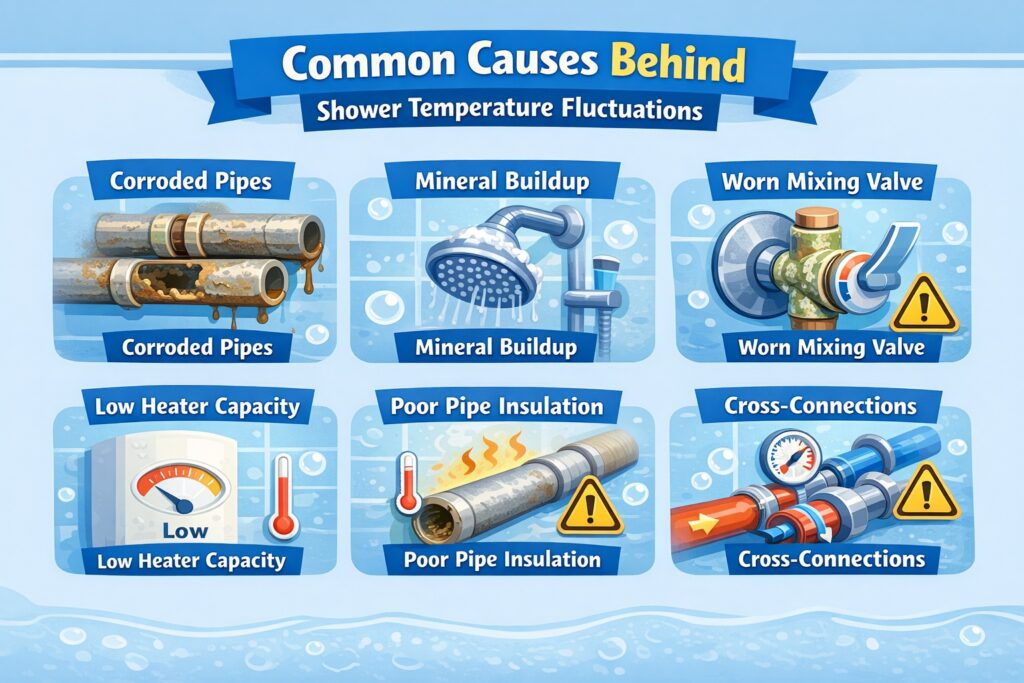
Shower temperature fluctuations usually happen when water pressure changes, hot water flow is restricted, or the mixing system can’t maintain a steady blend. In many homes, the problem is triggered by worn components, mineral deposits, or plumbing layouts that create imbalances between hot and cold supply lines. Identifying the exact cause is important because the right fix depends on whether the issue is flow-related, valve-related, or capacity-related.
| Cause | Impact on Shower Temperature | Typical Solution |
|---|---|---|
| Narrow or corroded pipes | Restricted flow, pressure imbalance | Pipe replacement or upgrade |
| Mineral buildup | Reduced flow, valve sticking | Descaling, valve replacement |
| Worn mixing valve | Poor temperature control | Install thermostatic or pressure-balancing valve |
| Inadequate heater capacity | Hot water runs out quickly | Upgrade to larger or continuous-flow heater |
| Insufficient insulation | Heat loss, longer wait for hot water | Insulate hot water pipes |
| Cross-connections | Lukewarm water, backflow risk | Backflow testing, valve repair |
Once the underlying cause is confirmed, temperature stability improves quickly because hot and cold water can mix consistently without sudden pressure drops. Fixing the root issue also reduces wasted water, improves comfort, and prevents further strain on your hot water system. If fluctuations are frequent or getting worse, it’s best to have a licensed plumber assess the setup so the solution is safe, compliant, and long-lasting.
How Professional Diagnosis Identifies the Root Cause
Diagnosing shower temperature issues requires more than guesswork. Our licensed plumbers use a systematic approach to pinpoint the exact cause, starting with a detailed inspection of your fixtures, valves, and supply lines. We test water pressure at multiple points, measure hot water temperature at the heater and tap, and check for leaks or corrosion.
CCTV drain inspection cameras reveal internal pipe conditions without invasive excavation. We can see mineral scale, corrosion, and blockages in real time, then recommend targeted repairs or replacements. This diagnostic precision saves you time and money by avoiding unnecessary work.
We also review your water heater’s age, capacity, and recovery rate. If the heater is undersized or nearing the end of its service life, we present clear options for repair or replacement, complete with upfront pricing and expected timelines. Our goal is to give you the information you need to make confident decisions.
Effective Solutions to Stop Your Shower Getting Cold
Once we identify the cause, we tailor a solution to your home’s plumbing layout, budget, and long-term needs. Some fixes are straightforward valve replacements, while others involve pipe upgrades or heater installations. We explain the pros and cons of each option, provide upfront pricing, and complete the work to Australian Standards.
Our solutions focus on root causes, not temporary patches. We want you to enjoy consistent hot water for years, backed by our lifetime labour warranty and same-day service across Sydney.
1. Install a Pressure-Balancing or Thermostatic Valve
Upgrading to a pressure-balancing valve is the most direct way to eliminate temperature swings. These valves detect pressure changes and adjust the hot-cold mix instantly, maintaining your set temperature even when other fixtures operate. Thermostatic valves go a step further by sensing water temperature directly and compensating for both pressure and temperature fluctuations.
We install valves from trusted brands that comply with AS/NZS 3500 and include anti-scald protection. Installation typically takes a few hours, and you will notice the difference immediately. This upgrade is especially valuable for families with young children or elderly residents, where scalding risk is a serious concern.
2. Upgrade Your Water Heater
If your current heater cannot meet your household’s demand, upgrading to a larger tank or continuous-flow system solves the problem permanently. Continuous-flow heaters heat water on demand, so you never run out, and they are more energy-efficient than traditional storage tanks. Gas models are popular in Sydney for their fast recovery and lower running costs.
We supply and install heaters from leading manufacturers, handle all gas-fitting and electrical connections, and issue compliance certificates for gas work. Our team will help you choose the right size and fuel type based on your usage patterns, available space, and budget.
3. Reconfigure Plumbing and Pipe Layout
In some homes, the best solution is to reconfigure the plumbing layout to reduce pipe runs, eliminate bottlenecks, and balance pressure across fixtures. We may install dedicated hot and cold lines to high-demand areas, add a manifold system for better distribution, or replace undersized pipes with larger-diameter copper or PEX.
This approach is ideal for renovations or when you are upgrading multiple bathrooms. We work with minimal disruption, protect your floors and walls, and clean up thoroughly after every job.
4. Insulate Hot Water Pipes
Pipe insulation is a cost-effective way to reduce heat loss and improve temperature consistency. Foam sleeves or fibreglass wrap keep water hotter as it travels from the heater to your shower, reducing the impact of cold-water pressure drops. Insulation also prevents condensation on cold pipes, protecting your walls and ceilings from moisture damage.
We insulate pipes in roof spaces, under floors, and along external walls, ensuring compliance with energy-efficiency standards and building codes.
5. Add a Pressure Regulator
If your home experiences high street pressure or pressure spikes, a regulator stabilises the supply and protects your fixtures from damage. Regulators also make it easier for mixing valves to maintain consistent temperature, as they eliminate sudden surges that overwhelm the valve’s adjustment mechanism.
We install regulators at the main supply entry point, test the system under load, and adjust the setting to suit your household’s needs. This is a simple, affordable upgrade that delivers immediate benefits.
6. Replace Worn Fixtures and Fittings
Old taps, shower heads, and valve cartridges often contribute to temperature problems. We replace worn components with modern, water-efficient models that deliver better performance and comply with current plumbing standards. Upgrading to a quality shower head with built-in flow control can also improve comfort and reduce water waste.
Our team stocks a range of fixtures and can source specific brands or styles to match your bathroom design. We handle all installation, test for leaks, and ensure every fitting operates smoothly.
Why Choose Antons Plumbing & Gas for Shower Temperature Issues

Antons Plumbing & Gas brings more than 25 years of experience to every job. We diagnose the root cause of your shower temperature fluctuations, present clear options, and complete the work to Australian Standards. Our licensed plumbers are fully insured, carry the latest diagnostic tools, and respect your home by leaving it clean and tidy.
We offer same-day service and 24/7 emergency response across the Sydney Metro, from the Inner West and Eastern Suburbs to the North Shore, Northern Beaches, Hills District, and Western Sydney. There is no call-out fee, and we provide upfront pricing before we start. Our lifetime labour warranty gives you confidence that the repair will last.
Whether you need a simple valve replacement, a hot water system upgrade, or a complete plumbing reconfiguration, we tailor our work to your home, timeline, and budget. We use quality parts from trusted brands, document our findings, and issue compliance certificates for gas work and backflow testing. You can reach us anytime at 0493 824 176 or book online for a fast quote.
Preventing Future Temperature Fluctuations
Once we fix your shower, a few simple maintenance steps will keep it running smoothly. Have your water heater serviced annually to flush sediment, check the thermostat, and test safety valves. Inspect mixing valves and tap washers for wear, and replace them before they fail. Insulate any exposed hot water pipes to reduce heat loss and improve efficiency.
If you are planning a bathroom renovation or adding new fixtures, consult with us early to ensure your plumbing system can handle the additional demand. Upgrading pipes, valves, and heaters during a renovation is more cost-effective than retrofitting later.
Consider installing a whole-home water filtration or softening system if you have hard water. Reducing mineral content protects your pipes, valves, and appliances from scale buildup and extends their service life.
Conclusion
Shower temperature swings are frustrating, but they are also fixable with the right diagnosis and professional solution. Antons Plumbing & Gas delivers root-cause repairs, modern valve upgrades, and system improvements that restore consistent hot water across your home. Call 0493 824 176 or book online today for same-day service, upfront pricing, and work you can trust.
Antons Plumbing & Gas diagnoses pressure and temperature issues with expert leak detection and pipe repairs across Sydney. Our licensed team finds the root cause fast. Get started with same-day service today.
Related Articles
- What Does a Shower Drain Look Like? Key Features Explained
- Why Your Shower Takes Long to Heat Up: 5 Common Causes
FAQs
Why Does My Shower Get Cold When I Turn On Another Faucet?
Your shower may get cold when another faucet is turned on due to a drop in water pressure or flow rate in your plumbing system. This often happens in older homes or systems that are not designed to handle multiple outlets simultaneously. As a family-owned plumbing company with over 25 years of experience, we understand how to diagnose and resolve these issues effectively.
How Can I Fix A Shower That Gets Cold When Another Faucet Is Used?
To fix a shower that gets cold when another faucet is used, consider installing a pressure-balancing valve, which helps maintain consistent water temperature. Additionally, a plumber can assess your plumbing system for any underlying issues. Our team at Antons Plumbing & Gas is well-equipped to provide tailored solutions to your specific situation.
Is It Normal For The Shower To Get Cold When Other Taps Are On?
While it can be common for showers to lose hot water when other taps are on, it shouldn’t happen frequently or for extended periods. If it does, it may indicate issues with your plumbing system that need professional attention. With our extensive experience, we can help identify the cause and recommend the best course of action.
What Causes A Shower To Lose Hot Water When Other Faucets Are Running?
A shower may lose hot water when other faucets are running due to competing demands on your hot water supply, inadequate pipe sizes, or pressure issues within your plumbing system. Our expert team can evaluate your setup and provide efficient solutions to ensure consistent hot water availability.
How Do I Prevent My Shower From Getting Cold When Using Other Water Sources?
To prevent your shower from getting cold when using other water sources, consider upgrading to a larger hot water system or installing a pressure-balancing valve. Regular maintenance of your plumbing can also help. Antons Plumbing & Gas can assist you in implementing the best solutions for your home, ensuring reliable hot water when you need it.
 February 2026