

Major storms and flooding can wreak havoc on your home’s plumbing system in ways you might never see. While you’re focused on obvious damage like fallen trees or broken windows, underground pipes, drainage systems, and hot water units may be silently compromised. What appears to be working fine on the surface could be developing into costly problems that won’t show up for weeks or months.
This guide explains why you need a plumber to inspect your Sydney home after severe weather and what that inspection should include. You’ll also learn immediate steps you can take while waiting for professional help and how our team at Antons Plumbing & Gas (NSW Lic. 210933C) protects Sydney homes after storm damage.
Key Takeaways
- Storm damage to plumbing systems often remains hidden until serious problems develop.
- Professional post storm plumbing inspection prevents costly repairs and health hazards.
- Contaminated water and compromised drainage systems pose immediate safety risks.
- CCTV drain inspections reveal underground damage that visual checks cannot detect.
- Quick professional response helps prevent mould after flooding and structural issues.
- Any work on gas lines, hot water units or sewer connections in NSW must be carried out by a licensed plumber – Antons Plumbing & Gas holds NSW Lic. 210933C.
Hidden Plumbing Damage That Major Storms and Flooding Can Cause

Storms and flooding create underground chaos that homeowners rarely see until it’s too late. Tree roots shift and crack underground pipes during heavy rainfall and strong winds. Soil movement puts pressure on sewer lines and stormwater drains, creating hairline fractures that allow contaminated water to seep into your property.
Floodwater carries debris, sand, and sewage that can block your drainage system completely. Your hot water system might appear functional but could have water damage to electrical components or gas connections. Foundation movement during storms can misalign pipes and create stress points that will fail over time.
Sewer Line Contamination and Blockages
Floodwater often overwhelms Sydney Water’s sewer network, causing sewage to back up into your home’s drainage network. This contaminated water leaves behind bacteria and harmful substances throughout your pipes. Even after the water recedes, these contaminants remain in your system.
Underground Pipe Displacement
Saturated soil becomes unstable and shifts around buried pipes. Clay pipes common in older Sydney homes, particularly across the inner west and lower north shore, are particularly vulnerable to cracking under this pressure. These cracks allow tree roots to penetrate and cause ongoing blockages.
Hot Water System Damage
Floodwater can damage electrical components in electric hot water systems or affect gas connections in gas units. Water damage to insulation reduces efficiency and can lead to complete system failure. Sediment and debris may also enter the tank through damaged connections. Any repair or reconnection of a gas hot water unit must be carried out by a licensed gas fitter.
Stormwater Drain Failure
Heavy debris clogs stormwater drains and downpipes during major weather events. This blockage causes water to pool around your foundation and increases the risk of subfloor flooding. Damaged grates and covers allow more debris to enter the system. Note that private stormwater pipes on your property are usually your responsibility, while the council or Sydney Water manage the street connection – a licensed plumber can tell you where that boundary sits.
Foundation and Structural Impacts
Water pooling around foundations can cause settling and movement that affects pipe alignment. Bathroom and kitchen plumbing may develop leaks at joint connections. These structural shifts create ongoing stress on your entire plumbing network.
Now let’s examine why professional inspection is essential after severe weather events.
Why You Need a Plumber to Inspect Your Home After Major Storms and Flooding

Skipping a professional post storm plumbing inspection puts your family’s health and your property investment at serious risk. Licensed plumbers have specialised equipment like CCTV cameras and pressure testing tools that reveal problems invisible to homeowners. We can detect contamination, structural damage, and potential failure points before they become emergencies.
Delaying this inspection often leads to much higher repair costs down the track. A small crack in your sewer line today becomes a complete pipe replacement next year. Contaminated water systems can cause serious illness if not properly treated and disinfected.
Health and Safety Risks
Contaminated floodwater introduces dangerous bacteria and chemicals into your plumbing system. These contaminants can cause gastroenteritis, skin infections, and respiratory problems if not properly removed. Professional disinfection and testing ensures your water supply is safe for your family.
Insurance Documentation Requirements
Most insurers require professional assessment and documentation of storm damage for claims processing. Licensed plumbers provide detailed reports with photographs and technical findings that support your claim. DIY inspections don’t carry the same weight with insurance assessors.
Prevent Mould After Flooding
Hidden moisture in walls and under floors from damaged pipes creates perfect conditions for mould growth, especially in Sydney’s humid summer storm season. Professional leak detection identifies these moisture sources before mould becomes established. Quick action prevents extensive remediation costs and health issues.
Long-term Cost Prevention
Small problems identified early cost significantly less to repair than major failures. A professional drainage inspection after rain reveals blockages before they cause overflow damage. Preventive repairs protect your property value and avoid emergency callout fees.
Compliance and Safety Standards
Storm damage repairs must comply with AS/NZS 3500 (see our AS/NZS 3500 compliance explainer), NSW Fair Trading licensing rules, and any relevant Sydney Water or local council requirements. Licensed plumbers ensure all work meets these standards and obtain necessary approvals. This compliance protects you from legal issues and ensures proper insurance coverage.
When To Call A Licensed Sydney Plumber
If you’ve had flooding or a major storm, call a licensed plumber straight away if you notice sewage smells, water pooling near your foundations, no hot water, discoloured tap water, or any sign your gas hot water unit was submerged. Under NSW law, gas fitting, hot water and sewer connection work must be done by a licensed tradesperson – Antons Plumbing & Gas holds NSW Lic. 210933C and provides 24/7 emergency response across Sydney. Call 0493 824 176 for a same-day assessment.
Specialised Equipment and Expertise
CCTV drain inspection technology reveals the exact location and extent of underground damage. Acoustic leak detection finds hidden leaks in walls and slabs without destructive excavation. This technology saves time and money while providing accurate diagnosis.
Let’s look at what a thorough professional inspection should include.
What a Professional Post Storm Plumbing Inspection Should Cover
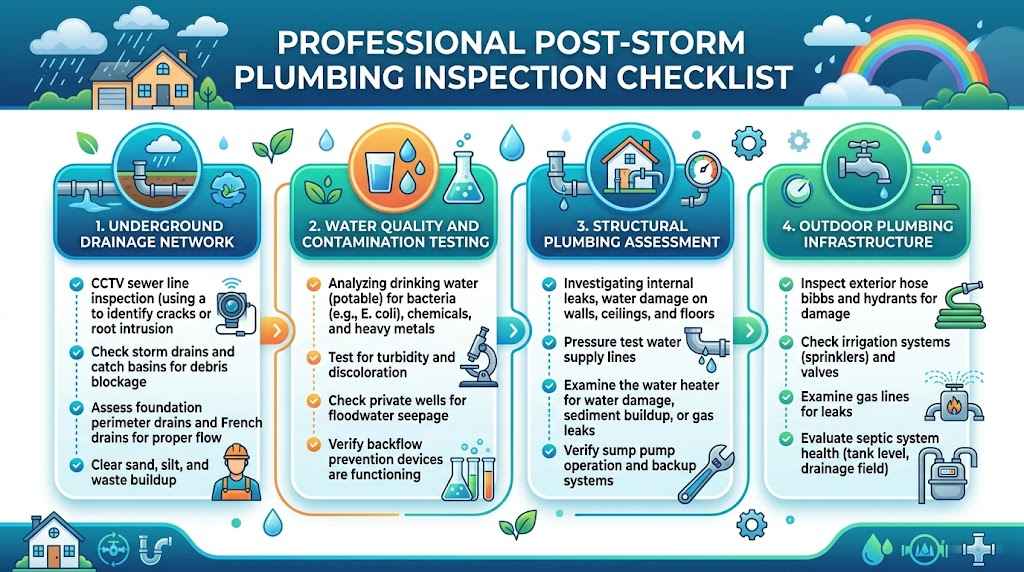
A comprehensive post storm plumbing inspection goes far beyond checking visible pipes and fixtures. Professional plumbers systematically examine every component of your plumbing system using specialised diagnostic equipment. This thorough approach identifies both immediate hazards and potential long-term problems that could develop into costly repairs.
Underground Drainage Network
CCTV cameras travel through your entire drainage network to identify cracks, displaced joints, and debris blockages. This inspection covers sewer lines, stormwater drains, and connection points to the Sydney Water main in the street. We document all findings with video footage and location mapping for repair planning.
Water Quality and Contamination Testing
Post-flood water systems require testing for bacterial contamination and chemical pollutants. We collect samples from multiple points in your system and arrange laboratory analysis. This testing ensures your water supply meets Australian Drinking Water Guidelines before you resume normal use.
Structural Plumbing Assessment
Foundation movement and soil shifting can misalign pipes and create stress points throughout your system. We check all visible pipe runs and connections for signs of movement or strain. This assessment helps prevent future failures at vulnerable connection points.
Outdoor Plumbing Infrastructure
Garden taps, irrigation systems, and pool equipment often suffer hidden damage during storms. We inspect all outdoor fixtures and underground sprinkler lines for leaks and blockages. Damaged outdoor plumbing can waste thousands of litres and increase your water bills significantly.
Next, we’ll explain how our team protects Sydney homes after severe weather events.
How Antons Plumbing and Gas Protects Homes After Storms and Flooding

When severe weather strikes Sydney, our emergency response team mobilises immediately to help affected homeowners. We understand that storm damage creates stress and uncertainty, so our approach focuses on clear communication and rapid problem-solving. Our 24/7 emergency service means you can call us any time for same-day response across all Sydney regions.
Our systematic approach begins with safety assessment and immediate hazard identification. We document everything thoroughly for insurance purposes while explaining each finding in plain English. This transparency helps you make informed decisions about repairs and gives you confidence in our recommendations.
Immediate Emergency Response
Our emergency team responds within hours of your call, not days. We carry specialised equipment for storm damage assessment and can begin temporary repairs immediately if needed. This quick response prevents further damage and reduces your stress during an already difficult time.
Comprehensive Documentation Process
Every inspection includes detailed photography, written reports, and technical diagrams that insurers require. We provide copies of all documentation and help explain findings to your insurance assessor. This professional documentation often speeds up claim processing and approval.
Safety-First Approach
We never compromise on safety when dealing with flood-damaged plumbing systems. All gas work is tested and certified to Australian Standards before we leave your property, in line with our NSW gasfitting licence conditions. Electrical components are thoroughly checked and isolated if necessary to prevent shock hazards.
Insurance Liaison Support
Our team works directly with insurance assessors and loss adjusters to explain technical findings and repair requirements. We provide detailed quotes in AUD that break down labour, materials, and compliance costs clearly. This cooperation helps ensure your claim covers all necessary repairs.
Long-term Prevention Planning
Beyond immediate repairs, we identify vulnerabilities and recommend improvements to prevent future storm damage. This might include backflow prevention devices, improved drainage, or pipe relining for ageing systems. These preventive measures protect your investment and reduce future risk.
Finally, let’s cover what you can safely do while waiting for professional help.
Safe Immediate Steps Homeowners Can Take Before a Plumber Arrives After Flooding

While waiting for professional help, there are several safe steps you can take to protect your property and family. Focus on safety first and avoid any work involving gas lines, electrical components, or underground systems. These immediate actions can prevent further damage and help you feel more in control during a stressful situation.
Turn Off Utilities Safely
Locate your water main shutoff valve and turn off the supply if you notice leaks or water damage. Switch off electricity to affected areas at the switchboard if water has entered power points or appliances. Never touch electrical switches or power points with wet hands or while standing in water.
Remove Standing Water
Use buckets, mops, or a wet vacuum to remove standing water from floors and low areas. Focus on areas around hot water systems, switchboards, and gas appliances first. Open windows and doors to improve ventilation and begin the drying process.
Document All Damage
Take photographs of water damage, affected appliances, and any visible plumbing problems. Include wide shots showing the extent of damage and close-ups of specific issues. Write down the date, time, and location of each photograph for insurance documentation.
Check for Obvious Leaks
Look for dripping pipes, wet walls, or pooling water around fixtures and appliances. Note any unusual sounds like running water or gurgling drains. Don’t attempt to fix these issues yourself, but knowing their location helps when the plumber arrives.
Avoid Using Damaged Systems
Don’t use toilets, sinks, or drains if you suspect sewage backup or contamination. Avoid using hot water if the system shows signs of damage or has been submerged. Wait for professional clearance before resuming normal use of any affected plumbing.
Ventilate and Dry Areas
Open windows and use fans to circulate air and speed drying in affected areas. Remove wet carpets, furniture, and belongings from flooded rooms if possible. Quick drying helps prevent mould after flooding and reduces damage to building materials.
Contact Your Insurance Company
Report storm damage to your insurer as soon as possible after the event. Provide them with your initial damage assessment and photographs. Ask about emergency repair coverage and approved contractors in your area.
Document everything with photographs for insurance purposes, but don’t attempt repairs yourself. Professional assessment is essential for safety and insurance compliance, but these preliminary steps can minimise ongoing damage.
Conclusion
Professional post storm plumbing inspection protects your family’s health and prevents costly hidden damage. Our emergency team responds same-day across Sydney with specialised equipment and insurance documentation. Call us for immediate storm damage assessment and peace of mind.
Antons Plumbing & Gas provides expert leak detection and burst pipe repairs after storm damage. Our fully licensed team (NSW Lic. 210933C) offers same-day service across Sydney Metro. Learn more about protecting your home today.
Related Articles
- Why Plumbing Quotes Often Increase During Winter and Storm Seasons
- How to Find Plumbers Near Me Now for Elderly Parents Living Alone
- Plumbers in Sydney: Hot Water Repairs & Installation
FAQs
What Plumbing Problems Should I Check For After A Major Storm Or Flooding Event?
After a major storm or flooding event, it’s essential to check for issues such as leaks, blockages in drains, and signs of water damage. Look for damp spots on walls or ceilings, overflowing gutters, and unusual odours, as these can indicate plumbing problems that require professional attention.
How Can A Plumber Help Prevent Mould And Structural Damage After Flooding?
A plumber can help prevent mould and structural damage by conducting a thorough inspection of your plumbing system, identifying leaks, and ensuring proper drainage. We can also recommend and implement solutions like pipe relining and waterproofing to protect your home from future water-related issues.
Do I Really Need A Professional Plumbing Inspection After Heavy Rain If Everything Looks Fine?
Yes, a professional plumbing inspection is crucial even if everything appears fine. Hidden issues, such as compromised pipes or drainage systems, may not be visible to the untrained eye. Our experienced team can identify potential problems before they escalate, ensuring your plumbing remains safe and functional.
What Parts Of My Drainage And Sewer System Are Most At Risk After Storms?
After storms, the most at-risk parts of your drainage and sewer system include gutters, downpipes, and sewer lines. Heavy rain can cause blockages from debris, while flooding can compromise the integrity of pipes. Our skilled plumbers conduct thorough inspections to assess and address these vulnerabilities effectively.
Can A Post Storm Plumbing Report Help With Insurance Claims And Repairs?
Yes, a post-storm plumbing report can be invaluable for insurance claims and repairs. Documenting the condition of your plumbing system helps substantiate your claim and guides necessary repairs. At Antons Plumbing & Gas, we provide detailed reports that can assist you in the claims process.
How Quickly Can Antons Plumbing & Gas Attend My Sydney Property After A Storm?
We run a 24/7 emergency callout service and aim to reach storm-affected properties across Sydney Metro on the same day you call. For urgent issues like a suspected sewage backup or a hot water unit that’s been submerged, call us on 0493 824 176 and we’ll prioritise your job.
Is Antons Plumbing & Gas Licensed To Carry Out Storm Damage Repairs In NSW?
Yes. Antons Plumbing & Gas holds NSW Lic. 210933C, which covers general plumbing, drainage and gas fitting work. This means any repairs we carry out, including sewer relining, hot water reconnections and gas isolations after a storm, meet NSW licensing and Australian Standards requirements.
Which Sydney Suburbs Do You Cover For Emergency Storm Plumbing?
We service homes across Sydney Metro, including the North Shore, Northern Beaches, Ryde, Hills District, Inner West and surrounding suburbs. If you’re unsure whether we cover your area, call 0493 824 176 and we’ll confirm availability for a same-day visit.
Do You Charge Extra For After-Hours Storm Callouts?
We’ll always confirm any applicable after-hours callout rate in AUD with you before we start work, so there are no surprises on the invoice. Ask our team for a clear, itemised quote when you book your emergency appointment.
How Do I Book An Emergency Plumber After A Storm Right Now?
The fastest way is to call us directly on 0493 824 176 for a same-day response, or use our online booking form to arrange an inspection. Have your address and a short description of the damage ready so we can send the right equipment.
Will You Help Me Deal With Sydney Water If The Fault Is In The Council Or Water Main?
Yes. During our inspection we’ll identify whether the fault sits on your private property or on infrastructure managed by Sydney Water or your local council, and advise you on the correct process, including lodging a Sydney Water notification if required.
Can You Provide A Written Report For My Insurance Claim?
Yes, every post-storm inspection includes a written report with photos and technical findings that you can submit directly to your insurer. We’re also happy to liaise with your assessor to explain the damage and recommended repairs.
What Should I Do First If My Hot Water System Was Flooded?
Don’t turn the unit on or attempt to use hot water until it’s been checked. If it’s a gas unit, isolate the gas supply if it’s safe to do so and call a licensed plumber/gas fitter to inspect electrical and gas connections before reconnection.
How Long Does A Full Post-Storm Plumbing Inspection Take?
Inspection time varies with the size of your property and the extent of the damage, since a full check includes CCTV drainage inspection, water testing and a structural review. We’ll give you a time estimate on site once we’ve assessed the scope of work.
Can A Blocked Stormwater Drain Affect My Neighbours Too?
Yes, blocked or damaged stormwater drains can cause overflow that affects neighbouring properties, particularly on shared or connected drainage lines. If you suspect this is happening, a licensed plumber can inspect the system and advise on the appropriate fix and any council notification needed.
Do You Offer CCTV Drain Inspection As A Standalone Service?
Yes, we offer CCTV drain inspections as a standalone service if you just want to check for storm-related cracks, root intrusion or blockages without a full plumbing assessment. This is a popular option for pre-purchase checks and post-storm peace of mind.
What Is Pipe Relining And Will It Fix Storm-Damaged Sewer Pipes?
Pipe relining is a trenchless repair method that installs a new pipe lining inside your existing damaged pipe, avoiding the need to dig up your yard or driveway. It’s often suitable for cracked or root-affected sewer pipes identified during a post-storm CCTV inspection – we’ll confirm suitability during your assessment.
Should I Get A Plumbing Inspection Every Storm Season, Or Only After A Major Event?
We recommend a professional check after any major storm or flooding event, and as a preventive measure before the Sydney storm season if your home has ageing clay pipes or a history of blockages. Regular checks catch small issues before they become expensive emergencies.
Is It Safe To Use My Toilet Or Shower If I Suspect A Sewage Backup?
No, avoid using any fixtures connected to the affected drain until a licensed plumber has inspected the system. Using toilets, showers or sinks during a suspected sewage backup can push contaminated water further into your home.