

A blocked kitchen sink during lunch service, an overflowing staff toilet or wastewater backing up through a floor drain can interrupt daily operations. For Sydney business owners, the immediate concern is understanding which areas are affected, preventing further wastewater entering the blockage and arranging an assessment.
A blocked drains plumber in Sydney can investigate the affected drainage, select a suitable clearing method and explain whether further inspection or repairs are needed. However, restoring flow does not automatically confirm that the underlying problem has been resolved.
This guide explains how to respond to business drain blockages, prepare for a plumber’s visit and compare recommendations before approving further work. Whether the premises is a café, office, retail tenancy or managed commercial building, these steps can help make the response more organised.
Key Takeaways
- Stop using fixtures that are backing up and keep people away from escaping wastewater.
- Provide the plumber with affected fixture locations, operating hours, access details and previous reports.
- Confirm the clearing scope, inspection costs and approval process before work begins.
- Ask for evidence supporting recommendations for camera inspection or pipe repairs.
- Plan maintenance around the findings and keep grease trap servicing separate from drain clearing.
What Should a Business Do When a Drain Starts Backing Up?

Stop using fixtures that are backing up and keep staff and customers away from escaping wastewater. Avoid running additional taps or flushing toilets to test the blockage, as this adds more water to the affected system.
Record which fixtures are affected and when the symptoms started. A single slow basin provides different information from several toilets and floor drains backing up together, although the cause still needs investigation.
When requesting blocked drain services in Sydney, prepare the following details:
- Affected areas: Identify sinks, toilets, floor wastes or equipment connections showing symptoms.
- Overflow location: Describe where wastewater is appearing without approaching contaminated areas.
- Operating hours: Explain when the premises is occupied and when access is available.
- Previous work: Share earlier clearing reports, camera footage or repair recommendations.
- Site contact: Nominate someone authorised to approve the proposed work.
- Building access: Explain loading restrictions, locked service areas and building management requirements.
Sydney Water advises people to stay clear of wastewater overflows and report them through its faults service; its wastewater blockage guidance explains the warning signs and reporting arrangements.
Coordinate Access When Drainage Serves Multiple Tenancies
If neighbouring businesses are experiencing similar symptoms, tell the plumber and building manager before work begins. Shared drainage may require access beyond the affected tenancy, and access arrangements can influence the investigation.
Confirm who can authorise the initial assessment and who must approve any additional repairs. Keep the technical findings separate from decisions about payment responsibility, which may require review of the lease and building arrangements.
Sydney Water’s service responsibility guidance explains the distinction between private infrastructure and its network. It does not, by itself, determine how a commercial landlord and tenant divide costs.
Ask What Caused the Commercial Drain Blockage
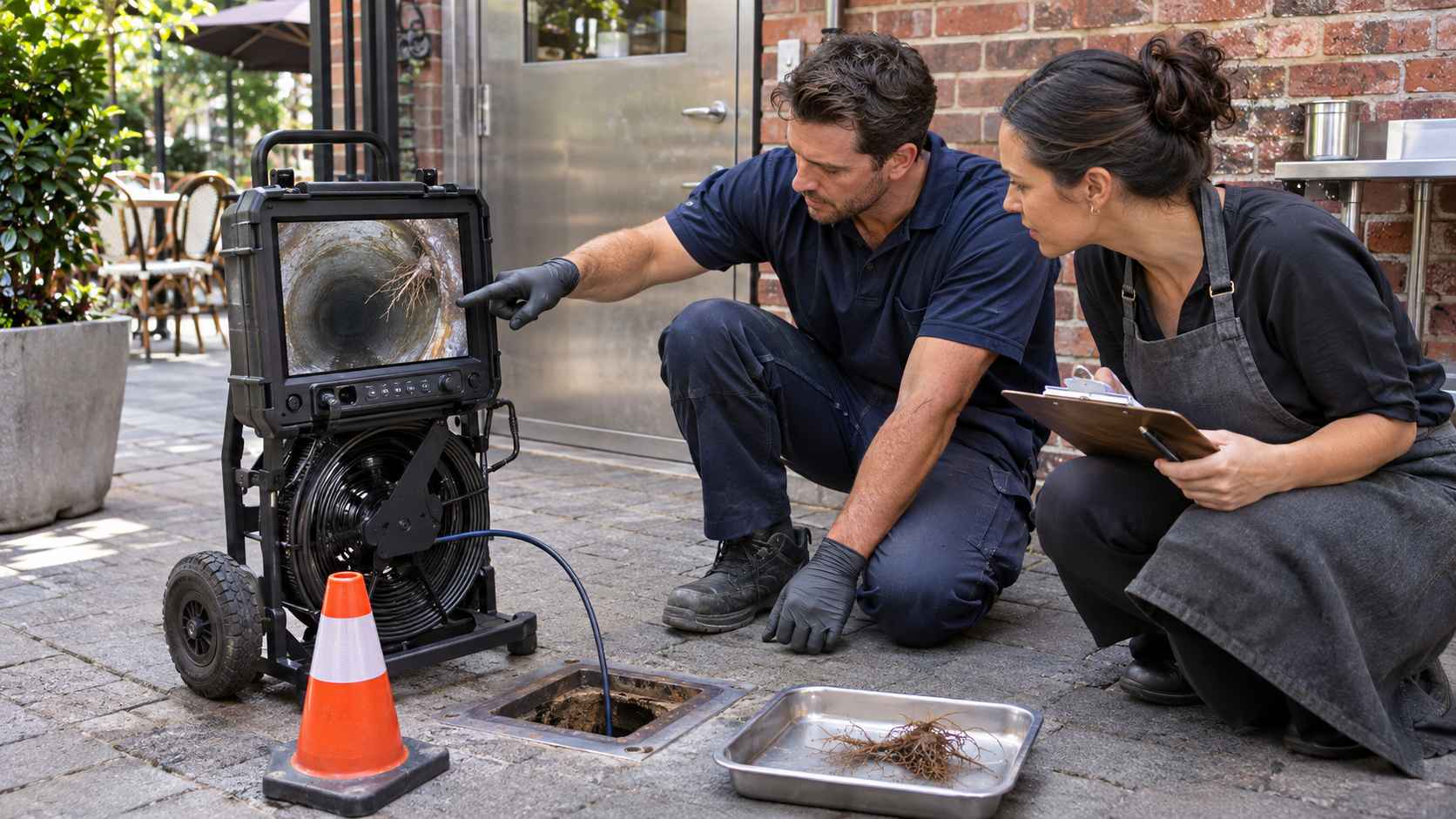
A useful drain-clearing visit should help establish what was removed, which section was treated and whether further investigation is necessary. Possible causes include accumulated grease, unsuitable waste, root intrusion and damaged pipework, but symptoms alone cannot confirm which applies.
Before approving further work, ask:
- Where was the obstruction located?
- What material was removed?
- Was the full affected section accessible?
- Was flow checked after clearing?
- Is there evidence of a defect that needs repair?
- What remains uncertain?
These questions help distinguish an immediate clearing service from a recommendation for additional investigation or pipe repairs.
When Is a CCTV Drain Inspection Worth Discussing?
A CCTV drain camera inspection may help investigate a recurring blockage or examine accessible pipework after clearing. Ask whether the inspection can answer a specific question, such as where roots are entering or whether a visible defect corresponds with the problem.
Request an explanation of the inspected section, any available footage and the limits of the inspection. If standing wastewater, debris or restricted access prevents a clear view, the findings should describe that limitation.
Compare Clearing With Longer-Term Repair Options
Drain clearing removes an obstruction; it does not necessarily repair the opening through which roots entered or correct a damaged section of pipe. If the same location repeatedly blocks, ask the plumber to explain whether the evidence supports further cleaning, monitoring or repairs.
Depending on the pipe’s condition and access, an assessment may include pipe relining or excavation and replacement. Request the reasons for the recommended method, its limitations and what reinstatement work is included before approving a repair.
Plan Drain Clearing Around Access and Operating Hours
Explain which facilities the business needs to operate and ask the plumber what restrictions are likely during assessment and clearing. Work affecting one isolated fixture may have different implications from a blockage involving shared toilets or the main drainage line.
Discuss equipment access, areas that need to remain clear and whether fixtures must be taken out of service. If work is proposed outside trading hours, confirm availability, access arrangements and any additional charges.
Avoid assuming that a cleared drain means every affected area is ready to reopen. Escaped wastewater, contamination and loss of essential facilities may require separate attention before normal operations resume.
What Should a Commercial Drain-Clearing Quote Include?
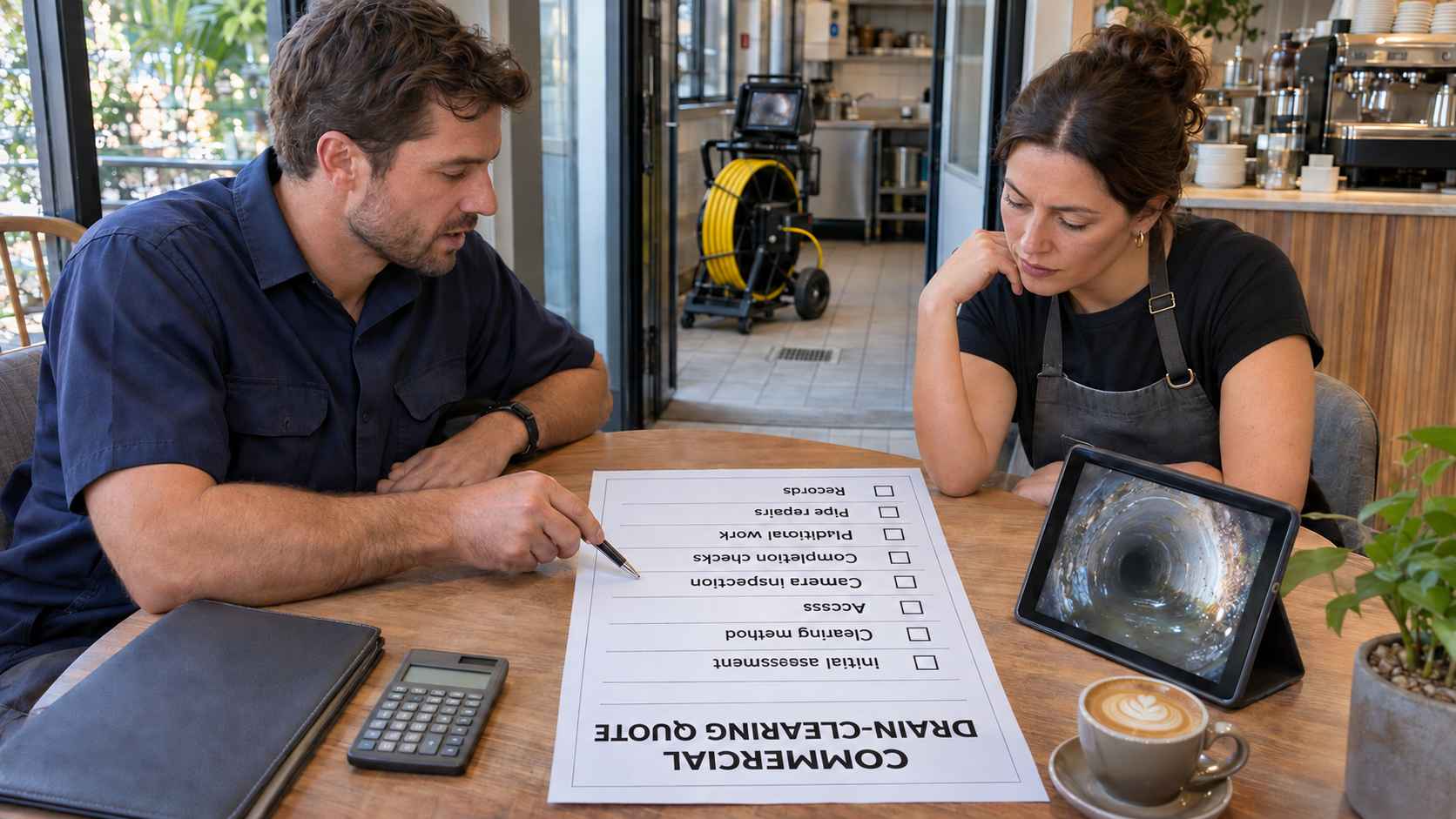
A clear quote helps the authorised site contact understand what is being approved and which findings could change the scope. Ask for the proposed work and any additional charges to be explained before proceeding.
| Quote item | What to clarify |
|---|---|
| Initial assessment | Which fixtures and drainage sections will be investigated? |
| Clearing method | What equipment is proposed, and why does it suit the pipework? |
| Access | Are restricted areas or additional access arrangements involved? |
| Camera inspection | Is CCTV inspection included or priced separately? |
| Completion checks | How will drainage be checked after clearing? |
| Additional work | What happens if the obstruction cannot be cleared within the agreed scope? |
| Pipe repairs | Are repairs separately quoted and subject to approval? |
| Records | What findings, images or footage will be provided? |
Where the full extent of the problem is unknown, ask the plumber to identify the limits of the initial service. This makes it easier to review additional recommendations against the findings.
Keep Grease Trap Servicing Separate From Drain Clearing
For cafés, restaurants and other food businesses, clearing a blocked pipe does not replace grease trap servicing. Tell the plumber where the grease trap is located, who maintains it and whether recent service records are available.
Sydney Water states that grease traps must be emptied, cleaned and maintained using a Wastesafe transporter. Its commercial trade wastewater guidance also explains that permit conditions govern equipment operation, maintenance and permitted discharges.
If blockages continue after clearing, review the drainage findings alongside the grease trap service history. Confirm whether the recommended follow-up concerns the pipework, the pre-treatment equipment or both.
Build a Maintenance Plan From the Findings

Commercial drain maintenance should reflect the site’s operating demands, previous blockage pattern and confirmed pipe condition. Ask what each recommended service is intended to achieve and why the proposed interval suits the premises.
Keep a record of the affected section, material removed, visible defects and any inspection limitations. Assign one person to store reports, track follow-up work and record new symptoms.
Staff can support the plan by reporting slow drainage early and following appropriate waste-handling procedures. Repeated symptoms should prompt a review of the cause rather than an automatic repeat of the previous treatment.
Arrange a Commercial Blocked Drain Assessment in Sydney
When requesting assistance from Anton’s Plumbing & Gas, describe the affected fixtures, any escaping wastewater and the impact on the premises. Include access restrictions, operating hours and previous drainage findings so the team can discuss the next steps.
Explore blocked drain assessment and clearing, drain camera inspections and pipe relining assessments, or request a booking for the affected premises.
Related Articles:
- Why Commercial Kitchens Need Regular Blocked Drains Services to Stay Compliant
- How CCTV Inspections Reveal the Real Cause Behind Persistent Blocked Drainage
- Blocked Sewer Plumber Checklists for Routine Inspections and Compliance
FAQS
How do I book a blocked drains plumber for my Sydney business?
Use Anton’s Plumbing & Gas’s booking enquiry form to provide the premises address, affected fixtures and available access times. Mention any overflow, loss of toilet facilities or interruption to operations so the team can discuss urgency and attendance.
What information should I provide when requesting a commercial drain-clearing quote?
Describe where the symptoms occur, when they started and whether previous clearing has been carried out. When requesting a blocked drain assessment, include access restrictions, operating hours and existing inspection reports to help clarify the scope.
Can Anton’s Plumbing & Gas attend outside our trading hours?
Ask about your preferred attendance time when submitting a booking enquiry, including who can provide access and approve work. Confirm availability and applicable charges before arranging an evening, overnight or weekend visit.
When should I request urgent help for a business drain blockage?
Seek prompt assessment when wastewater is escaping, multiple fixtures are backing up or essential facilities cannot be used. Describe these conditions when arranging blocked drain services so the plumber can discuss the immediate response.
Will our business need to close during drain clearing?
The impact depends on the affected drainage, usable facilities, contamination and access required for the work. Ask the plumber to explain likely service interruptions when discussing your drain-clearing booking, then assess whether the premises can operate safely.
Which questions should I ask before approving the quote?
Ask what assessment, clearing, completion checks and records are included, along with any exclusions or additional charges. Request clarification through the booking contact if camera inspection or pipe repairs are listed as separate services.
Is CCTV inspection included in every commercial drain-clearing service?
Confirm whether camera inspection is included in the proposed scope or requires separate approval. A drain camera inspection should have a clear purpose, particularly when investigating recurring symptoms or checking accessible pipework.
Why does the same drain keep blocking after it has been cleared?
Recurring blockages can indicate persistent waste accumulation, root entry or a pipe defect that clearing alone has not addressed. Ask whether a CCTV drain inspection could help identify the affected section and guide further recommendations.
Could pipe relining suit the damaged drain at our premises?
Suitability depends on the confirmed defect, existing pipe condition and available access. Request a pipe relining assessment and ask how the proposed method compares with replacement for the affected section.
Does root removal mean the pipe problem is permanently repaired?
Removing roots can restore flow while leaving the entry point unresolved. Before approving repeat clearing, ask whether the findings support a pipe repair or relining assessment.
Who should authorise work in a leased commercial property?
Nominate an authorised site contact and clarify landlord or managing-agent involvement before approving work. Share the assessment request and subsequent findings with the relevant parties so scope and payment arrangements can be reviewed.
What happens if the blockage affects neighbouring tenancies?
Notify building management and explain the wider symptoms when arranging a blocked drain assessment. Ask whether access to shared areas or adjacent premises is needed before confirming the appointment.
Should I contact Sydney Water or arrange a private plumber?
The appropriate response depends on the location of the blockage and whether private drainage or Sydney Water infrastructure is involved. Consult Sydney Water’s service responsibility guidance and explain any uncertainty when requesting assistance.
Can a café book drain clearing instead of grease trap servicing?
Drain clearing addresses an obstruction in the pipework and does not replace required grease trap maintenance. Sydney Water’s commercial trade wastewater guidance explains the requirement to use a Wastesafe transporter for grease trap emptying, cleaning and maintenance.
How should our kitchen prepare for a plumber’s visit?
Stop using affected fixtures, keep access routes clear and provide grease trap service records or previous drainage reports where available. Include equipment locations and operating constraints in the booking enquiry so access can be discussed beforehand.
Are written findings or camera footage available after the inspection?
Ask what reporting and footage are included before approving a drain camera inspection. Request that the findings identify the inspected section, observed issues and any limits caused by access or visibility.
Would scheduled maintenance help reduce repeat business drain blockages?
A maintenance plan may help manage recurring accumulation when its scope and timing reflect the site’s findings. Ask the plumber to explain the proposed tasks and review interval after the initial blocked drain assessment.
What if clearing does not restore normal drainage?
Ask the plumber to explain what prevented completion, which fixtures remain affected and what further investigation is recommended. Approve any expanded scope or separately quoted camera inspection only after its purpose and cost are clear.
Must excavation be approved immediately if pipe damage is found?
Request an explanation of the defect, urgency and available repair options before approving excavation. Ask whether a pipe relining assessment is appropriate and confirm the access, disruption and reinstatement included in each option.
Where can I request an assessment before our next busy trading period?
Submit a commercial drainage booking enquiry with the premises location, symptoms and preferred attendance window. Include previous blockage dates and reports so the team can discuss assessment and potential follow-up work.