Toilet paper is designed to break down in water, but clogs can still happen when too much is flushed at once or when paper catches on other debris in the drain. It’s understandable to look for a chemical fix when the toilet is slow to clear and you want to avoid a call-out. The risk is that the wrong product—or using it the wrong way—can damage seals and pipework, create fumes, or shift the blockage deeper into the line.
This guide explains what chemical dissolves toilet paper, how each option works, and what to consider before using anything in your toilet. You’ll also learn when DIY methods are unlikely to work and why professional drain clearing is often the safer option for Sydney homes.
Key Takeaways
- Caustic soda, bleach, and enzymatic cleaners can break down toilet paper, but each can cause problems if used incorrectly.
- Toilet paper is made from cellulose and calcium carbonate, and different chemicals affect these materials in different ways.
- Misusing drain chemicals can damage pipework, release toxic fumes, and still leave the blockage in place.
- CCTV drain inspections show what’s actually causing clogs that keep coming back—so you can fix the right problem.
- Anton’s Plumbing & Gas provides same-day, fixed-rate drain clearing across Sydney with no call-out fee.
What Chemical Dissolves Toilet Paper and How Does It Work?
Toilet paper is mainly made from cellulose, which swells and weakens when it absorbs water. Most brands are designed to break apart quickly, but paper can still clump together and lodge in a bend, especially when large amounts are flushed at once. When that happens, certain products can speed up breakdown by loosening fibres, weakening binding agents, or digesting organic material over time.
Caustic Soda (Sodium Hydroxide)
Caustic soda is a strong alkali that reacts with organic matter, including cellulose, and can break apart toilet paper faster than water alone. When it mixes with water, it generates heat and helps weaken the bonds holding paper fibres together, which can soften a fresh paper clog. Because it is highly corrosive and can burn skin and eyes, it must be handled carefully with gloves, eye protection, and good ventilation, and it should never be mixed with other cleaning products.
Bleach (Sodium Hypochlorite)
Bleach works through oxidation and hydrolysis, which helps break down some organic compounds and can soften small amounts of toilet paper. It is more commonly used for disinfecting and whitening, so its clog-clearing effect is usually limited compared with dedicated drain products. Bleach must never be mixed with acids or ammonia-based cleaners because it can release toxic gas, and repeated use can degrade rubber seals and affect certain finishes over time.
Enzymatic Drain Cleaners
Enzymatic cleaners use bacteria and enzymes to digest organic waste, including toilet paper, gradually breaking down the clog rather than forcing it through. They are generally gentler on pipes and are often considered safer for septic systems, making them better suited for maintenance or mild blockages. The trade-off is speed: they typically need hours or overnight to work and will not clear non-organic items like wipes, sanitary products, or foreign objects.
Acidic Solutions (Phosphoric Acid)
Mild acids such as phosphoric acid can soften cellulose and may help loosen very small toilet paper clogs over time. Some people try cola drinks because they contain phosphoric acid, but the concentration is low, so results are inconsistent and usually limited to minor issues. These acidic approaches can also leave residue that attracts debris, so they are not a reliable long-term solution for drain health.
Chemical options can help with minor, paper-only blockages, but they work best when the clog is fresh and there are no non-dissolvable materials involved. For stubborn or recurring clogs, mechanical clearing (plunger or toilet auger) and professional diagnosis are typically faster and more reliable. If you’re dealing with repeat blockages, it often points to a deeper drain restriction rather than the toilet paper itself.
Risks of Using Chemicals to Dissolve Toilet Paper
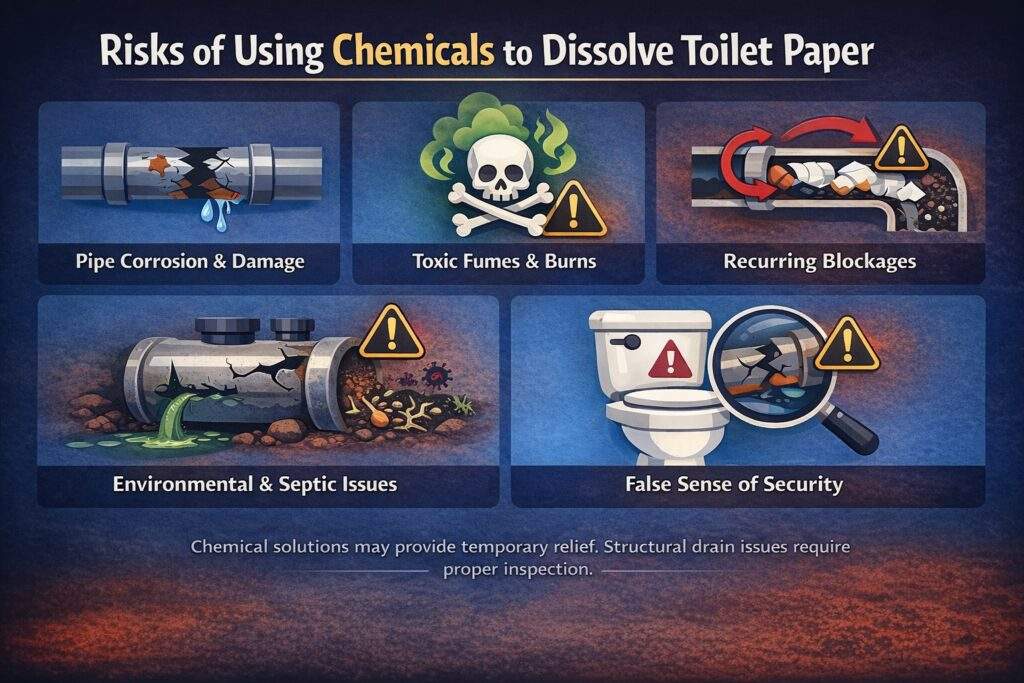
Chemical drain cleaners can seem like a quick fix, but they often introduce risks that outweigh the short-term convenience. Strong formulas can damage pipes, create serious health hazards, and still fail to remove the real cause of a blockage. Before using any chemical product in a toilet, it’s important to understand how these risks show up in real homes and why problems can return quickly.
Pipe Corrosion and Damage
Caustic soda and strong acids can corrode metal pipework, weaken PVC joints, and degrade rubber seals, especially when used repeatedly. In older Sydney properties with clay or cast-iron drains, harsh chemicals can accelerate deterioration by thinning pipe walls and attacking weakened connections. Over time, that can lead to leaks or failures that cost far more than the original blockage.
Toxic Fumes and Burns
Many chemical cleaners release fumes that irritate the eyes, nose, and throat, particularly in small bathrooms with limited ventilation. The biggest danger is mixing products—bleach with acids or ammonia-based cleaners can produce toxic gases that are hazardous even at low exposure. That’s why label directions, ventilation, and proper protection matter—especially in small bathrooms.
Incomplete Blockage Removal
Chemicals may soften toilet paper but leave other clog material behind, which means the blockage can return soon after the toilet clears. Items like wet wipes, sanitary products, hair, and grease do not break down easily and can remain lodged in bends or junctions. If the clog shifts deeper, it can be harder to clear with a plunger or auger and more likely to come back.
Environmental and Septic Concerns
Strong chemical cleaners can kill beneficial bacteria in septic tanks, disrupting the natural breakdown of waste and leading to odours, poor performance, and more frequent servicing. If pipework is already compromised, chemicals can also contribute to contamination risks by moving through cracks or failed joints. Enzymatic cleaners are generally safer for septic systems, but they still need correct use and enough time to work, and they won’t solve structural drain issues.
False Sense of Security
A toilet that flushes after chemicals are used can create the impression the problem is solved when the underlying cause is still there. Recurring clogs are often linked to tree roots, collapsed sections of pipe, poor drain gradient, or rough internal surfaces that catch paper and debris. Without inspection, it’s easy to keep treating symptoms while the underlying drain issue gets worse.
Chemical options may help in very minor, paper-only situations, but they are rarely the safest or most reliable long-term approach. If blockages keep returning, the best next step is usually mechanical clearing and a proper diagnosis to find the real cause. Addressing the source early protects your plumbing, reduces damage risk, and prevents repeat call-outs.
Why Professional Drain Clearing Beats DIY Chemicals
Chemical drain cleaners can look like the fastest option, but they often don’t remove what’s actually blocking the line—especially when wipes, hair, grease, or built-up debris are involved. Professional drain clearing is safer and more thorough because it’s based on diagnosis first, not guesswork. A licensed plumber can clear the obstruction properly and reduce the chance of the same problem returning a few days later.
With a CCTV drain inspection, we can see inside the pipe and pinpoint the exact cause—tree roots, a damaged section, or a build-up point that keeps catching waste. That clarity helps choose the right fix straight away, including pipe relining when the pipe is structurally compromised and needs reinforcement without excavation. For clearing blockages, hydro-jetting uses high-pressure water to remove grease, scale, roots, and years of build-up while cleaning the pipe walls, which is far more effective than pouring chemicals into a toilet.
We keep it straightforward with fixed-rate pricing so you know the cost before work begins, plus same-day service across Sydney (Inner West, Eastern Suburbs, North Shore, Northern Beaches, Hills District, Western and South-Western Sydney, and Sutherland Shire). You can call us 24/7 on 0493 824 176 and we’ll diagnose the issue, explain your options clearly, and complete the work to Australian Standards. All work is backed by a lifetime labour warranty, and we operate under NSW Fair Trading licensing and AS/NZS 3500 requirements (Lic: 210933C) for a compliant, long-term result.
Real-World Example from a Sydney Home
A homeowner in the Inner West called us after trying caustic soda to clear a toilet blockage. The chemical dissolved some of the toilet paper but left a clump of wet wipes and hair deeper in the drain. The homeowner poured more caustic soda, which corroded a rubber seal and caused a slow leak under the bathroom floor.
We arrived the same day, performed a CCTV inspection, and located the blockage and the damaged seal. We used hydro-jetting to clear the debris and replaced the corroded seal. The entire job took a few hours, and the homeowner avoided the cost of replacing water-damaged flooring.
This case shows why chemicals are not always the answer. A proper diagnosis and professional tools prevent secondary damage and save you money in the long run.
How Antons Plumbing & Gas Protects Your Sydney Plumbing

We’re a family-owned team with over 25 years of experience helping Sydney homeowners, strata managers, and local businesses with blocked drains and plumbing issues. We focus on doing the job properly the first time, with clear options, upfront pricing, and no call-out fee. Every job is completed to Australian Standards, and we document what we find so you’re not left guessing.
Our services include blocked drain clearing, CCTV drain inspections, pipe relining, leak detection, burst pipe repairs, hot water system installation, gas fitting, backflow testing, toilet and tap repairs, and bathroom renovations. We use quality parts from trusted brands, document our findings, and leave your space clean and tidy.
We serve the greater Sydney region, including the Inner West, Eastern Suburbs, North Shore, Northern Beaches, Hills District, Western and South-Western Sydney, and Sutherland Shire. Same-day service and 24/7 emergency response mean help is always a phone call away.
Conclusion
Chemicals can soften toilet paper, but they’re not a reliable fix when the blockage includes wipes, hair, grease, or debris deeper in the drain. Professional drain clearing is usually the safer option because it clears the line properly and checks what’s causing the blockage at the same time. If clogs keep coming back, or you’re seeing slow drainage and backups, it’s often a sign the problem is further down the pipe and needs inspection.
Antons Plumbing & Gas offers expert blocked drain solutions across Sydney Metro with same-day service available. Our licensed team uses safe methods to clear stubborn blockages without damaging your pipes. Contact us today to get started.
Related Articles
- How to Dissolve Toilet Paper Clogs Fast
- Can Too Much Toilet Paper Clog a Toilet? Here’s What You Should Know
FAQs
Can Vinegar Break Down Toilet Paper?
Vinegar is a mild acid and can slightly soften toilet paper over time, but it does not dissolve it quickly or effectively. It may help loosen a very small, fresh clog when combined with hot water, but it is not strong enough to clear compacted or deep blockages. For anything more than minor paper buildup, vinegar alone is unlikely to solve the problem.
What Acid Dissolves Toilet Paper?
Stronger acids, such as sulfuric acid (found in some industrial drain cleaners), can break down organic material like toilet paper by attacking the cellulose structure. However, these acids are highly corrosive and dangerous to handle, and they can damage pipes, especially PVC, rubber seals, and older metal drains. Because of the safety and plumbing risks, acid-based cleaners are not recommended for routine toilet clogs.
How to Get Toilet Paper to Break Down Faster?
Hot (not boiling) water can help soften toilet paper and speed up natural breakdown. Adding dish soap can reduce friction and help separate fibres, while enzymatic drain cleaners can digest organic material gradually. The key is giving the solution time to work and avoiding repeated flushing, which can compact the paper further into the drain.
Will Hydrogen Peroxide Dissolve Toilet Paper?
Hydrogen peroxide is a mild oxidizer and can slightly weaken organic material, but it is not strong enough to dissolve toilet paper effectively in a clogged drain. It may help with minor organic residue, but it will not break down compacted paper or remove non-organic debris. It is not considered a reliable method for clearing toilet blockages.
What Chemical Dissolves Toilet Paper Overnight?
Enzymatic drain cleaners are the safest option for breaking down toilet paper overnight because they use bacteria and enzymes to digest organic material gradually. Caustic soda can act faster, but it carries significant safety and pipe-damage risks if misused. Even overnight treatments will not clear clogs caused by wipes, sanitary products, tree roots, or structural drain issues, which usually require mechanical clearing or professional inspection.