A blocked toilet is one of the most stressful plumbing emergencies a homeowner can face. Water rises, panic sets in, and the risk of overflow and water damage becomes very real. Recognizing the early signs of a clogged toilet can save you from a messy disaster and expensive repairs. Acting fast when you notice these warning signs means you can call in professional help before the problem escalates into something far worse.
In this guide, we walk you through the most common warning signs your toilet is clogged, what causes blockages, and why prompt action matters. You’ll also learn when to call a licensed plumber and how our team at Antons Plumbing & Gas can help you clear drains quickly, safely, and with minimal disruption to your day.
Key Takeaways
- Slow drainage and rising water levels are the earliest signs toilet is clogged and should never be ignored.
- Gurgling sounds and bad odours often indicate a partial blockage or venting issue in your waste line.
- Multiple plunging attempts without success mean the blockage is deeper and requires professional tools like a drain snake or CCTV inspection.
- Ignoring these signs can lead to overflow, water damage, contamination, and costly emergency repairs.
- Same-day service from a licensed Sydney plumber helps you avoid major damage and restore normal function fast.
Early Warning Signs of a Clogged Toilet
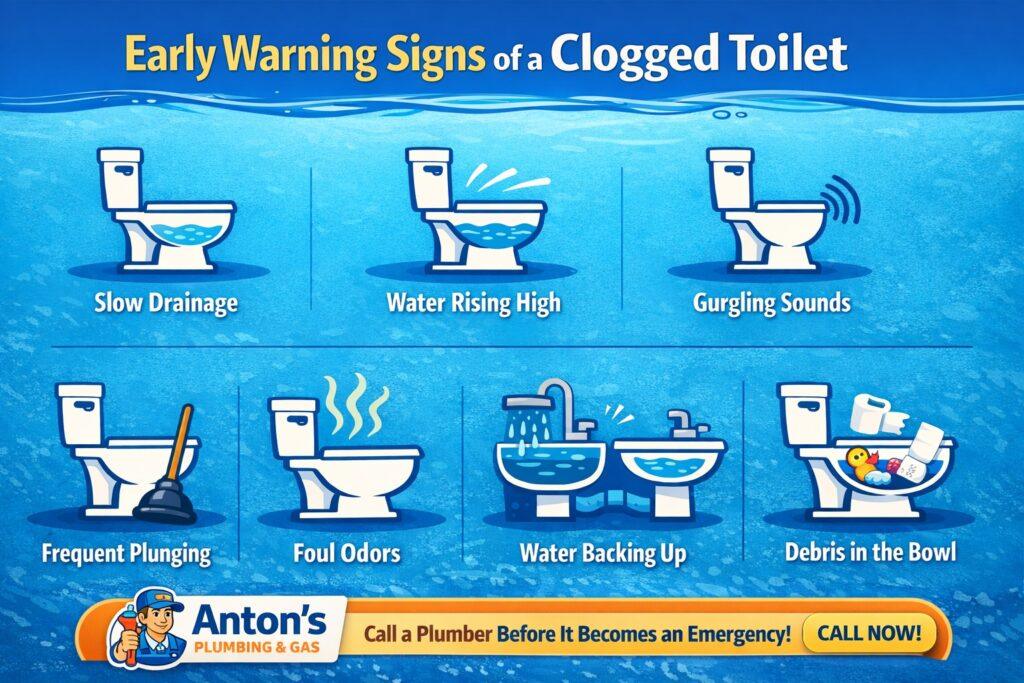
Toilets rarely block without warning. Most clogs develop gradually, giving you time to act before the situation becomes urgent. Paying attention to these early signals can prevent a full blockage and the chaos that comes with it. Here are the most reliable signs your toilet is clogged and needs attention.
1. Slow Drainage After Flushing
When you flush, the water should disappear quickly and completely. If the bowl drains slowly or water lingers for several seconds, you likely have a partial blockage forming in the trap or waste pipe. This is one of the first signs toilet is clogged, and it often gets worse over time as more material accumulates.
2. Water Rises Higher Than Normal
A healthy flush sends water down immediately. If the water level rises toward the rim before slowly draining away, the flow is restricted somewhere in the line. This rising water is a clear red flag that a blockage is building and could lead to overflow on the next flush.
3. Gurgling Sounds During or After Flushing
Strange noises coming from your toilet or nearby drains suggest trapped air in the plumbing system. Gurgling often means a partial clog is preventing smooth water flow, forcing air to bubble up through the bowl. It can also indicate a venting problem, which affects drainage throughout your home.
4. Unpleasant Odours Coming From the Bowl
A foul smell that lingers around your toilet is more than just unpleasant. It usually means waste is sitting in the pipe instead of flowing away cleanly. Decomposing material trapped in a partial blockage releases gases that escape back into your bathroom, signaling an urgency to go to the toilet for professional clearing.
5. Frequent Need to Plunge
If you find yourself reaching for the plunger after every second or third flush, the problem is not going away on its own. Repeated plunging is a temporary fix that masks a deeper issue. The blockage is likely too far down the line or too stubborn for a plunger to resolve, and professional equipment is needed.
6. Water Backs Up in Other Fixtures
When flushing the toilet causes water to bubble up in your shower drain or basin, you’re dealing with a shared waste line blockage. This is a serious sign that the clog is affecting multiple fixtures and requires immediate attention to prevent sewage backup into your home.
7. Visible Debris or Foreign Objects in the Bowl
Sometimes the cause is obvious. Excessive toilet paper, sanitary products, wet wipes, or toys can create an instant blockage. Even if the water eventually drains, these items don’t break down and will cause recurring problems until they’re physically removed from the pipe.
What Causes Toilets to Clog?
Understanding what leads to blockages helps you prevent them in the future. Most clogs are avoidable with a bit of awareness and routine care. Below are the most common culprits behind a blocked toilet in Sydney homes.
- Too much toilet paper: Flushing large wads of paper at once overwhelms the pipe and creates a dense plug that won’t break down quickly.
- Non-flushable items: Wet wipes, cotton buds, sanitary pads, and dental floss do not dissolve and should never go down the toilet.
- Foreign objects: Children’s toys, phone accessories, and other hard items can lodge in the trap and cause a complete blockage.
- Low-flow or old toilets: Older models or poorly designed low-flow toilets may lack the flushing power to clear waste effectively, leading to frequent clogs.
- Tree root intrusion: In older Sydney properties with clay pipes, tree roots can grow into the sewer line and catch debris, creating a persistent blockage.
- Blocked vent stack: Your plumbing system needs air to flow properly. A blocked vent on the roof can slow drainage and cause gurgling, even if the waste pipe itself is clear.
If you’re dealing with recurring blockages despite careful use, the problem may be structural. Our team uses CCTV drain inspection to identify root intrusion, pipe damage, or incorrect falls in your waste line so we can recommend the right repair, whether that’s a targeted clearing, pipe relining, or replacement.
Preventing Future Toilet Clogs
Once your toilet is flowing freely again, a few simple habits can help you avoid future blockages. Prevention is always easier and cheaper than emergency repairs, and most clogs are entirely avoidable with a bit of care.
- Flush only waste and toilet paper: Nothing else belongs in your toilet. Keep a small bin in the bathroom for wipes, cotton products, and other items.
- Use less toilet paper per flush: If you need a lot of paper, flush twice rather than overloading the system in one go.
- Teach children what not to flush: Toys, crayons, and other objects are common causes of blockages in family homes.
- Schedule regular drain maintenance: An annual inspection and clean can catch small issues before they become big problems, especially in older homes.
- Consider pipe relining if you have tree roots: If roots are a recurring issue, relining creates a smooth, seamless inner pipe that roots can’t penetrate.
- Upgrade old toilets: If your toilet is decades old and clogs frequently, a modern dual-flush model may offer better performance and water efficiency.
If you’re unsure whether your plumbing is in good shape, our team can perform a preventive CCTV inspection and provide a clear report on the condition of your waste lines. It’s a small investment that can save you from major repairs down the track.
When to Call a Professional Plumber
Some toilet clogs are simple enough to fix with a plunger. Others require professional tools, experience, and compliance with Australian plumbing standards. Knowing when to stop DIY attempts and call in a licensed plumber can save you time, money, and frustration.
If plunging doesn’t clear the blockage after two or three attempts, the obstruction is likely too deep or too solid for a plunger to reach. Continuing to plunge can damage the wax seal or crack the porcelain, creating a bigger problem. A professional plumber uses a drain snake or electric eel to physically break up or retrieve the blockage without damaging your fixtures.
When multiple drains in your home are slow or backing up, the issue is not isolated to one toilet. This points to a main sewer line blockage, which requires CCTV inspection and possibly high-pressure jetting to clear. These are not DIY jobs, and attempting them without the right equipment can make the situation worse.
If you notice water pooling around the base of your toilet, the wax seal may be compromised, or the blockage is causing pressure that’s forcing water out through the weakest point. This needs immediate attention to prevent floor damage and potential sewage contamination.
Why Choose Antons Plumbing & Gas for Blocked Toilets in Sydney
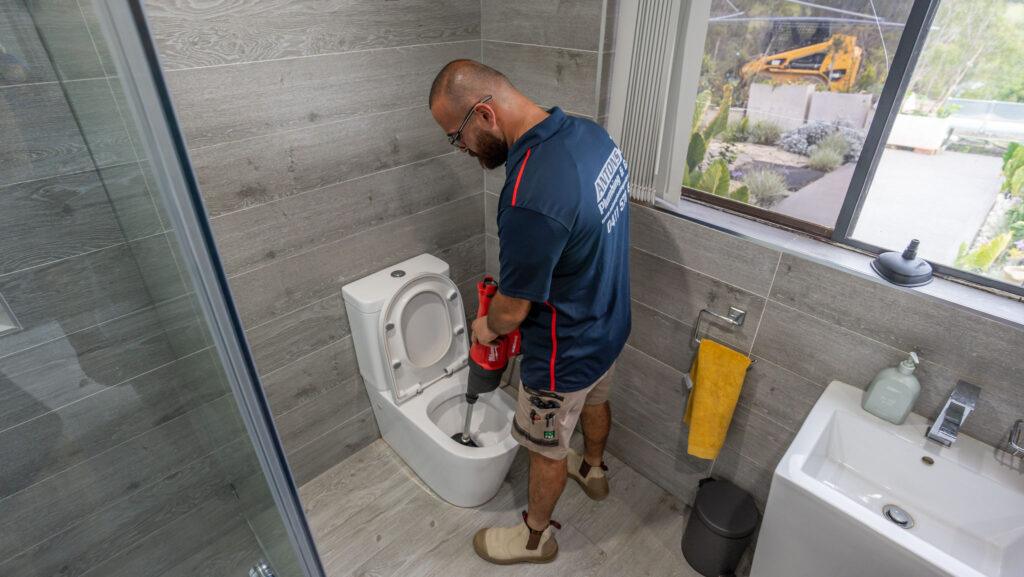
When you’re dealing with a clogged toilet, you need a plumber who responds fast, works clean, and fixes the problem properly the first time. That’s exactly what we deliver. Our team is licensed (Lic: 210933C), experienced, and equipped to handle everything from simple blockages to complex sewer line issues across the Sydney Metro.
We offer same-day service with no call-out fee, so you’re not left waiting or paying extra just to get a plumber to your door. Our pricing is fixed-rate and explained upfront, so there are no surprises when the job is done. Whether you’re in the Inner West, Eastern Suburbs, North Shore, or anywhere across greater Sydney, we’re ready to help 24/7.
Every job is backed by a lifetime labour warranty, and we work to AS/NZS plumbing standards to ensure your system is safe, compliant, and built to last. From CCTV inspections and high-pressure jetting to pipe relining and toilet replacements, we tailor our approach to your home and your needs.
If you’re noticing any of the warning signs of a clogged toilet, don’t wait for the problem to get worse. Call us on 0493 824 176 or book online for fast, reliable service from a team that treats your home with respect and gets the job done right.
Conclusion
Recognizing the signs of a clogged toilet early gives you the chance to act before overflow and damage occur. Slow drainage, rising water, and gurgling sounds are your cue to call a licensed plumber who can clear the blockage safely and completely. Fast action protects your home, your health, and your budget—so don’t ignore the warning signs.
Antons Plumbing & Gas offers expert blocked drain solutions backed by 25 years of experience. We provide same-day service across Sydney with upfront pricing. Contact us today to get started.
Related Articles
- Why Your Shower Gets Cold When Other Faucet Runs
- 5 Simple Ways to Unclog Toilet Without a Plunger
- 5 Common Clogged Toilet Fixes for Sydney Homeowners
FAQs
What Are The Signs Of A Clogged Toilet?
Common signs of a clogged toilet include water rising in the bowl when flushing, gurgling sounds, slow drainage, and unpleasant odors. If you notice any of these symptoms, it’s time to act quickly to prevent further issues.
How Do You Know If Your Toilet Is Clogged?
You can tell your toilet is clogged if the water level rises unusually high after a flush or if it drains slowly. Additionally, if you hear gurgling noises from the bowl or the pipes, it’s a clear indication of a blockage.
What Happens When A Toilet Is Clogged?
A clogged toilet can lead to overflow, causing water to spill onto your bathroom floor. This can create a mess and potentially damage your flooring. Prolonged clogs can also lead to more serious plumbing issues, so addressing them promptly is essential.
What Should I Do If My Toilet Is Clogged?
If your toilet is clogged, try using a plunger to dislodge the blockage. If that doesn’t work, avoid flushing again and consider calling a professional plumber like Antons Plumbing & Gas. Our experienced team can quickly diagnose and resolve the issue, ensuring your plumbing is back in working order.
Can A Clogged Toilet Cause Other Plumbing Issues?
Yes, a clogged toilet can lead to additional plumbing problems if not addressed promptly. It can cause backups in the sewer line, affect other fixtures, and lead to costly repairs. Regular maintenance and prompt action can help prevent these complications.