

A dripping tap is the plumbing job most people put off longest — and the one quietly costing you money every day. Most are a straightforward fix, and we’ll tell you when a repair beats a replacement.

Almost every household has one: the tap that drips, the mixer that’s gone stiff, the shower tap you have to turn just so or it weeps. They’re easy to live around, which is exactly why they get left for months.
The thing that surprises people is the cost. A steadily dripping tap wastes a genuinely significant volume of water over a year, and if it’s the hot tap you’re paying to heat every drop of it. It also isn’t static — a worn washer or cartridge keeps wearing, and a slow drip becomes a constant run.
Most tap problems are a worn internal component rather than a failed tap, which means a repair is usually the sensible option. Where a tap is old, corroded or a discontinued design with no parts available, replacement makes more sense — and we’ll tell you which situation you’re in before doing anything.
If any of these sound familiar, it’s worth booking rather than waiting.
If several taps have gone stiff or noisy at once, it’s often a water pressure or supply issue rather than the taps themselves — worth mentioning when you book.
Taps fail in a small number of predictable ways, and the symptom usually tells us what to bring.
Almost always a worn washer, seat or cartridge inside the tap.
Failed O-rings or a worn spindle allowing water past the seal.
The seat has worn or scored, so the washer no longer seals against it.
Mineral build-up or a corroded spindle, common in older tapware.
The fixing nut underneath has worked loose, or the mounting has failed.
Usually a blocked aerator, sometimes air or a partially closed isolation valve.
A worn washer vibrating against the seat as water passes.
A bang in the pipes when the tap shuts — a pressure and pipework issue, not the tap itself.
Tapware has consumable parts inside it. Most faults are those parts reaching the end of their life.
The classic cause on traditional taps. The rubber washer compresses and hardens over years of use until it no longer seals.
The brass surface the washer presses against gets scored over time, so even a new washer can’t seal properly. This is why a tap that’s been over-tightened for months often needs the seat reground.
Mixer taps use a ceramic cartridge rather than washers. When it wears, the tap either drips or becomes stiff — replacing the cartridge usually restores it completely.
Deposits accumulate on internal components and aerators, restricting flow and stiffening the action.
Excessive mains pressure accelerates wear on every seal in the house, and causes water hammer. Where pressure is consistently high, a pressure limiting valve addresses the cause rather than the symptom.
Older tapware, particularly in coastal areas, corrodes at the fittings and eventually reaches the point where repair isn’t practical.
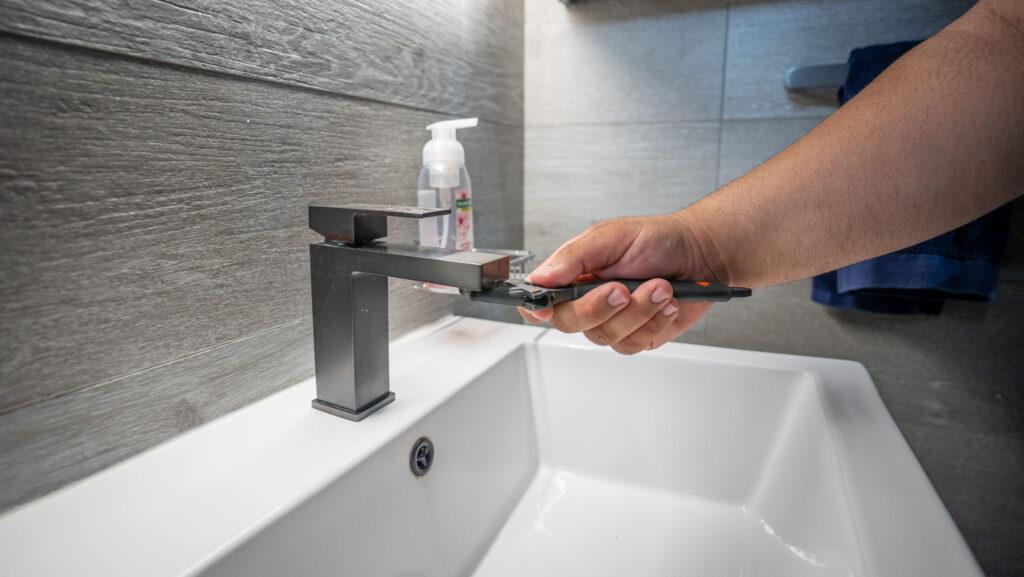
It’s the easiest plumbing fault to ignore, and it doesn’t stay the same size.
Tell us which tap and what it’s doing — we’ll bring the parts.
No guesswork and no surprise bills. Every job runs the same way, so you know what’s happening and what it costs before work begins.
Which tap, whether it drips, weeps or sticks, and roughly how old the tapware is. That tells us what parts to carry.
At the fixture's isolation valve where there is one, or at the meter where there isn't. Usually a short interruption.
The internal components come out and we can see what's actually worn — washer, seat, O-rings or cartridge.
If the tap is sound and parts are available, we repair. If it's corroded or discontinued, we'll say so and price a replacement.
Washers, seats, O-rings or cartridges replaced, seats reground where needed, and the tap reassembled properly.
We run the tap under normal use and check for leaks. While we're there, we'll flag any other tapware heading the same way.
Cartridge, O-ring and spout seal faults.
Traditional pairs and single mixers.
Including wall-mounted and concealed bodies.
Dripping spouts and diverter faults.
Heavy-use tapware, often the first to go.
Weathered, seized and leaking hose taps.
Where the body sits behind tiling.
The usual fix on a modern mixer.
Traditional tap servicing and seat regrinding.
Seized or leaking shut-offs.
Blocked, scaled or missing.
Where taps bang the pipes on closing.
Usually a job that’s been on the list for a while, and often several taps at once. It’s worth having them all looked at in one visit rather than booking three separate callouts as each one gets annoying enough.
Dripping taps are a common tenant maintenance request and an easy one to resolve quickly. Where a property has aged tapware throughout, servicing the lot in a single visit is usually more economical than responding to them one at a time.
Amenities, kitchens and staff areas in commercial premises get far heavier use than domestic tapware, so components wear faster. Scheduled servicing avoids the drip that becomes a run. After-hours availability: [confirm].

Clearing gets you working again today. Whether that holds depends entirely on what the camera shows afterwards.
Sound tap, worn washer or cartridge
Repair
The tap body is fine — only the consumable parts have worn.
Scored seat, tap otherwise good
Repair with seat regrinding
Restores the sealing surface so a new washer can do its job.
Modern mixer, dripping or stiff
Replace the cartridge
A single part restores it — far cheaper than new tapware.
Corroded body or fittings
Replace the tap
Corrosion doesn't stop, and repairs won't hold on a failing body.
Discontinued design, no parts available
Replace the tap
Nothing to repair it with, whatever its condition.
Multiple faults on very old tapware
Replace
Repair costs stack up and the next fault is close behind.
We’ll show you the worn part we take out. It’s usually obvious which side of the line your tap sits on.
Tap repairs are among the more predictable plumbing jobs, but a few things still affect the price.
A traditional washer tap, a ceramic cartridge mixer and a concealed wall body are different jobs.
Several taps in one visit costs less per tap than separate callouts.
Common washers and cartridges we carry. Proprietary or imported parts may need sourcing.
Regrinding a scored seat is extra work beyond a straight washer change.
An exposed basin tap is simple. A concealed shower body behind tiling is not.
Standard hours differ from after-hours attendance. Policy: [confirm]
Usually well within the first visit.
Still commonly a single appointment — the efficient way to do it.
Adds a modest amount of time to the same visit.
Longer, depending on access behind the wall.
Same visit where a suitable replacement is available.
If something on site changes the picture, we tell you before we keep going — not after.
NSW plumbing licence 210933C — all work to Australian Standards.
Most taps only need internal parts — we won't sell you new tapware you don't need.
You approve the price before any work starts.
If a tap is past repairing, we'll show you the corrosion rather than just assert it.
The Hills, North West, Northern Sydney and the Hawkesbury.
One team for owners, landlords, agents and businesses.
Confirm before publishing.
Confirm before publishing.
Confirm before publishing.
The Hills District, North West, Northern Sydney, the Hawkesbury and greater metro.
Written as a real conversation with the plumber — your question, our answer.
In most cases it’s repairable — the tap body is fine and only the internal parts have worn out. Replacement really comes into it when the body or fittings are corroded, or when the tap is a discontinued design with no parts made for it any more. We’ll open it up, show you what’s worn, and tell you which situation you’re in before doing anything.
We can, though a drip is rarely urgent enough to need after-hours rates — you’ll usually pay less booking it into normal hours. If it’s more than a drip, or if water is escaping from the base of the tap into a vanity, that’s worth treating more quickly because it can damage the cabinetry.
We isolate the water, take the tap apart, and look at what’s actually worn — the washer, the seat it presses against, the O-rings, or the cartridge in a mixer. That matters because fitting a new washer to a scored seat won’t stop the drip, and that’s a common reason a ‘repaired’ tap starts dripping again a fortnight later.
Almost always because the seat is worn. The washer presses against a brass surface inside the tap, and once that surface is scored, a brand new washer can’t seal against it. It needs regrinding, which is a straightforward extra step but one that gets skipped surprisingly often.
Different mechanism, same idea. Mixers use a ceramic cartridge instead of washers, and when it wears the tap either starts dripping or gets stiff and notchy to turn. Replacing the cartridge usually restores it to feeling like new, and it’s far cheaper than replacing the whole mixer.
A single washer or cartridge change is usually done well within the first visit. If you’ve got several taps that need doing, we can generally still handle them all in one appointment — which is the sensible way to do it rather than booking us back three times.
Clear out the cupboard under the sink or vanity so we can reach the isolation valves — that’s the main one. Make a note of exactly which taps are playing up and what each one does. And if there are others that have started dripping, mention them when you book so they get done in the same visit.
The type of tap, how many we’re doing, and whether the seat needs regrinding as well as a new washer. Access matters for shower taps in particular, since a concealed body behind tiling is a very different job from an exposed basin tap. Doing several in one visit is always better value than separate callouts.
Usually only to the fixture. Most modern basins and sinks have isolation valves in the cupboard underneath, so the rest of the house keeps running. Older installations sometimes don’t, in which case we isolate at the meter for a short period while the tap is apart.
Yes, but try not to over-tighten it to stop the drip — that’s the thing that turns a simple washer job into one that needs the seat reground as well. Turn it off firmly but normally. If the tap is leaking from the base rather than the spout, put a container under it inside the vanity.
Financially, yes, and more than people expect. A steady drip runs continuously, day and night, and if it’s the hot tap you’re paying to heat every drop of it. Beyond the water bill, the fault gets worse rather than staying put — and a tap that’s been over-tightened for six months needs more work than one seen early.
When it’s all of them together, it often points to something system-wide rather than the taps themselves — high mains pressure, or mineral build-up affecting the whole house. That’s worth investigating properly, because fitting new cartridges to every tap without addressing the pressure just means doing it again sooner than you’d like.
That’s water hammer — the moving column of water stopping abruptly and shocking the pipework. It isn’t a fault in the tap itself, and it’s worth addressing because that shock stresses every joint in the system. The fix is usually an arrestor or a pressure adjustment rather than anything to do with the tapware.
Generally the owner or managing agent authorises repairs, and a dripping tap is normal wear rather than tenant damage. If a property has ageing tapware throughout, it’s usually more economical to have the lot serviced in one visit than to respond to each one as it starts annoying the tenant.
The biggest one is not over-tightening them — that damages the seat and shortens the life of everything inside. After that, get mains pressure checked, because high pressure wears every seal in the house, not just the taps. Clean the aerators occasionally, and have heavily used taps like the kitchen and laundry serviced before they fail rather than after.
Don’t wait on a form, call now for 24/7 priority response.