

Water going where it shouldn’t? Turn it off at the meter first — ring us and we’ll stay on the phone while you find the tap. Every minute the water runs adds to the repair bill.

A burst pipe is one of the few plumbing problems where what you do in the first two minutes genuinely changes the cost of the whole job. Water escaping under mains pressure soaks flooring, plasterboard and cabinetry faster than most people expect, and it keeps going until the supply is isolated.
So the first step is the water meter, not the phone book. Ring us and we’ll stay on the line while you find the isolation tap — most people have never needed theirs, and hunting for it in the dark with water running isn’t the moment to be working it out alone.
Once the water is off, the pressure comes out of the situation in every sense. We find where the pipe has failed, work out whether it’s an isolated fault or a sign the pipework is at the end of its life, and give you the repair options and the price before we start cutting anything open.
If any of these sound familiar, it’s worth booking rather than waiting.
Not every leak is dramatic. A slow burst inside a wall or under a slab can run for weeks — the water meter test below is the quickest way to confirm one.
Bursts range from a spectacular flood to something you only notice on the bill. These are the common presentations.
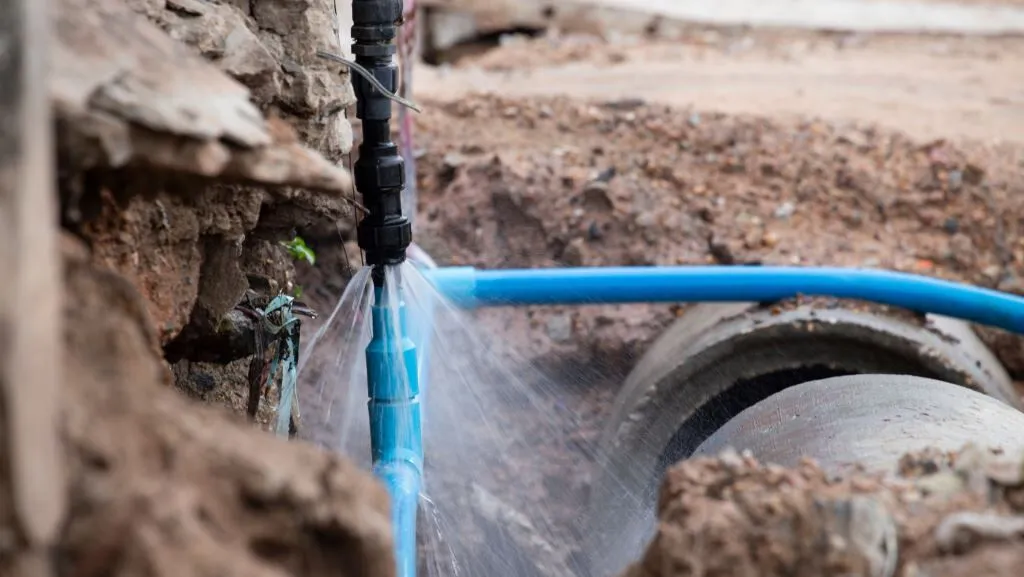
Water escaping under pressure indoors or outdoors — isolate at the meter immediately.
Water diverting out of a break means less reaching your taps and shower.
A pipe failing in the roof space or an upstairs wall. Isolate power to that area as well.
Water surfacing over a buried supply line, often with unusually green grass.
Audible flow with everything turned off is a strong indicator of a concealed leak.
With all taps off, a ticking meter means water is escaping somewhere on your side.
A sudden jump with no change in usage often traces to a concealed burst.
Concealed water in a wall or under flooring, usually weeks in by the time it's noticed.
Most bursts aren’t random. They’re an existing weakness that finally gave way.
Ageing and corroded pipework
Older galvanised and copper pipework across Sydney’s established suburbs thins from the inside over decades. It holds until the wall is too thin at one point, then fails without warning.
Excessive water pressure
High or fluctuating mains pressure stresses joints and fittings continuously. Where pressure is consistently high, a pressure limiting valve is often the real fix rather than another repair.
Failed flexible hoses
The braided hoses under sinks, vanities and behind washing machines have a finite life, and when one lets go it does so at full pressure. This is one of the most common causes of sudden indoor flooding.
Ground movement
Sydney’s reactive clay soils expand and contract through wet and dry cycles, dragging on buried supply lines until a joint or a weakened section fails.
Tree roots and external damage
Roots pressing on buried pipework, or a pipe struck during landscaping, fencing or renovation work.
Poor previous workmanship
Unsupported pipework, mismatched materials or joints that were never made properly — problems that surface years after the work was done.
With a burst pipe, the plumbing repair is often the cheapest part of the total cost.
Isolate at the meter, then ring — we’ll guide you through it.
No guesswork and no surprise bills. Every job runs the same way, so you know what’s happening and what it costs before work begins.
First thing, every time. We'll talk you through it on the phone before we arrive if the water is still running.
A meter test tells us water is genuinely escaping on your side and gives a sense of the scale.
Visible bursts are straightforward. Concealed ones are traced using pressure testing and leak detection rather than opening walls speculatively.
Whether this is a one-off failure or the pipework generally is at the end of its life. That changes the recommendation significantly.
You get the repair options and the price before any access work starts. No surprises once the wall is open.
The section is repaired or replaced, the system is tested under pressure, and the supply is restored. We explain what failed and why.
Between the meter and the house.
Behind walls, under floors and in ceilings.
Older homes, corroding from the inside.
Concealed leaks below concrete.
Under sinks, vanities and behind appliances.
Feeding and leaving the hot water unit.
Split fittings and buried irrigation supply.
Bursts causing ceiling damage.
Failed connections rather than the pipe itself.
Seized or leaking shut-off points.
Leaks affecting more than one lot.
Larger diameter pipework and higher demand.
Homes
From a split flexi hose under a vanity to a mains line failing in the front yard. Older homes in the established northern and Hills suburbs more often have corroded galvanised or copper pipework; newer homes tend to fail at fittings and hoses instead.
Landlords, agents and strata
We can attend, isolate, repair and report back with photos and a description of the fault for the owner or the strata committee. Where a leak crosses into common property or another lot, our diagnosis establishes where the failed pipework actually sits — which is usually what settles responsibility.
Businesses
A burst that stops trade or threatens stock is urgent in its own right. We prioritise commercial callouts and can work around trading hours where the repair allows. After-hours availability: [confirm].

A burst is sometimes a one-off and sometimes the first of several. Which one you have changes the sensible response.
Single failure, pipework otherwise sound
Repair that section
No reason to replace pipe that has plenty of life in it.
Failed flexible hose
Replace the hose, check the others
They fail on a similar timeline — worth replacing the set.
Corroded galvanised pipe, thin throughout
Replace the run
Repairing one point on failing pipework just moves the next burst along.
Repeated bursts on the same line
Replace the affected run
Multiple failures mean the pipework, not the location, is the problem.
High mains pressure damaging fittings
Repair plus a pressure limiting valve
Fixing the pipe without fixing the pressure means it happens again.
Burst caused by ground movement or roots
Repair plus rerouting where practical
Leaving it in the same path invites the same failure.
We’ll show you the condition of the pipe we take out. That’s usually the clearest evidence of which row you’re in.
Burst pipe repairs are priced on what we find, because access is usually the biggest variable.
Under a sink is straightforward. Inside a wall, under a slab or in a roof space is a different scope.
Cutting into tiling, concrete or plasterboard adds time, and reinstatement may involve another trade.
Repairing modern pipework is simple. Older galvanised often needs a section replaced rather than patched.
A single repair versus replacing a length of pipework are very different jobs.
A visible burst needs no searching. Tracing one under a slab takes detection work first.
Standard hours differ from after-hours attendance. Policy: [confirm]
Commonly repaired within the same visit.
Allow additional time on site before any repair begins.
Often same visit for the plumbing; reinstatement may be separate.
Longer, and usually scheduled rather than same-day.
Quoted and scheduled separately after assessment.
If something on site changes the picture, we tell you before we keep going — not after.
NSW plumbing licence 210933C — all work to Australian Standards.
Stopping the damage comes before anything else on every burst pipe callout.
You approve the price before any work starts.
If the pipework is failing generally, we'll tell you — rather than repair one point and leave.
The Hills, North West, Northern Sydney and the Hawkesbury.
One team for owners, landlords, agents and businesses.
Confirm before publishing.
Confirm before publishing.
Confirm before publishing.
The Hills District, North West, Northern Sydney, the Hawkesbury and greater metro.
Written as a real conversation with the plumber — your question, our answer.
Get to the water meter and turn the tap beside it clockwise until it stops. That’s the single most useful thing you can do, and it costs you nothing. Ring us while you’re doing it and we’ll stay on the phone — plenty of people have never needed to find that tap before, and the middle of a flood is a hard time to go looking.
In most Sydney homes it’s near the front boundary, often in a small green or black box set into the lawn or garden bed. Lift the lid and there’s usually a tap on the house side of the meter — turn it clockwise until it won’t go further. If it’s stiff or seized, don’t force it to breaking point; ring us and we’ll work through it with you.
A burst with water actively escaping is treated as an emergency, and our after-hours availability is [confirm with David]. Once the water is isolated at the meter the urgency drops considerably, which sometimes means a normal-hours booking makes more sense and costs less. Tell us what’s happening and we’ll give you a straight answer on that.
If the water is still running, isolating it comes first. Then we do a meter test to confirm water really is escaping on your side and get a sense of how much. From there it’s locating the failure — obvious with a visible burst, and via pressure testing and detection equipment when it’s concealed. We also assess the general condition of the pipework, because that changes what we’d recommend.
Turn off every tap and appliance that uses water, then go and look at your meter. If the dial is still creeping around, water is escaping somewhere on your side of the meter. That test takes two minutes and tells us a lot before we even arrive.
Sometimes, and we don’t do it speculatively. We locate the failure first using pressure testing and leak detection, so any access work is targeted at the right spot rather than exploratory. You’ll know what access is needed and what it costs before we start cutting, not after.
An accessible burst or a failed flexi hose is commonly repaired within the same visit. A concealed leak needs detection time first. Under-slab repairs take longer and are usually scheduled rather than same-day, and replacing a full run of pipework is quoted separately.
Water off at the meter, and power off at the switchboard if water is near anything electrical. Move furniture, rugs and electronics out of the way, and put towels or buckets down to contain what’s already out. Take a few photos before you start cleaning up — your insurer will generally want them.
Access is usually the biggest single factor. The same length of pipe under a sink and under a concrete slab are completely different jobs. Beyond that: whether the leak needs locating first, the pipe material and its age, and whether we’re repairing one point or replacing a failing run. You get the number before any access work starts.
Yes — the supply has to be off for the repair itself. If you’ve already isolated at the meter it’s off anyway. We’ll tell you roughly how long you’ll be without water so you can fill a jug or two beforehand, and it goes back on only after the repair has been pressure tested.
If you’ve had to shut off at the meter, nothing will run until we’ve been — so fill a container for drinking and flushing. If the burst is isolated to one area and you’ve been able to shut off just that section at a local valve, the rest of the house is usually fine. Stay out of any area where water is near electrics.
That’s the right question to ask, and the answer is in the condition of the pipe we remove. If it’s sound apart from one failure point, a section repair is all you need. If it’s corroded and thin throughout — common in older galvanised — then repairing one spot just moves the next burst somewhere else, and we’ll show you the evidence rather than just asserting it.
That’s between you and your insurer and policies vary a lot, so check yours. Broadly, they tend to look at whether the escape was sudden and whether you acted reasonably to limit it once you knew — which is another argument for getting to the meter quickly. Keep photos, keep our invoice, and keep our description of what failed.
It depends where the failed pipework actually sits, and that’s exactly what we determine on site. Pipework inside your lot is generally yours; common supply lines generally aren’t. We document what we find so you can take something concrete to the strata manager rather than an argument.
Three practical things. Find your meter tap and check it turns, so next time you lose seconds not minutes. Replace braided flexi hoses on a cycle rather than waiting for one to burst, since they’re behind a large share of indoor floods. And have your mains pressure checked — if it’s running high, a pressure limiting valve protects every joint and fitting in the house.
Don’t wait on a form, call now for 24/7 priority response.