
A kitchen drain clogged with grease, food scraps, or soap buildup can bring your daily routine to a standstill. Water pools in the sink, unpleasant odors emerge, and the frustration builds as you wonder whether to tackle it yourself or call for help. The good news is that many kitchen sink drain clogs can be resolved quickly with the right approach—and knowing when to step back and reach out to a licensed professional can save you time, money, and potential damage to your plumbing.
In this guide, you’ll discover the most common causes behind a clogged kitchen sink drain, practical DIY methods to clear minor blockages safely, and clear signs that the problem needs expert attention. We’ll also walk you through what to expect when you work with a qualified Sydney plumber and how to prevent future clogs from disrupting your home.
Key Takeaways
- Fat, oil, and grease are the leading causes of a kitchen drain clogged over time.
- Boiling water, baking soda, and vinegar can clear minor kitchen sink drain clogs safely.
- Plungers and P-trap cleaning offer simple mechanical solutions for stubborn blockages.
- Recurring or deep clogs require CCTV inspection and professional drain cleaning.
- Preventing a clogged drain kitchen sink starts with mindful disposal and regular hot water flushing.
What Causes a Kitchen Drain Clogged in the First Place?
Understanding why your kitchen sink drain clogged helps you prevent the issue from returning. Most blockages develop slowly as materials accumulate inside the pipes. Fat, oil, and grease top the list—they flow down as liquids but harden into a waxy coating as they cool, trapping food particles and soap residue along the way.
Starchy foods like pasta, rice, and potato peels expand when wet and form dense clumps. Coffee grounds and eggshells also contribute, despite their small size. Even dish soap can leave a film that narrows the pipe over time, especially in older plumbing systems common across Sydney’s Inner West and Eastern Suburbs.
You might be wondering whether your garbage disposal is helping or hurting. While disposals break down food into smaller pieces, they don’t eliminate the grease or prevent buildup further down the line. Without regular hot water flushing, even a well-maintained disposal can lead to a clogged kitchen sink drain.
How to Fix a Kitchen Sink Drain Clog Using DIY Methods
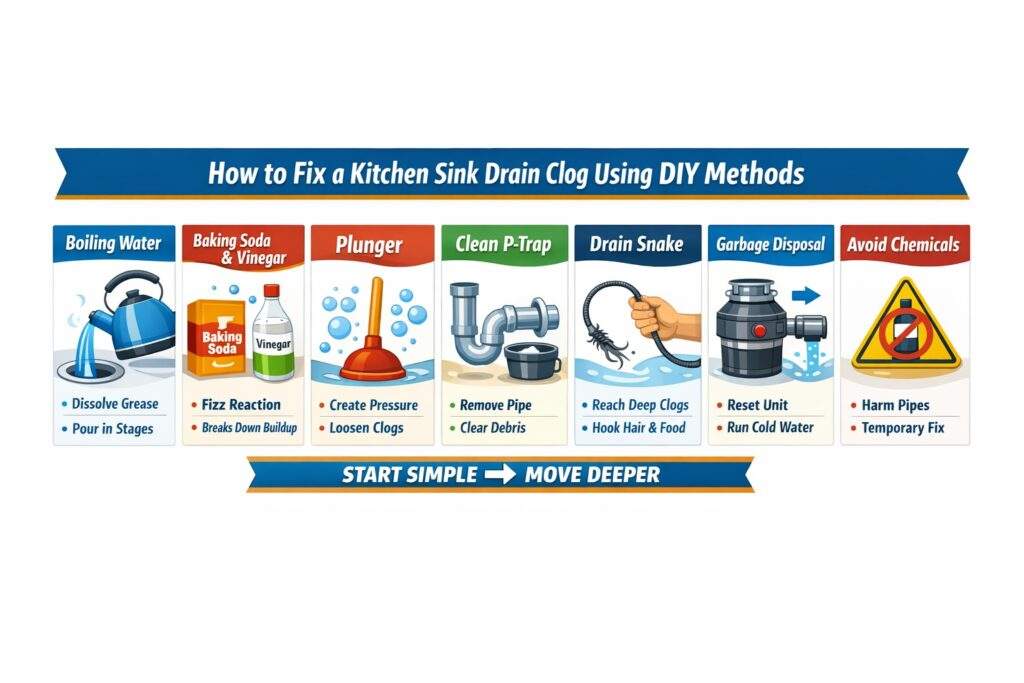
Before you reach for harsh chemicals or call a plumber, try these safe, straightforward techniques. Each method targets different types of blockages, so you may need to combine approaches for best results. Always start with the simplest option and work your way up.
1. Flush With Boiling Water
Boiling water is your first line of defense against a kitchen drain clogged by grease or soap buildup. Pour a full kettle of boiling water directly down the drain in two or three stages, allowing a few seconds between each pour. The heat helps dissolve fatty deposits and flush them through the pipes.
2. Use Baking Soda and Vinegar
For a natural chemical reaction, pour half a cup of baking soda down the drain, followed by one cup of white vinegar. The mixture will fizz and bubble, breaking down organic matter and light grease. Cover the drain with a plug or cloth for 15 minutes, then flush with boiling water to clear the loosened debris.
3. Plunge the Sink
A standard cup plunger can dislodge clogs near the drain opening. Fill the sink with a few inches of water to create a seal, then place the plunger over the drain and pump vigorously for 20 to 30 seconds. Release and check if water drains freely. Repeat if needed.
4. Clean the P-Trap
The P-trap is the curved pipe beneath your sink that traps debris and prevents sewer gases from entering your home. Place a bucket underneath, unscrew the slip nuts by hand or with pliers, and remove the trap. Clear out any buildup, rinse the trap, and reassemble. This method often resolves a clogged drain kitchen sink caused by solid objects or heavy grease accumulation.
5. Try a Plumber’s Snake
A manual drain snake or auger can reach clogs deeper in the line. Feed the cable into the drain until you feel resistance, then rotate the handle to break up or hook the blockage. Pull the cable back slowly and flush with hot water. This tool works well for hair, food, and other fibrous materials.
6. Check the Garbage Disposal
If your sink has a disposal, turn it off and reset the unit using the red button on the underside. Run cold water and turn the disposal on for a minute to clear any trapped food. A jammed disposal can mimic a clogged kitchen sink drain, so this step is worth checking early.
7. Avoid Chemical Drain Cleaners
Store-bought chemical cleaners may seem convenient, but they can corrode pipes, harm the environment, and create dangerous fumes. They also provide only temporary relief, leaving the root cause untouched. We recommend mechanical methods or professional drain cleaning for lasting results.
Signs Your Clogged Kitchen Sink Drain Needs Professional Help
DIY methods work well for minor blockages, but some situations call for a licensed plumber with specialized equipment. Recognizing these signs early can prevent water damage, pipe corrosion, and costly emergency repairs. If you notice any of the following, it’s time to reach out for expert support.
- Slow drainage across multiple fixtures: If your kitchen sink, bathroom basin, or laundry drain all back up at once, the blockage may be in your main sewer line or shared branch drain.
- Foul odors that persist: Persistent smells suggest trapped organic matter or a venting issue that won’t clear with surface cleaning.
- Gurgling sounds: Air bubbles rising through standing water indicate a partial blockage or venting problem deeper in the system.
- Water backing up into other drains: When water from the kitchen sink appears in the shower or toilet, you’re dealing with a serious obstruction that requires CCTV inspection.
- Recurring clogs despite repeated clearing: If the same drain blocks every few weeks, the underlying cause—tree roots, pipe damage, or heavy grease buildup—needs professional diagnosis.
At Antons Plumbing & Gas, we use CCTV drain cameras to pinpoint the exact location and nature of the blockage. This camera-based inspection reveals cracks, root intrusion, and collapsed sections without guesswork. Our team then presents clear options—high-pressure water jetting, pipe relining, or excavation—with upfront pricing so you can make an informed decision.
What to Expect When You Call a Licensed Sydney Plumber
When you contact us for a kitchen drain clogged emergency, we arrive the same day across the greater Sydney region—Inner West, Eastern Suburbs, North Shore, Northern Beaches, Hills District, Western and South-Western Sydney, and Sutherland Shire. There’s no call-out fee, and we charge a fixed rate for the work, so you know the cost before we start.
| Service | Typical Response Time | Method | Best For |
|---|---|---|---|
| Emergency drain clearing | Same day | High-pressure jetting | Grease, soap, food buildup |
| CCTV drain inspection | Same day | Camera inserted into pipe | Diagnosing recurring or deep clogs |
| Pipe relining | 1–2 days | Epoxy liner cured in place | Cracks, root damage, old clay pipes |
| P-trap and fixture repair | Same day | Manual disassembly and cleaning | Localized blockages, leaks |
Our plumbers begin with a visual inspection and ask about your drainage history. If the blockage isn’t obvious, we deploy a CCTV camera to inspect the pipe from the inside. You’ll see the live feed on our monitor, and we’ll explain what we find in plain English—whether it’s grease buildup, a foreign object, or tree roots invading an old clay pipe.
Once we’ve identified the cause, we outline your options. For grease and soap clogs, high-pressure water jetting clears the pipe without chemicals or damage. For structural issues like cracks or root intrusion, pipe relining offers a trenchless repair that restores flow and strength without digging up your yard. We complete the work, test the drain, clean up thoroughly, and provide a written report if needed for strata or insurance purposes.
Real-World Example: Resolving a Recurring Kitchen Drain Clog in the Inner West
Sarah, a homeowner in the Inner West, contacted us after her kitchen sink clogged for the third time in six months. She’d tried boiling water, baking soda, and a plunger, but the problem kept returning within weeks. Frustrated and worried about potential damage, she called our team for a same-day inspection.
We arrived within two hours and deployed a CCTV camera into her kitchen drain. The footage revealed a thick layer of grease coating the pipe, combined with a partial collapse in the clay section beneath her courtyard. Tree roots from a neighboring fig tree had exploited the crack, trapping food scraps and soap residue.
We presented two options: high-pressure jetting to clear the immediate blockage, or pipe relining to address the structural damage and prevent future clogs. Sarah chose relining. We completed the work in one day, with no excavation and minimal disruption. Six months later, her drain flows freely, and she’s had no further issues.
Common Mistakes That Make a Kitchen Sink Drain Clogged Worse
When faced with a slow drain, it’s tempting to try quick fixes that promise instant results. Unfortunately, some common approaches can damage your pipes or push the blockage deeper. Here are the mistakes we see most often and what to do instead.
- Using chemical drain cleaners repeatedly: These products generate heat and gas that can crack older pipes, especially PVC and metal joins. The chemicals also kill beneficial bacteria in septic systems.
- Over-plunging with excessive force: Aggressive plunging can dislodge pipe connections or force water back into the dishwasher or washing machine drain.
- Ignoring early warning signs: A drain that slows gradually is easier and cheaper to fix than one that backs up completely. Address the issue as soon as you notice a change.
- Pouring grease down with hot water: Hot water only moves the grease further into the pipe, where it cools and solidifies in a harder-to-reach spot.
- Disassembling pipes without a plan: If you remove the P-trap or other fittings, take photos first and have a bucket and towels ready. Missing washers or cross-threaded connections can cause leaks.
If you’ve already tried a DIY method and the problem persists, stop and call a licensed plumber. Continuing to experiment can turn a simple blockage into a burst pipe or water damage. We’re available 24/7 at 0493 824 176, and we’ll walk you through what to expect before we arrive.
Why Same-Day Service Matters for a Kitchen Drain Clogged Emergency

A blocked kitchen sink isn’t just inconvenient—it can halt meal preparation, create hygiene concerns, and lead to water damage if the sink overflows. That’s why we offer same-day service across Sydney, with no call-out fee and fixed-rate pricing. You call, we arrive, we fix it, and you get back to your routine.
Our trucks carry high-pressure jetters, CCTV cameras, replacement parts, and hand tools so we can handle most jobs on the first visit. If the issue requires pipe relining or excavation, we’ll provide a clear quote and timeline before starting work. You won’t be left waiting days for a diagnosis or wondering what the final bill will be.
We also understand that emergencies don’t respect business hours. Whether it’s a Sunday morning or midnight on a public holiday, our 24/7 emergency line connects you to a qualified plumber who can assess the situation and dispatch a team if needed. For café owners, strata managers, and busy families, this responsiveness makes all the difference.
Compliance, Safety, and Quality You Can Trust
Every job we complete meets NSW Fair Trading licensing requirements and relevant Australian Standards for plumbing and drainage. We hold Lic: 210933C and maintain current insurance for both plumbing and gas-fitting work. When we clear a drain, reline a pipe, or replace a fixture, we document our findings, take photos, and provide a written report if you need it for strata, insurance, or future reference.
We use quality parts from trusted brands and back our workmanship with a lifetime labor warranty. That means if an issue arises from our installation or repair, we’ll return and make it right at no extra cost. This commitment to accountability and transparency is what sets us apart in a crowded market.
Our team respects your home. We lay drop sheets, wear shoe covers, and clean up thoroughly before we leave. We communicate in plain English, answer your questions, and never pressure you into unnecessary upgrades. Great plumbing is about people, not just pipes—and we take that seriously.
Conclusion
A kitchen drain clogged by grease, food, or structural damage doesn’t have to disrupt your life for long. Start with safe DIY methods, watch for warning signs, and call a licensed Sydney plumber when the problem goes beyond surface fixes. We’re here 24/7, ready to diagnose, repair, and prevent future issues with upfront pricing and workmanship you can trust. Reach us anytime at 0493 824 176.
Antons Plumbing & Gas specialises in blocked drain solutions backed by 25 years of experience. We offer same-day service across Sydney with upfront pricing. Contact us today to get started.
Related Articles
- How to Snake a Bathroom Sink Like a Pro (Easy DIY Guide)
- Top 5 Signs Your Bathroom Sink Is Clogged and Needs Fixing
- 5 Common Reasons Why Isn’t My Kitchen Sink Draining Properly?
FAQs
What Causes A Kitchen Drain To Clog?
Kitchen drains often clog due to food particles, grease buildup, soap residue, and foreign objects. Over time, these materials can accumulate and restrict water flow, leading to blockages.
How Do You Unclog A Kitchen Drain?
To unclog a kitchen drain, you can try using a plunger, a mixture of baking soda and vinegar, or a plumber’s snake. For stubborn clogs, consider contacting Antons Plumbing & Gas for professional assistance, ensuring a thorough and safe resolution.
What Is The Best Way To Prevent Kitchen Drain Clogs?
Prevent kitchen drain clogs by regularly cleaning your sink, using a drain strainer to catch food particles, avoiding pouring grease down the drain, and running hot water after each use to help flush debris.
Can Boiling Water Unclog A Kitchen Drain?
Boiling water can help dissolve grease and soap buildup in your kitchen drain. However, if the clog persists, it’s best to consult a professional plumber from Antons Plumbing & Gas for a more effective solution.
When Should You Call A Plumber For A Clogged Kitchen Drain?
If your kitchen drain remains clogged after trying basic methods, or if you notice recurring issues, it’s time to call a plumber. Antons Plumbing & Gas can quickly diagnose and resolve the problem, ensuring your plumbing system functions properly.