
Emptying a toilet bowl is one of those tasks that sounds simple until you actually need to do it. Whether you’re preparing to remove and reinstall a toilet, deep-clean stubborn stains, or tackle a clogged toilet, getting all the water out is the first step. Most Sydney homeowners face this job at some point, and knowing the right method can save you time, mess, and frustration.
This guide explains how to empty a toilet bowl safely and effectively using both standard and alternative methods. It also covers common mistakes to avoid, practical ways to protect your bathroom during the process, and when it is better to call a licensed plumber. Whether you are clearing the bowl for cleaning, inspection, or repairs, the goal is to help you do the job with less mess and more confidence.
Key Takeaways
- Turn off the water supply before flushing so the toilet does not refill while you work.
- A wet/dry vacuum is the fastest and cleanest way to remove the remaining water.
- Manual methods such as a sponge, cup, or small container work well if you do not have specialised tools.
- A small amount of water will still remain in the S-bend trap unless it is removed separately.
- For toilet removal, wax ring replacement, or stubborn clogs, calling a licensed plumber is often the safest option.
Why You Need to Empty a Toilet Bowl
You can’t repair a cracked bowl, replace a wax ring, or scrub mineral deposits properly if water is in the way. Removing all the water gives you clear access to the porcelain surface and the internal trap. It also prevents spills and water damage when you disconnect the toilet from the floor flange.
Some homeowners try to work around standing water, but that usually leads to more mess. A dry bowl is easier to inspect, clean, and repair.
If you’re dealing with a stubborn blockage, emptying the bowl first lets you see exactly where the clog sits. That visibility helps you decide whether to unclog a toilet with baking soda and vinegar, use a plunger, or call in a professional for a CCTV drain inspection.
How to Empty a Toilet Bowl: Step-by-Step Method
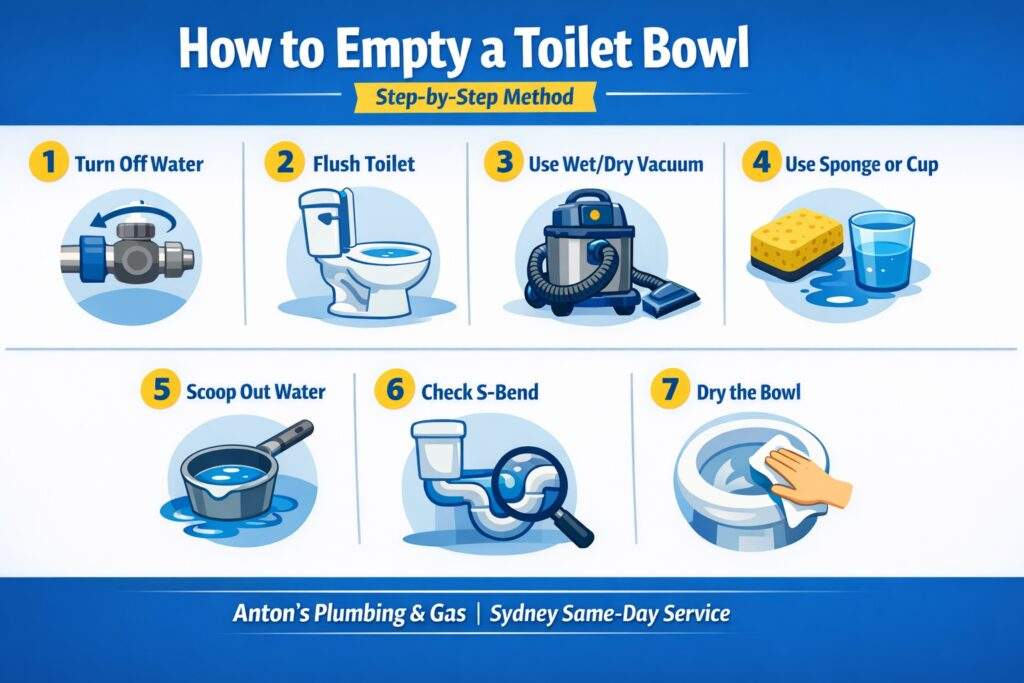
This process works for most standard toilets in Sydney homes. Follow each step in order to avoid flooding your bathroom or damaging the fixture. If you’re unsure at any point, our team at Anton’s Plumbing & Gas can handle the job for you with same-day service across the Sydney Metro.
1. Turn Off the Water Supply
Locate the shutoff valve behind your toilet, usually near the wall or floor. Turn the valve clockwise until it stops completely. This prevents fresh water from entering the tank and bowl while you work.
2. Flush the Toilet Once
Press the flush lever to drain most of the water from both the tank and the bowl. The tank will empty first, then gravity pulls water from the bowl through the trap. You’ll notice the water level drops significantly, but some will remain in the S-bend.
3. Remove Remaining Water With a Wet/Dry Vacuum
A wet/dry vacuum is the fastest tool for this job. Insert the hose into the bowl, making sure the nozzle reaches the bottom of the trap. Turn on the vacuum and let it suck out the remaining water. Most hardware stores in Sydney rent these machines if you don’t own one. Professionals prefer this method because it’s clean, quick, and removes up to 90 percent of the water in seconds.
4. Use a Sponge or Cup for Manual Removal
If you don’t have a vacuum, a large sponge or plastic cup works well. Soak up water with the sponge and wring it into a bucket, or scoop water with the cup and pour it into the bucket. Work slowly to avoid splashing. This method takes longer but requires no special equipment.
5. Bail Out Water With a Small Container
For tight spaces or hard-to-reach water, a small plastic container or even a turkey baster can help. Dip the container into the bowl, fill it, and empty it into your bucket. Repeat until the water level is as low as possible.
6. Check the S-Bend Trap
After you’ve removed all visible water, a small amount will remain in the S-bend trap at the bottom of the toilet. This water seal blocks sewer gases from entering your home. If you need the bowl completely dry for a repair like removing the toilet wax ring, use the wet/dry vacuum one more time or tilt the toilet slightly to drain the trap once the toilet is unbolted.
7. Dry the Bowl Surface
Wipe down the inside of the bowl with a clean towel or paper towels. A dry surface is essential for applying sealants, inspecting cracks, or scrubbing stubborn stains. Make sure the rim, trap, and floor flange area are all dry before you proceed with your repair or cleaning task.
Following these steps in order helps keep the job cleaner and more controlled. It also gives you better access to the toilet bowl, trap, and surrounding surfaces before any repair or cleaning begins. When the job involves toilet removal or more complex plumbing work, professional help can prevent damage and save time.
Alternative Methods to Empty a Toilet Bowl
Not every toilet-draining situation requires the same solution. The best method depends on the tools you have, how quickly you need the bowl emptied, and whether you are also dealing with a clog. Choosing the right approach can make the task faster, cleaner, and easier to manage.
| Method | Best For | Speed | Mess Level |
|---|---|---|---|
| Wet/Dry Vacuum | Fast, thorough drainage | Very fast | Low |
| Sponge or Cup | No special tools available | Slow | Medium |
| Plunger | Clearing clogs first | Medium | Medium |
| Garden Hose Siphon | Outdoor access available | Medium | High |
The plunger method works well when a clog is preventing the toilet from draining properly. A garden hose siphon can also be effective, though it tends to be messier and requires more setup than other options. By comparing the speed, convenience, and mess level of each method, you can choose the one that best fits your situation..
Common Mistakes When Emptying a Toilet Bowl
Emptying a toilet bowl may seem simple, but small mistakes can quickly turn the job into a messy and frustrating task. Many homeowners overlook basic preparation steps that affect both safety and efficiency. Knowing what to avoid helps you drain the bowl properly while reducing the risk of spills, damage, or extra cleanup.
- Forgetting to turn off the water supply: If you flush without closing the shutoff valve, fresh water will refill the tank and bowl, undoing your work.
- Using a regular vacuum instead of a wet/dry model: Household vacuums are not designed for liquids and can be damaged or create electrical hazards.
- Pouring water down the drain too quickly: Fast pouring can cause splashes and spills, especially if the drain is partially blocked.
- Ignoring the S-bend trap: That small pool of water at the bottom is normal, but if you need the bowl completely dry, you’ll need to remove it manually or tilt the toilet.
- Not protecting the floor: Lay down old towels or a plastic sheet around the base of the toilet to catch drips and spills during the process.
Avoiding these mistakes makes the job cleaner, safer, and easier to complete from start to finish. A little preparation can save you from unnecessary mess and prevent damage to your tools or bathroom surfaces. By following the right steps and working carefully, you can empty a toilet bowl with far less hassle.
Protecting Your Bathroom During Toilet Work
Even careful work can create mess. Before you start draining the toilet, lay down old towels or a plastic drop sheet around the base. Keep a bucket and extra rags nearby to catch drips and spills. If you’re removing the toilet completely, protect your floors and walls from scratches and water damage.
Turn off the water supply to the entire bathroom if you’re unsure which valve controls the toilet. This prevents accidental flooding if you disconnect the wrong pipe. Label the shutoff valve for future reference so you don’t waste time searching next time.
If you’re working in a strata property or rental, check with your building manager or landlord before starting major repairs. Some jobs require licensed plumbers to maintain insurance coverage and compliance with NSW Fair Trading regulations.
When to Call a Professional Plumber

Draining a toilet is manageable for most people, but some situations require licensed expertise. If you’re removing and reinstalling a toilet, replacing the wax ring, or dealing with a persistent clog that won’t clear, professional help saves time and prevents damage. Our team at Anton’s Plumbing & Gas handles these jobs every day across the Sydney Metro, from the Inner West to the Northern Beaches.
We use CCTV drain inspection cameras to locate blockages deep in your pipes, and we can diagnose root causes like tree roots in clay pipes or collapsed sections. If your toilet needs to come off the floor, we’ll remove it, inspect the flange and wax ring, and reinstall it to Australian Standards with a proper seal. That work is backed by our lifetime labour warranty, so you won’t face leaks or recurring problems.
Same-day service is standard for us. Call 0493 824 176 and we’ll send a licensed plumber to your property, often within hours. We charge a fixed rate, so you’ll know the cost upfront with no hidden fees. Whether it’s a simple repair or a full bathroom renovation, we’ll give you clear options and complete the work with minimal disruption.
Conclusion
Draining a toilet bowl is a straightforward task when you follow the right steps and use the proper tools. For repairs that go beyond basic cleaning or minor clogs, our licensed plumbers are ready to help with same-day service across Sydney. Call 0493 824 176 or book online for upfront pricing and reliable workmanship you can trust.
Antons Plumbing & Gas brings over 25 years of expertise to every toilet repair and plumbing service across Sydney. Our licensed team handles everything from minor fixes to full replacements with upfront pricing. Contact us today to get started.
Related Articles
- Why Your Toilet Won’t Flush But Isn’t Clogged: Quick Fixes
- How to Fix a Toilet That Won’t Flush Without Professional Tools
FAQs
What Is The Best Way To Empty A Toilet Bowl?
The best way to empty a toilet bowl is to turn off the water supply to the toilet, usually located behind it. Then, flush the toilet to remove most of the water. You can absorb any remaining water with towels or a sponge, or use a wet/dry vacuum for a thorough job. At Antons Plumbing & Gas, we recommend professional assistance for more complex issues.
How Do You Manually Empty A Toilet Bowl?
To manually empty a toilet bowl, start by turning off the water supply and flushing the toilet. Use towels or a sponge to soak up any remaining water in the bowl. You can also use a bucket to scoop out water if necessary. For a safer and cleaner approach, consider contacting our team at Antons Plumbing & Gas for expert help.
Can You Use A Wet/Dry Vacuum To Empty A Toilet Bowl?
Yes, a wet/dry vacuum can effectively empty a toilet bowl. After turning off the water supply and flushing, use the vacuum to suck out the remaining water. This method is efficient and helps prevent spills, but if you’re unsure, our experienced plumbers at Antons Plumbing & Gas are always ready to assist.
What Tools Do I Need To Empty A Toilet Bowl?
To empty a toilet bowl, you typically need a sponge or towels to soak up water, a bucket for manual removal, and optionally, a wet/dry vacuum for thoroughness. If you’re facing plumbing issues beyond this, Antons Plumbing & Gas can provide the right tools and expertise to handle the situation safely.
Is It Safe To Empty A Toilet Bowl Without A Plunger?
Yes, it is safe to empty a toilet bowl without a plunger, especially if you follow the proper steps to turn off the water supply and flush first. However, if you’re dealing with more significant plumbing concerns or blockages, it’s advisable to consult with our professional team at Antons Plumbing & Gas for reliable service and peace of mind.