
Continuous flow hot water systems heat water instantly as it passes through the unit, eliminating the need for storage tanks. These systems activate when you turn on a hot water tap, with heating elements or gas burners rapidly warming water to your desired temperature. Understanding how these systems operate helps homeowners across Sydney and NSW make informed decisions about their hot water needs.
This article explains the inner workings of continuous flow hot water systems, their performance benefits, energy efficiency advantages, and practical installation considerations for residential properties. You’ll discover why these systems are becoming increasingly popular among Sydney homeowners seeking reliable, space-saving hot water solutions.
Key Takeaways
- Continuous flow systems heat water on-demand without storage tanks, providing endless hot water supply.
- These systems use either gas burners or electric heating elements to instantly warm water as it flows through the unit.
- Energy efficiency is higher than traditional systems because there’s no standby heat loss from stored water.
- Installation requires proper sizing based on household flow rate demands and available utility connections.
- Regular maintenance ensures optimal performance and extends the system’s 20+ year lifespan.
- Gas fitting and plumbing work in NSW must be carried out by a licensed practitioner – Antons Plumbing & Gas holds NSW Lic. 210933C.
How Continuous Flow Hot Water Systems Generate Instant Heat
The core principle behind continuous flow hot water systems involves heating water as it travels through the unit rather than storing pre-heated water. When you open a hot water tap, cold water enters the system and triggers sensors that detect flow. These sensors immediately activate the heating mechanism to warm water to your preset temperature.
Gas-powered continuous flow systems use burners that ignite when water flow is detected. Electric models employ powerful heating elements that energise within seconds of activation.
1. Water Flow Detection and Activation
Flow sensors monitor water movement through the system and signal when heating should begin. Most units require a minimum flow rate of 1.5-2 litres per minute to activate properly.
2. Temperature Control Mechanisms
Thermostats regulate water temperature by adjusting heat output based on incoming water temperature and desired outlet temperature. Advanced models offer precise digital temperature controls with degree-by-degree adjustment.
3. Heat Exchange Process
Water passes through heat exchangers where it absorbs thermal energy from gas flames or electric elements. Copper or stainless steel heat exchangers transfer heat efficiently while resisting corrosion.
4. Safety and Monitoring Systems
Built-in safety features prevent overheating and ensure safe operation through temperature limiters and flame failure devices. Modern units include diagnostic systems that alert users to potential issues.
5. Output Regulation
Modulating controls adjust heat output based on flow rate and temperature requirements. This ensures consistent temperature delivery regardless of demand fluctuations.
Our team at Antons Plumbing & Gas specialises in installing and servicing continuous flow hot water systems across Sydney. We ensure proper sizing and configuration for optimal performance in your home.
Energy Efficiency Benefits of Continuous Flow Hot Water Systems

Continuous flow hot water systems deliver superior energy efficiency compared to traditional storage tank systems. The absence of standby heat loss means energy is only consumed when hot water is actually needed. This on-demand heating approach can reduce energy consumption by 20-30% in typical households.
The efficiency gains become more pronounced in homes with moderate hot water usage patterns. Unlike storage systems that maintain water temperature 24/7, continuous flow units remain dormant until activated.
- Elimination of Standby Losses: No energy wasted maintaining stored water temperature when not in use.
- Precise Temperature Control: Reduces energy waste from overheating water beyond required temperatures.
- Reduced Heat Distribution Losses: Shorter pipe runs from compact units minimise heat loss during delivery.
- Variable Output Matching: Heat output automatically adjusts to match actual demand rather than heating full tank capacity.
- Advanced Combustion Technology: Modern gas units achieve combustion efficiency ratings above 90%.
- Smart Controls: Programmable features allow optimisation for household usage patterns.
The energy savings translate directly to reduced utility bills, with many Sydney homeowners reporting 15-25% decreases in hot water heating costs after switching to continuous flow systems.
Performance Characteristics of Instant Electric Hot Water Systems

Instant electric hot water systems offer specific performance advantages for certain residential applications. These units excel in situations where gas connections are unavailable or impractical. Electric continuous flow systems provide precise temperature control and require minimal maintenance compared to gas alternatives.
| System Type | Power Rating | Flow Rate | Installation Requirements |
|---|---|---|---|
| Single Phase Electric | 7.5-12kW | 3-5 L/min | 32A circuit, close to point of use |
| Three Phase Electric | 15-27kW | 5-8 L/min | Dedicated circuit, electrical upgrade often needed |
| Gas Continuous Flow | 20-32kW | 8-20 L/min | Gas line, flue, outdoor or internal installation |
The electrical demand for these systems is substantial, typically requiring dedicated high-capacity circuits. Most residential electric continuous flow units need 15-27 kilowatts of power to deliver adequate flow rates.
Rheem Hot Water System Technology and Innovation

Rheem continuous flow hot water systems incorporate advanced technology to maximise efficiency and reliability. These systems feature modulating gas controls that adjust flame size based on water flow and temperature requirements. The precise control mechanisms ensure consistent water temperature while minimising energy consumption.
Rheem’s continuous flow models include built-in recirculation capabilities and smart home integration options. Their heat exchangers use corrosion-resistant materials designed for Sydney’s water conditions.
- Modulating Gas Technology: Automatically adjusts heat output from 11% to 100% capacity for optimal efficiency.
- Digital Temperature Display: Precise temperature control with 1-degree increments for user comfort.
- Freeze Protection: Built-in protection prevents damage during cold Sydney winter nights.
- Self-Diagnostic Systems: Error codes help technicians quickly identify and resolve issues.
- Compact Design Options: Space-saving units suitable for small Sydney properties and apartments.
Our qualified technicians are experienced with Rheem continuous flow installations and can provide same-day service for repairs or new installations across the Sydney metro area.s and can provide same-day service for repairs or new installations across the Sydney metro area.
Installation Considerations for Continuous Flow Hot Water Systems
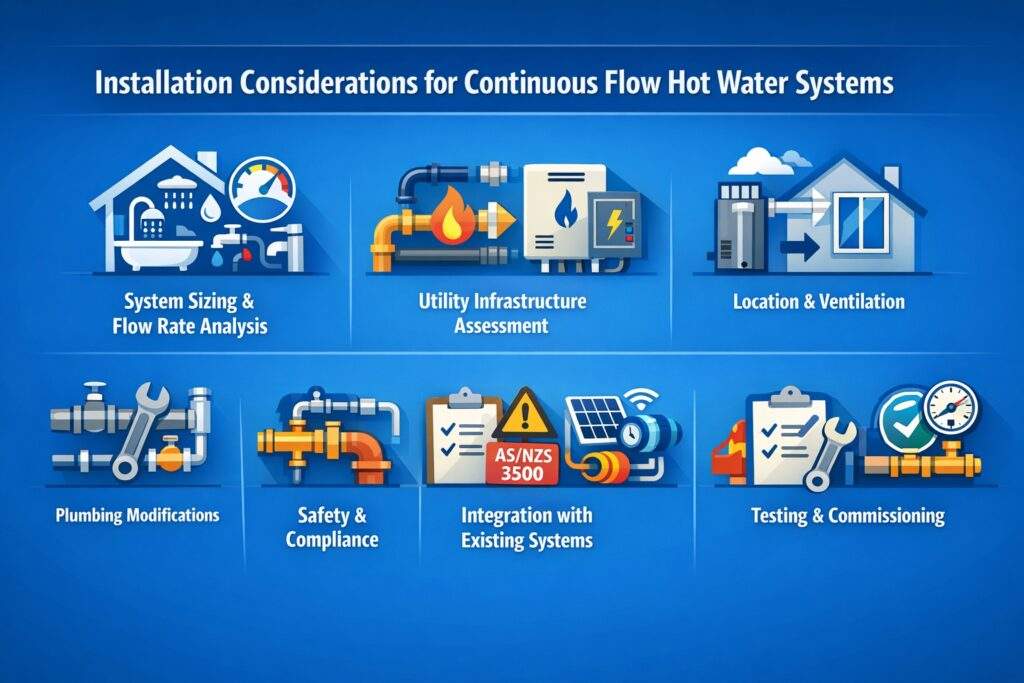
Proper installation of continuous flow hot water systems requires careful planning and professional expertise. The location, utility connections, and sizing must align with household hot water demands and building constraints. Gas models need adequate ventilation and flue arrangements, while electric units require sufficient electrical capacity.
The installation process involves assessing existing infrastructure and potentially upgrading gas lines or electrical services. Professional installation ensures compliance with Australian Standards, Sydney Water requirements, and local NSW council regulations.
1. System Sizing and Flow Rate Analysis
Calculating household hot water demand determines the appropriate unit capacity. Consider simultaneous usage patterns, number of bathrooms, and peak demand periods when selecting system size.
2. Utility Infrastructure Assessment
Existing gas lines or electrical capacity may require upgrades to support continuous flow systems. Gas pressure testing and electrical load calculations help determine necessary modifications.
3. Location Planning and Ventilation
Gas units need proper ventilation and clearances from windows, doors, and property boundaries. Indoor installations require balanced flue systems or adequate natural ventilation.
4. Plumbing Modifications
Removing existing storage tanks and reconfiguring hot water distribution may be necessary. Pipe sizing should accommodate the flow characteristics of continuous flow systems.
5. Safety and Compliance Requirements
All installations must comply with AS/NZS 3500 plumbing standards, NSW Fair Trading licensing requirements, and Sydney Water rules for water and gas fitting. Gas work must be carried out by a licensed technician and requires compliance certification under NSW law.
6. Integration with Existing Systems
Solar hot water preheating, recirculation pumps, and smart home controls can be integrated with continuous flow systems. Proper design ensures all components work harmoniously.
7. Testing and Commissioning
Comprehensive testing verifies proper operation, safety systems, and performance characteristics. Documentation and user training complete the installation process.
Antons Plumbing & Gas handles all aspects of continuous flow hot water system installation, from initial assessment through final commissioning. Our licensed technicians (NSW Lic. 210933C) ensure compliant, safe installations backed by our lifetime labour warranty.
When to Call a Licensed Sydney Plumber

Continuous flow hot water systems involve gas fitting, electrical connections, and plumbing work that must be carried out by a licensed professional under NSW law. You should call a licensed Sydney plumber if you notice inconsistent water temperature, error codes on the unit display, a gas smell near the system, no hot water at all, or if you’re planning a new installation or replacement. Antons Plumbing & Gas is fully licensed (NSW Lic. 210933C) to carry out plumbing and gas fitting work across Sydney – call +61 493 824 176 to book an assessment.
Comparing Heat Pump Hot Water Systems with Continuous Flow Technology

Heat pump hot water systems and continuous flow systems serve different residential applications and offer distinct advantages. Heat pumps excel in energy efficiency by extracting ambient heat from air, while continuous flow systems provide unlimited hot water capacity. Understanding these differences helps homeowners choose the most suitable technology for their needs.
Both systems eliminate standby losses but achieve this through different mechanisms. Heat pumps store heated water in insulated tanks with minimal heat loss, while continuous flow systems avoid storage entirely.
| Feature | Heat Pump System | Continuous Flow System |
|---|---|---|
| Energy Source | Ambient air heat + electricity | Gas or electricity |
| Storage Requirement | Insulated tank (160-315L) | No storage tank needed |
| Space Requirements | Larger footprint | Compact wall-mounted |
| Hot Water Capacity | Limited by tank size | Unlimited continuous supply |
| Installation Complexity | Moderate | Variable (gas vs electric) |
| Operating Cost | Very low (high efficiency) | Low to moderate |
The choice between these technologies depends on household hot water usage patterns, available space, and utility connections. High-usage households often benefit from continuous flow systems, while moderate-usage homes may prefer heat pump efficiency.
Maintenance Requirements for Optimal System Performance

Regular maintenance keeps continuous flow hot water systems operating efficiently and extends their lifespan beyond 20 years. Gas models require annual servicing to clean burners, check gas connections, and verify safety systems. Electric units need periodic descaling and heating element inspection.
Preventive maintenance prevents costly repairs and ensures consistent performance. Professional servicing identifies potential issues before they cause system failures.
- Annual Gas Safety Inspections: Check gas connections, burner operation, and flue integrity
- Heat Exchanger Cleaning: Remove mineral deposits that reduce efficiency and restrict flow
- Filter Replacement: Clean or replace water filters to prevent sediment buildup
- Electrical Connection Testing: Verify secure connections and proper earthing on electric models
- Temperature Calibration: Ensure accurate temperature control and safety system operation
- Ventilation Clearance Checks: Maintain proper clearances around gas units for safe operation
Our maintenance services include comprehensive system inspections and performance testing to keep your continuous flow hot water system operating at peak efficiency. We provide same-day service calls and can schedule regular maintenance visits across the Sydney region.
Conclusion
Continuous flow hot water systems provide efficient, space-saving solutions for residential hot water needs through on-demand heating technology. These systems eliminate standby energy losses while delivering unlimited hot water capacity when properly sized and installed. Professional installation and regular maintenance ensure optimal performance and longevity for your investment in modern hot water technology.
Antons Plumbing & Gas specialises in hot water system installation across Sydney Metro. Our 25+ years of experience and NSW Lic. 210933C ensure your continuous flow system operates efficiently and safely. Learn more about our trusted hot water solutions today.
Related Articles
- The Key Differences Between a Handyman and a Licenced Plumber
- $0 Call-Out Fee Promise: Why We Have No Call-Out Fee
- No-Hot-Water Checklist Before You Call Hot Water Plumber Near You
FAQs
What Is A Continuous Flow Hot Water System?
A continuous flow hot water system, also known as an on-demand or instantaneous hot water system, heats water directly as it flows through the unit. Unlike traditional storage systems, it provides hot water only when needed, ensuring that you never run out of hot water during use.
How Does A Continuous Flow Hot Water System Work?
This type of system uses a gas burner or electric element to heat water as it passes through the heat exchanger. When you turn on the tap, cold water travels through the system, triggering the heating element to provide hot water almost instantly.
What Are The Benefits Of A Continuous Flow Hot Water System?
Continuous flow hot water systems offer several advantages, including unlimited hot water supply, reduced energy costs due to on-demand heating, and a compact design that saves space. They are ideal for homes with varying hot water needs.
Is A Continuous Flow Hot Water System More Efficient?
Yes, continuous flow hot water systems are generally more energy-efficient than traditional storage systems. They only heat water when it is needed, reducing standby energy losses associated with keeping a tank of water hot.
How Do You Install A Continuous Flow Hot Water System?
Installing a continuous flow hot water system requires professional expertise to ensure compliance with local NSW regulations and safety standards. At Antons Plumbing & Gas, our licensed team (NSW Lic. 210933C) has the experience to assess your needs, recommend the right system, and perform a seamless installation with minimal disruption to your home.
Do I Need A Permit Or Council Approval To Install A Continuous Flow Hot Water System In Sydney?
Most standalone continuous flow installations don’t require a separate council permit, but the gas and plumbing work must comply with AS/NZS 3500 and NSW gas fitting regulations. Our licensed team will confirm exactly what’s needed for your property before starting work.
Is A Licensed Plumber Required To Install A Continuous Flow Hot Water System In NSW?
Yes. In NSW, gas fitting and plumbing work on hot water systems must be carried out by a licensed practitioner. Antons Plumbing & Gas holds NSW Lic. 210933C, so every installation is compliant, safe, and properly certified.
Can Antons Plumbing & Gas Replace My Old Storage Tank With A Continuous Flow System?
Yes, our licensed technicians regularly replace old storage tanks with continuous flow systems across Sydney homes. Call us on +61 493 824 176 to arrange an assessment and get your new system installed with minimal disruption.
How Quickly Can A Licensed Sydney Plumber Attend If My Hot Water System Fails?
We offer prompt attendance across the Sydney metro area for hot water issues. Call +61 493 824 176 and our licensed team will let you know whether same-day service is available for your suburb.
Do You Service Continuous Flow Systems From Rheem, Rinnai, And Other Major Brands?
Yes, our technicians are experienced with Rheem, Rinnai, and other major continuous flow brands sold in Australia, from routine servicing and repairs to full replacements.
What Suburbs Across Sydney Does Antons Plumbing & Gas Service?
We service homes across the Sydney metro area, including areas such as Pymble, Carlingford, Northbridge, East Ryde, and the Northern Beaches. Get in touch to confirm coverage for your suburb.
Will Installing A Continuous Flow System Affect My Sydney Water Connection Or Approvals?
Continuous flow systems connect to your existing water supply, so any work affecting your Sydney Water connection is carried out in line with NSW plumbing regulations. Our licensed plumbers manage this as part of a compliant installation.
Do You Offer A Warranty On Continuous Flow Hot Water System Installations?
Yes, we back our installations with a lifetime labour warranty, giving you added confidence in our workmanship alongside the manufacturer’s product warranty.
How Do I Get A Quote For A New Continuous Flow Hot Water System?
The easiest way is to book an assessment with our team. We’ll review your household’s hot water needs, recommend the right system size, and provide a clear quote before any work begins.
Can You Install A Continuous Flow Hot Water System On The Same Day As An Inspection?
In many cases our licensed plumbers can assess your property and complete a continuous flow installation in the same visit, depending on the scope of work and whether gas or electrical upgrades are required.
What Happens If My Continuous Flow System Stops Producing Hot Water?
If your system stops producing hot water, check that it has power or gas supply and that taps are fully open. If the issue isn’t resolved, call a licensed Sydney plumber promptly, as gas hot water faults should only be diagnosed and repaired by a licensed technician.
Do You Provide Emergency Plumbing And Gas Services Outside Business Hours?
Yes, we provide plumbing and gas services beyond standard business hours for urgent hot water issues. Call +61 493 824 176 to check availability for your situation.
Is Antons Plumbing & Gas Fully Licensed And Insured For Gas Fitting Work?
Yes, Antons Plumbing & Gas is fully licensed (NSW Lic. 210933C) and insured for plumbing and gas fitting work across Sydney and greater NSW.
How Do I Book A Technician For Continuous Flow Hot Water System Servicing?
You can book a technician by calling +61 493 824 176 or using our online booking form. We’ll arrange a time that suits your schedule for installation, repairs, or servicing.
Can A Continuous Flow Hot Water System Be Retrofitted Into An Older Sydney Home?
Yes, continuous flow systems can be retrofitted into most older Sydney homes, though existing gas, electrical, or plumbing infrastructure may need upgrading. Our licensed plumbers will assess your property and advise on the best approach.
What Should I Check Before Calling A Plumber About Hot Water Issues?
Before calling, check that the system has power or gas supply, that any pilot light is on, and that taps are fully open. If hot water still isn’t flowing, contact a licensed Sydney plumber for a proper diagnosis rather than attempting gas or electrical repairs yourself.