Emergency Plumber Penrith for Drains, Leaks and Hot Water
A blocked toilet in an apartment, water escaping from a townhouse service or a hot water fault in a detached home needs the response matched to the property. Anton’s Plumbing & Gas provides 24/7 Penrith triage for the suburb’s varied housing and essential plumbing failures.

Penrith Emergency Steps Before the Plumber Arrives
Protect people first, stop contributing water and note which fixtures changed together. The pattern is more useful than repeatedly testing a failing drain or pipe.
- Stop toilets, showers, sinks and water-using appliances.
- Check the outside overflow point from a safe distance.
- Keep people and pets away from wastewater.
- Do not add caustic products to a line that may need mechanical clearing.
- List the order in which each fixture slowed or backed up.
- Close the nearest clearly identified fixture or appliance valve.
- Use the property meter if the flow continues and it is safe to reach.
- Keep clear of wet electrical fittings and sagging finishes.
- Move belongings by a dry route without disturbing the leak.
- Photograph the source, spread and meter where safe.
- Keep everyone away from hot discharge water.
- Turn off the cold inlet only when the valve is identifiable and safe.
- Do not cap the relief line or restart a faulting system.
- Note the system type, leak point and any sound or steam.
- Call 000 for fire, electrical danger or an immediate threat.
Tell us whether the property is a house, townhouse or apartment and whether more than one fixture is affected. Those facts guide isolation, drain access and equipment.
When to Call a 24-Hour Plumber in Penrith
An emergency threatens safety, sanitation, essential services or the building. A contained inconvenience may be safer to schedule.
- Water escaping that you can't stop
- Any smell of gas
- Sewage backing up inside the house
- No water at all to the property
- Water near electrics, downlights or the switchboard
- A hot water system leaking heavily or venting steam
- The only toilet in the house blocked
- A leak affecting a neighbour or common property
- A business that can't safely trade until it's fixed
- A dripping tap
- One slow drain, everything else normal
- A running toilet cistern
- Hot water that's cooler than usual but still working
- Low pressure at a single fixture
- A hot water system leaking heavily or venting steam
- A toilet you can stop by turning off its isolation tap
- A leak you've successfully isolated and contained
- Noisy pipes or water hammer
If the problem changes while you wait—another drain gurgles, the meter keeps moving or water reaches power—call again with the new symptom.
Emergency Plumbing Across Penrith Houses, Townhouses and Apartments
ABS 2021 data describes a mixed housing profile: 43.4% apartments, 36.0% separate houses and 20.4% townhouses or similar attached homes. Anton’s 24-hour emergency plumbing service therefore asks about lot access, boundary meters, shared lines and outdoor drain points instead of assuming every call is a detached-house problem.

Penrith Plumbing Faults We Diagnose After Hours
The affected fixture pattern, property type and access route determine whether the first task is isolation, clearing, testing or safe temporary containment.
01
Blocked Toilets and Multi-Fixture Backups
The sequence across fixtures helps distinguish one trap from a deeper branch or main restriction.

02
Burst Pipes and Meter-Side Leaks
The active supply is controlled before the visible water path and repair access are assessed.
![Blocked Drain & Toilet Services in [sububrb]](https://antonsplumbingandgas.com.au/wp-content/uploads/2026/02/When-to-Call-a-Professional-Plumber-1024x583.jpg)
03
Apartment and Townhouse Shared Drains
Neighbouring symptoms and common access are checked before a blockage is treated as private.
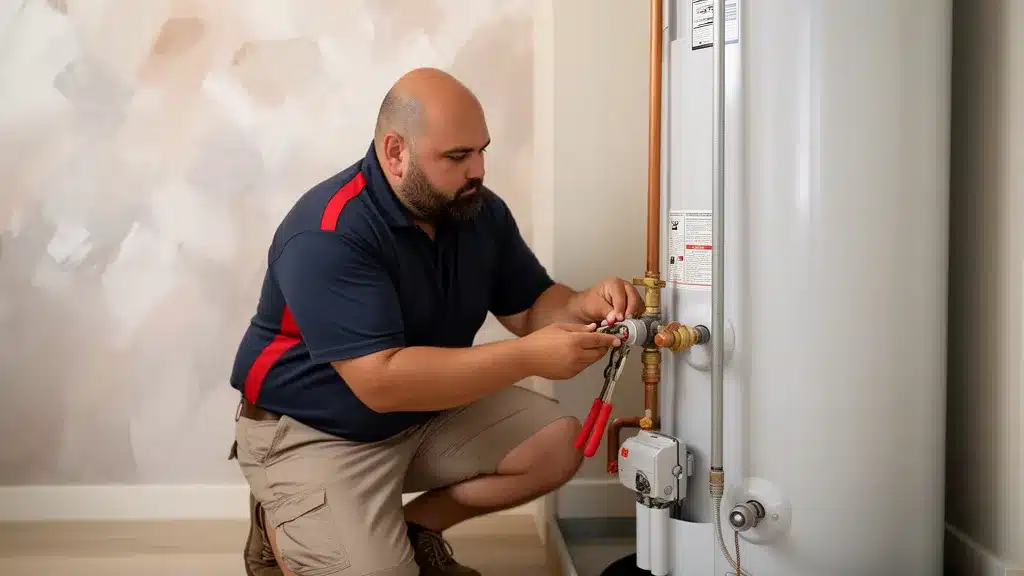
04
Hot Water Tank and Valve Failures
Temperature, discharge, supply and energy-source risks are separated before repair advice.

05
Hidden Leaks Behind Finished Areas
Meter and moisture evidence narrow the likely route before access is proposed.
06
Gas Appliance and Supply Concerns
Evacuation and isolation come first, followed by appropriately licensed testing.
Penrith Water, Unit and Hot Water Isolation Points
The useful valve may be at the boundary, inside the lot or attached to one appliance. Never force a seized or unlabelled control.
- Locate the boundary meter and keep the box accessible.
- Turn the customer valve clockwise without forcing it.
- Open a low cold tap to confirm the flow stops.
- Leave the meter route clear for the plumber.
- Use an under-sink, cistern, laundry or appliance valve for a visible local fault.
- Contact strata for locked meter banks or common risers.
- Match any shared valve to the lot before operation.
- Record what was isolated and whether the leak stopped.
- Identify the cold inlet and energy source without touching wet components.
- Keep clear of hot relief discharge.
- Do not relight gas equipment or reset unsafe electrical equipment.
- Leave recommissioning to the appropriate licensed trade.
Test accessible customer valves during routine maintenance—not during a crisis—so a seized control does not become the first surprise in an emergency.
How a Penrith Emergency Plumbing Visit Works
We move from symptoms to accessible services, then choose the least disruptive useful test.
You tell us what changed first and which plumbing remains usable.
Meter, unit, side path, parking and shared-service details are gathered.
The smallest effective water, gas or fixture service is shut down.
Drain, pressure, moisture or system checks are selected from the evidence.
You receive the findings, price and any effect on finishes or access.
The service is tested where appropriate and monitoring advice completes the handover.
What Affects a Penrith Emergency Plumbing Quote?
Access, service type and diagnostic work matter more than the suburb name.
Meters, common valves and equipment routes differ by property type.
Several symptoms can move the investigation beyond one local trap.
Tank, continuous-flow, gas and electrical risks require different checks.
Outside openings and safe equipment position influence clearing and inspection.
Finished walls, floors or cabinetry require a targeted access decision.
Containment may precede a larger repair requiring parts or owner approval.
Continued water use is reduced before damage expands.
The pattern points toward a local or shared fault.
The plumber can reach the relevant service without delay.
You understand what failed and the repair choices.
Changes after restoration can be reported accurately.
ABS 2021 Census figures show 43.4% of occupied Penrith dwellings are apartments, 36.0% are separate houses and 20.4% are townhouses or similar attached homes. That mix changes who controls the water, where drain access sits and whether another occupancy may be involved. Local data guides our questions; inspection confirms the fault.
- Locate your water meter isolation tap and check it actually turns.
- Replace braided flexi hoses on a sensible cycle rather than waiting for one to burst.
- Have mains pressure checked — high pressure wears every joint and seal in the house.
- Act on small leaks, weeping joints and damp patches early.
- Have an ageing hot water system assessed before it fails, not after.
- Get recurring blockages diagnosed with a camera rather than cleared over and over.
- Clear gutters, downpipes and stormwater pits before storm season.
- In a rental, make sure whoever lives there knows how to isolate the water.
- Turn the water off at the meter if the property will be empty for a long stretch.
Emergency Plumbing for Penrith’s Mixed Housing
We ask what changed across the property before choosing equipment.
Isolation and access are adapted to private and shared services.
Clearing and pipe-condition decisions are kept separate.
Leaks, valves and energy-source risks are distinguished.
Gas testing and repairs are handled by an appropriately licensed fitter.
Meter and moisture evidence guide access decisions.
The approved scope and cost are explained before work proceeds.
The active queue and access requirements are checked first.
Testing and what to monitor are covered at handover.
Penrith Plumbing Questions, Answered
Straight answers on pricing, response times and what to expect.
How can you tell whether my Penrith blockage is local or deeper?
How can you tell whether my Penrith blockage is local or deeper?
One affected fixture may be local; several slow or gurgling fixtures can point to a branch or main restriction. Stop water use and tell us the symptom order.
Can you attend both Penrith houses and apartments?
Can you attend both Penrith houses and apartments?
Yes. Tell us the property type, floor or lot, meter access and whether another occupancy has the same problem.
What should I do if the only toilet is blocked?
What should I do if the only toilet is blocked?
Stop flushing and avoid nearby water use if other drains gurgle. Keep people away from wastewater and call with the affected fixtures.
Is a leaking hot water relief pipe an emergency?
Is a leaking hot water relief pipe an emergency?
Occasional discharge and heavy continuous flow are different. Keep clear of hot water, never cap the valve and describe the system behaviour.
Can a slow shower drain wait until daytime?
Can a slow shower drain wait until daytime?
If it is the only symptom and there is no overflow or sewage odour, it may suit a standard booking. Stop using it if other fixtures change.
What if my water meter moves with every tap off?
What if my water meter moves with every tap off?
Check appliances, irrigation and filling cisterns. Continued unexplained movement can support a leak investigation.
Can you clear a blocked apartment stack?
Can you clear a blocked apartment stack?
Yes when authorised common access is available. Ask whether other units or floors are affected and contact the building manager.
Should I pour drain cleaner into an overflowing toilet?
Should I pour drain cleaner into an overflowing toilet?
No. Chemicals can add hazards and may not reach the restriction. Stop flushing and keep the wastewater area isolated.
Can you repair a burst pipe behind a wall?
Can you repair a burst pipe behind a wall?
Yes after the likely route is narrowed. Accessible checks and targeted detection come before an opening decision where practical.
What photos help before a Penrith callout?
What photos help before a Penrith callout?
Send the source, affected fixtures, meter, hot water label and safe access route. Do not enter water near electrical equipment.
Can you repair a gas hot water system?
Can you repair a gas hot water system?
Licensed gas and plumbing assistance is available. The system is assessed before repair, replacement or another trade requirement is discussed.
What if I cannot turn the boundary meter?
What if I cannot turn the boundary meter?
Do not force it with improvised tools. Call with a photo and the current flow so the safest next step can be planned.
Do you use drain cameras on every blockage?
Do you use drain cameras on every blockage?
No. Camera inspection is useful when location, condition or a repeated fault needs confirmation; the first priority may be restoring flow.
Can a townhouse blockage affect a neighbour?
Can a townhouse blockage affect a neighbour?
It can when drainage or services are shared. Similar symptoms in adjoining lots and the strata plan help guide access.
How quickly can a plumber reach Penrith?
How quickly can a plumber reach Penrith?
We give a realistic window after checking the active emergency queue, exact address, property access and required equipment.
Will you quote a whole pipe replacement immediately?
Will you quote a whole pipe replacement immediately?
No. We explain the observed condition and practical scopes after useful diagnosis. One leak or blockage does not prove the whole system needs replacement.
Can no hot water wait until tomorrow?
Can no hot water wait until tomorrow?
Often yes when there is no leak, gas smell, electrical risk or vulnerable occupant need. Describe the circumstances so we can help classify it.
What access should I clear?
What access should I clear?
Make the meter, hot water unit, affected fixture and any safe drain openings accessible. Secure pets and keep contaminated areas closed off.
Can you document the repair for my landlord or strata?
Can you document the repair for my landlord or strata?
We can record relevant plumbing findings and completed work. Approval, ownership and insurance decisions remain with the responsible parties.
How can I reduce another Penrith plumbing emergency?
How can I reduce another Penrith plumbing emergency?
Keep valves and drain openings accessible, act on recurring gurgles, service hot water systems and investigate unexplained meter movement early.
STOP THE ACTIVE SERVICE
Call an Emergency Plumber in Penrith
Plumbing emergency in Penrith?
Don’t wait on a form, call now for 24/7 priority response.
- Fully Stocked Vehicles
- Your local Penrith experts
- Same day service where available
- Upfront fixed pricing
- Licensed & insured. Lic: 210933C