
Pouring cooking oil down your kitchen sink seems harmless. But that simple act can lead to stubborn blockages, expensive repairs, and plumbing headaches that affect your entire home. Oil might flow as a liquid when hot, yet it solidifies in cooler pipes—sticking to walls, trapping food scraps, and forming thick deposits that slow or stop drainage completely.
This guide explains exactly how oil clogs drains and what happens inside your pipes. You’ll also learn when to call a professional and how our team tackles oil-related blockages with CCTV inspections, hydrojetting, and root-cause diagnosis across Sydney.
Key Takeaways
- Olive oil and other cooking fats solidify at around 10°C in cooler pipes, creating sticky layers that trap debris and cause sink clogs.
- Fats, oils, and grease (FOG) build up over time, leading to complete blockages and repair costs that vary widely depending on severity.
- Cool cooking oil completely, pour it into a sealed container, and recycle at local centers or wrap in foil and bin it—never pour it down the drain.
- CCTV drain inspections reveal the exact location and extent of grease buildup, helping plumbers choose the right clearing method.
- Same-day service and a lifetime labour warranty mean you get fast, reliable fixes for oil-related blockages anywhere in Sydney.
Can Oil Clog a Sink and Why Does It Happen?
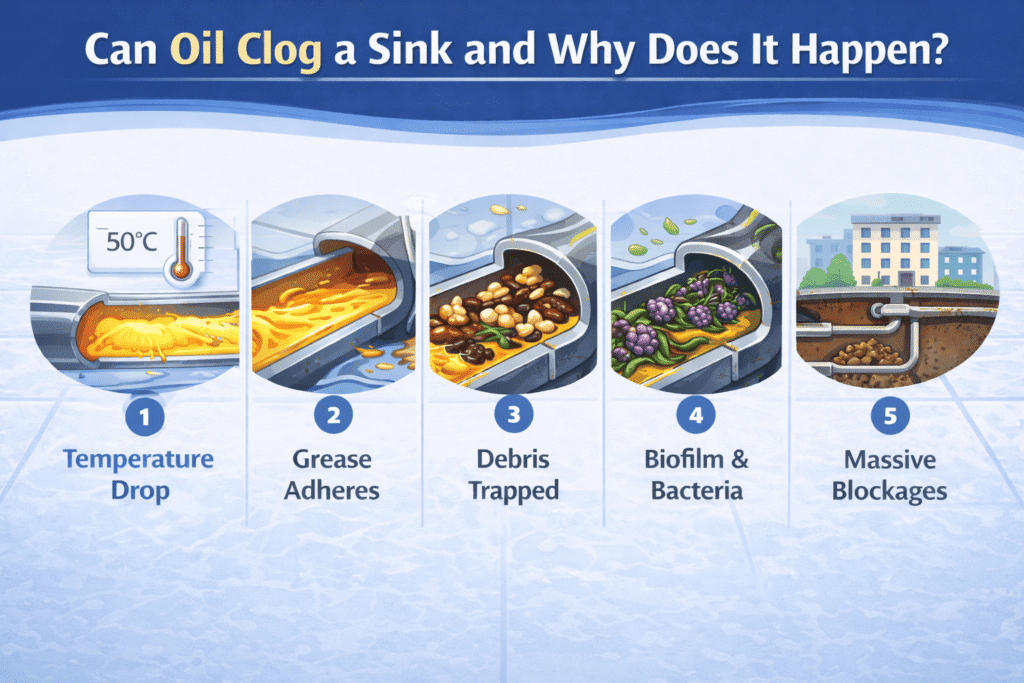
Yes, oil can absolutely clog a sink. When you pour cooking oil or grease down your drain, it flows smoothly while hot. But as it travels through your pipes, the temperature drops—especially in Sydney’s cooler months or if your pipework runs under a slab or through unheated spaces. Olive oil, for instance, begins to solidify at around 10°C, coating the inside of your pipes with a sticky film.
That film acts like glue. Food particles, soap scum, hair, and other debris stick to the grease layer, building up over weeks or months. Eventually, the pipe narrows so much that water drains slowly or not at all. You might notice a gurgling sound, a foul smell, or standing water in the sink—all signs that fats, oils, and grease (FOG) have created a blockage.
The problem isn’t limited to one type of oil. Butter, lard, coconut oil, vegetable oil, and animal fats all behave the same way once they cool. Even small amounts add up over time, especially in older clay or cast-iron pipes where rough interior surfaces give grease more to cling to.
What Happens Inside Your Pipes When Oil Goes Down the Drain?
Understanding the journey of oil through your plumbing helps you see why disposal matters. When you tip oil into the sink, it mixes with hot water and flows into your waste trap—the U-bend under your sink designed to hold a small amount of water and block sewer gases. Some oil clings to the trap walls right away, but most continues into the horizontal drain line that connects to your main stack or sewer.
As the oil moves away from the heat source, it cools. Horizontal pipes are the worst offenders because oil has more contact time with the pipe surface and gravity doesn’t help it keep moving. The grease starts to congeal, forming a thin layer. Each time you wash dishes or rinse pans, you add more oil, thickening that layer. Eventually, the pipe’s diameter shrinks from, say, 40 millimeters to 20 or less, and water struggles to pass.
If the blockage is close to the sink, you might clear it with a plunger or a simple drain snake. But if grease has traveled further into your system—into the main line or even the sewer connection—you’ll need professional equipment. That’s where CCTV drain inspections come in. We insert a high-definition camera into your pipes to see exactly where the grease has built up, how thick it is, and whether tree roots or other issues are also at play.
Common Types of Oil That Clog Sinks
Not all oils are equal, but all can cause problems. Some solidify faster or at higher temperatures, making them more likely to clog your pipes quickly. Knowing which oils pose the biggest risk helps you avoid the worst mistakes.
- Olive oil: Solidifies around 10°C, common in Sydney kitchens, and forms a sticky residue that traps food particles.
- Coconut oil: Solidifies at about 24°C, so it can harden even in warm weather if your pipes are cool or if you run cold water.
- Butter and lard: Animal fats congeal quickly and create dense, waxy deposits that are hard to shift without hydrojetting.
- Vegetable and canola oil: Remain liquid longer but still coat pipes over time, especially when mixed with soap and food waste.
- Deep-frying oil: Large volumes of used frying oil are particularly problematic because they carry food particles and have already been heated and cooled multiple times.
Even products marketed as cleansing oils—like those used in skincare routines—can contribute to buildup if rinsed down the sink regularly. You might wonder what does oil cleanser do in a bathroom context, but the principle is the same: oil binds to impurities and, when washed away, can coat pipes if not managed properly.
Signs That Oil Has Already Clogged Your Sink
Recognizing the early warning signs of a grease blockage can save you from a full drain failure. Oil clogs develop slowly, so you’ll often see symptoms weeks before the sink stops draining altogether. Pay attention to these red flags.
- Slow drainage: Water takes longer to empty from the sink, pooling around the plughole.
- Gurgling sounds: Air trapped by the blockage creates bubbling or gurgling noises as water tries to pass.
- Foul odors: Grease traps food waste and bacteria, producing a rotten or sour smell that rises from the drain.
- Water backing up: In severe cases, water from the kitchen sink backs up into other fixtures, like a nearby laundry tub or floor waste.
- Recurring clogs: You clear the drain with a plunger, but the problem returns within days or weeks—a sign that grease remains deeper in the line.
If you notice any of these symptoms, it’s time to act. Pouring boiling water or chemical drain cleaners down the sink might shift a small blockage temporarily, but they won’t remove the grease layer. Boiling water can also crack older clay pipes, and harsh chemicals can corrode metal fittings. The safest approach is a professional inspection and targeted clearing.
Professional Solutions for Oil-Related Blockages
When grease has built up beyond the reach of a plunger or hand snake, professional tools and techniques are the only reliable fix. We use a combination of CCTV inspection, hydrojetting, and root-cause analysis to clear oil clogs and prevent them from coming back.
CCTV Drain Inspection
A high-definition camera travels through your pipes, sending live video to a monitor. We see exactly where the grease has accumulated, how thick it is, and whether other issues—like tree roots, pipe damage, or incorrect falls—are contributing to the problem. This diagnosis takes the guesswork out of the repair and lets us quote accurately before we start.
Hydrojetting
High-pressure water jetting blasts grease, food waste, and biofilm from pipe walls, restoring full flow. The pressure is adjustable, so we can safely clean PVC, clay, or cast-iron pipes without causing damage. Hydrojetting is faster and more thorough than mechanical snaking, and it leaves your pipes cleaner for longer. We back our hydrojetting work with a lifetime labour warranty, so you can trust the job is done right.
Pipe Relining (If Damage Is Present)
If the CCTV inspection reveals cracks, corrosion, or root intrusion alongside the grease buildup, we may recommend pipe relining. This no-dig solution inserts a resin-lined sleeve into the damaged section, creating a smooth, watertight pipe within the old one. Relining is faster and less disruptive than excavation, and the new lining resists grease adhesion better than rough clay or corroded metal.
Preventive Maintenance Plans
For cafés, restaurants, and busy households, regular drain cleaning can prevent grease from building up in the first place. We offer scheduled CCTV inspections and hydrojetting to keep your drains flowing year-round, reducing the risk of emergency callouts and downtime.
Our plumbers arrive with all the tools needed to diagnose and fix oil clogs on the spot. We provide clear options, upfront pricing, and same-day service across Sydney—from the Inner West to the Northern Beaches, Hills District, and beyond. No call-out fee applies from 7am to 3pm on weekdays (excluding public holidays), so you know exactly what you’ll pay before we start.
Real-World Example: A Blocked Kitchen Sink in the Inner West
Sarah, a homeowner in the Inner West, called us after her kitchen sink stopped draining completely. She’d been pouring small amounts of olive oil down the drain after cooking, thinking it was harmless. Over six months, the oil had coated the waste trap and the horizontal drain line, trapping food scraps and soap scum. By the time she called, water was pooling in the sink and a foul smell was coming from the plughole.
We arrived the same day and ran a CCTV camera through the line. The footage showed a thick grease layer reducing the pipe diameter by more than half. We used hydrojetting to blast the grease away, restoring full flow in under an hour. We also showed Sarah how to dispose of oil safely—using a jar and the local recycling center—and recommended wiping pans before washing. Six months later, her drains are still flowing perfectly, and she hasn’t poured oil down the sink since.
Preventing Future Oil Clogs: Simple Habits That Work
Prevention is always cheaper and easier than repair. A few small changes to your kitchen routine can keep oil out of your drains and save you from blockages, odors, and emergency callouts.
- Wipe cookware before washing: Use paper towel to remove grease, oil, and food residue before you rinse pans and plates.
- Scrape plates into the bin: Food scraps and sauces often contain fats—bin them instead of washing them down the sink.
- Use a sink strainer: A simple mesh or silicone strainer catches food particles and prevents them from mixing with any residual oil in the drain.
- Run cold water while rinsing: Cold water keeps any trace oil in liquid form long enough to reach the sewer, rather than solidifying in your pipes. (This doesn’t mean you should pour oil down with cold water—it just helps with trace amounts.)
- Schedule an annual CCTV inspection: For busy kitchens or older homes, a yearly camera check can spot early grease buildup before it becomes a full blockage.
These habits take seconds and make a real difference. If you’re unsure whether your drains are clear, give us a call. We can run a quick camera inspection and provide a clear answer—no guesswork, no sales pressure.
When to Call a Professional for an Oil Clog
DIY methods work for minor, surface-level blockages. But if you’ve tried a plunger, the sink is still slow, and you can smell grease or sewage, it’s time to call a licensed plumber. Waiting too long can turn a simple grease buildup into a burst pipe, a sewer overflow, or damage to your kitchen cabinetry from leaking water.
We’re available 24/7 for emergencies, and same-day service is standard across Sydney. Our plumbers carry CCTV cameras, hydrojetting equipment, and mechanical snakes on every van, so we can diagnose and fix most oil clogs in a single visit. We provide upfront pricing before we start, and our lifetime labour warranty means you’re covered if any issue arises from our workmanship.
If the blockage is in a hard-to-reach section—under a slab, inside a wall cavity, or deep in the main sewer line—we have the tools and experience to handle it without unnecessary excavation. Pipe relining, acoustic leak detection, and trenchless repairs are all part of our toolkit, and we choose the method that makes sense for your property and budget.
Why Choose Our Team for Oil Clogs and Blocked Drains

We’ve been clearing blocked drains across Sydney for more than 25 years. Our plumbers are licensed (Lic: 210933C), fully insured, and trained in the latest diagnostic and clearing techniques. We don’t just clear the symptom—we find the root cause, whether that’s grease buildup, tree roots, incorrect pipe falls, or a combination of issues.
Every job starts with a clear explanation and upfront pricing. We show you the CCTV footage, point out the blockage, and discuss your options: clear and monitor, clear and reline, or replace. You choose what makes sense for your home and budget, and we deliver the work to Australian Standards with a lifetime labour warranty on our workmanship.
Same-day service is our standard, not an exception. We know a blocked sink disrupts your routine, so we prioritize fast response times across the Inner West, Eastern Suburbs, North Shore, Northern Beaches, Hills District, Western Sydney, South-Western Sydney, and Sutherland Shire. No call-out fee applies from 7am to 3pm on weekdays (excluding public holidays), and our 24/7 emergency line is always open.
We respect your home. Our plumbers arrive in clean uniforms, lay drop sheets, and clean up after every job. We explain what we’re doing in plain English, answer your questions, and leave you with practical advice to prevent future blockages. If you need a dependable Sydney plumber who puts safety, compliance, and clear communication first, call 0493 824 176 or book online.
Conclusion
Oil clogs are preventable, but once they form, they need professional attention to clear properly. Dispose of cooking oil responsibly, adopt simple wipe-first habits, and call us at the first sign of slow drainage or odors—we’ll get your sink flowing again fast.
Antons Plumbing & Gas clears stubborn grease blockages with expert blocked drain services across Sydney. Our licensed team uses CCTV inspections to diagnose oil buildup fast. Get started with same-day service today.
Related Articles
- You’ve Been Pouring Oil Down the Sink—But Does It Clog Drains?
- How to Prevent a Fat Clogged Sink in Your Kitchen
- 5 Common Mistakes When Dealing with Oil in Sink Drains
FAQs
Can Oil Clog A Sink?
Yes, oil can clog a sink. When oil is poured down the drain, it can solidify and accumulate in the pipes, leading to blockages. This can disrupt your plumbing system and may require professional assistance to resolve.
What Should I Do If I Accidentally Poured Oil Down The Sink?
If you accidentally poured oil down the sink, avoid running water down the drain to prevent further blockage. Instead, contact a licensed plumber like Antons Plumbing & Gas to assess the situation and provide effective solutions.
How Do You Unclog A Sink Clogged With Oil?
To unclog a sink clogged with oil, a professional plumber will typically use specialized tools and techniques, such as hydro jetting or pipe inspection, to effectively remove the buildup and restore proper flow.
Is It Safe To Pour Cooking Oil Down The Drain?
It is not safe to pour cooking oil down the drain. Doing so can lead to clogs and plumbing issues. Instead, dispose of cooking oil in a sealed container and throw it in the trash.
What Happens If You Pour Oil Down The Sink?
Pouring oil down the sink can cause significant plumbing issues, including clogs and slow drainage. Over time, the oil can harden and create blockages that may require professional intervention to clear.