

An overflowing gutter does not prove the downpipe is blocked. Leaves at the outlet, a damaged joint, an obstructed underground run or a gutter alignment problem can look similar from below. Start by noting where water escapes and whether the problem appears only during rain. This guide helps you describe the fault and decide when professional access is needed.
Start with observations from the ground
Wait until the weather is safe. From a stable position on the ground, note the overflow point, visible damage and any pooling near the outlet. Do not stand in floodwater, reach into concealed openings or approach electrical equipment affected by water. A photograph taken safely can help explain the problem when booking.
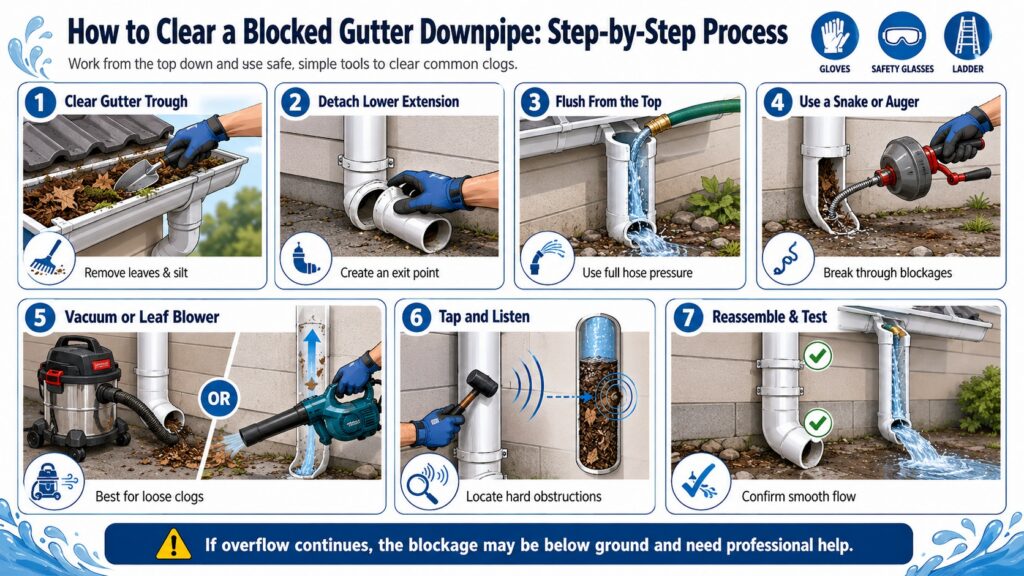
Avoid turning a blockage into a fall or pipe break
Do not climb onto the roof, lean from a ladder or dismantle a high downpipe to investigate a clog. Fragile pipework and restricted access can make a seemingly simple task unsuitable for DIY. Arrange appropriate access equipment and a competent contractor where work cannot be done safely from the ground. SafeWork NSW guidance on working at heights explains why avoiding height exposure is the preferred starting point.
Separate the gutter, downpipe and underground drain
Water escaping at the gutter may indicate a restricted outlet or gutter issue. Pooling beside the bottom of the downpipe may involve the outlet or connected drainage. These are clues, not a diagnosis. Ask the contractor which part is being assessed and whether roof plumbing, pipe clearing or further drainage investigation is required.
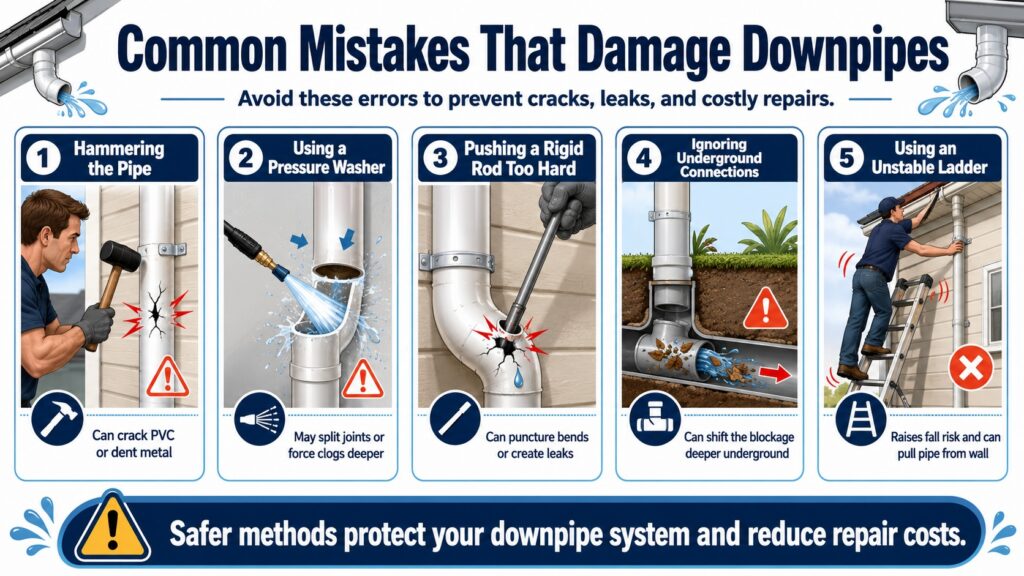
Why forced flushing is not a universal fix
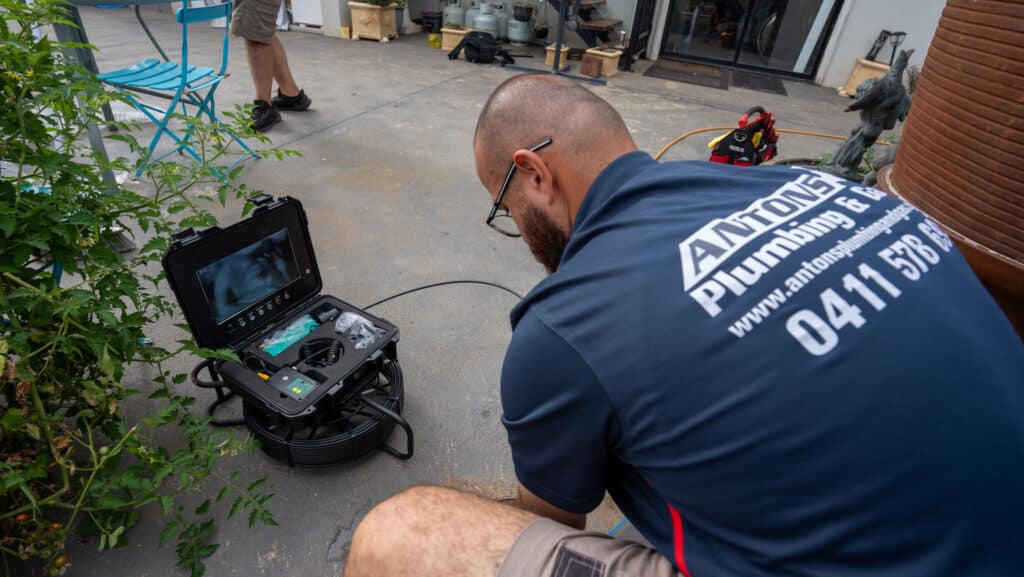
A hose, auger, vacuum or pressure washer can be unsuitable for damaged pipework or an unknown connection. Avoid repeated flushing when water is already backing up. Do not force tools around bends or open pits. If the suspected obstruction is below ground, discuss accessible inspection points and CCTV drain inspection where useful; a camera cannot see through every obstruction.
After assessment: clearing, repair and prevention
Ask what was cleared, what remained inaccessible and whether normal discharge was checked. A damaged connection or drainage-capacity problem may need a separate remedy. Arrange gutter and inlet maintenance according to debris exposure and safe access rather than assuming one timetable suits every property.
Arrange the right drain assessment
For Sydney blocked-drain services, call 0493 824 176 with your address, symptoms and safe access details. Confirm availability and quote inclusions before booking. Check contractor details using the Service NSW licence checking guide.
Related local drain services
serve the greater Sydney region · qualified plumbing service · our experienced team
Frequently asked questions
Does a gutter overflow always mean a blocked downpipe?
No. A restricted gutter outlet, damaged connection or drainage issue may be involved. Describe the overflow location and timing before deciding what work is needed.
Should I push a hose down from the roof?
Do not climb onto the roof or force a hose into an unknown obstruction. Arrange suitable access and assessment where the pipe cannot be reached safely from the ground.
Can a camera inspect a downpipe blockage?
It depends on the opening, bends, pipe size and visibility. Ask which section can be inspected and whether clearing is required first.
Who handles water collecting at the street outlet?
Report the location to the relevant council or asset owner and ask who manages that infrastructure. Do not assume every stormwater outlet belongs to Sydney Water.