

Stormwater drains play a quiet but critical role in protecting your property from water damage. When they fail, the consequences can escalate quickly — from pooling water in your yard to structural damage that costs thousands to repair. Recognising the early warning signs of a blocked stormwater drain can save you time, money and stress, and knowing when to call a licensed Sydney plumber can stop a small blockage becoming a costly emergency.
This guide walks you through five common signs that your stormwater system needs attention. You’ll learn what causes blockages, how to spot trouble before it becomes an emergency, and when to call in professional help. Whether you’re a homeowner in Sydney’s Inner West or managing a strata property on the North Shore, understanding these signals helps you act before minor issues turn into major headaches — and before Sydney’s notoriously heavy downpours put pressure on an already struggling system.
Key Takeaways
- Pooling water after rain often signals a blocked stormwater drain that needs urgent attention.
- Gurgling sounds from drains indicate air trapped by debris or roots in your stormwater pipes.
- Unpleasant odours near outdoor drains suggest stagnant water and organic matter decomposing in blocked pipes.
- Overflowing gutters during storms point to downpipe or underground drainage blockages.
- Cracks in paving or soil erosion around your property may result from water backing up through blocked stormwater systems.
- If any of these signs appear, it’s time to call a licensed Sydney plumber — our team holds NSW Lic. 210933C and is available 24/7 across the Sydney metro area.
Understanding Stormwater Drains and Why They Block
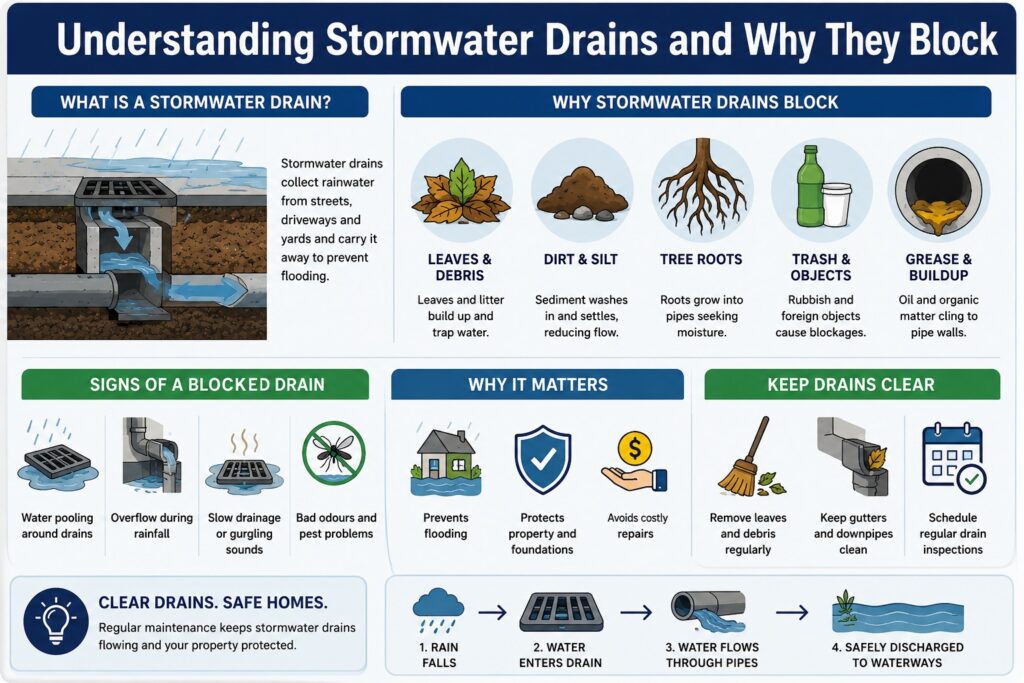
Stormwater drains are designed to divert rainwater away from your property and into the local council system. They collect run-off from roofs, driveways and gardens, channelling it through underground pipes to prevent flooding. In Sydney, many older homes still rely on clay pipes that crack over time, while newer builds use PVC or concrete systems.
Blockages happen for several reasons. Tree roots seek out moisture and invade cracks in pipes, creating dense tangles that trap debris. Leaves, dirt and garden waste wash into grates and accumulate over months. Poor installation or sagging pipes create low points where sediment settles. Sometimes, incorrect connections between sewer and stormwater lines cause clogs that back up into your yard — which is also a breach of Sydney Water rules.
Sydney’s climate adds another layer of complexity. Heavy downpours overwhelm systems already compromised by slow-building blockages. Heritage properties in suburbs like Balmain or Mosman often have undersized pipes that can’t handle modern water volumes. If your stormwater system hasn’t been inspected in years, hidden damage could be reducing its capacity without you realising.
Sign 1: Pooling Water After Rain
The most visible sign of a blocked stormwater drain is water that refuses to drain away. After a storm, you might notice puddles lingering in your driveway, garden beds or near downpipes for hours or even days. This standing water indicates that your drainage system can’t move run-off fast enough — or at all.
Pooling water creates more than just an inconvenience. It softens soil around foundations, increasing the risk of cracks and subsidence. Stagnant pools become breeding grounds for mosquitoes and attract pests. If water sits near your home’s perimeter, it can seep into basements or under floor slabs, causing damp, mould and structural damage over time.
You might wonder whether the problem lies with your property’s grading or the drain itself. Both can contribute, but if water collects directly around grates or inspection points, the blockage is almost certainly inside the pipe. We use CCTV drain inspection — a camera fed into your stormwater line — to pinpoint the exact location and cause of the obstruction. This diagnostic step takes the guesswork out of repairs and lets us show you what’s happening underground.
Sign 2: Gurgling Sounds From Outdoor Drains
Strange noises coming from your stormwater grates or downpipes are more than just odd — they’re a warning. Gurgling, bubbling or sucking sounds occur when air gets trapped in a partially blocked pipe. As water tries to flow past the obstruction, it creates pockets of air that escape noisily through the nearest opening.
This symptom often appears before you see pooling water, making it an early indicator worth paying attention to. The blockage might be a clump of leaves, a root intrusion or sediment build-up. Either way, the restricted flow forces air and water to compete for space, producing those telltale sounds.
Ignoring gurgling drains rarely ends well. The partial blockage will worsen with each storm, trapping more debris until the pipe stops draining altogether. By the time you notice flooding, the damage may already be affecting your garden, paving or even your home’s foundation. If you hear unusual noises from your outdoor drains, it’s worth booking a CCTV inspection to confirm what’s causing the issue before it escalates.
Sign 3: Unpleasant Odours Near Outdoor Drains
A foul smell wafting from your stormwater grates or yard drains is never a good sign. When water can’t flow freely, it sits in the pipe and stagnates. Organic matter — leaves, dirt and plant debris — begins to decompose, releasing unpleasant odours that drift up through grates and cracks.
In some cases, the smell might be worse than just rotting vegetation. If your stormwater drain has been incorrectly connected to a sewer line, you could be dealing with sewage backing up into the stormwater system. This cross-connection is a serious health hazard, breaches NSW plumbing rules, and requires immediate professional attention.
Odours don’t just affect your outdoor living areas. They can drift into your home through open windows or doors, making your property uncomfortable and potentially affecting your health. Stagnant water also attracts insects and rodents, compounding the problem. Our team can identify the source of the smell using CCTV technology and high-pressure jetting to clear blockages and flush out decomposing material. We’ll also check for illegal connections and ensure your system complies with Sydney Water regulations.
Sign 4: Overflowing Gutters and Downpipes in Rain
Overflowing gutters and downpipes during rainfall can point to more than just debris at roof level. In many cases, the stormwater system below is partially or fully blocked, preventing water from flowing away as quickly as it should. When run-off has nowhere to go, it backs up through the drainage network and spills from gutters, downpipes or overflow points around the home.
This overflow can damage fascia boards, exterior walls, eaves and nearby landscaping. Water spilling close to the foundation also increases the risk of damp problems, erosion and long-term structural issues. If left unresolved, repeated overflow during storms can shorten the lifespan of your guttering system and create costly repair work around the property.
While blocked gutters can contribute to the problem, persistent overflow during moderate or heavy rain often suggests the issue extends into the stormwater line itself. A blocked underground drain stops the system from handling roof water efficiently, even if the gutters have been recently cleaned. We use CCTV drain inspections and professional clearing equipment to determine whether the restriction is in the downpipe connection, underground pipework, or further along the stormwater line.
Sign 5: Persistent Soggy Patches or Damp Areas
Soggy patches in your yard that never seem to dry out are a strong sign that stormwater is not draining properly. If certain parts of the lawn, garden or paving remain wet long after rain has stopped, water may be leaking from or backing up within a blocked stormwater drain. This trapped moisture often appears gradually, making it easy to overlook until the affected area becomes muddy, unstable or discoloured.
Persistent dampness can damage turf, kill plants, soften paving bases, and weaken the soil around paths or foundations. Over time, excess moisture may also attract pests, encourage mould growth, and create unpleasant smells in outdoor areas. What looks like a simple drainage issue on the surface can actually indicate a larger blockage or damaged pipe underground.
In some cases, soggy ground develops when water escapes from cracked stormwater pipes, but blockages are also a common cause because backed-up water needs somewhere to go. If the wet area appears near drain runs, downpipes or low points in the yard, the drainage system should be inspected as soon as possible. Our team uses CCTV technology to locate the exact cause and recommend the right solution, whether that involves clearing the blockage, repairing the line, or improving stormwater flow across the property.
Recognising Less Obvious Warning Signs
Not every blocked stormwater drain announces itself with flooding or smells. Some symptoms are subtler but just as serious. Paying attention to these quieter signals can help you catch problems before they cause visible damage.
Overflowing Gutters During Storms
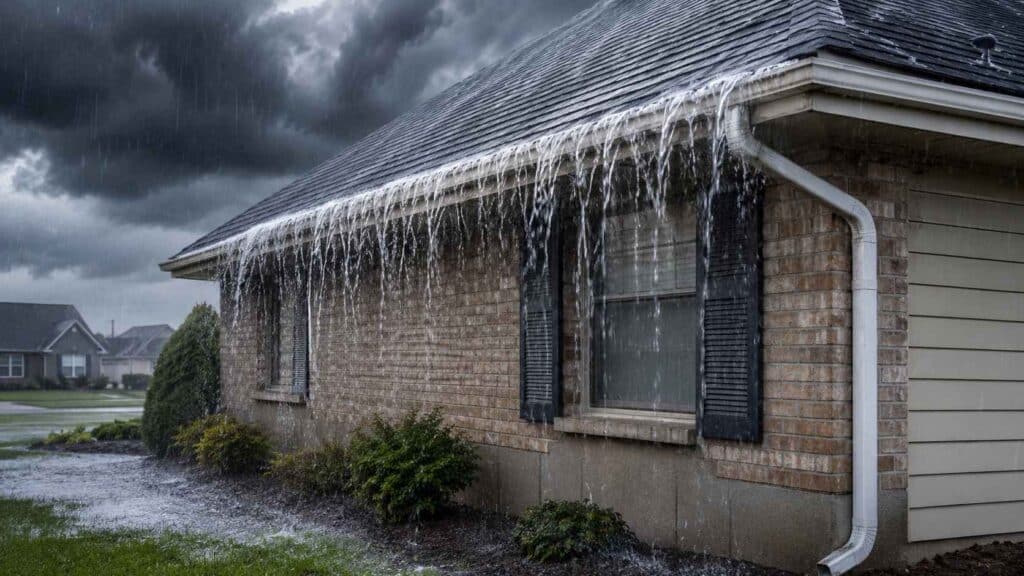
When gutters overflow during rain, the first instinct is to blame the gutters themselves. But often, the real culprit is a blocked downpipe or the underground stormwater drain it connects to. If water can’t exit through the drain, it backs up into the downpipe and spills over the gutter edge.
This overflow can damage fascia boards, soffits and external walls. Water running down the side of your home may also pool near the foundation, increasing the risk of damp and structural issues. Checking both the downpipe and the underground drain is the only way to confirm where the blockage sits.
Cracks in Paving or Driveways
Unexplained cracks in concrete, pavers or asphalt near your driveway or patio can signal water pressure building up beneath the surface. When a stormwater drain blocks, water has nowhere to go. It saturates the soil, causing it to expand and shift. This movement cracks rigid surfaces above.
Soil erosion is another consequence. As water backs up and finds alternative paths, it washes away soil from under paving, creating voids that eventually collapse. If you notice sunken sections or cracks appearing after heavy rain, a blocked stormwater drain may be undermining your property’s hardscaping.
Soggy Patches in Your Lawn
A lawn that stays wet long after rain has stopped — or develops boggy patches even in dry weather — can indicate a blocked or broken stormwater pipe. Water leaking from a cracked pipe or backing up from a blockage saturates the surrounding soil, creating persistently damp areas.
These soggy spots often attract weeds, moss and fungal growth. They can also make mowing difficult and damage turf. If the wet patch sits directly above your stormwater line, the pipe may have collapsed or been invaded by tree roots.
Increased Mosquito Activity
Mosquitoes breed in standing water, and a blocked stormwater drain provides the perfect habitat. If you’ve noticed a sudden increase in mosquitoes around your property, check for hidden pools of stagnant water near grates, downpipes or low-lying garden areas.
Mosquitoes can lay eggs in as little as a few millimetres of water, so even a small blockage that creates a shallow pool can become a breeding ground. Addressing the drainage issue removes the habitat and reduces the pest problem.
Water Stains on Exterior Walls
Dark streaks, discolouration or damp patches on your home’s exterior walls can result from water overflowing from blocked gutters or downpipes. When stormwater can’t drain away, it spills over and runs down walls, leaving stains and potentially causing paint to peel or render to crack.
Over time, persistent moisture can penetrate the wall cavity, leading to internal damp, mould and damage to insulation or framing. If you see water stains appearing after rain, trace them back to the nearest downpipe or gutter and investigate the drainage system.
What Causes Blocked Stormwater Drains in Sydney?
Blocked stormwater drains in Sydney are often caused by a combination of environmental conditions, ageing infrastructure and property-specific drainage issues. Mature trees, older pipe materials, heavy rainfall and gradual debris build-up all place pressure on stormwater systems across many Sydney suburbs. Understanding these common causes helps homeowners recognise potential risks earlier and take steps to prevent more serious drainage problems.
| Cause | Description | Common Locations |
|---|---|---|
| Tree Roots | Roots enter cracked or aging pipes and create dense blockages that trap other debris over time. | Inner West, North Shore, and Eastern Suburbs, especially where older clay pipes are common |
| Leaves and Garden Debris | Organic matter washes into grates, gutters, and downpipes, then collects inside the stormwater line. | Properties with large trees, especially near roof drainage and garden beds |
| Sediment and Silt | Soil, sand, and fine particles wash into drains during rain and settle in low sections of pipework. | Sloped blocks, unpaved areas, and sites near ongoing construction |
| Pipe Damage | Cracked, collapsed, or sagging pipes restrict water flow and create points where debris can build up. | Heritage homes and older properties with clay or terracotta drainage pipes |
| Incorrect Connections | Improper plumbing connections can send unsuitable waste into the stormwater system and increase the risk of blockages. | Older suburbs and properties with previous DIY or non-compliant plumbing changes |
Many blocked stormwater drains are not caused by a single issue but by several contributing factors building up over time. A pipe may already be cracked, for example, and then become fully blocked when roots, leaves or sediment collect inside it during heavy rain. By understanding the main causes of blocked stormwater drains in Sydney, homeowners can make better maintenance decisions and address drainage problems before they lead to flooding or property damage.
How We Diagnose and Fix Blocked Stormwater Drains
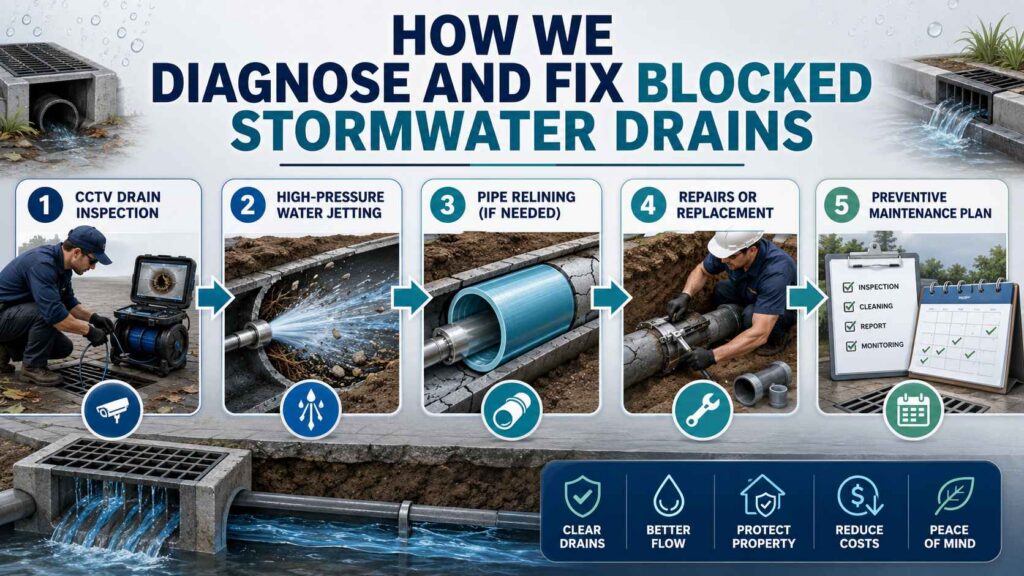
Diagnosing a blocked stormwater drain isn’t guesswork. We use proven methods to locate the blockage, identify its cause, and recommend the most effective solution. Here’s how we approach every job, from initial inspection to final repair.
Step 1: CCTV Drain Inspection
We start with a CCTV drain inspection — a high-resolution camera fed into your stormwater pipe. This lets us see exactly what’s inside: roots, debris, cracks, collapses or sediment build-up. The footage is recorded, so we can show you the problem and explain your options clearly.
Step 2: High-Pressure Water Jetting
For most blockages, high-pressure water jetting is the fastest and most effective solution. We use a specialised nozzle that blasts water at high pressure, cutting through roots, flushing out debris, and scouring the pipe walls clean. This method is safe for pipes and environmentally friendly — no harsh chemicals involved.
Step 3: Pipe Relining (If Needed)
If the CCTV inspection reveals cracks, root intrusion points or structural damage, we may recommend pipe relining. This trenchless repair method involves inserting a resin-coated liner into the damaged section of pipe and curing it in place. The result is a smooth, seamless inner pipe that’s resistant to roots and corrosion — without digging up your garden or driveway.
Step 4: Repairs or Replacement
In cases of severe collapse or damage, excavation and pipe replacement may be necessary. We’ll discuss the pros and cons of repair versus replacement, considering factors like pipe age, soil conditions, and your long-term plans for the property. Our goal is to give you a solution that lasts, not just a quick fix.
Step 5: Preventive Maintenance Plan
Once the blockage is cleared, we’ll recommend a maintenance schedule to keep your stormwater system flowing. This might include annual CCTV inspections, grate cleaning, or root treatments. Preventive care is far more cost-effective than emergency repairs.
We back our work with a lifetime labour warranty, so you can trust that the job is done right. Our team arrives on time, explains each step in plain English, and leaves your property clean and compliant with Australian Standards (AS/NZS 3500).
When to Call a Professional for a Blocked Stormwater Drain
Some drainage issues can wait. Others demand immediate attention. Knowing when to call in a licensed plumber can prevent minor blockages from becoming expensive emergencies.
Call us straight away if you notice flooding inside your home, sewage odours near outdoor drains, or water pooling against your foundation. These symptoms indicate a serious blockage or system failure that could cause structural damage or health hazards if left untreated. We offer 24/7 emergency service across Sydney, with same-day response and no call-out fee from 7am to 3pm on weekdays (excluding public holidays).
Even if the problem seems less urgent — like slow drainage or occasional gurgling — it’s worth scheduling an inspection. Early intervention often means a simple jetting job instead of a complex repair. We’ve seen too many cases where homeowners waited until a storm hit, only to discover that a minor blockage had turned into a collapsed pipe or flooded basement.
DIY solutions like poking a rod down a grate or hosing out a downpipe can sometimes clear surface debris. But if the blockage is deeper in the system — especially if roots or structural damage are involved — you need professional equipment and expertise, plus a plumber licensed under NSW Fair Trading. Attempting to force a blockage with makeshift tools can damage pipes and make the problem worse.
Our team serves the entire Sydney Metro, including the Inner West, Eastern Suburbs, North Shore, Northern Beaches, Hills District, Western and South-Western Sydney, and Sutherland Shire. Wherever you are across Sydney, our CCTV-first diagnostic process and repair standards stay the same, and every job is carried out in line with NSW plumbing regulations and Sydney Water requirements.
Preventing Future Blockages in Your Stormwater System
Prevention is always cheaper than repair. A few simple habits can keep your stormwater drains flowing freely and reduce the risk of blockages.
- Clean grates and downpipes regularly. Remove leaves, twigs and debris from grates and downpipe openings at least twice a year — more often if you have large trees nearby.
- Install grate guards. Mesh or slotted grate covers (available at Bunnings and other hardware stores) prevent large debris from entering your stormwater system while allowing water to flow through.
- Trim tree roots near pipes. If you have mature trees close to your stormwater lines, consider root barrier installation or regular root pruning to prevent intrusion.
- Avoid washing soil into drains. When gardening or landscaping, prevent soil and mulch from washing into grates during rain. Use sediment barriers or redirect run-off away from drain openings.
- Schedule annual inspections. A yearly CCTV inspection can catch early signs of damage or blockages before they become emergencies. This is especially important for older properties with clay pipes.
- Check for illegal connections. If you’ve had plumbing work done, ensure that sewer and stormwater lines are correctly separated, as required by Sydney Water. Cross-connections are illegal and can cause serious blockages.
We also recommend keeping a record of your stormwater system layout. Knowing where your pipes run, where inspection points are located, and the age of your system helps us diagnose issues faster and plan maintenance more effectively.
Why Choose Our Team for Stormwater Drain Solutions

Blocked stormwater drains are more than just a plumbing issue — they’re a threat to your property’s safety and value. That’s why we approach every job with the same level of care and precision, whether it’s a simple jetting job or a complex pipe reline.
We’re a licensed, family-owned Sydney plumbing and gas-fitting company with more than 25 years of hands-on experience. Our team is fully qualified and operates under NSW Fair Trading licensing requirements (Lic: 210933C). We comply with all relevant Australian Standards for plumbing and drainage work, and we document every job to ensure transparency and accountability.
When you call us, you’ll speak to a real person — not a call centre. We arrive on time, respect your property, and communicate in plain English. Our CCTV inspections provide clear visual evidence of the problem, so you understand exactly what needs fixing and why. We present clear options, explain the pros and cons of each approach, and tailor our recommendations to your budget and timeline.
We charge fixed rates for our services, so you know the cost upfront — no surprises or hidden fees. Our same-day service and 24/7 emergency response mean help is always available when you need it. And because we back our workmanship with a lifetime labour warranty, you can trust that the repair will last.
From blocked drains and CCTV inspections to pipe relining, leak detection and backflow testing, we provide end-to-end solutions for Sydney homeowners, strata managers and local businesses. We serve the entire Sydney Metro, including the Inner West, Eastern Suburbs, North Shore, Northern Beaches, Hills District, Western and South-Western Sydney, and Sutherland Shire.
If you’re dealing with a blocked stormwater drain — or any plumbing issue — call us at 0493 824 176 or book online. We’ll diagnose the problem, fix it right the first time, and help you prevent future issues with a maintenance plan that fits your property and budget.
Conclusion
Spotting the signs of a blocked stormwater drain early saves you money and protects your property from serious damage. Pooling water, gurgling sounds, foul odours, overflowing gutters and cracks in paving all point to drainage issues that need professional attention. Our team uses CCTV inspections, high-pressure jetting and pipe relining to diagnose and fix blockages quickly, backed by a lifetime labour warranty and same-day service across Sydney.
Antons Plumbing & Gas clears blocked drains fast with CCTV inspections and expert repairs across Sydney. Our licensed team (NSW Lic. 210933C) diagnoses the root cause and restores flow same-day. Get started with a no call-out fee quote today.
Related Articles
- 5 Proven Techniques to Unblock Stormwater Drains Safely
- Sewer vs. Stormwater: Blocked Drain Plumbing Differences
- Blocked Stormwater Pipe Solutions for Better Home Drainage
FAQs
What Causes A Stormwater Drain To Become Blocked?
Stormwater drains can become blocked due to a variety of reasons, including the accumulation of leaves, debris, and sediment, as well as tree roots infiltrating the pipes. Other factors may include improper installation or damage to the drainage system. Our experienced team at Antons Plumbing & Gas can quickly identify the cause of your blockage and provide effective solutions.
How Do You Unblock A Stormwater Drain?
Unblocking a stormwater drain typically involves clearing out debris manually or using specialised tools like a plumber’s snake or high-pressure water jetting. Depending on the severity of the blockage, our qualified technicians at Antons Plumbing & Gas will assess the situation and implement the best method to restore proper drainage.
What Are The Signs Of A Blocked Stormwater Drain?
Common signs of a blocked stormwater drain include water pooling in your yard or driveway, slow drainage in sinks or toilets, unpleasant odours, and gurgling sounds from the drainage system. If you notice any of these signs, it’s important to contact us at Antons Plumbing & Gas for prompt assistance.
Can A Blocked Stormwater Drain Cause Flooding?
Yes, a blocked stormwater drain can lead to localised flooding during heavy rain. When water cannot flow freely through the drainage system, it can overflow and cause damage to your property. Our team is available 24/7 to help prevent flooding by addressing any drainage issues promptly and effectively.
Who Is Responsible For Clearing A Blocked Stormwater Drain?
The responsibility for clearing a blocked stormwater drain often depends on its location. Homeowners are typically responsible for drains within their own property boundary, while Sydney Water and local councils handle those in the public network. If you’re unsure, our expert team at Antons Plumbing & Gas can inspect the line and advise you on the best course of action.
Do You Provide Emergency Blocked Stormwater Drain Repairs In Sydney?
Yes. We operate a 24/7 emergency service across the Sydney Metro area, with same-day response for blocked stormwater drains. Call 0493 824 176 any time, day or night, and we’ll get a licensed plumber to you promptly.
How Much Does It Cost To Fix A Blocked Stormwater Drain?
Costs vary depending on the cause and severity of the blockage, whether it’s a straightforward jetting job or more involved work like pipe relining. We provide fixed-rate quotes upfront after a CCTV inspection, so you know the exact cost before any work begins — no hidden fees.
Is There A Call-Out Fee?
We don’t charge a call-out fee for jobs booked between 7am and 3pm on weekdays (excluding public holidays). Just ask our team about after-hours arrangements when you call to book.
Are You A Licensed Plumber In NSW?
Yes. Antons Plumbing & Gas holds NSW Lic. 210933C and our technicians are fully qualified under NSW Fair Trading licensing requirements. Always check that any plumber you engage for stormwater or drainage work in Sydney is properly licensed.
Which Sydney Suburbs Do You Service?
We cover the entire Sydney Metro area, including the Inner West, Eastern Suburbs, North Shore, Northern Beaches, Hills District, Western and South-Western Sydney, and the Sutherland Shire.
Do You Inspect The Drain Before Quoting?
Yes. Every job starts with a CCTV drain inspection so we can see exactly what’s causing the blockage — roots, debris, cracks or collapse — before we recommend a fix or provide a price.
What If The CCTV Inspection Finds A Cracked Or Collapsed Pipe?
We’ll talk you through your options, including trenchless pipe relining or excavation and replacement, and recommend the most cost-effective long-term solution for your property.
Do You Offer A Warranty On Stormwater Drain Repairs?
Yes, all our workmanship is backed by a lifetime labour warranty, so you can be confident the repair is done properly the first time.
Can I Book A Stormwater Drain Inspection Online?
Yes, you can book directly through our online form, or call us on 0493 824 176 to arrange a same-day appointment.
Do You Handle Blocked Stormwater Drains For Strata And Rental Properties?
Yes, we regularly work with strata managers, landlords and property managers across Sydney to diagnose and fix stormwater blockages with minimal disruption to residents.
What Australian Standards Do You Comply With?
All our plumbing and drainage work is carried out in accordance with AS/NZS 3500 and relevant Sydney Water requirements, and every job is documented for transparency.
How Quickly Can Someone Come Out To Look At My Blocked Drain?
We offer same-day service across Sydney in most cases, and our 24/7 emergency line is available if the blockage is causing flooding or damage right now.
Can You Tell If My Blockage Is Stormwater Or Sewer Related?
Yes, our CCTV inspection identifies exactly which system is affected. If you’re unsure of the difference, our guide on sewer vs stormwater blockages explains what to look for.
How Do I Stop This Happening Again After You’ve Fixed It?
We’ll recommend a simple maintenance plan — such as annual CCTV checks, grate cleaning and root treatment — to keep your stormwater system flowing and avoid repeat call-outs.
How Do I Get A Quote Today?
Call us on 0493 824 176 or book online. We’ll arrange a CCTV inspection, give you a fixed-price quote, and can often fix the blockage the same day.