

Blocked stormwater drains can turn a light shower into a property nightmare for any Sydney homeowner. Water pooling around your home, overflowing gutters, and soggy lawns are more than inconveniences—they signal a drainage system under stress. Left unchecked, a clogged storm drain can lead to foundation damage, eroded landscaping, and even interior flooding, which is a real risk given Sydney’s sudden downpours and clay-heavy soils.
This guide walks you through five proven techniques to unblock stormwater drains safely, from simple DIY methods to professional-grade solutions. You’ll learn what tools you need, when to call in a licensed Sydney plumber, and how to prevent future blockages across Sydney’s diverse weather patterns and NSW soil conditions.
Key Takeaways
- Remove surface debris from grates and covers before attempting deeper clearing methods.
- Use a drain snake or auger for soil and leaf build-up in accessible pipes.
- Apply high-pressure water jetting carefully to dislodge stubborn clogs without damaging pipes.
- Book a CCTV drain inspection to identify tree roots, collapsed sections, or hidden obstructions.
- Schedule professional hydro jetting for severe blockages that DIY tools cannot shift.
- Anything beyond surface clearing on a stormwater connection should be handled by a licensed NSW plumber to stay compliant with Sydney Water requirements.
Understanding What Causes Stormwater Drain Blockages
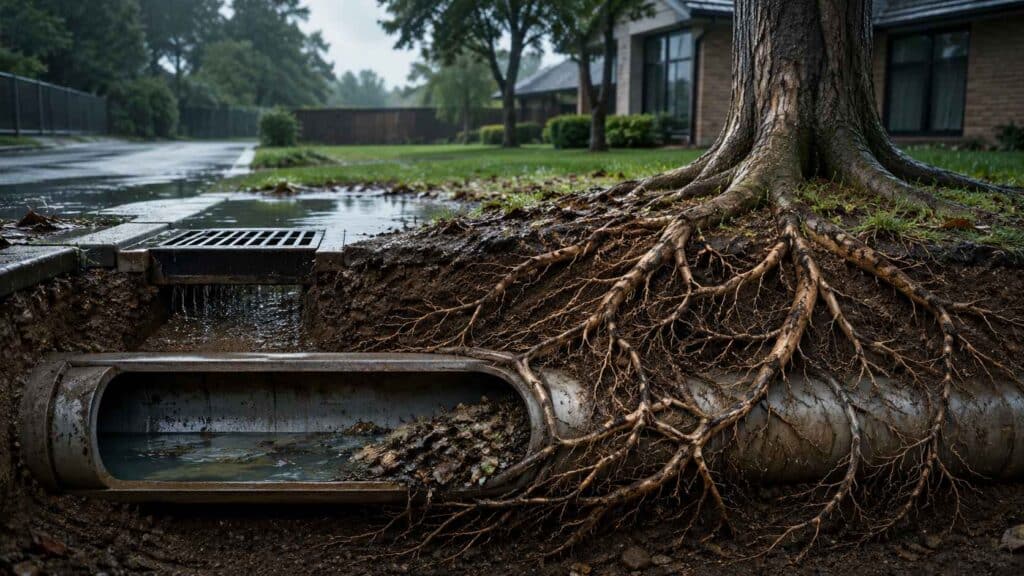
How to Unblock Stormwater Drain Blockages Safely
To unblock stormwater drain blockages safely, begin by removing leaves, twigs, soil and other visible debris from the grate. Flush the opening with a garden hose and watch how quickly the water drains. If water continues to pool, carefully use a drain snake or auger to break up soft clogs such as compacted leaves and silt. Avoid forcing the tool, especially in older clay pipes, as excessive pressure may damage weakened joints.
If the blockage remains after gentle snaking and flushing, stop before causing further damage. Recurring blockages, tree-root intrusion, cracked pipes and collapsed sections usually require a CCTV drain inspection to identify the exact cause. A licensed Sydney plumber can then use professional hydro jetting or recommend a suitable repair, relining or replacement solution based on the pipe’s condition.
Technique 1: Clear Surface Debris and Grates
Start at the top. Most blockages begin with visible material piling up on drain covers and gully traps. This step takes minutes but prevents hours of work downstream.
Put on a pair of heavy-duty gloves and remove leaves, twigs, and any rubbish sitting on the grate. Lift the cover if it’s accessible—many Sydney homes have removable grates secured by a single bolt or clip. Scoop out the top layer of sludge with a garden trowel or small bucket.
What You’ll Need
- Heavy-duty rubber gloves
- Bucket or garden bag for debris
- Garden trowel or scoop
- Stiff-bristle brush
- Garden hose with standard nozzle
Once the grate is clear, flush the opening with a garden hose. Watch how quickly water drains. If it disappears within seconds, you’ve likely solved a surface-level issue. If it pools or drains slowly, the blockage sits deeper in the pipe.
Regular grate maintenance is your first line of defence. We recommend checking covers after every major storm and scheduling a quick clean at the start of each season. Properties with overhanging trees benefit from monthly inspections during autumn leaf-drop.
Technique 2: Use a Drain Snake or Auger to Break Up Clogs
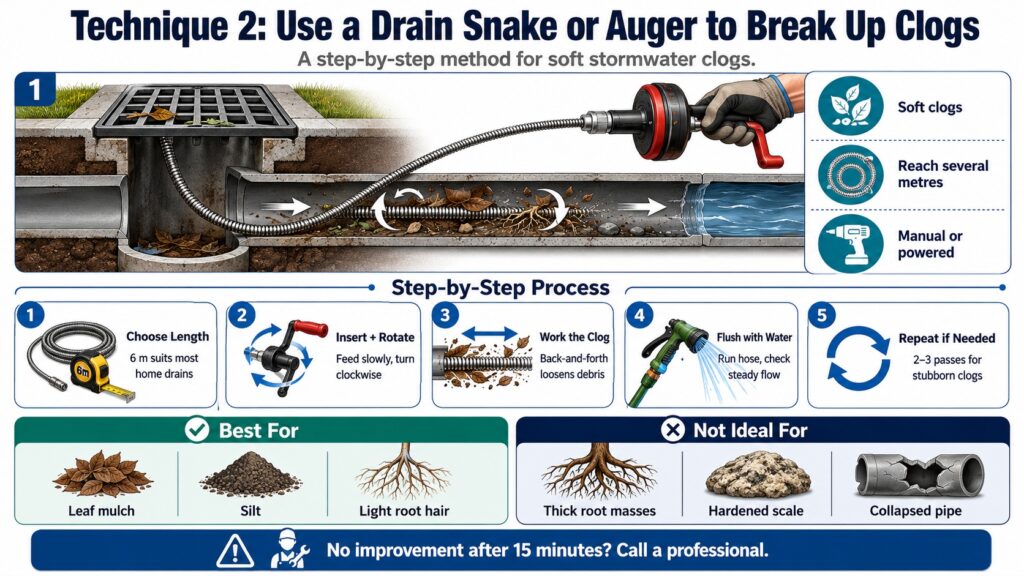
When surface clearing doesn’t restore flow, a drain snake (also called a plumber’s auger) can reach blockages up to several metres into the pipe. This tool is available at most Australian hardware stores, including Bunnings, in manual and powered versions.
Feed the snake slowly into the drain opening, rotating the handle clockwise as you push. You’ll feel resistance when the tip meets the clog—keep turning to break apart compacted soil, leaves, or light root intrusions. Pull the snake back periodically to clear accumulated debris from the coil.
Step-by-Step Process
- 1. Select the right snake length. Most residential stormwater blockages sit within three to five metres of the grate. A six-metre manual snake handles the majority of accessible clogs.
- 2. Insert and rotate gently. Push the cable in while turning the handle. Forcing it can kink the coil or damage older clay pipes common in Sydney’s established suburbs.
- 3. Work the blockage back and forth. When you hit resistance, rotate for 20 to 30 seconds, pull back slightly, then push forward again. This action breaks up compacted material.
- 4. Flush with water. After clearing the obstruction, run a garden hose into the drain for two to three minutes. Watch for steady flow and listen for gurgling—signs the pipe is open.
- 5. Repeat if necessary. Stubborn clogs may require two or three passes. If the snake won’t advance past a certain point, you’re likely facing tree roots or a collapsed section that needs professional assessment.
Drain snakes work well for soft blockages—leaf mulch, silt, and light root hair. They’re less effective against hardened scale, thick root masses, or structural damage. If you’re not seeing improvement after 15 minutes of effort, it’s time to escalate your approach.
Technique 3: Apply High-Pressure Water Jetting with a Hose
A standard garden hose fitted with a high-pressure nozzle can dislodge clogs that a snake can’t shift. This method uses water force to scour pipe walls and push debris downstream. It’s particularly effective for soil build-up and light root intrusions.
Attach a jet nozzle or trigger-spray fitting to your garden hose reel. Insert the hose as far into the drain as it will comfortably reach—usually one to two metres. Turn on the water at full pressure and move the nozzle in a circular motion to hit all sides of the pipe.
You’ll see dirty water and debris flowing back out of the drain. That’s normal. Keep jetting for three to five minutes, then withdraw the hose and check drainage with a bucket of clean water. If flow has improved but isn’t perfect, repeat the process once more.
Safety and Limitations
- Never use boiling water in stormwater drains—it can crack PVC joints and won’t dissolve the types of blockages you’re facing.
- Avoid chemical drain cleaners in stormwater systems. They’re designed for indoor grease clogs, not outdoor organic matter, and can harm plants and local waterways, which is also a Sydney Water and EPA (NSW) consideration since stormwater flows straight to our creeks and harbour.
- High-pressure nozzles from Bunnings or similar retailers deliver around 300 to 500 kPa. That’s enough for loose debris but won’t cut tree roots.
- If you’re not seeing results after two attempts, the blockage is too severe for DIY water pressure.
This technique is a step up from a drain snake but still falls short of professional hydro jetting, which operates at 3,000 to 5,000 kPa. For persistent or recurring blockages, professional equipment makes the difference between temporary relief and a lasting fix.
Technique 4: Book a CCTV Drain Inspection to Identify Hidden Issues
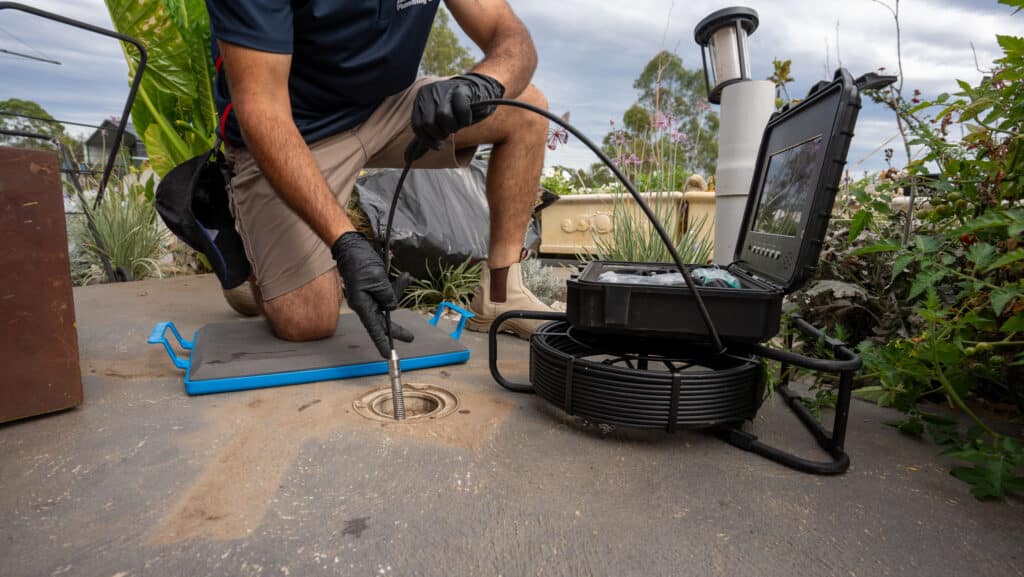
Sometimes the blockage isn’t where you think it is. Tree roots can infiltrate pipes three metres underground. Clay pipes installed decades ago may have cracked or collapsed under shifting soil. A CCTV drain inspection removes the guesswork.
We insert a waterproof camera on a flexible cable into your stormwater system. The camera travels through the pipe, transmitting live video to a monitor above ground. You see exactly what we see—root masses, cracks, bellied sections, or foreign objects lodged in the line.
This diagnostic step is especially valuable for properties with recurring blockages. If you’re clearing the same drain every few months, there’s an underlying issue that surface tools can’t address. A camera inspection pinpoints the problem and guides the repair strategy.
What a CCTV Inspection Reveals
- Tree root intrusion: Fine roots enter through joints or cracks, then expand into dense mats that trap debris.
- Pipe collapse or belly: Ground movement can cause sections to sag or break, creating low spots where water pools and sediment settles.
- Scale and mineral build-up: Hard water deposits narrow the pipe over time, reducing flow capacity.
- Foreign objects: Toys, garden tools, or construction rubble sometimes end up in stormwater lines during renovations.
- Incorrect installation: Pipes laid at the wrong grade or with poor joint sealing are prone to blockages from day one.
After the inspection, we provide a written report with still images and footage. You’ll receive clear options—repair, reline, or replace—with an upfront fixed-price quote in AUD for each. No hidden fees, no pressure. Just the information you need to make an informed decision.
Our CCTV inspections are available across the Sydney Metro, from the Inner West to the Sutherland Shire. Same-day service means you can move from diagnosis to solution without waiting. Call +61 493 824 176 or book online to schedule your inspection.
Technique 5: Professional Hydro Jetting for Severe Blockages
When DIY methods fail and the camera reveals heavy root intrusion or compacted debris, hydro jetting is the most effective clearing technique. This process uses ultra-high-pressure water—up to 5,000 kPa—to cut through roots, scour pipe walls, and flush the system clean.
A hydro jetting unit consists of a motorised pump, high-pressure hose, and specialised nozzle. The nozzle is designed to propel itself forward while spraying water in all directions. As it travels through the pipe, it obliterates obstructions and restores full flow capacity.
We’ve cleared decades of build-up from clay pipes in heritage homes and removed root balls the size of basketballs from modern PVC systems. Hydro jetting is safe for all pipe materials when performed by trained operators. It’s also environmentally friendly—no chemicals, just water doing the work.
Our team operates across the greater Sydney region, including the North Shore, Northern Beaches, Hills District, and Western Sydney. We offer same-day service for urgent blockages and 24/7 emergency response when stormwater flooding threatens your property. Pricing is fixed-rate, so you know the cost before we start.
Sydney Water and NSW Regulations You Should Know
In NSW, Sydney Water generally owns and maintains the main stormwater network in the street, while the pipes and grates within your property boundary are your responsibility as the owner. Connecting into or repairing near the Sydney Water network must meet their technical requirements, and any digging near underground services should start with a Dial Before You Dig check.
Under the NSW Home Building Act and NSW Fair Trading licensing rules, plumbing work beyond basic surface clearing—cutting into pipes, relining, reconnecting to the Sydney Water network, or gas work—must be carried out by a licensed plumber. Antons Plumbing & Gas holds NSW Lic. 210933C, so any repair, reline, or hydro jetting job we quote is compliant with Australian Standards and NSW regulations, and backed by proper documentation.
Comparing DIY and Professional Techniques
Different drain-clearing techniques are suited to different types of blockages, and choosing the right one depends on the severity and location of the problem. Some methods are effective for simple surface-level issues, while others are better for deeper clogs, recurring drainage problems, or root intrusion. Comparing DIY and professional techniques helps Sydney homeowners understand where to start and when licensed expertise is required.
| Method | Best For | Limitations | Typical Cost |
|---|---|---|---|
| Surface debris removal | Leaf litter, grate blockages | Only clears visible material | DIY (your time) |
| Drain snake or auger | Soil, light roots, shallow clogs | Limited reach and power | DIY or low-cost service |
| High-pressure hose | Loose debris, silt build-up | Insufficient for roots or scale | DIY (equipment hire) |
| CCTV inspection | Diagnosis, recurring issues | Identifies but doesn’t clear | Professional service (varies) |
| Hydro jetting | Tree roots, severe blockages | Requires professional equipment | Professional service (varies) |
This comparison shows where each technique fits. Start with the simplest method that matches your symptoms. If you’re not seeing results within 30 minutes, move to the next level or call in a licensed Sydney plumber.
Preventing Future Stormwater Drain Blockages
Clearing a blocked drain is one thing. Keeping it clear is another. A few proactive steps can save you from repeat callouts and water damage.
Install grate covers or mesh screens over drain openings. These catch leaves and twigs before they enter the pipe. Clean the screens monthly during autumn and after storms. It’s a five-minute job that prevents hours of clearing work.
Trim back overhanging branches, especially from species known for heavy leaf drop or aggressive root systems. Figs, willows, and some eucalypts are common offenders in Sydney. Keeping trees at least three metres from stormwater lines reduces root intrusion risk.
Schedule an annual CCTV inspection if your property has mature trees or older clay pipes. Early detection of root intrusion means you can clear it before it becomes a full blockage. Think of it as a check-up for your drainage system.
Consider pipe relining for sections with recurring root problems. Relining creates a seamless inner sleeve that roots can’t penetrate. It’s a trenchless repair that avoids digging up your garden and lasts 50 years or more.
Redirect stormwater runoff where possible. If downpipes or paved areas concentrate water into a single drain, you’re increasing the sediment load. Spreading flow across multiple outlets or into garden beds can ease the burden on your main stormwater line, and it keeps you in line with Sydney Water’s expectations around on-site stormwater management.
When to Call Antons Plumbing & Gas
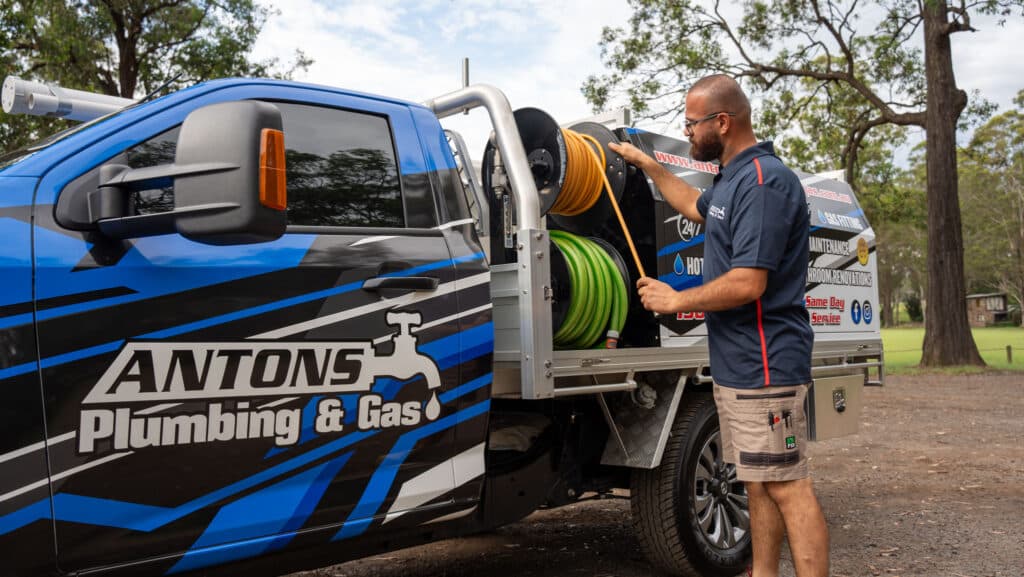
You’ve tried the DIY methods. Water is still pooling. Or maybe you’ve cleared the drain twice this year and it’s blocked again. That’s when it’s time to call a licensed Sydney plumber rather than keep guessing.
We provide same-day service across Sydney Metro—no call-out fee between 7am and 3pm on weekdays. Our team arrives with CCTV inspection gear, hydro jetting units, and the experience to solve drainage issues that DIY can’t touch. We diagnose the root cause, not just the symptom, and present clear options with fixed-rate AUD pricing agreed before we start.
Every job is completed to Australian Standards, with documentation and a lifetime labour warranty on our workmanship. We leave your property clean, your drains flowing, and your questions answered in plain English.
For urgent stormwater flooding or blockages threatening your home, we’re available 24/7. Call +61 493 824 176 or book online to request a fast quote. Fully licensed (NSW Lic. 210933C) and insured, and ready to help—that’s how we’ve served Sydney families and businesses for more than 25 years.
Conclusions
Blocked stormwater drains don’t fix themselves. Start with surface clearing and simple tools, then escalate to professional techniques when needed. The right approach depends on your pipe condition, blockage type, and how often the problem recurs—but every Sydney property deserves drainage that works when the rain comes down, and when it doesn’t, a licensed plumber who understands Sydney Water and NSW rules should take over.
Antons Plumbing & Gas brings over 25 years of experience in blocked drains and CCTV inspections across Sydney. Our NSW-licensed team (Lic. 210933C) provides same-day service with upfront AUD pricing and no call-out fees. Contact us today to get started.
CALL NOW for a Fast Plumbing FIX!
Related Articles
- Stormwater Drain Service: Prevent Floods Before They Start
- What Causes a Blocked Stormwater Drain and What Should I Do About It?
- 5 Common Signs You Have a Blocked Stormwater Drain
FAQs
What Are The Signs Of A Blocked Stormwater Drain?
Common signs of a blocked stormwater drain include water pooling in your yard or driveway, slow drainage, unpleasant odours, and gurgling noises from the drain. If you notice these signs in your Sydney home, it’s essential to address the issue promptly to prevent further damage.
How Do You Unblock A Stormwater Drain?
To unblock a stormwater drain, start by clearing debris from the surface, such as leaves and dirt. If the blockage persists, you can use a plunger or a drain snake. For more complex blockages, it’s advisable to call a professional plumber like Antons Plumbing & Gas, who can safely diagnose and resolve the issue.
Can I Use A Drain Snake To Unblock A Stormwater Drain?
Yes, a drain snake can be effective for unblocking stormwater drains. It helps to break up and remove stubborn blockages. However, if you’re unsure or the blockage is severe, it’s best to contact a qualified plumber to avoid damaging your drainage system.
What Tools Do I Need To Unblock A Stormwater Drain?
Essential tools for unblocking a stormwater drain include a plunger, drain snake, bucket, and possibly a high-pressure water jetter for more stubborn blockages. If you lack the right tools or expertise, consider reaching out to Antons Plumbing & Gas for professional assistance.
When Should I Call A Professional To Unblock A Stormwater Drain?
You should call a professional plumber if the blockage is severe, persists despite your efforts, or if you notice recurring drainage issues. Antons Plumbing & Gas is available 24/7 to provide prompt and reliable solutions to keep your Sydney drainage system functioning properly.
How Much Does It Cost To Unblock A Stormwater Drain In Sydney?
Cost depends on the severity of the blockage, pipe access, and whether CCTV inspection or hydro jetting is required. We always provide a fixed-rate quote in AUD before any work begins, so there are no surprises. Call +61 493 824 176 for an obligation-free quote today.
Do You Offer Same-Day Blocked Drain Service In Sydney?
Yes. Antons Plumbing & Gas offers same-day service across the Sydney Metro area, with no call-out fee between 7am and 3pm on weekdays. Book online or call now and we’ll get a licensed plumber to you quickly.
Is Antons Plumbing & Gas Licensed To Work On Stormwater Drains In NSW?
Yes, we hold NSW Lic. 210933C, which covers plumbing and gas work carried out in line with NSW Fair Trading requirements and Australian Standards. Every stormwater repair, reline, or hydro jetting job is completed by our licensed team.
Do You Charge A Call-Out Fee For Blocked Drain Jobs?
No call-out fee applies between 7am and 3pm on weekdays. Outside these hours, including our 24/7 emergency service, ask our team about current rates when you book so you know the cost upfront.
What Sydney Suburbs Do You Service?
We service the greater Sydney region, including the Inner West, North Shore, Northern Beaches, Hills District, Western Sydney, and the Sutherland Shire. If you’re unsure whether we cover your suburb, call +61 493 824 176 and we’ll confirm straight away.
Can I Book A CCTV Drain Inspection Today?
In most cases, yes. We offer same-day CCTV drain inspections across Sydney Metro, giving you a clear diagnosis and fixed-price options for repair, reline, or replacement before we do any work.
Do You Offer 24/7 Emergency Plumbing For Stormwater Flooding?
Yes, our team is available 24/7 for urgent stormwater flooding or blockages that threaten your property. Call +61 493 824 176 any time, day or night, for an emergency response.
Is Hydro Jetting Safe For Older Clay Pipes Common In Sydney Homes?
Yes, when performed by trained, licensed operators, hydro jetting is safe for clay, PVC, and other common pipe materials. We assess your pipe condition first, often using a CCTV inspection, to make sure the pressure used suits your system.
Who Is Responsible For A Blocked Stormwater Drain, Me Or Sydney Water?
Generally, Sydney Water maintains the main stormwater network in the street, while pipes and drains within your property boundary are your responsibility as the owner. If you’re unsure where the blockage sits, we can inspect and advise before any work starts.
Do I Need Council Or Sydney Water Approval To Fix A Stormwater Drain?
Simple surface clearing on your own property doesn’t require approval. However, repairs, relining, or reconnections near council or Sydney Water infrastructure may need approval or notification, which our licensed plumbers can manage on your behalf.
What Payment Methods Do You Accept?
We accept standard payment methods and always agree the total cost in AUD with you before starting work. Ask our team about current payment options when you book your job.
Do You Provide A Warranty On Drain Clearing And Repair Work?
Yes, we back our workmanship with a lifetime labour warranty. Every job is completed to Australian Standards, with documentation provided so you have a record for your property.
How Quickly Can A Licensed Plumber Get To My Property?
We offer same-day service across Sydney Metro for most jobs, and 24/7 response for urgent stormwater flooding. Call +61 493 824 176 now to check availability in your area.
Can A Blocked Stormwater Drain Damage My Sydney Home?
Yes, an ongoing blockage can lead to pooling water, eroded landscaping, foundation issues, and interior flooding during heavy Sydney storms. Booking a CCTV inspection early helps catch problems like root intrusion before they escalate.
How Do I Book A Plumber Online?
You can book online through our website or call +61 493 824 176 directly. Let us know your suburb and the issue you’re experiencing, and we’ll arrange same-day service where possible.
What Happens During A Fixed-Price Quote?
After inspecting the blockage, or reviewing your CCTV footage, we explain what’s causing the problem and present clear options—repair, reline, or replace—each with an upfront fixed price in AUD. You choose how to proceed with no pressure and no hidden fees.
Do You Service Strata Properties And Units In Sydney?
Yes, we work with strata managers and unit owners across Sydney on shared stormwater and drainage issues. Call us to discuss access, scheduling, and fixed-price options for your building.