


A drainage system protects your home from water damage, foundation issues, and landscape erosion. Building one requires careful planning, the right materials, and knowledge of local regulations—especially in Sydney, where clay soils, tree roots, and heavy rainfall create unique challenges for NSW homeowners. Whether you’re installing a stormwater drainage system, setting up an irrigation system, or replacing old clay pipes, understanding the fundamentals will save you time and money.
This guide walks you through how to build a drainage system for your property. You’ll learn about design considerations, material selection, installation techniques, and when to call in licensed professionals to ensure your work meets Australian Standards and protects your investment long-term.
Key Takeaways
- Proper drainage design starts with understanding your property’s slope, soil type, and water flow patterns.
- Stormwater drainage systems must comply with local council requirements and AS/NZS 3500 standards in Sydney.
- Choosing between DIY solutions and professional installation depends on project complexity and regulatory requirements.
- Quality materials like PVC, concrete, or AG pipe from suppliers such as Bunnings drainage pipe sections ensure longevity.
- Licensed plumbers provide CCTV inspections, compliance documentation, and lifetime labour warranties for peace of mind.
Understanding Your Property’s Drainage Needs
Before you dig a single trench, you need to assess where water collects on your property. Walk your yard during and after heavy rain to identify pooling areas, soggy patches, and overflow points. Sydney’s clay soils hold water longer than sandy ground, creating drainage challenges that require more robust solutions.
Check your property’s slope using a simple line level or hire a surveyor for precise grading data. Water flows downhill, so your drainage system must direct runoff away from foundations, driveways, and garden beds toward council stormwater connections or approved discharge points.
Consider how existing structures affect water movement. Paved areas, retaining walls, and garden beds alter natural flow patterns. Your drainage plan must account for these obstacles and work with—not against—your landscape’s topography.
How to Build a Drainage System: Core Planning Steps
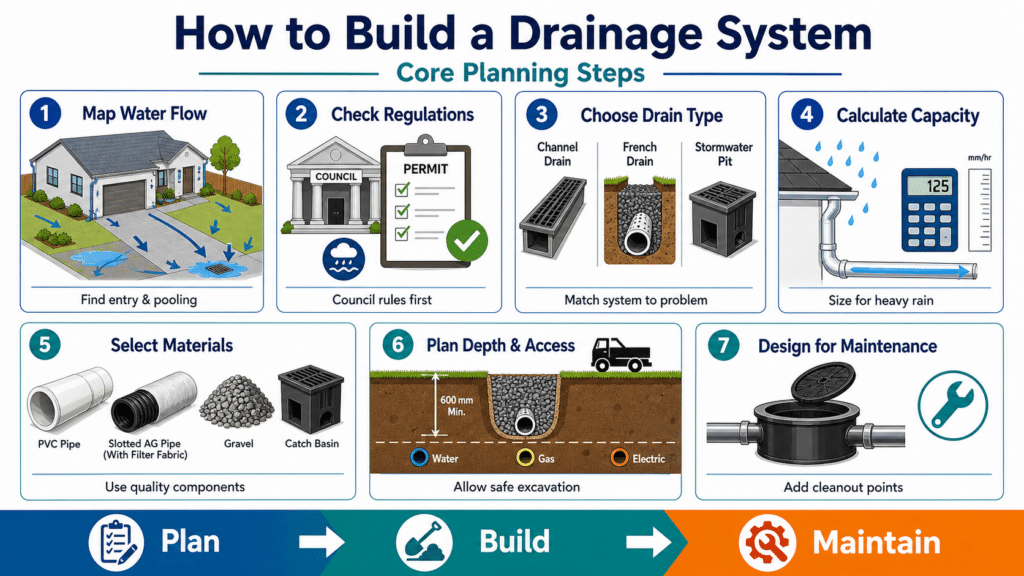
Building an effective drainage system starts with careful planning rather than immediate digging or installation. A well-designed system needs to suit your property layout, local drainage requirements, and the amount of water it must manage during heavy rainfall. Understanding the core planning steps helps homeowners create a drainage solution that performs efficiently, lasts longer, and reduces the risk of overflow or water damage.
1. Map Your Property and Water Flow
Start by sketching your property boundaries, buildings, paved areas, and garden zones. Mark where water enters (downpipes, driveway runoff) and where it currently exits or pools. This visual map helps you design a system that intercepts water at source points and channels it efficiently to discharge areas.
2. Check Council Regulations and Sydney Water Requirements
Sydney councils enforce strict stormwater drainage system rules under the Local Government Act and Building Code of Australia. In NSW, stormwater management on private property generally falls under council control, while any connection to the sewer network or Sydney Water infrastructure must be notified and carried out by a licensed plumber. You may need development approval for major earthworks or connections to public drainage, so contact your local council and check Sydney Water requirements before starting work to confirm permit requirements, setback distances, and discharge limits.
3. Choose Your Drainage Type
Different problems need different solutions. Surface drains handle sheet flow across lawns and driveways. Subsurface French drains manage groundwater and prevent boggy soil. Stormwater pits collect roof runoff. Irrigation systems distribute water to gardens, while automatic watering systems use timers and sensors for efficiency. Match your system type to your specific water management goals.
4. Calculate Required Capacity
Drainage pipes must handle peak flow during heavy storms. Calculate your roof catchment area in square metres and multiply by local rainfall intensity (typically 100-150mm per hour for Sydney design storms). This tells you the minimum pipe diameter and pit size needed. Undersized systems overflow and fail when you need them most.
5. Select Quality Materials
PVC pipes resist corrosion and last decades. AG pipe (agricultural slotted pipe) wrapped in geotextile fabric prevents soil clogging in French drains. Concrete pits withstand vehicle loads on driveways. Bunnings drainage pipe sections offer budget-friendly options for DIY projects, but ensure they meet AS/NZS 1260 standards for stormwater applications.
6. Plan Installation Access and Depth
Trenches for subsurface drains typically run 300-600mm deep, below root zones but above utility lines. Call Dial Before You Dig (1100) to locate underground cables, gas, and water pipes before excavating. Plan truck access for spoil removal and material delivery, especially if you’re installing a full stormwater drainage system across a large property.
7. Design for Future Maintenance
Every drainage system needs periodic cleaning. Install inspection pits or cleanout points every 10-15 metres on long pipe runs. Ensure pit lids remain accessible—not buried under pavers or garden beds. A system you can inspect and maintain will outlast one that’s hidden and forgotten until it fails.
Planning is what turns a basic drainage idea into a system that works effectively during everyday conditions and heavy storms alike. Each decision, from mapping water flow to choosing materials and allowing for maintenance, affects how well the drainage system performs in the long run. By following these core planning steps, homeowners can build a drainage system that is more efficient, compliant, and easier to manage over time.
Materials and Tools You’ll Need
Gathering the right supplies before you start prevents frustrating mid-project trips to the hardware store. For a basic subsurface drainage system, you’ll need AG pipe or slotted PVC, geotextile fabric to wrap the pipe, 20mm drainage gravel, and inspection pits with grates. Bunnings drainage pipe sections are readily available and suitable for many residential applications.
| Material | Application | Key Specification |
|---|---|---|
| AG pipe (100mm) | French drains, subsurface | Slotted, wrapped in geotextile |
| PVC pipe (100mm) | Storm water conveyance | AS/NZS 1260, solvent-weld joints |
| 20mm gravel | Pipe bedding and surround | Clean, angular, free-draining |
| Geotextile fabric | Filter wrap for AG pipe | Non-woven, UV-stabilized |
| Inspection pit | Access and cleanout | Load-rated lid, correct depth |
Surface drains require channel grates, concrete or polymer edging, and mortar or adhesive for secure installation. If you’re building a stormwater drainage system that connects to council mains or Sydney Water infrastructure, use certified PVC pressure pipe with solvent cement or rubber-ring joints. Always check product labels for AS/NZS compliance markings.
Tool-wise, a trenching spade or hired mini-excavator speeds up digging. A spirit level or laser level ensures correct fall. Pipe cutters give clean edges for secure joints. A wheelbarrow, tamper, and safety gear (gloves, boots, eye protection) round out the essentials.
Common Drainage System Challenges and Solutions
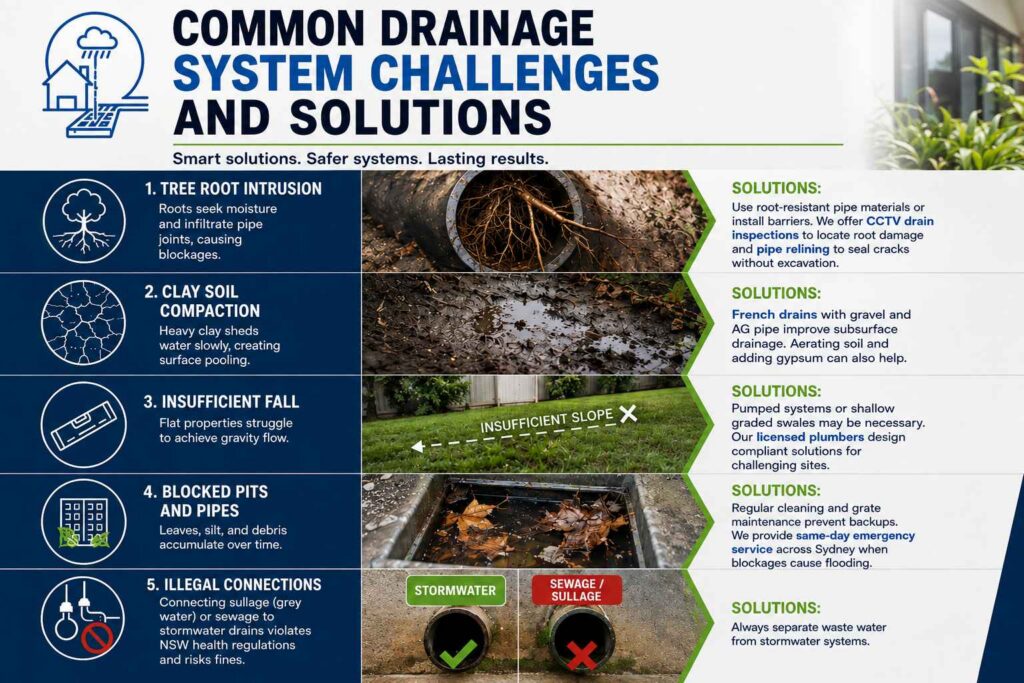
Even a well-planned drainage system can face problems over time due to soil conditions, site limitations, debris buildup, or poor installation practices. These challenges can reduce drainage performance, increase maintenance needs, and lead to water pooling or pipe damage if they are not addressed properly. Understanding the most common drainage system issues helps homeowners choose the right preventative measures and long-term solutions.
- Tree root intrusion: Roots seek moisture and infiltrate pipe joints, causing blockages. Use root-resistant pipe materials or install barriers. We offer CCTV drain inspections to locate root damage and pipe relining to seal cracks without excavation.
- Clay soil compaction: Heavy clay sheds water slowly, creating surface pooling. French drains with gravel and AG pipe improve subsurface drainage. Aerating soil and adding gypsum can also help.
- Insufficient fall: Flat properties struggle to achieve gravity flow. Pumped systems or shallow graded swales may be necessary. Our licensed plumbers design compliant solutions for challenging sites.
- Blocked pits and pipes: Leaves, silt, and debris accumulate over time. Regular cleaning and grate maintenance prevent backups. We provide same-day emergency service across Sydney when blockages cause flooding.
- Illegal connections: Connecting sullage (grey water) or sewage to stormwater drains violates NSW health regulations and Sydney Water rules, and attracts heavy fines. Always separate waste water from stormwater systems.
Drainage problems are easier and less expensive to manage when they are identified early and addressed with the right solution. What starts as a minor blockage, pooling issue, or soil-related problem can eventually lead to larger repair costs and compliance concerns. By understanding these common drainage system challenges, homeowners can plan smarter maintenance and protect their property more effectively.
When to Call a Licensed Plumber for Drainage Work

DIY drainage projects work well for simple garden beds or small French drains. But many scenarios require licensed expertise to ensure safety, compliance, and long-term performance. If your project involves connecting to council or Sydney Water mains, working near existing utilities, or installing backflow devices, you need a licensed plumber under NSW law.
We diagnose root causes using CCTV drain inspections—a camera travels inside your pipes to reveal cracks, blockages, and structural issues invisible from the surface. This technology saves guesswork and prevents unnecessary digging. Once we identify the problem, we present clear options: repair, replace, or reline, with upfront pricing in AUD so you can decide what fits your budget.
Our work complies with AS/NZS 3500 plumbing standards and NSW Fair Trading licensing requirements (NSW Lic: 210933C). We document findings, provide compliance certificates for council submission, and back our workmanship with a lifetime labour warranty. You get peace of mind that your drainage system will perform as designed, year after year. If you’re unsure whether your project needs a licensed plumber, it’s always safest to call and check before you dig.
Same-day service is standard for our team across the Inner West, Eastern Suburbs, North Shore, Northern Beaches, Hills District, Western Sydney, and Sutherland Shire. Call +61 493 824 176 anytime—24/7 emergency response with no call-out fee from 7am to 3pm weekdays. We turn up when we say we will, respect your property, and leave the site clean.
Why Sydney Properties Need Specialized Drainage Solutions
Sydney’s unique conditions demand tailored drainage approaches. Clay soils across the Western suburbs and Inner West retain water and expand when wet, stressing foundations and pipes. Coastal areas face salt corrosion that degrades metal components. Heritage homes in the Eastern Suburbs often have ageing clay pipes invaded by tree roots.
Heavy summer storms deliver intense rainfall that overwhelms undersized systems. Council regulations vary by local government area, with some requiring on-site detention tanks to limit peak discharge into the Sydney Water network. Navigating these requirements takes local knowledge and experience.
Our 25+ years serving Sydney homeowners, strata managers, and businesses means we understand these challenges intimately. We know which materials perform best in your suburb, how to work around mature trees without damaging roots, and how to secure fast council approvals. That local expertise saves you time, stress, and money.
Conclusion
Building a drainage system protects your home and landscape from water damage while meeting NSW regulatory standards. Plan carefully, choose quality materials, and know when professional help ensures compliance and performance. Our licensed team is ready to assist with design, installation, or repairs—call +61 493 824 176 for same-day service across Sydney.
Antons Plumbing & Gas brings over 25 years of expertise in blocked drains and CCTV inspections across Sydney. Our NSW licensed team (Lic: 210933C) diagnoses drainage issues and delivers compliant, long-lasting solutions with upfront pricing in AUD. Contact us today to get started.
Related Articles
- How to Install a Drainage System in Your Yard the Right Way
- Why Installing a Drainage System in Your Yard Is Essential for Your Property
- How to Install Yard Drainage: DIY vs Professional Solutions
FAQs
What Materials Do I Need To Build A Drainage System?
To build a drainage system, you typically need perforated pipes, solid drainage pipes, gravel or drainage rock, landscape fabric, and fittings such as elbows and connectors. Our experienced team at Antons Plumbing & Gas can help you select the right materials for your specific needs and ensure a reliable installation.
How Deep Should A Drainage System Be?
The depth of a drainage system can vary depending on the soil type and the specific design, but a general guideline is to dig at least 150 to 200mm deep for residential systems. Our professionals can assess your site and provide tailored recommendations to ensure effective drainage.
What Is The Best Way To Install A Drainage System?
The best way to install a drainage system involves planning the layout, excavating the trench, placing landscape fabric, adding gravel, and installing the pipes with proper slopes for drainage. At Antons Plumbing & Gas, we ensure that every step meets AS/NZS 3500 standards for optimal performance and longevity.
How Do I Know If I Need A Drainage System?
If you notice standing water in your yard, frequent flooding during heavy rains, or water pooling near your foundation, you may need a drainage system. Our experts can conduct a thorough inspection to determine the best solution for your property and prevent water damage.
Can I Build A Drainage System Myself?
While it’s possible to build a drainage system yourself, it requires knowledge of local council and Sydney Water regulations, proper techniques, and materials. Hiring a licensed professional like Antons Plumbing & Gas ensures that the system is installed correctly and efficiently, giving you peace of mind and long-lasting results.
Do I Need A Licensed Plumber For Stormwater Drainage Work In NSW?
Yes, if your drainage work involves connecting to council or Sydney Water infrastructure, installing backflow prevention, or working near existing gas and water utilities, NSW law requires a licensed plumber. Antons Plumbing & Gas holds NSW Lic: 210933C, so all connection and compliance work is handled correctly the first time.
How Much Does It Cost To Build A Drainage System In Sydney?
Cost depends on factors like site access, soil conditions, pipe length, and whether council or Sydney Water approvals are needed. We provide upfront pricing in AUD after assessing your property, so there are no surprises before work begins.
Do You Offer Emergency Drainage Services In Sydney?
Yes, we provide 24/7 emergency response across Sydney for blocked drains, flooding, and drainage failures. Call +61 493 824 176 anytime and we’ll organise a licensed plumber to attend as soon as possible.
Is There A Call-Out Fee For Emergency Plumbing Services?
We don’t charge a call-out fee for jobs booked between 7am and 3pm on weekdays. Ask our team about current after-hours arrangements when you call.
What Suburbs In Sydney Do You Service For Drainage Work?
We service the Inner West, Eastern Suburbs, North Shore, Northern Beaches, Hills District, Western Sydney, and Sutherland Shire, with same-day service available across these areas.
Do I Need Council Approval To Install A Stormwater Drainage System In Sydney?
Many stormwater and drainage projects require council notification or approval, particularly where they connect to public infrastructure or involve major earthworks. Our licensed plumbers can advise what’s needed for your property and help manage the approval process.
Can Antons Plumbing & Gas Provide Compliance Certificates For Council Submissions?
Yes, we document our findings and provide compliance certificates that meet AS/NZS 3500 and NSW Fair Trading requirements, ready for council submission where needed.
How Quickly Can You Attend A Blocked Drain Or Drainage Emergency?
We offer same-day service across Sydney and 24/7 emergency response for urgent drainage problems, so flooding and blockages are addressed quickly to limit damage to your property.
Do You Offer CCTV Drain Inspections Before Quoting Drainage Work?
Yes, our CCTV drain inspections let us see exactly what’s happening inside your pipes before we recommend a solution, so you get an accurate quote instead of guesswork.
What Warranty Do You Provide On Drainage Installation Work?
All our workmanship is backed by a lifetime labour warranty, giving you confidence that your new drainage system will keep performing long after installation.
Can You Connect My Drainage System To Sydney Water Infrastructure?
Yes, connections to Sydney Water infrastructure must be carried out by a licensed plumber. Our team handles the notification process and ensures the connection meets all NSW regulatory requirements.
How Do I Book A Licensed Plumber For Drainage Work In Sydney?
Simply call +61 493 824 176 or use our online booking form to arrange an inspection. We’ll assess your property, explain your options, and provide upfront AUD pricing before any work starts.
Do You Service Strata Properties For Drainage Issues?
Yes, we regularly work with strata managers across Sydney on shared stormwater systems, common area drainage, and compliance documentation for the whole building.
What Happens If Tree Roots Have Damaged My Drainage Pipes?
We use CCTV inspections to locate root intrusion, then recommend repair options such as pipe relining, which seals cracks without full excavation. Call us to book an inspection and get a clear repair plan.
Can You Fix Drainage Problems Without Digging Up My Yard?
In many cases, yes. Techniques like pipe relining and targeted spot repairs can resolve blockages and cracks with minimal disruption to your garden or driveway. Contact our licensed team to find out if a no-dig solution suits your situation.