

A blocked drain can seem simple at first, but the right tool depends on what is causing the clog and how deep it sits in the pipe. This is just as true in a Federation cottage in the Inner West as it is in a new-build unit in the Hills District—Sydney homes range from century-old terracotta pipework to modern PVC, and choosing the wrong tool can waste time or worsen the blockage. Understanding the plunger vs snake difference helps Sydney homeowners choose the right me
This guide explains when a plunger is the better choice, when a drain snake is more effective, and when DIY methods are no longer enough. It also shows how licensed plumbers handle stubborn or recurring blockages using more advanced tools and techniques, and where NSW plumbing rules and Sydney Water’s responsibilities come into play. By understanding what each method can and cannot do, you can make better decisions about drain cleaning and pipe care.
Key Takeaways
- Plungers work best on fresh, surface-level clogs near the drain opening.
- Drain snakes are better for deeper blockages caused by hair, grease, soap scum, or compacted debris.
- Different drain tools suit different fixtures, such as flange plungers for toilets and drain snakes for stubborn sink or shower clogs.
- Continued plunging can sometimes push debris further into the pipe and worsen the blockage.
- Severe or recurring clogs may require professional tools like CCTV inspections, power augers, hydro jetting, or pipe relining.
- Licensed plumbers help protect your pipes, diagnose the root cause, and provide longer-lasting solutions.
- In NSW, homeowners are generally responsible for the plumbing on their property up to the Sydney Water sewer junction — blockages beyond that point are a Sydney Water matter, not a DIY job.
Understanding the Plunger vs Snake Difference
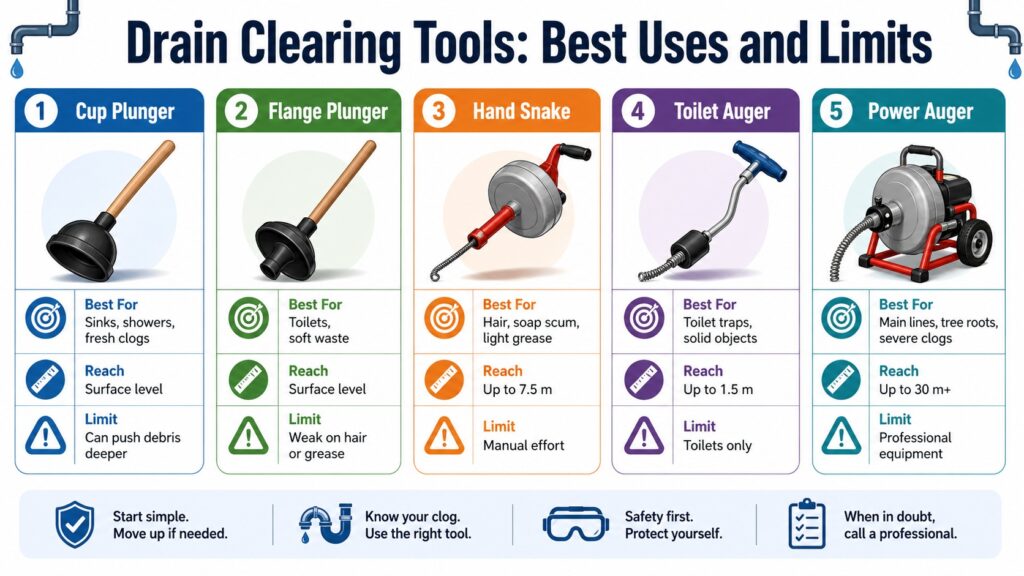
Plungers and snakes tackle blockages in completely different ways. A plunger uses air pressure and suction to push and pull water through the drain, hoping to shift the clog loose. A drain snake, on the other hand, is a long, flexible cable that you feed into the pipe to physically break up or hook the blockage.
Plungers excel at fresh clogs near the drain opening. If you’ve just flushed too much toilet paper or watched food scraps slow your kitchen sink, a plunger might clear it in seconds. Snakes handle deeper, tougher blockages — hair clumps in your shower drain, grease buildup in a kitchen sink drain, or compacted debris several metres down the line, which is common in older Sydney terraces with ageing clay or cast-iron pipework.
The key difference is reach and method. Plungers work on pressure. Snakes work on contact. Knowing which tool matches your clog type saves time and prevents damage.
When to Use a Plunger for Drain Clogs
Plungers are your first line of defence for minor, recent blockages. They’re simple, affordable, and effective when the clog sits close to the drain opening. But plungers have limits — they can’t reach deep into pipes, and they can push certain types of debris further down, making the problem worse.
Here’s when a plunger is the right choice and when you should stop pumping and try something else.
Fresh Toilet Paper or Soft Waste Clogs
Plungers work well on toilet clogs caused by too much paper or soft waste. The suction breaks up the blockage and allows water to flow again. Use a flange plunger — the type with a rubber extension that seals inside the toilet bowl — for best results.
Slow-Draining Sinks After Food Scraps
If your kitchen sink slows down after washing dishes, a cup plunger can help. Make sure there’s enough water in the basin to cover the plunger cup, then pump firmly to create suction. This method works if the clog is fresh and hasn’t hardened.
Shower Drains With Light Soap Buildup
A plunger can shift light soap scum or hair near the surface of a shower drain. But if hair has already formed a dense mat deeper in the pipe, plunging will only compress it. You’ll need a shower drain snake to pull it out.
When Plungers Make Clogs Worse
Plungers can push hair, grease, and solid objects deeper into your pipes. If you’ve been plunging for more than a few minutes with no progress, stop. Continuing can compact the blockage or damage older pipes, which is a real risk in many established Sydney suburbs with ageing terracotta or cast-iron drains. This is the moment to switch to a plumbing drain snake or call a licensed Sydney plumber — Antons Plumbing & Gas (NSW Lic. 210933C) can assess the pipe and clear it without causing further damage.
When to Use a Drain Snake for Stubborn Blockages
A drain snake — also called a plumber’s auger — is a coiled metal cable you feed into the drain to physically attack the clog. Some snakes have a hand crank, others are motorised. All of them reach deeper than a plunger and remove debris instead of just shifting it.
Snakes are the tool of choice for hair clogs, grease buildup, and blockages that plungers can’t budge. They’re also safer than chemical drain cleaners, which can corrode pipes and harm the environment — and dumping caustic chemicals down the drain can also breach Sydney Water’s trade waste and wastewater discharge requirements if it ends up in the sewer system.
Hair Clogs in Showers and Bathroom Sinks
Hair combines with soap and forms dense clumps that cling to pipe walls. A shower drain snake hooks these clumps and pulls them out. You’ll see immediate results — water drains freely again, and you’ve removed the root cause.
Grease and Food Buildup in Kitchen Sinks
A kitchen sink drain snake breaks through hardened grease and food particles that plungers can’t dislodge. The snake’s rotating head scrapes the pipe interior, clearing buildup that’s been accumulating for months. This prevents future slowdowns.
Toilet Augers for Solid Obstructions
Toilet augers are short, heavy-duty snakes designed for toilet traps. They navigate the curved pipe without scratching the porcelain. If a plunger fails on a toilet clog, a toilet auger is your next step before calling a plumber.
Deep Clogs Beyond Arm’s Reach
Household drain snakes extend up to 7.5 metres. If your clog sits further down — say, in the main sewer line — you’ll need a professional power auger. These motorised snakes reach 30 metres or more and handle tree roots, collapsed sections, and severe blockages that DIY tools can’t touch. Note that in NSW, the section of sewer pipe from your property boundary out to the Sydney Water main is usually Sydney Water’s responsibility, while the plumbing on your property — including the line to that boundary — is yours to maintain. A licensed plumber can help work out where the blockage sits and who’s responsible for fixing it.
The Cost of DIY vs Professional Drain Clearing
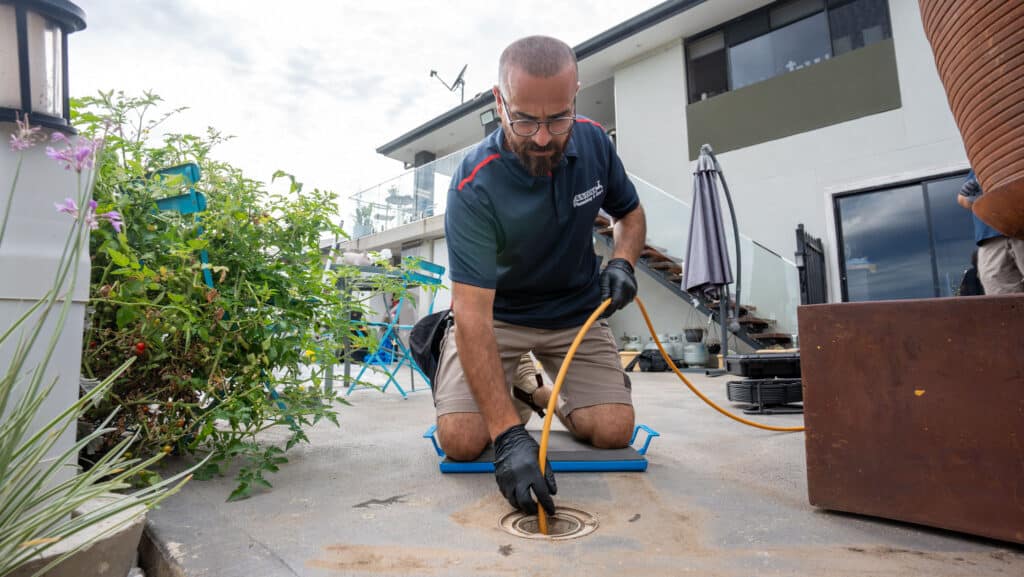
A plunger costs around AU$10. A hand snake costs around AU$30. Calling a licensed plumber costs more upfront, but it often saves money in the long run. Here’s why.
If you clear a surface clog with a plunger, great. You’ve solved the problem for around AU$10 and ten minutes of effort. But if you spend an hour plunging and snaking with no result, you’ve wasted time and possibly made the clog worse. When you finally call a plumber, we have to undo the damage and clear the original blockage.
DIY drain cleaners add another layer of risk. Caustic chemicals corrode pipes, especially older metal and PVC joints — a common issue in Sydney’s older housing stock. If the chemical doesn’t clear the clog, you’re left with a pipe full of corrosive liquid that can burn skin and eyes. We’ve attended dozens of emergency calls where homeowners injured themselves trying to plunge or snake after pouring chemicals. The cleanup and pipe repair cost far more than a straightforward drain clearing would have.
Professional drain clearing costs vary depending on the clog’s location, severity, and the tools required. A simple kitchen sink snake might take 30 minutes. A main sewer line blockage with tree roots might take half a day and require hydrojetting or pipe relining. We provide upfront, fixed-rate pricing in AUD after inspecting the problem, so you know the cost before we start work.
Same-day service is standard across Sydney. Call 0493 824 176 before 3 pm on a weekday, and we’ll arrive the same day with no call-out fee. After hours and weekends, we’re still available 24/7 for emergencies — burst pipes, severe blockages, and flooding don’t wait for business hours.
Protecting Your Pipes: Why Compliance and Licensing Matter

Anyone can buy a drain snake. Not everyone knows how to use it safely. Licensed plumbers understand pipe materials, joint types, and the limits of each tool. We know when to stop snaking and switch to a camera or hydrojetter. We know which pipes can handle high pressure and which will crack under stress.
Antons Plumbing & Gas operates under NSW Fair Trading licensing (Lic: 210933C) and complies with AS/NZS 3500 plumbing standards as well as Sydney Water’s requirements for work connecting to the sewer network. Our work is insured, documented, and backed by a lifetime labour warranty. If something goes wrong, you’re covered. If a DIY attempt damages your pipes, you’re liable for the repair cost — and it’s often significant.
We also provide compliance certificates for backflow prevention, gas fitting, and commercial plumbing work. If you’re a strata manager, landlord, or business owner, these documents prove your systems meet NSW legal requirements and protect you from liability.
Our team serves the greater Sydney region — Inner West, Eastern Suburbs, North Shore, Northern Beaches, Hills District, Western and South-Western Sydney, and Sutherland Shire. We arrive on time, work cleanly, and explain every step in plain English. No jargon. No surprises. Just honest, licensed plumbing done right the first time.
Conclusion
Plungers handle fresh, surface-level clogs. Snakes remove stubborn hair, grease, and debris deeper in your pipes. Knowing which tool to use saves time and prevents damage. When DIY methods fail, licensed plumbers bring CCTV cameras, power augers, and hydrojetting to clear even the toughest blockages. Call Antons Plumbing & Gas (NSW Lic. 210933C) at 0493 824 176 for same-day drain clearing across Sydney — upfront pricing in AUD, no call-out fees, and lifetime labour warranty included.
Antons Plumbing & Gas offers expert blocked drain solutions across Sydney Metro with 25 years of experience. Our licensed team diagnoses root causes and provides tailored fixes. Contact us today to get started.
Related Articles
- What Does a Plunger Do? A Simple Guide for Homeowners
- How to Clean Floor Drain: A Simple Guide for Homeowners
FAQs
What Is The Difference Between A Plunger And A Snake?
A plunger is a simple tool designed to create suction to dislodge minor clogs in sinks, toilets, and drains. In contrast, a plumbing snake, or auger, is a more advanced tool that can reach deeper into pipes to break up or retrieve tougher blockages. At Antons Plumbing & Gas, we use both tools effectively to address a variety of plumbing issues across Sydney homes.
When Should I Use A Plunger Instead Of A Snake?
You should use a plunger for minor clogs in sinks or toilets that are easily accessible and can be cleared with suction. If the clog persists after several attempts, or if it’s located deeper in the plumbing system, it may be time to use a plumbing snake. Our experienced team can help determine the best approach for your specific situation.
Can A Plunger Replace A Plumbing Snake?
No, a plunger cannot fully replace a plumbing snake. While a plunger can handle many minor clogs, a snake is necessary for more stubborn or deeper blockages. At Antons Plumbing & Gas, we assess each situation to choose the right tool for the job, ensuring effective and reliable solutions.
How Do You Use A Plumbing Snake?
To use a plumbing snake, insert the end of the snake into the drain until you meet resistance. Then, turn the handle to break up or grab the clog as you push the snake further into the pipe. This technique can be complex, so if you’re unsure, our skilled technicians at Antons Plumbing & Gas are always ready to assist!
Is A Plunger Effective For All Types Of Clogs?
No, a plunger is not effective for all types of clogs. It works best for minor blockages caused by debris or buildup in accessible areas. For tougher clogs or those located further down the plumbing system, a plumbing snake or professional assistance may be required. At Antons Plumbing & Gas, we have the expertise to tackle any clog efficiently.
Is Antons Plumbing & Gas a Licensed Plumber in Sydney?
Yes. Antons Plumbing & Gas operates under NSW Fair Trading licence 210933C and complies with AS/NZS 3500 plumbing standards. Every job, from a simple plunger fix to a full pipe reline, is carried out by licensed, insured tradespeople.
How Much Does Professional Drain Clearing Cost in Sydney?
Cost depends on the clog’s location, severity, and the tools required — a simple kitchen sink snake takes far less time than a main sewer line blocked by tree roots. We inspect the problem first and give you fixed-rate pricing in AUD before any work begins, so there are no surprises on the invoice.
Do You Charge a Call-Out Fee for Blocked Drains?
No. If you call 0493 824 176 before 3 pm on a weekday, we’ll come out the same day with no call-out fee. After-hours and weekend emergency calls are also available 24/7 across Sydney.
Can You Come Today If I Have a Blocked Drain?
In most cases, yes. Same-day service is standard for calls received before 3 pm on weekdays, and we run a 24/7 emergency service for burst pipes, severe blockages, and flooding that can’t wait until business hours.
Which Sydney Suburbs Do You Service?
We service the greater Sydney region, including the Inner West, Eastern Suburbs, North Shore, Northern Beaches, Hills District, Western and South-Western Sydney, and Sutherland Shire. Call us or book online to confirm coverage for your address.
Who Is Responsible for a Blocked Sewer Line — Me or Sydney Water?
Generally, you’re responsible for the plumbing on your property, including the line running to the Sydney Water sewer junction at your boundary. Blockages in the Sydney Water main itself are Sydney Water’s responsibility. If you’re unsure where the blockage sits, our licensed plumbers can use a CCTV camera to pinpoint it and advise you on the right course of action.
What Happens If I Keep Pouring Chemical Drain Cleaner Down the Pipe?
Caustic chemicals can corrode older pipes and joints, and if they don’t clear the clog, you’re left with a pipe full of hazardous liquid. It can also cause issues with wastewater discharge rules. Stop using chemical cleaners and call a licensed Sydney plumber instead.
Do You Provide a Warranty on Drain Clearing Work?
Yes. All our drain clearing and plumbing work is backed by a lifetime labour warranty and is fully insured, so you’re covered if an issue recurs.
What Tools Do You Use for Stubborn Sydney Sewer Blockages?
For blockages that are beyond a household snake, we use professional-grade power augers, CCTV drain cameras, hydrojetting, and pipe relining to clear tree roots, collapsed sections, and years of built-up grease or debris without unnecessary digging.
How Do I Book a Licensed Plumber for a Blocked Drain?
Call 0493 824 176 or book online through our website. Tell us what’s blocked and where you’re located, and we’ll arrange a same-day appointment where possible, with upfront fixed-rate pricing before we start.
Are Your Plumbers Compliant with AS/NZS 3500 and NSW Fair Trading Requirements?
Yes. We hold NSW Fair Trading licence 210933C and every job is carried out to AS/NZS 3500 plumbing standards, with compliance certificates available for backflow prevention, gas fitting, and commercial work when required.
Can Tree Roots Block My Drain, and Can You Fix It?
Yes, tree roots are a common cause of blocked drains in established Sydney suburbs with mature street trees. We use CCTV inspection to confirm root intrusion, then clear it with a power auger or hydrojetting, and recommend pipe relining if the pipe is damaged.
Do You Offer CCTV Drain Inspections in Sydney?
Yes. Our CCTV drain camera inspections let us see exactly what’s causing a blockage — roots, cracks, collapsed sections, or buildup — before we recommend a fix, so you’re not paying for guesswork.
What If My Blocked Drain Is an Emergency at Night or on the Weekend?
We run a 24/7 emergency plumbing service across Sydney for burst pipes, severe blockages, and flooding. Call 0493 824 176 any time and we’ll advise on next steps and dispatch a licensed plumber.
Will You Give Me a Fixed Price Before Starting Work?
Yes. We inspect the blockage first, then provide fixed-rate pricing in AUD before any work begins, so you know the total cost upfront with no surprise add-ons.
Do You Handle Strata or Rental Property Blocked Drains?
Yes. We regularly work with strata managers, landlords, and property managers across Sydney, and can provide compliance certificates and documentation to support your obligations under NSW regulations.