

A floor drain not draining properly can turn a simple laundry session or garage clean-up into a stressful puddle of standing water on your tiles. Whether it’s your bathroom floor drain, garage, or laundry, slow or blocked drainage signals that something downstream needs attention. The problem might be as simple as trapped hair and soap scum, or as serious as a main sewer line blockage sending wastewater back through the lowest point in your Sydney home.
In this guide, we’ll walk you through the five most common reasons floor drains fail to drain, explain how to spot the warning signs, and outline when it’s time to call a licensed blocked drain plumber for a permanent fix. By the end, you’ll know exactly what’s causing the backup and how to prevent it happening again – and where NSW rules and Sydney Water responsibilities come into it.
Key Takeaways
- Floor drains clog because they sit at the lowest point and collect debris, grease, and sediment over time.
- Hair, soap scum, dirt, and small objects are the most frequent culprits in bathroom floor drain and laundry blockages.
- Main sewer line issues cause water to back up through floor drains first, especially during heavy Sydney rain.
- CCTV drain inspections help pinpoint root causes like tree intrusion or collapsed pipes without guesswork.
- Same-day service and fixed-rate pricing make professional unblocking faster and more affordable than you think.
- Any work on the sewer drain between your house and the Sydney Water main must be carried out by a licensed plumber.
Quick Answer: Start by removing visible debris and checking whether water is draining elsewhere in the property. If several drains are slow, water is backing up, or the blockage keeps returning, the issue may require a professional drain inspection and clearing by a licensed plumber.
Why Floor Drains Clog More Often Than Other Fixtures
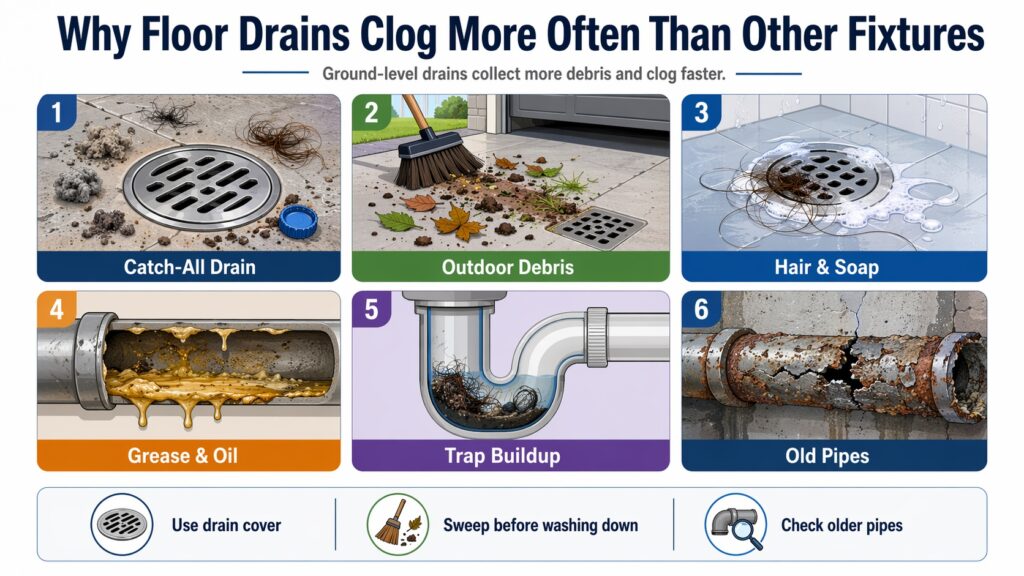
Floor drains are designed to handle overflow, spills, and wash-down water. But because they’re installed at ground level, they become a catch-all for everything that falls, flows, or gets swept across the floor. Dirt tracked in from outside, pet hair, laundry lint, grease from cleaning, and even small items like bottle caps can all end up in the drain grate. Over time, this debris builds up inside the trap and pipe, slowing water flow and eventually creating a full blockage.
| Blockage Type | Common Location | Typical Clearing Method | Prevention Tip |
|---|---|---|---|
| Hair & soap scum | Bathroom floor drain | High-pressure water jetting | Use a fine mesh grate cover |
| Dirt & debris | Garage, basement | Manual rodding or jetting | Sweep before hosing down |
| Grease & oil | Laundry, garage | Hot water jetting | Wipe containers before rinsing |
| Foreign objects | Any floor drain | Plumbing snake or retrieval tool | Install a secure bunnings drain cover |
| Main sewer line clog | Lowest fixture (floor drain) | CCTV inspection + jetting or relining | Schedule annual CCTV check for older pipes |
Unlike a sink or shower that only deals with water and personal care products, floor drains in garages and laundries also handle outdoor contaminants. Leaves, grass clippings, mud, and sand can harden inside pipes, especially when mixed with soap or oil. That’s why a call-out to unblock a floor drain often reveals a dense, compacted clog that a plunger or supermarket drain cleaner can’t shift.
The trap beneath the drain is another common trouble spot. It holds a small amount of water to stop sewer gases entering the room, but that same water can collect sediment, hair, and soap residue. If the trap isn’t cleaned regularly, the buildup narrows the pipe and restricts flow. In older Sydney homes with cast iron or clay pipes, corrosion and mineral deposits add another layer of restriction, making clogs more frequent and harder to clear.
5 Common Reasons Your Floor Drain Is Not Draining Properly
A floor drain that stops working properly can quickly lead to standing water, unpleasant odours and disruption in your bathroom, laundry or garage. The issue may develop gradually or appear suddenly, depending on what is affecting the drainage system. Understanding the most common reasons can help you recognise the warning signs and decide on the right next step.
Reason 1: Hair, Soap Scum, and Personal Care Products
If your bathroom floor drain is draining slowly or not at all, hair and soap scum are usually the first suspects. Every shower sends a mix of hair, skin cells, shampoo, conditioner, and body wash down the drain. Hair doesn’t dissolve – it clings to pipe walls and tangles with soap residue to form a sticky, fibrous mat. Over weeks or months, this mat grows large enough to block water completely.
Soap scum forms when soap mixes with minerals in hard water. The result is a white, chalky film that coats the inside of pipes and traps other debris. In bathrooms with poor ventilation or infrequent cleaning, this buildup accelerates. You might notice the drain gurgling, water pooling around the grate, or a faint odour – all signs that organic material is decomposing inside the pipe.
We often see this issue in ensuite bathrooms and shared family bathrooms across Sydney’s Inner West and Eastern Suburbs. A CCTV drain inspection can confirm the exact location and thickness of the clog, so we know whether a high-pressure water jet or manual rodding is the best approach. Clearing hair and soap blockages is straightforward when caught early, but if left too long, the clog can harden and require more intensive work.
Reason 2: Dirt, Debris, and Outdoor Contaminants
Dirt, debris, and outdoor material are some of the most common reasons floor drains become blocked over time. Unlike other fixtures, floor drains often collect whatever is washed, swept, or tracked across the surface, which makes them more vulnerable to buildup. Once this material mixes with water, it can settle inside the trap and pipes, restrict flow, and eventually create a full clog.
Garage, Laundry, and Subfloor Drains
Garage and subfloor drains – more common than true basements in Sydney homes – often collect dirt, sand, leaves, grass clippings, and even small stones that are swept or hosed into the grate. As this debris mixes with water, it forms a thick sludge that settles in the trap and pipe bends, gradually hardening and reducing drainage.
Laundry and Utility Areas
Laundry and utility floor drains commonly collect lint, detergent residue, and fabric fibres from regular washing. Because lint does not break down easily, it sticks to pipe walls and builds up over time, especially when washing machine discharge passes through the same drain.
Outdoor Debris After Rain
Outdoor drains or floor drains near entry points are often affected by soil, mulch, leaf litter, and other organic matter carried in during heavy rain. Sydney properties with nearby trees, garden beds, or exposed entry areas are especially prone to this type of blockage and may need more frequent grate cleaning, particularly through the wetter months.
These types of blockages usually build up slowly, which makes them easy to overlook until drainage becomes noticeably slow. Regular cleaning and early maintenance can help stop dirt and outdoor contaminants from settling deeper into the pipe system. By understanding where this debris comes from, you can take simple steps to reduce buildup and keep your floor drains clear.
Reason 3: Grease, Oil, and Fat Buildup
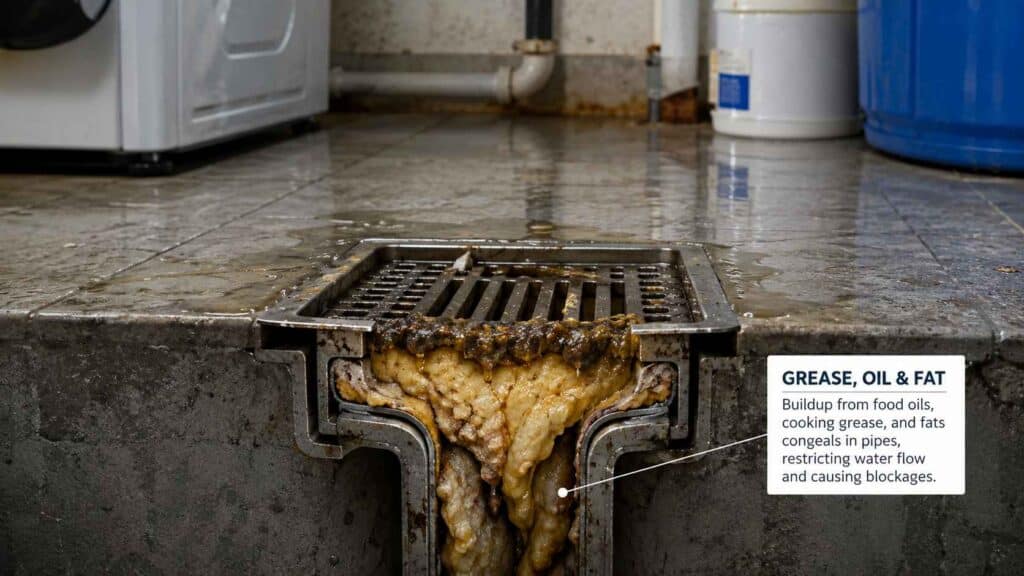
Grease and oil might seem harmless when they’re liquid, but they solidify as they cool inside your pipes. If you’ve ever rinsed a greasy mop bucket, cleaned car parts, or washed oily rags in a laundry tub that drains to a floor waste, you’ve introduced fat into the system. Over time, this fat coats the pipe walls, traps other debris, and narrows the passage until water can’t flow freely.
In commercial kitchens and cafés, grease traps are mandatory for this reason. But residential floor drains don’t have that protection. Once grease hardens, it’s difficult to remove with boiling water or supermarket chemical cleaners. A blocked drain plumber will typically use a high-pressure water jetter to blast away the fat layer and restore full flow.
We recommend wiping down greasy tools and containers with paper towel before rinsing them near a floor drain. It’s a small habit that can save you an unnecessary call-out. If you suspect grease is already causing slow drainage, book a CCTV inspection so we can assess the pipe condition and recommend the right cleaning method.
Reason 4: Small Objects and Foreign Materials
It’s surprising what ends up in floor drains. Bottle caps, screws, coins, children’s toys, and even chunks of plaster or grout from renovation work can slip through the grate and lodge in the trap. Once a solid object blocks the pipe, water can’t pass, and you’ll notice immediate pooling or backup.
In older homes, the drain grate might be damaged or missing altogether, making it easier for objects to fall in. Some homeowners buy a replacement Bunnings drain cover to protect the opening, but if the cover has large slots or isn’t fitted properly, small items can still get through.
Removing foreign objects usually requires a plumbing snake or manual extraction. If the object is metal or hard plastic, it won’t break down, so attempting to flush it with water or chemicals only pushes it deeper. We carry inspection cameras and retrieval tools to locate and remove blockages without damaging your pipes.
If you’ve dropped something valuable, let us know before we start – we’ve successfully recovered wedding rings, keys, and other items during drain clearing work.
Reason 5: Main Sewer Line Blockages and Backflow
When a floor drain not draining is accompanied by gurgling toilets, slow sinks, or sewage odour, the problem is likely downstream in the main sewer line. Floor drains are the lowest fixture in most homes, so when the main line is blocked, wastewater has nowhere to go but back up through the floor drain first. This is especially common during heavy rain, when stormwater infiltrates cracked sewer pipes and overwhelms the system.
Tree roots are a major cause of main line blockages in Sydney. Older clay pipes develop hairline cracks over time, and tree roots grow into those cracks searching for water. Once inside, the roots expand and trap toilet paper, wipes, and other waste, forming a dense plug. A shower strip drain or bathroom floor drain might back up even though the blockage is metres away in the yard.
As a general rule in NSW, the private sewer drain running from your house to the property boundary is the homeowner’s responsibility, while Sydney Water maintains the sewer main in the street. Because this pipework connects into the Sydney Water network, any clearing, repair, or relining work on it must be carried out by a licensed plumber, and some jobs near the boundary may need to be coordinated with Sydney Water. We use CCTV drain inspection to locate the exact position and cause of main line blockages. If tree roots are the issue, we can clear them with a root cutter attachment and then discuss pipe relining to seal the cracks and prevent regrowth. Relining is a no-dig solution that restores your sewer line without excavating your driveway or garden. It’s faster, cleaner, and often more affordable than traditional pipe replacement.
How to Tell If You Need a Blocked Drain Plumber
Not every slow drain requires professional help, but certain warning signs mean it’s time to call a plumber to unblock the drain properly. If water pools around the floor drain and doesn’t clear within a few minutes, the blockage is already significant. Gurgling sounds from nearby toilets or sinks suggest air is trapped in the line, a sign that the main sewer is affected. Foul odours coming from the drain indicate organic material is decomposing inside the pipe, and that won’t resolve on its own.
Recurring blockages are another red flag. If you’ve cleared the drain yourself but it clogs again within days or weeks, the root cause hasn’t been addressed. Tree roots, collapsed pipes, or incorrect fall can all cause repeat blockages that DIY methods can’t fix. We use CCTV cameras to diagnose these issues accurately, so you’re not paying for temporary fixes.
Any work on your sewer drain, stormwater connection, or gas lines must legally be carried out by a licensed plumber under NSW regulations. Anton’s Plumbing & Gas holds NSW Licence 210933C, so you can be confident the work meets AS/NZS 3500 plumbing and drainage standards and NSW Fair Trading requirements, including where it interfaces with the Sydney Water network.
At Antons Plumbing & Gas, we offer same-day service across Sydney, from the Inner West to the Northern Beaches, Hills District, and South-Western suburbs. Our team arrives with high-pressure jetters, inspection cameras, and drain snakes, so we can clear most blockages on the first visit. We provide upfront, fixed-rate pricing in AUD, so you’ll know the cost before we start. There’s no call-out fee between 7 am and 3 pm on weekdays, and we’re available 24/7 for emergencies. If your floor drain is backing up or draining slowly, call 0493 824 176 or book online for a fast, compliant solution.
What to Expect During a Professional Drain Clearing
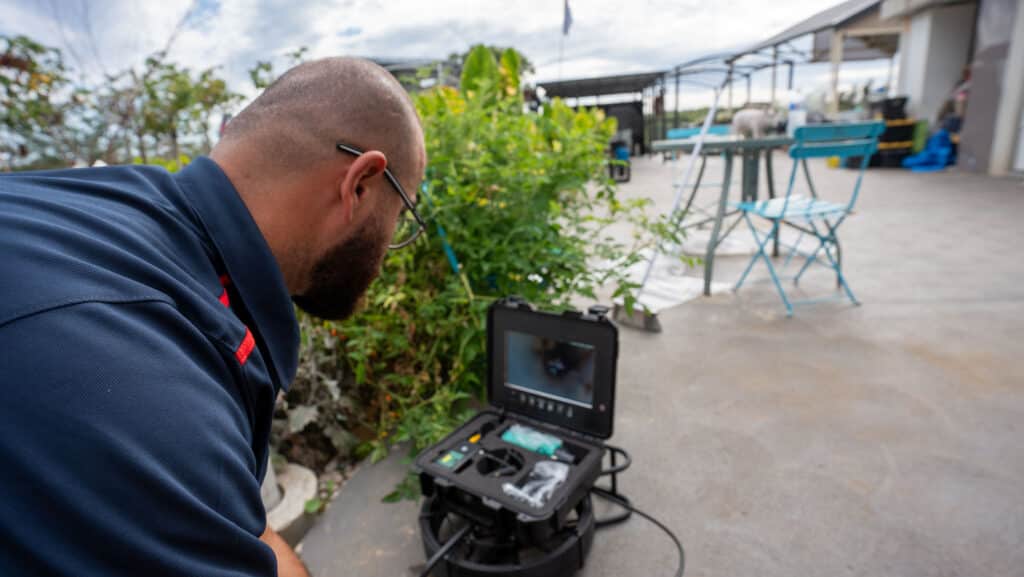
When you book a drain clearing with Antons Plumbing & Gas, we start with a quick assessment of the affected drain and any related fixtures. Our plumber will ask about the symptoms, how long the problem has been occurring, and whether you’ve noticed any odours or backups elsewhere. This helps us form an initial diagnosis before we begin work.
If the blockage location isn’t obvious, we’ll recommend a CCTV drain inspection. A small, waterproof camera is fed into the pipe, transmitting live video to a monitor. We can see exactly where the clog is, what it’s made of, and whether there’s any pipe damage. This takes the guesswork out of the job and ensures we use the right clearing method. CCTV footage is also useful if you’re buying a property or dealing with recurring issues – it provides a permanent record of your drain condition.
Once we’ve identified the blockage, we’ll use high-pressure water jetting to clear it. The jetter uses a focused stream of water – up to around 5,000 psi (roughly 345 bar) – to break up debris, cut through tree roots, and flush the pipe clean. It’s safe for most pipe materials and highly effective for grease, hair, and sediment.
For solid objects or stubborn clogs, we’ll use a plumbing snake or manual extraction tool. After clearing, we’ll run water through the drain to confirm full flow and check for any remaining issues. We clean up the work area, dispose of waste properly, and provide a clear summary of what we found and what we did.
All work complies with AS/NZS 3500 plumbing and drainage standards as regulated in NSW, and we back our labour with a lifetime warranty.
How to Prevent Future Floor Drain Blockages

Preventing future floor drain blockages is much easier than dealing with a serious clog after it forms. A few simple maintenance habits can help keep water flowing properly and reduce the risk of bad odours, slow drainage, and costly repairs. With regular care and early prevention, you can protect your drainage system and avoid recurring floor drain problems.
Install a Fine Mesh Grate or Strainer
A good-quality drain cover helps catch hair, lint, and debris before they enter the pipe. Stainless steel or heavy-duty plastic options work well, and cleaning the strainer weekly can stop buildup from forming.
Flush the Drain with Hot Water Regularly
Pouring a bucket of hot water down the floor drain once a month can help dissolve soap scum, grease, and light residue. This simple step keeps the trap cleaner and helps reduce unpleasant odours.
Avoid Sweeping Debris Directly into the Drain
Sweeping or vacuuming floors before mopping or hosing down prevents dirt, leaves, and solid particles from entering the drainage system. This reduces the amount of debris that can settle inside the pipe and create clogs.
Schedule Annual CCTV Inspections for Older Homes
Older Sydney homes with clay or cast iron pipes are more likely to develop issues such as cracks, corrosion, and tree root intrusion. An annual CCTV inspection can identify these problems early before they lead to a major blockage or backup.
Consider Pipe Relining for Vulnerable Sections
If certain sections of pipe are repeatedly affected by tree roots or cracking, pipe relining can provide a long-term solution. It creates a smooth internal lining that helps block root entry and strengthen the pipe without the need for excavation.
Taking preventive steps now can save you from bigger plumbing issues later. Consistent maintenance helps keep floor drains clear, improves drainage performance, and lowers the chance of unexpected blockages. By following these simple habits, you can keep your floor drain working properly for the long term.
Why Sydney Homeowners Choose Antons Plumbing & Gas for Drain Clearing

We’ve been clearing blocked drains across Sydney for over 25 years. Our team is fully licensed (NSW Lic: 210933C), insured, and trained in the latest drain clearing techniques, from high-pressure jetting to trenchless pipe relining. We don’t just treat the symptoms, we diagnose the root cause using CCTV technology and provide clear options so you can make an informed decision.
Our fixed-rate pricing (in AUD) means no surprises. You’ll know the cost before we start, and there’s no call-out fee for weekday bookings between 7 am and 3 pm. We offer same-day service across the Inner West, Eastern Suburbs, North Shore, Northern Beaches, Hills District, and South-Western Sydney, so you’re never waiting days for a repair. For emergencies, we’re available 24/7 on 0493 824 176.
We respect your home. Our plumbers arrive in clean uniforms, use drop sheets to protect floors, and clean up thoroughly after every job. We explain what we’re doing in plain English, show you the CCTV footage if needed, and answer all your questions. Every job is completed to Australian Standards and NSW plumbing regulations, and we back our workmanship with a lifetime labour warranty. Whether it’s a simple hair clog or a complex main line blockage connecting into the Sydney Water network, we’re here to help you get your drains flowing again.
Conclusion
A floor drain not draining properly is more than an inconvenience – it’s a warning that debris, grease, or a main line issue needs attention. Acting fast prevents water damage, odour, and costly repairs down the track. When DIY methods don’t work, our licensed team is ready to diagnose and fix the problem the same day, with clear pricing and no mess left behind.
Antons Plumbing & Gas specialises in blocked drains and CCTV inspections across Sydney Metro. Our NSW-licensed team (Lic. 210933C) diagnoses the root cause with precision and upfront pricing. Get started with same-day service today.
Related Articles
- How to Fix a Floor Drain Clogged With Debris, Hair, or Grease
- Simple Solutions for How to Unclog Sink Hair Effectively
- How to Unclog a Floor Drain Using Simple Household Tools
FAQs
What Causes A Floor Drain To Not Drain?
Common causes of a floor drain not draining include clogs from debris, grease buildup, or foreign objects obstructing the pipe. Additionally, a broken or damaged pipe can cause drainage issues. Our experienced team at Antons Plumbing & Gas can diagnose and resolve these problems effectively.
How Do You Unclog A Floor Drain?
To unclog a floor drain, you can start by removing any visible debris from the grate. Using a plunger or a plumbing snake can help dislodge deeper clogs. If these methods don’t work, it’s best to call a professional like Antons Plumbing & Gas for safe and effective solutions.
Can A Floor Drain Be Cleaned Out?
Yes, a floor drain can be cleaned out. This typically involves removing the drain cover and using a plumbing snake or high-pressure water jet to clear any blockages. With over 25 years of experience, our team can perform thorough cleaning to ensure your floor drain functions properly.
Why Is There Standing Water in My Floor Drain?
A small amount of water may be normal because the trap holds water to block sewer gases. High, dirty, or rising water can indicate a partial or complete blockage. Contact Anton’s Plumbing & Gas if the water backs up when other fixtures are used.
What Should I Do if My Drain Is Not Draining?
Remove visible hair, dirt, or debris from the drain opening first. You can then try warm water or a plunger if the blockage appears shallow. Arrange professional help if water still does not flow or begins backing up.
What Should I Do if My Floor Drain Is Backing Up?
Stop using nearby sinks, showers, toilets, and appliances to prevent more water entering the system. A backup often indicates a blockage farther along the drainage line. Anton’s Plumbing & Gas can inspect the pipe and clear the obstruction, including any section that connects into the Sydney Water network.
Why Do People Pour Salt Down the Drain at Night?
Salt is sometimes used as a household remedy for mild grease or odour buildup. It is unlikely to clear a serious blockage, solid object, or tree roots. It should not replace proper drain cleaning when water is draining slowly.
What if a Drain Is Not Clogged but Still Not Draining Properly?
The pipe may have restricted venting, poor fall, internal buildup, or partial damage. These issues can slow water even when there is no complete blockage. Anton’s Plumbing & Gas can inspect the line if cleaning the visible drain does not help.
What Is the Biggest Cause of Blocked Drains?
The most common cause depends on the location of the drain. Hair and soap often block bathroom drains, while grease and food residue commonly affect kitchen pipes. Floor drains may also collect dirt, sand, leaves, and foreign objects.
What Is the Fastest Way to Unclog a Drain?
Removing visible debris and using a plunger may quickly clear a shallow blockage. A manual auger can sometimes reach material lodged farther inside the pipe. For a stubborn or recurring clog, professional drain clearing is usually the fastest, most reliable option.
How Do You Know if a Floor Drain Is Clogged?
Common signs include slow drainage, standing water, gurgling sounds, and unpleasant odours. Water may also rise through the floor drain when another fixture is used. Recurring symptoms often indicate a deeper drainage problem.
Why Shouldn’t You Use Baking Soda and Vinegar to Unclog a Drain?
The fizzing reaction may loosen light residue but usually cannot remove a substantial blockage. It can make the drain appear improved while debris remains inside the pipe. Never combine these substances with bleach or commercial chemical cleaners.
What Liquid Do Plumbers Use to Unclog Drains?
Plumbers generally rely on mechanical equipment rather than one standard liquid. Depending on the blockage, they may use augers, high-pressure water jetting, or specialised treatments. Anton’s Plumbing & Gas can select a method suited to the pipe material and obstruction.
Should You Pour Water Down a Floor Drain?
Yes, pouring clean water into an infrequently used floor drain can restore the trap seal. This helps prevent sewer gases and odours from entering the property. Do not add more water when the drain is already blocked or backing up.
Does Pouring Boiling Water Down a Drain Help Unclog It?
Hot water may help loosen mild soap residue or grease buildup. Boiling water can affect some PVC pipes or joints, so hot tap water is generally safer. It will not clear solid objects, tree roots, or serious obstructions.
What Causes a Floor Drain to Back Up?
A downstream blockage can force wastewater through the floor drain because it is often the lowest opening in the system. Possible causes include grease, debris, tree roots, damaged pipes, or a main sewer obstruction. Stop using connected fixtures and contact Anton’s Plumbing & Gas if the backup continues.
Is It Normal for a Floor Drain to Have Water in It?
Yes, a small amount of water in the trap is normally expected. The water creates a seal that prevents sewer gases from entering the room. Rising, dirty, or foul-smelling water may indicate a blockage.
How Do You Unclog a Floor Drain With Standing Water?
Remove some of the water if necessary, then clear debris from the grate and accessible trap. Use a plunger carefully while maintaining a seal over the drain opening. If the water level does not fall, Anton’s Plumbing & Gas can locate and clear the deeper obstruction.
Does Pouring Vinegar Down the Drain Help?
Vinegar can help cut through light soap scum and mild odours, similar to baking soda, but it will not shift hair mats, grease buildup, or solid objects. Treat it as light routine maintenance rather than a fix for a genuine blockage. If the drain is still slow after trying this, book a proper inspection rather than repeating home remedies.
How Much Does It Cost to Unblock a Floor Drain in Sydney?
The cost depends on the cause and location of the blockage, whether it’s a simple hair clog or a main line issue needing jetting or relining. Anton’s Plumbing & Gas provides upfront, fixed-rate pricing in AUD before any work begins, so there are no surprises on the invoice. Call 0493 824 176 for an obligation-free assessment.
Do You Offer Same-Day Blocked Drain Service Across Sydney?
Yes, we offer same-day service across the Inner West, Eastern Suburbs, North Shore, Northern Beaches, Hills District, and South-Western Sydney. Our fully equipped vans carry jetters, cameras, and snakes so most jobs are resolved on the first visit. Book online or call to check availability in your suburb today.
Is Antons Plumbing & Gas Licensed to Work on Sewer Connections in NSW?
Yes, Anton’s Plumbing & Gas holds NSW Licence 210933C, which covers drainage and sewer work regulated under AS/NZS 3500 and NSW Fair Trading. This includes work on private drains that connect into the Sydney Water network. Always check a plumber’s licence before allowing sewer or gas work at your property.
How Quickly Can Someone Come Out for an Emergency Floor Drain Backup?
Anton’s Plumbing & Gas offers 24/7 emergency response across Sydney for backed-up floor drains and sewage smells. Stop using nearby fixtures and call 0493 824 176 as soon as you notice backup, gurgling, or odour. Our team will prioritise the job and bring the equipment needed to fix it on the spot.
What Areas of Sydney Do You Service for Blocked Floor Drains?
We service the Inner West, Eastern Suburbs, North Shore, Northern Beaches, Hills District, and South-Western Sydney. If you’re unsure whether we cover your suburb, call 0493 824 176 and our team will confirm availability and timing. Same-day appointments are available for most areas.