

Oil and grease clogs are one of the most common kitchen problems we see in Sydney homes and units. When cooking oil cools inside your pipes, it solidifies and traps food scraps, soap scum and other debris. The result is a slow drain or complete blockage that disrupts your routine and puts extra strain on your plumbing.
This guide walks you through proven methods on how to unclog oil in sink safely, explains when DIY steps make sense, and shows you how professional drain clearing can save time and prevent costly damage. You will learn which household products work, how to protect your pipes, and when to call a licensed Sydney plumber for same-day help.
Key Takeaways
- Hot water and dish soap can emulsify fresh grease clogs in minutes.
- Bicarb soda and vinegar create a fizzing reaction that breaks down oil buildup.
- Plungers and drain snakes tackle deeper blockages when household remedies fail.
- Prevention—wiping pans, using strainers, and weekly hot-water flushes—stops clogs before they start.
- Persistent or recurring oil clogs often signal pipe damage that requires CCTV inspection and professional repair.
Understanding Why Oil Clogs Your Kitchen Sink
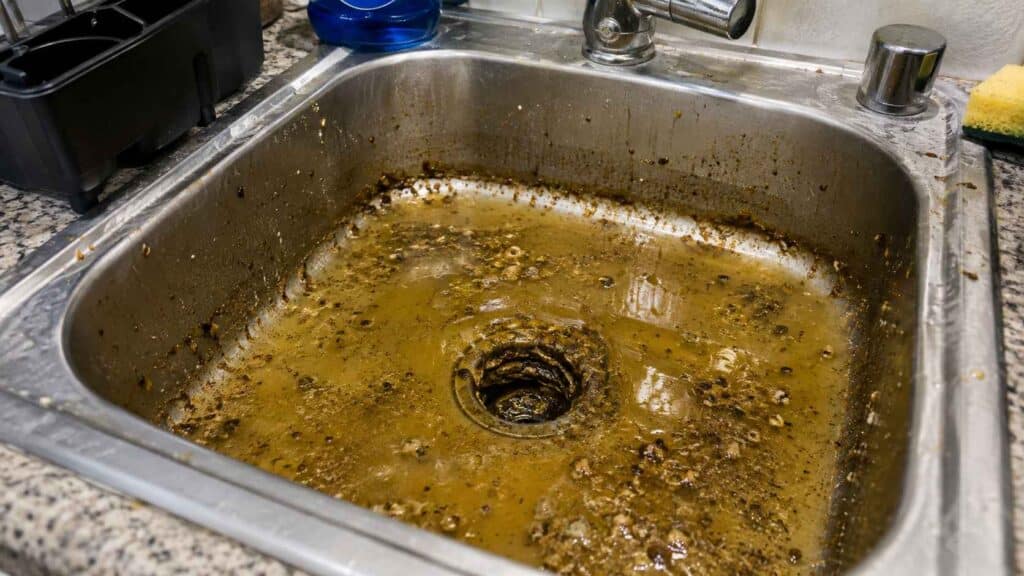
Cooking oils and fats behave differently once they leave the frying pan. Liquid oil flows easily at high temperatures, but as it travels through your pipes and cools, it solidifies into a sticky film. That film clings to pipe walls and narrows the passage, catching food scraps, coffee grounds, and soap residue along the way.
Over time, the buildup hardens into a waxy mass that restricts water flow. You might notice water pooling around the drain, a gurgling sound when the sink empties, or an unpleasant odour rising from the plughole. These early signs tell you grease has started to accumulate, and ignoring them can lead to a full blockage that backs up into your sink or dishwasher.
Sydney homes with older clay or cast-iron pipes are especially vulnerable. Tree roots can penetrate joints, creating rough surfaces where grease catches more easily. If you live in the Inner West, North Shore, or any suburb with mature street trees, you may face both grease and root intrusion at the same time.
Techniques on How to Unclog Oil in Sink
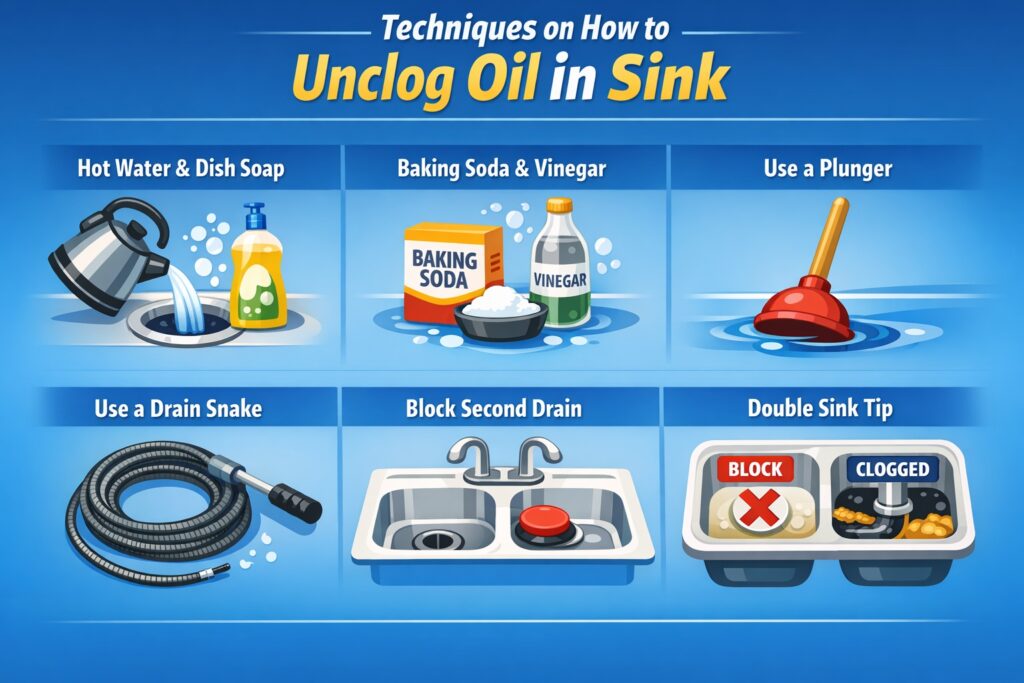
Oil clogs can build up quickly in kitchen sinks, especially when grease, cooking oil, and food residue collect inside the pipe walls. The best way to clear the blockage depends on how severe it is, how far down the line it sits, and whether the grease has already hardened. Starting with simple home remedies and moving to mechanical tools when needed gives you a safer and more effective way to restore proper drainage.
Use Hot Water and Dish Soap
Hot water and dish soap work best for fresh grease clogs that have not yet fully hardened inside the pipe. Start by squirting a generous amount of dish soap directly into the drain and letting it sit briefly so it can begin coating the grease buildup. Then slowly pour a full kettle of just-boiled water into the drain to help melt the oil while the soap breaks it into smaller droplets, and finish by running hot tap water to flush away the loosened residue.
Try Bicarb Soda and Vinegar
Bicarb soda and vinegar can help loosen moderate oil buildup when hot water alone is not enough. First remove any standing water so the mixture can reach the clog directly, then pour half a cup of bicarb soda into the drain followed immediately by half a cup of white vinegar. Cover the drain to keep the fizzing reaction concentrated inside the pipe, leave it for fifteen to thirty minutes, and then flush with hot water to wash away softened grease and debris.
Use a Plunger
A plunger is a useful next step when natural remedies do not restore full drainage. Fill the sink with enough water to cover the plunger cup, position it firmly over the drain opening, and pump it up and down several times to create pressure against the clog. This push-and-pull action can break apart a grease blockage and help move it further down the line so the sink can drain again.
Use a Drain Snake
A drain snake is helpful when the clog sits deeper in the pipe or is too stubborn for plunging alone. Feed the snake slowly into the drain until you feel resistance, then rotate the handle to break up the blockage or hook onto the trapped material. Once removed, flush the line with hot water to clear out any remaining oil, food scraps, or debris left behind in the pipe.
Block the Second Drain in a Double Sink
If you have a double-bowl kitchen sink, make sure to block the second drain before using a plunger or drain snake. This helps prevent air and water from escaping through the other basin and allows stronger pressure to build in the clogged side. Creating a tighter seal improves the effectiveness of whichever mechanical method you are using.
Using the right technique early can make a big difference when dealing with oil buildup in your sink. Fresh grease clogs often respond well to hot water, dish soap, or bicarb soda and vinegar, while more stubborn blockages may need a plunger or drain snake for better results. If the sink still drains slowly after trying these methods, the blockage may be deeper in the system and best handled by a licensed plumber—call Anton’s Plumbing & Gas (NSW Lic. 210933C) on +61493824176.
Preventing Oil Clogs Before They Start
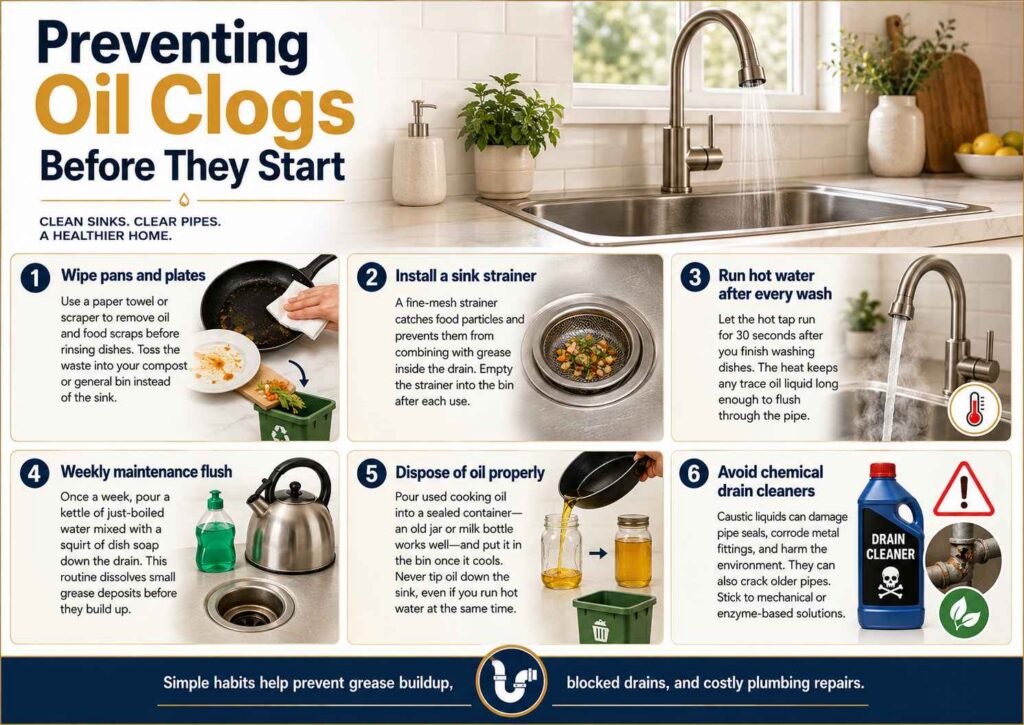
Prevention is always simpler and cheaper than repair. A few small habits can keep your kitchen drain flowing freely and extend the life of your pipes. These steps take less than a minute after each meal but save hours of frustration and potential plumbing bills down the track.
- Wipe pans and plates: Use a paper towel or scraper to remove oil and food scraps before rinsing dishes. Toss the waste into your compost or general bin instead of the sink.
- Install a sink strainer: A fine-mesh strainer catches food particles and prevents them from combining with grease inside the drain. Empty the strainer into the bin after each use.
- Run hot water after every wash: Let the hot tap run for thirty seconds after you finish washing dishes. The heat keeps any trace oil liquid long enough to flush through the pipe.
- Weekly maintenance flush: Once a week, pour a kettle of just-boiled water mixed with a squirt of dish soap down the drain. This routine dissolves small grease deposits before they build up.
- Dispose of oil properly: Pour used cooking oil into a sealed container—an old jar or milk bottle works well—and put it in the bin once it cools. Never tip oil down the sink, even if you run hot water at the same time.
- Avoid chemical drain cleaners: Caustic liquids can damage pipe seals, corrode metal fittings, and harm the environment. They also create heat that can crack older pipes. Stick to mechanical or enzyme-based solutions.
We see many Sydney kitchens with recurring grease clogs that could have been avoided with these simple steps. If you manage a café, restaurant, or strata building with shared drainage, a grease trap is a worthwhile investment—and may be required under your Sydney Water trade waste agreement. Our team can assess your site, recommend the right size, and install it to meet Sydney Water and local council requirements.
When to Call a Professional Plumber for Oil Clogs

DIY methods work well for minor, surface-level blockages. But some clogs sit deep in the line, involve damaged pipes, or keep coming back no matter how often you clear them. Recognising when to call a licensed Sydney plumber saves you time, protects your property, and prevents emergency repairs at inconvenient hours.
You should contact a licensed plumber if water backs up into other fixtures—such as your dishwasher, laundry trough, or floor waste—when you run the kitchen sink. That symptom indicates a blockage in the main drain line, not just the sink trap, and may need to be reported if it affects the Sydney Water main. Attempting to clear a main-line clog with a hand snake can push the blockage further and make the problem worse.
Foul odours that persist after cleaning suggest grease has accumulated in sections of pipe you cannot reach. A professional CCTV drain inspection lets us see exactly where the buildup sits, how severe it is, and whether tree roots or pipe damage are contributing factors. We insert a high-resolution camera into your drain and record the footage, so you can see the same images we do and make an informed decision about the best repair option.
Slow drainage that returns within days or weeks points to a partial blockage or underlying pipe issue. Hydro jetting—high-pressure water cleaning—removes grease, scale, and biofilm from the entire pipe interior, restoring full flow and reducing the chance of future clogs. We back our jetting work with a lifetime labour warranty, so you can feel confident the job is done properly.
If you notice water pooling around the base of your sink cabinet, you may have a leak caused by corrosion or a cracked fitting. Grease clogs increase pressure inside pipes, which can force water through weak points. Our licensed team will locate the leak, explain your repair or replacement options, and complete the work to AS/NZS 3500 plumbing standards and Sydney Water requirements.
We offer same-day service across Sydney Metro—Inner West, Eastern Suburbs, North Shore, Northern Beaches, Hills District, Western and South-Western Sydney, and Sutherland Shire. Call us on 0493 824 176 any time, day or night, and we will dispatch a qualified, licensed plumber (NSW Lic. 210933C) with no call-out fee between 7am and 3pm on weekdays. Emergency callouts outside those hours are available 24/7 at our standard fixed rates, with clear pricing in AUD explained before we start work.
Real-World Example: Recurring Grease Clogs in an Inner West Terrace
A homeowner in Newtown contacted us after her kitchen sink blocked for the third time in two months. She had tried bicarb soda, vinegar, and a hand snake, but the clog returned within days. When we arrived, we ran a CCTV camera through the drain and discovered a section of cast-iron pipe with heavy corrosion and a buildup of solidified grease nearly two centimetres thick.
Tree roots from a street fig had penetrated a joint ten metres from the house, creating a rough surface that caught grease and food scraps. We explained two options: excavate and replace the damaged section, or use pipe relining to create a smooth, seamless interior without digging up the courtyard. She chose relining because it was faster, less disruptive, and came with a long-term structural warranty.
We hydro-jetted the line to remove all grease and debris, then installed an epoxy liner that bonded to the inside of the old pipe. The entire job took four hours, and she has had no further blockages in the eighteen months since. We also recommended a weekly hot-water flush and a sink strainer to prevent future buildup.
Choosing the Right Plumber for Drain Clearing in Sydney

Not all plumbers offer the same level of service, equipment, or transparency. When you need help with a clogged sink or any other drainage issue, look for a team that prioritises safety, compliance, and clear communication.
Check that the plumber holds a current NSW licence and insurance. Lic: 210933C is our licence number, and we are happy to provide proof of insurance before we start any work. Licensed plumbers follow AS/NZS 3500 Australian Standards and Sydney Water requirements, use quality parts, and carry public liability cover to protect your property.
Ask about diagnostic methods. A plumber who offers CCTV inspections can show you exactly what is blocking your drain and recommend the most effective solution. Guesswork leads to unnecessary repairs and repeat callouts.
Request a fixed-price quote in AUD before work begins. We provide upfront pricing for every job, so you know the total cost before we lift a tool. No hidden fees, no surprise charges, no hourly rates that blow out if the job takes longer than expected.
Look for a lifetime labour warranty. We stand behind our workmanship with a lifetime labour warranty on all repairs and installations. If a problem arises due to our work, we return and fix it at no extra cost.
Confirm availability and response time. Blocked drains do not wait for business hours. We offer same-day service across Sydney Metro, with 24/7 emergency response when you need it most. Call 0493 824 176 any time, and we will dispatch a qualified plumber to your location.
Conclusion
Oil clogs are preventable, treatable, and rarely need to disrupt your routine for long. Simple habits and the right clearing method restore flow quickly and protect your pipes. When DIY steps fall short or symptoms suggest deeper damage, our licensed team (NSW Lic. 210933C) is ready to diagnose, repair, and safeguard your plumbing with same-day Sydney service and transparent AUD pricing you can trust.
Antons Plumbing & Gas offers expert blocked drain solutions across Sydney with same-day service available. Our licensed team clears oil-clogged sinks safely using professional equipment and techniques. Get started with a no call-out fee quote today.
Related Articles
- How to Drain a Kitchen Sink That Won’t Empty
- How to Snake a Bathroom Sink Like a Pro (Easy DIY Guide)
- Simple Solutions for How to Unclog Sink Hair Effectively
FAQs
What Causes Oil to Clog a Sink?
Oil can clog a sink when it cools and solidifies, combining with food particles and other debris. Over time, this buildup restricts water flow and can lead to significant blockages. Regular maintenance and prompt attention to spills can help prevent these issues.
How Do You Unclog a Sink with Oil and Grease?
To unclog a sink with oil and grease, start by removing any standing water. Then, use a mixture of hot water and dish soap to break down the grease. If the clog persists, consider using a plunger or a drain snake. For persistent blockages, our experienced team at Antons Plumbing & Gas can provide professional assistance.
Can Bicarb Soda and Vinegar Unclog Oil in a Sink?
Yes, bicarb soda and vinegar can help unclog oil in a sink. Pour half a cup of bicarb soda followed by half a cup of vinegar down the drain. Allow it to sit for about 30 minutes, then flush with hot water. This method can be effective, but for severe clogs, contacting a licensed plumber may be the best option.
Is It Safe to Pour Hot Water Down the Sink to Unclog Oil?
Pouring hot water down the sink can help dissolve oil and grease, but be cautious not to use boiling water, as it can damage pipes, especially older ones. Using hot, but not boiling, water along with other methods is generally safe; if you’re unsure, our qualified team can guide you.
What Are Some Preventative Measures to Avoid Oil Clogs in Sinks?
To prevent oil clogs in sinks, avoid pouring fats, oils, and grease down the drain. Instead, dispose of these substances in the bin. Using a sink strainer can also catch food particles and prevent buildup. Regular professional maintenance from Antons Plumbing & Gas can further help keep your plumbing in optimal condition.
Do You Offer Same-Day Blocked Sink Service in Sydney?
Yes, we offer same-day service across Sydney Metro, including the Inner West, Eastern Suburbs, North Shore, Northern Beaches, Hills District, Western and South-Western Sydney, and Sutherland Shire. Call 0493 824 176 and we will arrange a qualified plumber to attend, often the same day you call.
Is Anton’s Plumbing & Gas Licensed to Work in NSW?
Yes, we hold current NSW Lic. 210933C and full insurance. We’re happy to provide proof of licensing and insurance before starting any job, so you can book with confidence.
How Much Does It Cost to Unclog a Sink in Sydney?
Costs vary depending on the severity of the blockage and whether CCTV inspection or hydro jetting is required. We always provide a fixed-price quote in AUD before any work begins, so call us on 0493 824 176 for an obligation-free assessment of your specific job.
Do You Charge a Call-Out Fee?
There’s no call-out fee for jobs booked between 7am and 3pm on weekdays. After-hours emergency callouts are available 24/7 at our standard fixed rates, which we explain clearly before any work starts.
What Areas of Sydney Do You Service?
We service the greater Sydney Metro area, including the Inner West, Eastern Suburbs, North Shore, Northern Beaches, Hills District, Western Sydney, South-Western Sydney, and Sutherland Shire. Call us to confirm coverage for your suburb.
Can a Blocked Kitchen Sink Affect the Sydney Water Network?
If a blockage sits in your section of the main drain rather than just the sink trap, it can eventually affect flow into the Sydney Water sewer connection. Persistent backups into other fixtures are a sign to call a licensed plumber rather than continuing DIY attempts.
Do You Provide CCTV Drain Inspections for Oil Clogs?
Yes, we offer professional CCTV drain inspections to pinpoint exactly where grease has built up, whether tree roots are involved, and whether pipe damage is contributing to the clog. Book an inspection with us for an accurate diagnosis before any repair work begins.
What If My Sink Clog Keeps Coming Back After DIY Methods?
Recurring clogs usually mean the blockage sits deeper in the line or there’s underlying pipe damage. Our licensed team can run a CCTV inspection and recommend hydro jetting or pipe relining to fix the root cause, backed by our lifetime labour warranty.
Do You Offer Emergency Plumbing After Hours?
Yes, we provide 24/7 emergency plumbing across Sydney at our standard fixed rates. Call 0493 824 176 any time, day or night, and we will dispatch a qualified, licensed plumber to your address.
How Quickly Can a Sydney Plumber Arrive for a Blocked Sink?
We offer same-day service across Sydney Metro for most bookings, with priority dispatch for emergency callouts. Call us to check current availability in your suburb.
Is Hydro Jetting Safe for Older Sydney Homes?
Hydro jetting is safe for most pipe materials when performed by a licensed plumber who assesses pipe condition first via CCTV. For older clay or cast-iron pipes, we adjust pressure settings accordingly to clear grease without causing damage.
Do You Provide a Warranty on Blocked Drain Repairs?
Yes, we back our repairs, jetting, and relining work with a lifetime labour warranty. If an issue arises from our workmanship, we return and fix it at no extra cost to you.
Can I Book a Plumber Online?
Yes, you can book online through our website or call us directly on 0493 824 176 to arrange a same-day or scheduled appointment for your blocked sink.
Do You Give a Fixed Price Before Starting Work?
Yes, we always provide an upfront, fixed-price quote in AUD before we begin any job, so you know the full cost with no hidden fees or surprise charges.
Do Sydney Strata Buildings Need a Grease Trap?
Cafés, restaurants, and some strata buildings with shared kitchen drainage may be required to install a grease trap under their Sydney Water trade waste agreement and local council rules. We can assess your site and install a compliant system.
What Should I Do If Water Is Pooling Under My Sink Cabinet?
Pooling water under the cabinet may indicate a leak caused by corrosion or a cracked fitting, often worsened by grease-related pressure in the pipes. Call us to book an inspection so we can locate the leak and repair it to AS/NZS 3500 standards.