

A slow-draining bathroom sink is one of the most common calls we get from homes across Sydney, from Bondi terraces to Parramatta townhouses. Water pools around the basin, toothpaste residue lingers, and you know something is blocking the pipe below. Before you reach for harsh chemicals or call in help, a plumbing snake can often solve the problem in minutes. This guide walks you through how to snake a bathroom sink so you can tackle the clog yourself with confidence.
We will cover the tools you need, the step-by-step technique for snaking your bathroom sink, and when it makes sense to bring in a licensed Sydney plumber. You will also learn how to prevent future blockages and what signs suggest a deeper issue that requires professional diagnosis under NSW plumbing regulations.
Key Takeaways
- A hand-crank drain snake is the most effective tool for clearing hair and soap clogs in bathroom sinks.
- Always remove the pop-up stopper and check the P-trap before feeding the snake into the drain line.
- Turn the auger handle clockwise as you push the cable forward to break through blockages.
- Flush the drain with hot water after snaking to confirm the clog is fully cleared.
- If the sink remains slow or water backs up elsewhere, the blockage may be deeper in the main line and require a CCTV inspection.
- Any plumbing work beyond basic DIY drain clearing must be carried out by a licensed plumber to comply with NSW Fair Trading and AS/NZS 3500 requirements.
How to Snake a Bathroom Sink: Step-by-Step Instructions
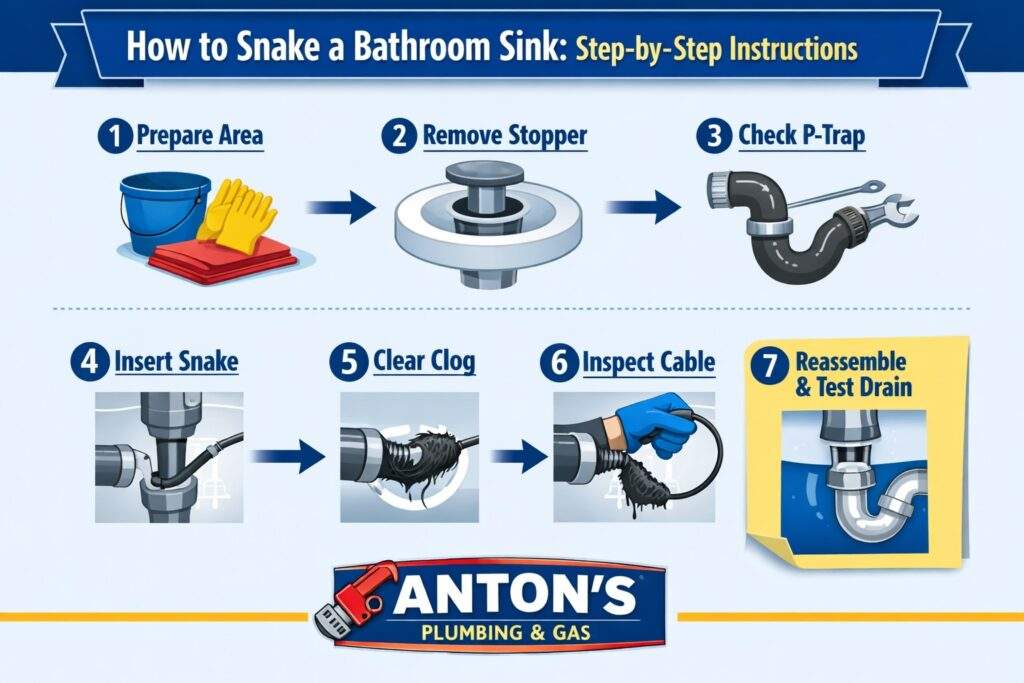
Follow these steps in order to clear your bathroom sink drain safely and effectively. Take your time with each stage, especially if this is your first attempt. Rushing can kink the cable or push the clog further down the line, and older Sydney homes with original galvanised pipework can be more prone to damage from over-forcing a cable.
1. Prepare the Work Area
Clear everything from under the sink so you have room to move. Place a bucket directly beneath the P-trap to catch water when you disconnect the pipe. Lay a towel on the vanity floor to soak up any drips. Put on your rubber gloves and have your torch within reach.
2. Remove the Pop-Up Stopper
Most bathroom sinks have a pop-up stopper controlled by a lift rod behind the tap. Unscrew the pivot nut on the back of the tailpiece and pull out the pivot rod. The stopper will lift free from the drain opening. Set both pieces aside in a safe spot so you do not lose the small washers or clips.
3. Check and Clean the P-Trap
Use your wrench to loosen the slip nuts at each end of the P-trap. Slide the nuts up the pipe and gently pull the trap away from the tailpiece and wall stub. Tip the contents into your bucket. If the clog is sitting in the trap itself, you may see a dense wad of hair and soap. Rinse the trap in another sink or outside, then set it aside. If the trap was clear, the blockage is further along the drain line.
4. Feed the Snake Into the Drain
Insert the tip of the snake cable into the drain opening or, if the trap is removed, directly into the wall stub. Push the cable forward while turning the handle clockwise. The rotating motion helps the auger head navigate bends and bite into the clog. You will feel resistance when the tip reaches the blockage.
5. Work Through the Clog
When you hit resistance, continue cranking clockwise and apply steady forward pressure. The cable may push through the clog, or the auger head may snag hair and pull it back toward you. If the cable starts to coil or kink, retract it slightly and try again. Avoid forcing the snake, as this can damage the pipe or create a loop in the cable.
6. Retract the Snake and Inspect
Once you feel the cable move freely past the obstruction, slowly pull it back while continuing to turn the handle. Wipe the cable with a rag as it emerges to remove hair and debris. Check the auger head for signs of the clog. If you retrieve a large clump, the blockage is likely cleared. If the cable comes out clean, the clog may have been pushed further down or already dislodged.
7. Reassemble and Test the Drain
Reconnect the P-trap, tightening the slip nuts by hand first, then giving them a quarter turn with your wrench. Do not overtighten, as this can crack plastic fittings. Reinsert the pop-up stopper and pivot rod, then fill the sink with water. Release the stopper and watch the water drain. If it empties quickly and smoothly, the clog is gone. If water still drains slowly, you may need to repeat the process or investigate further down the line.
Taking a methodical approach makes snaking a bathroom sink much safer and more effective, especially for first-time DIY attempts. While this method works well for many minor to moderate clogs, it does have limits when the blockage is deeper or caused by pipe damage. If the sink continues to drain slowly after repeated attempts, Anton’s Plumbing & Gas (NSW Lic. 210933C) can inspect the line properly and clear the problem using professional equipment.
Common Mistakes to Avoid When Snaking a Sink
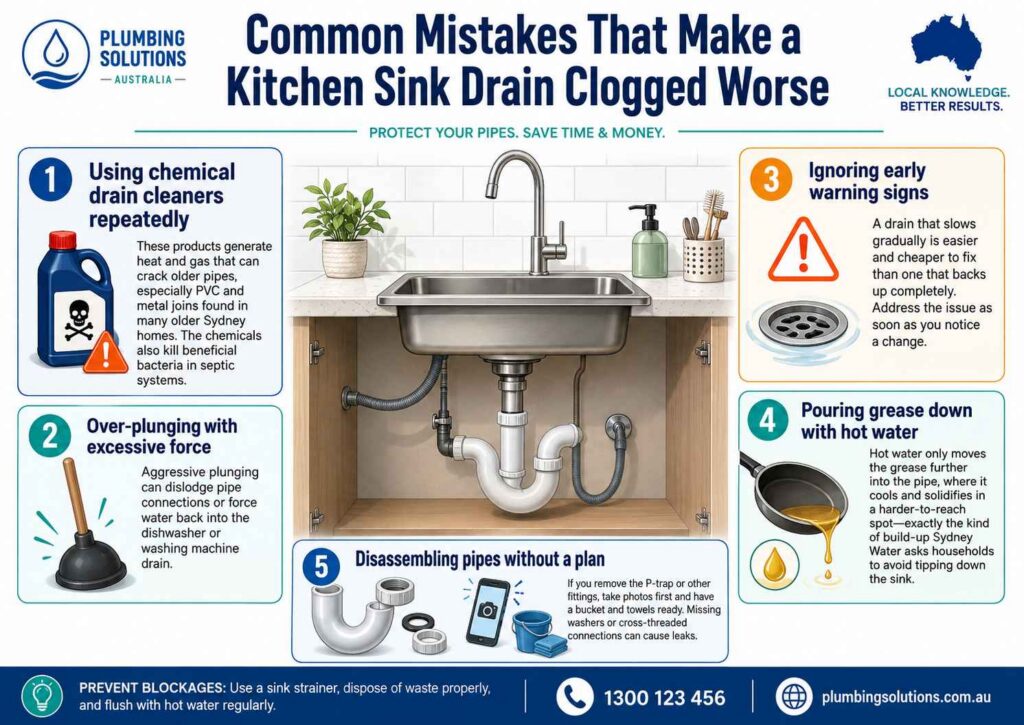
Even a straightforward task like snaking a drain can go wrong if you skip steps or use too much force. Here are the pitfalls we see most often when Sydney homeowners attempt DIY drain clearing.
- Skipping the P-trap inspection: Many clogs sit in the trap itself, and removing it first saves time and prevents unnecessary cable wear.
- Turning the auger anticlockwise: Rotating the wrong direction can unwind the cable or cause the tip to snag on pipe joints.
- Forcing the cable: If the snake will not advance, retract and try again at a different angle rather than pushing harder.
- Using a cable that is too long: Excess cable can coil inside the drum or kink in the pipe, making retrieval difficult.
- Neglecting to flush the drain: Running hot water after snaking washes away loosened debris and confirms the line is clear.
If you encounter sharp resistance or hear scraping metal, stop immediately. Many older Sydney properties, particularly in the inner west and eastern suburbs, still have original galvanised or copper pipework that can corrode from the inside, and aggressive snaking may puncture a weakened section. In that case, a CCTV drain inspection will show the pipe condition and help you decide whether repair or replacement is needed.inspection will show the pipe condition and help you decide whether repair or replacement is needed.
When to Call a Licensed Plumber Instead

Snaking a bathroom sink is a manageable DIY job for shallow clogs, but some situations call for professional tools, expertise, and a valid plumbing licence. You might be wondering when it is time to put down the snake and pick up the phone.
If water backs up in multiple fixtures when you run the sink — such as the shower or toilet gurgling — the blockage is likely in the main drain line beyond the bathroom. A hand snake cannot reach that far, and attempting to force it can damage branch connections. Once a blockage sits in the shared sewer main rather than your internal pipework, it may actually fall under Sydney Water’s jurisdiction rather than yours, and a licensed plumber can confirm where responsibility lies before any work begins. Our team uses motorised drain machines and flexible CCTV cameras to locate and clear deep blockages without guesswork.
Recurring clogs in the same sink suggest a structural issue. Tree roots, collapsed pipes, or improper slope can all cause water to pool and debris to accumulate. We perform a camera inspection to identify the root cause, then present clear options: high-pressure water jetting, pipe relining, or excavation and replacement. Each approach has trade-offs in cost, disruption, and longevity, and we explain them in plain English so you can choose what suits your home and budget.
If you have tried snaking the drain twice without success, or if the sink drains slowly even after clearing visible debris, the problem may be mineral buildup or a partially collapsed section. Continuing to snake can scratch the pipe interior and create more places for hair and soap to catch. At that point, a same-day inspection by a licensed plumber will save you time and prevent further damage. Anton’s Plumbing & Gas holds NSW Lic. 210933C, meaning all diagnosis and repair work is carried out to AS/NZS 3500 plumbing standards and NSW Fair Trading requirements.
How Our Plumbers Handle Stubborn Sink Blockages
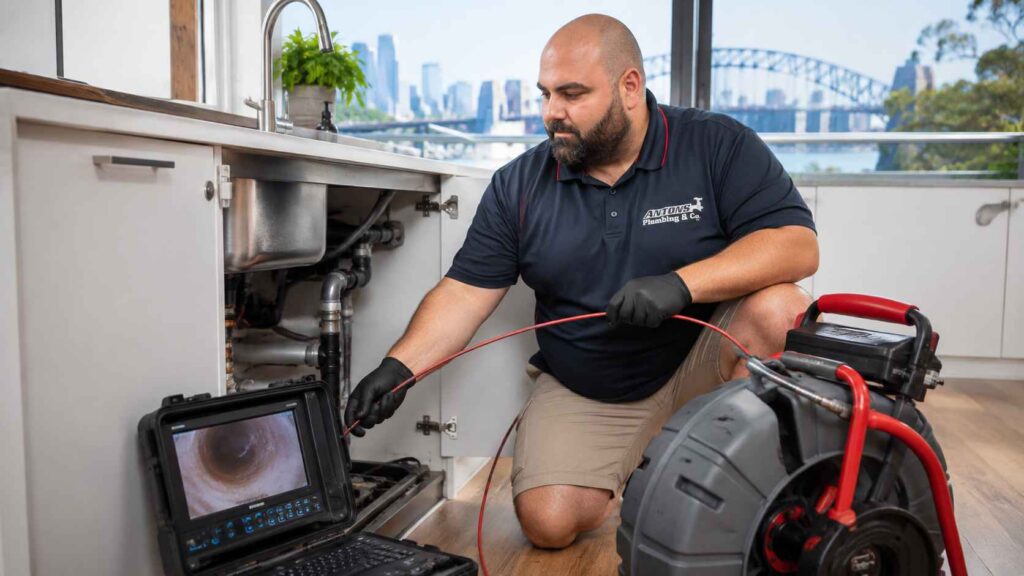
When a standard hand snake does not solve the problem, we bring professional-grade equipment and diagnostic tools to your Sydney home. Our approach starts with understanding the full picture, not just treating the symptom.
We begin with a CCTV drain inspection, feeding a high-resolution camera through the line to see exactly where the blockage sits and what caused it. The footage shows us whether the clog is hair and soap, tree roots, or a collapsed section of pipe. This removes the guesswork and lets us recommend the most effective solution.
For dense clogs or mineral buildup, we use a motorised drain machine with interchangeable cutting heads. These machines deliver more torque than a hand auger and can clear blockages well beyond the reach of a domestic hand snake. We work carefully to avoid damaging the pipe, adjusting speed and pressure based on what the camera revealed.
If the pipe itself is damaged — cracked, corroded, or misaligned — we discuss repair options. Pipe relining creates a new, smooth interior without digging up your bathroom floor or garden. The resin-coated liner cures in place and can last decades. For localised damage, we may recommend replacing a short section of pipe. We provide upfront pricing in AUD for each option so you can make an informed choice.
All work is completed to Australian Standards (AS/NZS 3500 plumbing and drainage series) and NSW Fair Trading licensing requirements, and we document the job with before-and-after photos or video. You receive a clear report showing what we found, what we fixed, and any maintenance recommendations. Our lifetime labour warranty covers the workmanship, so if an issue arises with our repair, we return at no extra charge.
Comparing DIY Snaking to Professional Drain Clearing
Deciding whether to tackle a clog yourself or call a plumber depends on the severity of the blockage, your comfort with tools, and how quickly you need the sink working again. This table summarises the key differences.
| Aspect | DIY Hand Snake | Professional Service |
|---|---|---|
| Effective range | Up to 3 metres from drain opening | Up to 30+ metres with motorised equipment |
| Suitable for | Hair and soap clogs in P-trap or nearby pipe | Deep blockages, tree roots, mineral buildup, structural issues |
| Diagnosis | Trial and error | CCTV camera inspection shows exact location and cause |
| Time required | 30–60 minutes including reassembly | Same-day service, typically 1–2 hours including inspection |
| Risk of damage | Possible if pipe is corroded or technique is incorrect | Minimised by camera guidance and professional training |
| Cost | Tool purchase or rental, your time | Fixed-rate pricing, includes diagnosis and warranty |
If your sink drains completely after snaking and stays clear for months, DIY was the right call. If the problem returns within days or you see water backing up elsewhere, a professional inspection will identify the underlying cause and prevent repeated clogs.
Why Choose Antons Plumbing & Gas for Drain Issues

We have spent more than 25 years diagnosing and clearing blocked drains across Sydney. Our team knows the difference between a simple hair clog and a symptom of a larger plumbing problem. When you call us, you get honest advice, upfront pricing in AUD, and same-day service — no call-out fee, no hidden charges.
Every job starts with a clear explanation of what we found and what we recommend. If a hand snake will solve the problem, we tell you. If the blockage requires CCTV inspection or high-pressure jetting, we explain why and show you the evidence. You decide how to proceed, and we respect your timeline and budget.
Our work complies with NSW Fair Trading licensing requirements and AS/NZS 3500 plumbing standards — we hold NSW Lic. 210933C. Where a blockage involves the shared sewer main, we can advise whether the issue falls under Sydney Water’s responsibility. We use quality parts, document our findings with photos or video, and back our workmanship with a lifetime labour warranty. Whether you need a quick drain clear or a full pipe reline, we treat your home with care and leave the site clean.
We serve the entire Sydney Metro, including the Inner West, Eastern Suburbs, North Shore, Northern Beaches, Hills District, Western and South-Western Sydney, and Sutherland Shire. Our 24/7 emergency line on +61 493 824 176 means help is always available, day or night. If your sink is blocked and a DIY snake did not work, we can be there the same day to diagnose the issue and get your drain flowing again.
Conclusion
Snaking a bathroom sink is a practical skill that saves time and money when a clog strikes. With the right tools and a methodical approach, most hair and soap blockages clear in under an hour. If the problem persists or you suspect a deeper issue, our licensed team (NSW Lic. 210933C) is ready to help with professional equipment, honest advice, and same-day service across Sydney.
Anton’s Plumbing & Gas offers expert blocked drain solutions across Sydney Metro with 25+ years of experience. Our licensed team provides same-day service and upfront pricing in AUD for all plumbing needs. Learn more today.
Related Articles
- How to Snake a Toilet with a Hanger Effectively
- Toilet Snake vs Drain Snake: What’s the Difference and Which One Should You Use?
- Kitchen Drain Clogged? Here’s How to Fix It Quickly and Safely
FAQs
What Is The Best Way To Snake A Bathroom Sink?
The best way to snake a bathroom sink is to start by removing the sink stopper, then insert the plumbing snake into the drain until you encounter resistance. Gently rotate the snake to break up the clog, then pull it out slowly, bringing any debris with it. If the clog persists, you may want to consider professional assistance from experts like Anton’s Plumbing & Gas, who can diagnose and resolve the issue efficiently.
How Do You Use A Plumbing Snake On A Sink?
To use a plumbing snake on a sink, first remove any visible debris and the sink stopper. Insert the snake into the drain, pushing it gently until you feel the blockage. Rotate the handle of the snake to navigate through the clog, breaking it apart. Once you feel the drain clear, slowly retract the snake and clean any debris off it. If you’re uncomfortable with this process, our experienced team is just a call away to help.
Can You Snake A Bathroom Sink Yourself?
Yes, you can snake a bathroom sink yourself if you have the right tools and are comfortable doing so. However, if the clog is persistent or you’re unsure about the process, it’s wise to contact professionals like Anton’s Plumbing & Gas. With over 25 years of experience, we can quickly and safely resolve any plumbing issues across Sydney.
What Tools Do I Need To Snake A Bathroom Sink?
The primary tool you need is a plumbing snake or drain auger, which is designed to navigate through pipes and break up clogs. Additionally, you may need a bucket to catch any water or debris, gloves for hygiene, and a torch to see inside the drain. If you prefer a hassle-free solution, our expert team at Anton’s Plumbing & Gas can handle it for you.
How Do You Know If A Sink Is Clogged?
You can tell if a sink is clogged if water drains slowly or not at all, or if you notice unusual sounds like gurgling when the water is draining. Foul odours coming from the drain can also indicate a blockage. If you suspect a clog, it’s best to consult with a professional service like Anton’s Plumbing & Gas for a thorough inspection and reliable solutions.
Do I Need A Licensed Plumber To Snake A Bathroom Sink In NSW?
You don’t need a licence to snake your own bathroom sink drain, as this counts as basic homeowner maintenance. However, any work involving pipe replacement, tap fittings, or connections to the water or sewer system must be carried out by a licensed plumber under NSW law. Anton’s Plumbing & Gas holds NSW Lic. 210933C, so you can book us with confidence for anything beyond simple DIY drain clearing.
How Much Does It Cost To Call A Plumber For A Blocked Bathroom Sink In Sydney?
Pricing depends on the cause and severity of the blockage, whether a CCTV inspection is needed, and how accessible the pipework is. We provide upfront, obligation-free pricing in AUD before we start any work, with no hidden charges and no call-out fee. Call us on +61 493 824 176 for a quote specific to your Sydney property.
Do You Offer Same-Day Blocked Drain Service In Sydney?
Yes. We provide same-day service across Sydney Metro for blocked bathroom sinks and other drainage issues, and our emergency line operates 24/7. If your DIY snaking attempt hasn’t worked, give us a call and we’ll aim to have a licensed plumber at your door the same day.
What Areas Of Sydney Do You Service For Blocked Drains?
We service the entire Sydney Metro area, including the Inner West, Eastern Suburbs, North Shore, Northern Beaches, Hills District, Western and South-Western Sydney, and Sutherland Shire. Wherever you are in Sydney, you can book a licensed plumber for blocked drains and general plumbing work.
Is There A Call-Out Fee For A Blocked Bathroom Sink Inspection?
No. Anton’s Plumbing & Gas does not charge a call-out fee for blocked drain inspections in Sydney. You’ll receive an upfront, obligation-free quote in AUD before any work begins, so there are no surprises on your invoice.
What Happens If The Blockage Is In The Sydney Water Main, Not My Pipes?
If a blockage originates in the shared sewer main rather than the pipework on your property, responsibility for the repair may sit with Sydney Water rather than you as the homeowner. A licensed plumber can perform a CCTV inspection to confirm exactly where the blockage sits and advise whether it needs to be reported to Sydney Water or resolved as part of your private plumbing.
Can I Use Chemical Drain Cleaners Before Calling A Plumber?
We generally recommend avoiding harsh chemical drain cleaners in bathroom sinks, as they can damage older pipework common in many Sydney homes and create hazards for anyone who later works on the pipe, including our plumbers. Mechanical snaking, as outlined above, or a professional CCTV-guided clear is a safer first option.
How Do I Book An Emergency Plumber In Sydney Outside Business Hours?
Our emergency line on +61 493 824 176 is answered 24/7, including nights, weekends, and public holidays. Simply call, describe the issue with your bathroom sink or drain, and we’ll arrange a licensed plumber to attend as soon as possible.
Do You Provide A Warranty On Blocked Drain Repairs?
Yes. All workmanship carried out by Anton’s Plumbing & Gas is backed by a lifetime labour warranty. If an issue arises with a repair we’ve completed, we return to fix it at no extra charge.
How Quickly Can A Plumber Get To My Home In Sydney?
We offer same-day service across Sydney Metro in most cases, and our 24/7 emergency line means we can respond quickly to urgent blocked drain calls, day or night. Call ahead so we can give you an accurate arrival window for your suburb.
Can A Blocked Bathroom Sink Indicate A Bigger Sewer Problem In My Home?
Yes, particularly in older Sydney homes. If multiple fixtures are draining slowly, or if you notice gurgling in the toilet or shower when the sink runs, this can point to a blockage or structural issue further along the main line. A licensed plumber can carry out a CCTV inspection to confirm the cause before recommending a fix.
How Do I Know If I Need A CCTV Drain Inspection?
If you’ve snaked the bathroom sink and the clog returns quickly, if multiple fixtures are affected, or if you hear unusual noises like scraping or grinding when clearing the drain, it’s time for a CCTV inspection. This lets us see the exact condition of your pipework and recommend jetting, relining, or replacement as needed, with no guesswork.
What Should I Do While I Wait For The Plumber To Arrive?
Avoid running more water into the affected sink and don’t pour any further chemical cleaners down the drain. If water has backed up, place towels or a bucket nearby to manage any overflow. Our team will talk you through any immediate steps when you call to book.
Is Anton’s Plumbing & Gas Fully Licensed And Insured In NSW?
Yes. Anton’s Plumbing & Gas operates under NSW Lic. 210933C and complies with NSW Fair Trading licensing requirements and AS/NZS 3500 plumbing standards on every job, giving Sydney homeowners confidence that work is done to code.
Can I Get A Fixed Price Before The Plumber Starts Work?
Yes. We provide upfront, fixed pricing in AUD once we’ve assessed the job, whether that’s a straightforward drain clear or a more involved CCTV inspection and repair. You approve the price before any work begins.