


A sewage smell in your bathroom is more than unpleasant—it signals a plumbing issue that needs attention. If your bathroom smells like sewage, that rotten-egg odour or persistent foul stench often points to trapped gases, blockages, or failing seals. Left unchecked, these problems can worsen, affecting your home’s air quality and comfort, and in Sydney’s older terraces, units and strata blocks with ageing pipework, they tend to escalate faster than in newer builds.
This guide walks you through five common causes of bathroom sewage odours and explains how to address each one. You’ll learn what to check first, when to call a licensed plumber, and how our team at Anton’s Plumbing & Gas (NSW Lic. 210933C) can diagnose and fix the root cause—quickly and cleanly, in line with Sydney Water and NSW plumbing regulations.
Key Takeaways
- Dry P-traps allow sewer gases to escape into your bathroom, causing immediate odour problems.
- Clogged drains from hair and soap scum breed bacteria that release sewage smells over time.
- Blocked vent pipes force gases back into your home instead of venting them safely outdoors.
- Broken toilet seals or leaking pan connector (wax ring) seals let sewer gas seep around the base of your toilet.
- Biofilm buildup in shower drains and overflow channels releases persistent foul odours.
Why Does My Bathroom Smell Like Sewage? Understanding the Core Problem
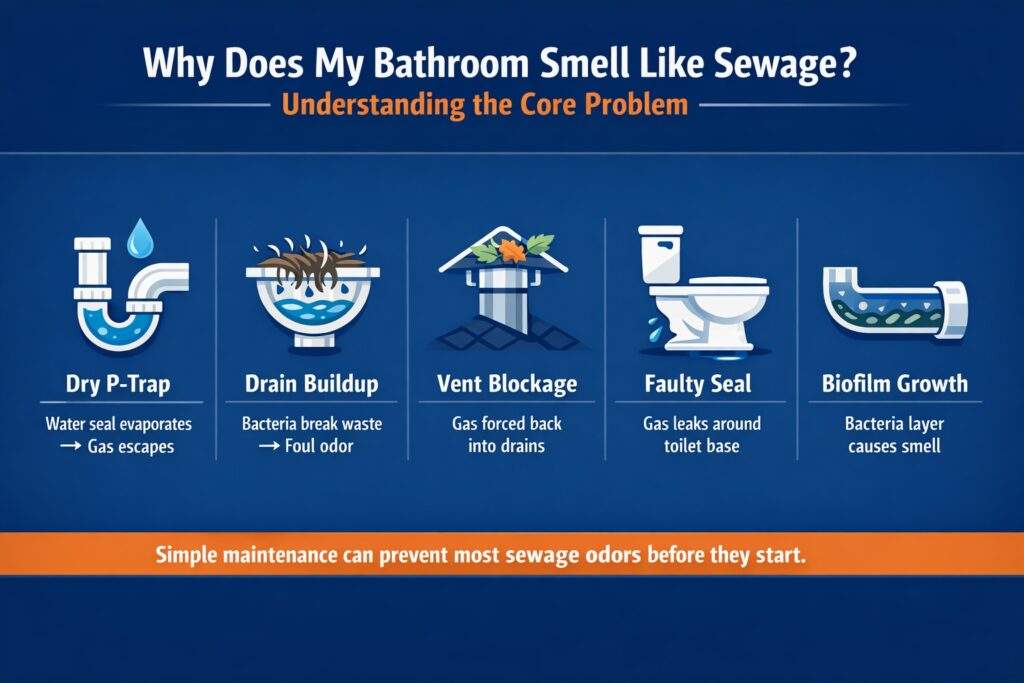
Sewer gas is a mix of methane, ammonia, hydrogen sulfide, and other compounds produced by decomposing waste. Your plumbing system is designed to keep these gases contained and vented safely outside. When that system fails—through a dried-out trap, a crack, or a blockage—gases find their way into your living space.
The smell is often strongest near drains, toilets, or floor grates. You might notice it after returning from a holiday, during Sydney’s hot, humid summer months, or when a particular fixture hasn’t been used in weeks.
Pinpointing the source requires a methodical check of traps, seals, vents, and drain lines. Our plumbers use CCTV drain inspection (a camera inside your pipe) and acoustic leak detection to locate hidden faults without guesswork. We’ll explain what we find, show you the footage, and outline your options—repair, replace, or reline—with clear, upfront pricing in AUD before any work begins.
1. Dry P-Trap Allowing Sewer Gas to Escape
Every sink, shower, and floor drain has a U-shaped pipe called a P-trap. This trap holds a small pool of water that acts as a seal, blocking sewer gases from rising through the drain. When that water evaporates—because the fixture hasn’t been used, or because of a slow leak—the seal breaks and gases flow freely into your bathroom.
Dry traps are common in guest bathrooms, laundry tubs, or floor drains that sit unused for weeks. Sydney’s hot, dry spells accelerate evaporation, especially in poorly ventilated spaces or holiday homes on the coast.
How to Check and Fix a Dry P-Trap
- Run water for 30 seconds in every drain, including floor grates and guest showers, to refill the trap.
- Listen for gurgling as water drains—this can indicate a venting issue or partial blockage.
- Inspect under the sink for leaks or cracks in the trap that might be draining water slowly.
- Pour a small amount of cooking oil into rarely used drains to slow evaporation (a temporary fix).
- Call a licensed plumber if the smell returns quickly—there may be a hidden leak or faulty trap seal.
We see dry traps often in strata buildings and heritage homes across Sydney’s Inner West and North Shore. Our licensed team can replace cracked traps, install deeper models, or add trap primers (automatic water feeders) for drains that go unused for long periods. All work meets AS/NZS 3500 plumbing standards, and we clean up thoroughly before we leave. heritage homes across Sydney’s Inner West and North Shore. Our team can replace cracked traps, install deeper models, or add trap primers (automatic water feeders) for drains that go unused for long periods. All work meets AS/NZS 3500 plumbing standards, and we clean up thoroughly before we leave.
2. Clogged Drains Breeding Bacteria and Odor

Hair, soap scum, toothpaste, and skin oils accumulate inside drain pipes over time. This sticky buildup traps organic matter, creating a breeding ground for bacteria. As bacteria break down the debris, they release hydrogen sulfide—the gas responsible for that rotten-egg smell.
Clogs also slow drainage, allowing water to pool in the pipe. Stagnant water amplifies odour and can lead to complete blockages if left untreated.
You might notice the smell worsening after showers or when running hot water, which stirs up the biofilm and releases more gas. Partial clogs often gurgle or drain slowly, giving you an early warning before a full backup occurs.
3. Blocked Vent Pipes Forcing Gases Indoors
Your plumbing system relies on vent pipes to release sewer gases safely above your roofline. These vents also allow air into the drain lines, preventing vacuum conditions that can suck water out of P-traps. When a vent becomes blocked—by leaves, bird nests, or debris—gases have nowhere to go and are forced back through your drains.
Blocked vents often cause multiple symptoms: slow drains throughout the house, gurgling toilets, and intermittent sewage smells. You might hear bubbling sounds when you flush or run water, a sign that air is struggling to enter the system.
| Symptom | Likely Cause | Quick Check |
|---|---|---|
| Gurgling toilet when shower drains | Blocked vent or partial drain clog | Run water in other fixtures; listen for bubbles |
| Slow drainage in multiple fixtures | Main vent blockage or sewer line issue | Check roof vent for visible debris |
| Sewage smell after heavy rain | Water pooling in vent stack or damaged flashing | Inspect roof penetrations for leaks |
Vent blockages are tricky to diagnose from ground level. Our plumbers can access your roof safely, clear obstructions, and install vent guards to prevent future problems. If the vent pipe is cracked or poorly installed, we’ll replace it to Australian Standards and provide a compliance report. Note that in NSW, any plumbing work connecting to or affecting the sewer system must be carried out by a licensed plumber and, where required, notified to Sydney Water under the Plumbing and Drainage Act 2011—DIY work on shared vent stacks or sewer connections can breach these regulations. We serve the Northern Beaches, Hills District, and Western Sydney with the same commitment to safety and transparency.
4. Broken Toilet Seal or Leaking Wax Ring

The seal between your toilet base and the drain pipe is critical. A wax ring (commonly called a pan connector seal in Australia, or a rubber gasket in modern installations) creates an airtight barrier, preventing sewer gas from escaping around the toilet. Over time, this seal can dry out, crack, or shift—especially if the toilet rocks or wasn’t installed level.
A failing seal often produces a smell near the toilet base, sometimes accompanied by water stains or discolouration on the floor. You might feel the toilet move slightly when you sit, a sign that the bolts have loosened or the flange is damaged.
Ignoring a broken seal can lead to water damage, mould growth, and structural issues in timber floors. The fix is straightforward but requires proper technique to avoid leaks.
Signs Your Toilet Seal Has Failed
- Persistent sewage odour near the base, even after cleaning
- Water pooling around the toilet after flushing
- Toilet wobbles or feels unstable when you sit
- Stains or soft spots on the floor near the toilet
- Visible cracks in the pan connector seal (if you lift the toilet)
We replace toilet seals and pan connectors as part of our toilet repair service. Our licensed plumbers will check the flange condition, level the toilet, and test for leaks before leaving. If the flange is cracked or corroded, we’ll repair or replace it to prevent future issues. All work is backed by our lifetime labour warranty and complies with AS/NZS 3500, and we’ll explain every step in plain English.s before leaving. If the flange is cracked or corroded, we’ll repair or replace it to prevent future issues. All work is backed by our lifetime labour warranty, and we’ll explain every step in plain English.
5. Biofilm Buildup in Shower Drains and Overflow Channels
Shower drains and overflow channels are magnets for biofilm—a slimy layer of bacteria, oils, and organic matter. This film clings to pipe walls and releases a persistent sewage-like odour, especially when disturbed by hot water. Unlike a simple clog, biofilm can coat the entire length of a drain line, making it hard to eliminate with DIY methods.
Overflow channels in bathtubs and vanity basins are often overlooked during cleaning. Water sits in these channels, allowing bacteria to thrive and odours to build. You might smell it when you lean over the basin or run a bath.
Biofilm also reduces pipe diameter over time, slowing drainage and increasing the risk of blockages. Regular maintenance prevents buildup and keeps your drains flowing freely.
Preventing Bathroom Sewage Smells: Simple Maintenance Tips

Preventing bathroom smells starts with consistent care and a few practical plumbing habits. Small maintenance tasks can help keep drains flowing properly, preserve water seals, and reduce the chance of odours building up inside your home. With regular attention, homeowners can avoid many of the common causes of unpleasant bathroom smells before they turn into larger plumbing issues—and larger AUD repair bills.
- Run water in every drain at least once a week: This keeps P-traps sealed and prevents water from evaporating in less-used bathrooms, floor drains, and laundry tubs.
- Use drain covers and clean them weekly: Drain covers help catch hair, soap residue, and debris before they enter the pipe and create blockages.
- Flush drains monthly with hot water and bicarb soda: This can help break down grease, residue, and biofilm that may contribute to bad smells over time.
- Avoid pouring fats, oils, or coffee grounds down the sink: These materials can harden inside pipes and increase the risk of slow drainage and blockages.
- Address slow drains and gurgling sounds early: These warning signs often indicate developing clogs or venting problems that are easier to fix before they worsen.
- Inspect roof vents once or twice a year: Check for leaves, debris, cracks, or damage that may interfere with proper sewer gas ventilation.
- Consider periodic CCTV drain inspections for older homes: This is especially useful for properties with clay pipes or mature trees, where root intrusion can develop gradually, common in older Sydney suburbs.
These simple maintenance habits can go a long way in keeping your bathroom fresh and your plumbing system in better condition. They also help reduce the likelihood of hidden blockages, dried traps, and venting issues that often cause persistent sewer odours. When smells keep returning despite regular upkeep, a professional plumbing inspection is usually the best next step.
When to Call a Licensed Plumber for Sewage Smells
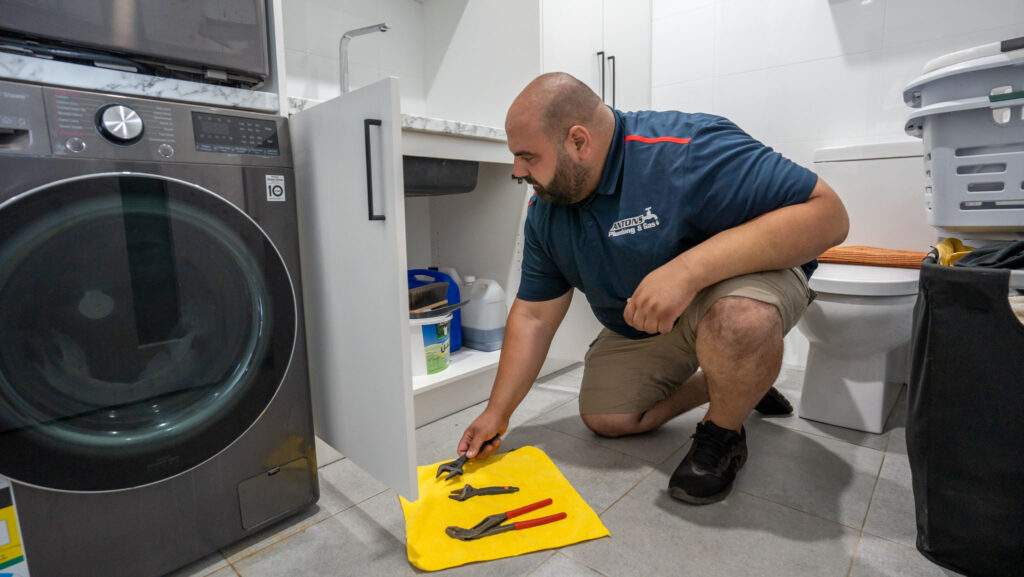
Some odour problems are easy to fix yourself—refilling a dry trap or cleaning a drain cover takes minutes. But persistent smells, multiple affected fixtures, or visible leaks require professional diagnosis. Sewer gas exposure can cause headaches, nausea, and respiratory irritation, so don’t delay if the problem worsens. In NSW, any work involving the sewer connection or shared strata drainage legally requires a licensed plumber—Anton’s Plumbing & Gas holds NSW Licence 210933C, so all repairs meet Sydney Water and AS/NZS 3500 compliance requirements.
Our team uses CCTV drain inspection to pinpoint blockages, cracks, and root intrusion without digging. We can detect leaks behind walls using acoustic equipment and thermal imaging, saving you time and repair costs. Every job is completed to AS/NZS 3500 standards, with clear documentation and a lifetime labour warranty on our workmanship.
We serve homeowners, strata managers, and businesses across the Inner West, Eastern Suburbs, Sutherland Shire, and beyond. Whether you need a quick seal replacement or a full drain reline, we’ll explain your options, provide upfront pricing in AUD, and finish the job cleanly. Call 0493 824 176 anytime—24/7 emergency response across Sydney, no call-out fee, and same-day service when you need it most.
Conclusion
Sewage smells are fixable when you know where to look. Check traps, seals, vents, and drains—or let our licensed Sydney plumbers handle it for you. We’ll find the cause, explain your options in plain English, and restore fresh air to your bathroom, backed by clear AUD pricing and a lifetime warranty.
Anton’s Plumbing & Gas (NSW Lic. 210933C) specialises in blocked drains and CCTV inspections to eliminate sewer odours fast. Our licensed team serves all Sydney Metro with same-day service, fully compliant with Sydney Water and NSW plumbing regulations. Get started today.
Related Articles
- 5 Common Causes When Your Toilet Smells Like Sewage
- What to Do If Your Toilet Smells Like Sewer: Essential Tips
FAQs
Why Does My Bathroom Smell Like Sewage?
A bathroom can smell like sewage because of dry drain traps, blocked drains, faulty toilet seals, bacteria buildup, or poor plumbing ventilation. Many homeowners first notice it after flushing, showering, or when a bathroom has not been used for a while. Anton’s Plumbing & Gas can inspect the drains, toilet, and venting to find where the smell is coming from.
How Do I Get Rid Of A Sewage Smell In My Bathroom?
Start by running water through all bathroom drains to refill any dry traps, especially in floor wastes, showers, or basins that are not used often. You can also clean visible drain buildup and check around the toilet base for leaks or movement. If the smell keeps coming back, Anton’s Plumbing & Gas can check for blocked drains, faulty seals, or venting problems.
Should I Be Worried About A Sewage Smell In The Bathroom?
Yes, you should take a sewage smell seriously if it is strong, constant, or comes with slow drains, gurgling sounds, or water backing up. The odour may indicate sewer gases, a blocked drain, a broken seal, or another plumbing issue that needs proper attention. A licensed plumber can inspect the issue safely and help stop the smell from returning.
Can A Blocked Bathroom Drain Cause A Sewage Smell?
Yes, a blocked drain can cause a sewage smell when hair, soap scum, waste, and bacteria sit inside the pipe instead of flowing away. You may also notice slow drainage, gurgling, or water pooling near the shower, basin, or floor drain. Anton’s Plumbing & Gas can clear the blockage and check whether the smell is isolated or part of a larger drainage problem.
Why Does My Bathroom Smell Like Sewage After I Flush The Toilet?
If the smell appears after flushing, the issue may be a faulty toilet pan connector seal, a blocked vent, or a drainage problem that is pushing sewer gases back into the bathroom. It can also happen if the toilet is loose, leaking at the base, or not flushing waste away properly. Anton’s Plumbing & Gas can inspect the toilet and plumbing system to find the cause and fix it safely.
Do I Need A Licensed Plumber To Fix A Sewage Smell In Sydney?
Yes. Under NSW law, any plumbing work connected to your sewer or drainage system must be carried out by a licensed plumber. Anton’s Plumbing & Gas holds NSW Licence 210933C and completes all repairs to AS/NZS 3500 standards, so you can be confident the job is compliant and covered by warranty.
How Quickly Can Anton’s Plumbing & Gas Attend A Sewage Smell Call-Out In Sydney?
We offer 24/7 emergency response across Sydney Metro and same-day service in most areas when you call before midday. Simply call 0493 824 176 and we’ll arrange a time that suits you.
Do You Charge A Call-Out Fee To Inspect A Sewage Smell?
No, we don’t charge a call-out fee. We’ll assess the issue, explain what’s causing the smell, and give you upfront pricing in AUD before any work starts.
What Suburbs Do You Service For Bathroom Sewage Smell Repairs?
We service the greater Sydney Metro area, including the Inner West, Eastern Suburbs, North Shore, Northern Beaches, Hills District, Western Sydney, and the Sutherland Shire. If you’re unsure whether we cover your suburb, give us a call.
Can You Fix A Sewage Smell In A Strata Or Apartment Building?
Yes, we regularly work with strata managers across Sydney to diagnose and repair sewage odour issues in shared plumbing systems, vent stacks, and common area drains, in line with strata and Sydney Water requirements.
How Much Does It Cost To Fix A Sewage Smell In A Sydney Bathroom?
Cost depends on the cause—whether it’s a simple trap refill, a seal replacement, or a drain reline. We provide a clear, upfront quote in AUD after inspecting the issue, so there are no surprises.
Do You Provide CCTV Drain Inspections Before Quoting?
Yes, we use CCTV drain inspection to locate blockages, cracks, or root intrusion before recommending a fix, so you know exactly what you’re paying for.
Is There A Warranty On Sewage Smell Repairs?
Yes, all our workmanship is backed by a lifetime labour warranty, giving you peace of mind that the repair is done right the first time.
Can A Sewage Smell Mean There’s A Problem With The Sydney Water Sewer Main?
It’s possible, especially if multiple properties or fixtures are affected. Our plumbers can determine whether the issue is within your property’s plumbing or related to the Sydney Water sewer main, and advise on next steps.
Do You Offer Emergency Plumbing For Sewage Smells Outside Business Hours?
Yes, we provide 24/7 emergency plumbing across Sydney, including evenings, weekends, and public holidays, with no call-out fee.
Will You Explain What’s Causing The Smell Before Starting Repairs?
Absolutely. We’ll show you any CCTV footage, explain the cause in plain English, and outline your repair options and pricing before any work begins.
How Do I Book A Plumber For A Sewage Smell Inspection In Sydney?
You can call us on 0493 824 176 or book online through our website. We’ll arrange a same-day or next-available appointment depending on urgency.
Can You Fix Both The Smell And Any Underlying Blocked Drain In One Visit?
In most cases, yes. Our plumbers arrive equipped to diagnose and repair common causes—dry traps, blockages, faulty seals, and vent issues—in a single visit.
Are Your Plumbers Fully Licensed And Insured In NSW?
Yes, Anton’s Plumbing & Gas operates under NSW Licence 210933C and is fully insured, so all work is compliant, documented, and covered.
What Should I Do Right Now If My Bathroom Smells Like Sewage?
Run water in all drains to refill any dry traps and check around your toilet base for movement or leaks. If the smell persists, call Anton’s Plumbing & Gas on 0493 824 176 for a same-day inspection and upfront quote.