


You press the flush button and nothing happens. The bowl isn’t clogged, but the toilet won’t flush properly or won’t flush at all. This frustrating problem usually points to an issue inside the toilet tank (cistern), not the drain itself. Most causes are simple to diagnose and fix yourself, though some situations call for a licensed plumber to ensure everything meets Australian Standards and works safely for years to come.
This guide walks you through the most common reasons your toilet won’t flush but not clogged, with step-by-step fixes you can try today. You’ll also learn when to call our team for same-day service across Sydney, backed by 25+ years of experience and a lifetime labour warranty on every repair.
Key Takeaways
- If simple fixes don’t restore normal flushing, our licensed Sydney plumbers (NSW Lic. 210933C) offer same-day diagnosis and fixed-rate repairs with no call-out fee.
- A toilet that won’t flush but isn’t clogged usually has a problem inside the cistern, such as a faulty flapper, broken chain, or low water level.
- Check the water level in the tank first; it should sit about 2.5 cm below the overflow tube.
- Inspect the flapper and chain for wear, misalignment, or slack that prevents a full flush.
- Flush button mechanisms can break or disconnect, stopping the chain from lifting the flapper.
Understanding Your Toilet’s Flush Mechanism

Understanding how your toilet’s flush mechanism works makes it easier to spot problems early and explain the issue clearly when calling a plumber. Most Australian toilets use a gravity-flush system, where pressing the button or handle lifts the flapper and releases water from the cistern into the bowl. As the tank empties, the flapper closes, the fill valve opens, and the cistern refills so the toilet is ready for the next flush.
| Component | Role | Common Issue |
|---|---|---|
| Fill valve | Controls water flow into the tank and shuts off when the float reaches the correct level. | A faulty fill valve can cause constant running water or slow tank refills. |
| Flapper | Seals the flush valve at the bottom of the tank and lifts during flushing to release water. | Wear, warping, or misalignment can stop it from sealing properly. |
| Flush lever or button | Activates the flushing process through internal linkages. | Plastic parts or linkages can break, especially in dual-flush toilets. |
| Overflow tube | Prevents the tank from overflowing by directing excess water into the bowl. | Constant water flow into the tube usually means the fill valve is not shutting off properly. |
| Float | Rises with the water level and tells the fill valve when to stop filling. | Incorrect float height can lead to weak flushing or low water levels. |
Dual-flush toilets work in a similar way but include a half-flush and full-flush option for better water efficiency. These systems have extra internal parts, which can make them more prone to wear or adjustment issues over time. Even so, they help reduce water use and support WELS efficiency standards required for many new toilet installations in NSW. In Sydney, Sydney Water also encourages water-efficient fixtures to reduce demand on the local network, and any significant alteration to your water supply or drainage connection should be carried out by a licensed plumber so it meets Sydney Water’s requirements.
Why Your Toilet Won’t Flush but Not Clogged
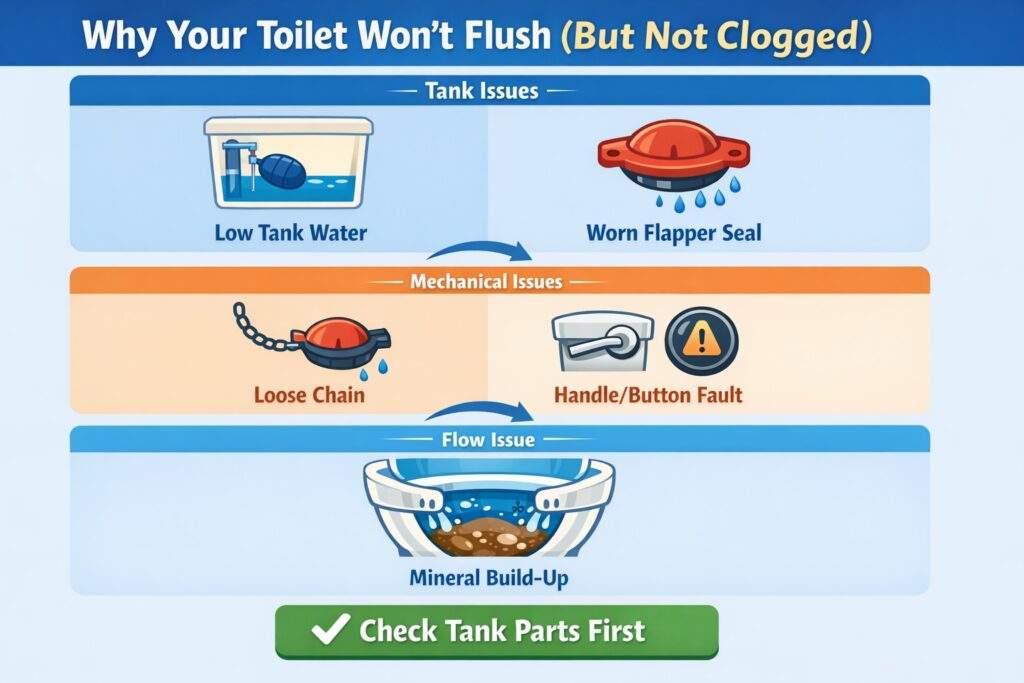
When your toilet will not flush properly even though the drain is clear, the problem usually starts inside the cistern rather than in the pipework. Several internal components must work together to release enough water into the bowl for a complete flush. Understanding these common faults can help you identify the issue faster and decide whether it is something you can fix yourself or a job for a plumber.
Low Water Level in the Cistern
A toilet needs enough water stored in the cistern to create the pressure required for a proper flush. If the water level is too low, the toilet may only release a weak flow into the bowl, which is often not enough to clear waste effectively. This issue commonly happens when the float is set too low, the fill valve is not refilling properly, or a small leak is causing the tank to lose water between flushes.
Start by removing the cistern lid and checking where the water sits compared to the overflow tube. In most cases, the waterline should be around 2.5 cm below the top of the overflow tube. If it is noticeably lower, you may need to adjust the float arm or fill valve so the tank refills to the proper height after each flush.
Faulty or Worn Flapper
The flapper is the rubber seal at the bottom of the tank that lifts when you flush and allows water to rush into the bowl. If the flapper becomes worn, warped, cracked, or stiff, it may not open properly or may close too early, reducing the strength of the flush. It can also fail to seal completely, which causes water to leak slowly into the bowl and prevents the tank from filling fully.
Inspect the flapper closely for visible wear, cracks, or mineral residue. If it no longer sits flat or feels hardened, replacement is usually the best solution. This is one of the most common toilet flush issues and is generally a simple and low-cost repair using a compatible replacement part.
Broken or Slack Flapper Chain
The chain links the flush button or handle to the flapper, allowing the flushing action to lift the seal and release water. If the chain is too loose, it may not pull the flapper high enough for a full flush. If it is too tight, the flapper may not close properly afterward, which can lead to constant leaking and poor refill performance.
Check whether the chain is still connected securely at both ends and whether it has a small amount of slack when the flapper is closed. A properly adjusted chain should move freely without tangling or hanging too loose. If it has snapped, corroded, or become badly misaligned, replacing or repositioning it can often restore normal flushing very quickly.
Flush Button or Handle Malfunction
The flush button or handle is the part you use every day, so it naturally wears down over time. In dual-flush toilets, the internal button assembly may crack, stick, or fail to push the lifting mechanism properly. In traditional handle toilets, the handle may loosen, stop catching, or turn without enough resistance to activate the flush.
To check this, remove the cistern lid and observe what happens inside when you press the button or handle. If the internal parts do not move correctly, the problem is likely in the linkage or mounting assembly. Tightening loose hardware may solve the issue, but damaged plastic or worn internal parts usually need to be replaced for the toilet to flush reliably again.
Mineral Build-Up in Rim Jets or Siphon Jet
Mineral deposits can build up over time in the small rim jets under the toilet bowl edge and in the siphon jet near the bottom of the bowl. When these openings become partially blocked, the toilet may still release water, but the flow into the bowl becomes weak and uneven. This reduces flushing power and can make it seem like the toilet is blocked when the actual problem is restricted water delivery.
You can inspect the rim jets using a small mirror and look for white, brown, or chalky deposits. Vinegar can help loosen mild build-up, while gentle cleaning with a thin tool can clear stubborn blockages. Keeping these jets clean helps restore the strong, even water flow needed for a proper flush.
Many toilet flushing problems that are not caused by clogs can be traced back to simple wear, incorrect adjustments, or mineral build-up inside the cistern or bowl. Catching these issues early can save water, prevent frustration, and reduce the risk of a complete toilet failure. If the problem keeps returning or you are unsure which part has failed, a licensed plumber can diagnose the fault and carry out a proper long-term fix.
How to Fix a Toilet That Won’t Flush but Isn’t Clogged

Once you’ve identified the likely cause, follow these step-by-step instructions to restore normal flushing. Most repairs require only a screwdriver, a pair of pliers, and replacement parts from your local hardware store. Always turn off the water supply at the isolation valve before starting work, and place a towel under the tank to catch any spills.
1. Adjust the Water Level in the Tank
Locate the fill valve on the left side of the tank. If it’s a float-cup style, pinch the clip and slide the float up to raise the water level. For older ball-float valves, gently bend the metal arm downward. Flush the toilet and watch the tank refill; the waterline should stop about 2.5 cm below the overflow tube. If the water still runs or the level remains low, the fill valve may need replacement.
2. Replace a Worn or Damaged Flapper
Turn off the water and flush to empty the tank. Unhook the flapper chain from the flush lever, then slide the flapper ears off the pegs on the overflow tube. Take the old flapper to the hardware store to match the size and style. Install the new flapper by reversing the steps, ensuring it sits flat and seals completely. Reconnect the chain with about 1 cm of slack, turn the water back on, and test the flush.
3. Adjust or Replace the Flapper Chain
If the chain is too long, move it to a hole closer to the end of the flush lever arm. If it’s too short, add a few links or replace it with a longer chain. The flapper should lift fully when you press the button and drop back into place without the chain getting caught underneath. A properly adjusted chain makes a noticeable difference in flush strength and prevents running toilets.
4. Repair or Replace the Flush Button or Handle
For a broken button, unscrew the top cap (usually a quarter-turn) and lift out the button assembly. Check for cracked plastic or a disconnected rod. Replacement button kits are model-specific, so note your toilet brand before shopping. For a loose handle, tighten the locknut inside the tank (it’s reverse-threaded, so turn it anticlockwise to tighten). If the handle arm is cracked, replace the entire unit.
5. Clean Mineral Deposits from Rim Jets and Siphon Jet
Pour one cup of white vinegar into the overflow tube and let it sit for an hour. This dissolves calcium and lime without harsh chemicals. Use a small piece of wire to poke through each rim jet, then flush to rinse. For the siphon jet at the bottom of the bowl, use a hand mirror to locate it, then clear it with a wire coat hanger or Allen key. Regular cleaning every six months prevents build-up and keeps your flush strong.
6. Inspect and Clear the Overflow Tube
If water constantly runs into the overflow tube, the fill valve isn’t shutting off. This wastes water and prevents the tank from filling properly. Adjust the float as described in step one, or replace the fill valve if adjustment doesn’t stop the flow. A running toilet can waste hundreds of litres per day, so fixing this issue quickly saves water and helps keep your Sydney Water bill down.
7. Check for Cracks in the Tank or Bowl
Hairline cracks can leak water slowly, lowering the tank level and weakening the flush. Dry the outside of the tank and bowl, then inspect for wet spots or drips. If you find a crack, the toilet usually needs replacement, as repairs are temporary and can fail suddenly. Our team can supply and install a new toilet suite the same day, with models that meet WELS water-efficiency standards and suit Sydney’s water pressure.
If you’re unsure at any stage, or if the problem persists after trying these fixes, our licensed Sydney plumbers are available 24/7 with no call-out fee. We diagnose the root cause, present clear options, and complete repairs to Australian Standards, leaving your bathroom clean and your toilet working perfectly.
When to Call a Licensed Sydney Plumber for Toilet Flush Problems

Some flush issues point to deeper problems that need professional diagnosis and repair. If you’ve tried the fixes above and your toilet still won’t flush properly, or if you notice any of the warning signs below, it’s time to call our team. We arrive the same day across Sydney, diagnose the root cause with clear explanations, and offer fixed-rate repairs with no hidden fees.
You should contact a licensed plumber if the toilet won’t flush after plunging and you’ve ruled out a blockage, if the flush button not working persists after replacing the mechanism, if the toilet tank empty won’t flush even when the water supply is on, or if you see water pooling around the base of the toilet. These symptoms can indicate a faulty fill valve, a cracked internal component, or a problem with your home’s water pressure or supply line. When you call, ask to see the plumber’s licence — ours is NSW Lic. 210933C — to make sure any work on your cistern or water supply meets NSW Fair Trading and Sydney Water requirements.
Our licensed plumbers carry diagnostic tools, replacement parts from trusted brands, and the experience to solve even unusual flush problems on the spot. We work to AS/NZS 3500 plumbing standards, provide clear before-and-after explanations, and back every repair with a lifetime labour warranty. If your toilet needs replacement, we’ll walk you through water-efficient models, installation timelines, and upfront pricing in AUD so you can make an informed decision.
Why Choose Our Team for Toilet Repairs in Sydney

When a quick fix doesn’t solve the problem, or you’d rather have a licensed professional handle the repair from the start, our team is ready to help. We’ve spent 25+ years diagnosing and fixing every type of toilet issue across Sydney, from heritage homes in the Inner West to modern apartments on the North Shore. Every job is completed to Australian Standards, with clear communication, fixed-rate pricing in AUD, and a lifetime labour warranty that gives you confidence long after we leave.
We carry common cistern parts, flush mechanisms, and fill valves on every service van, so most repairs are completed the same day without a return visit. If your toilet needs replacement, we’ll explain your options, help you choose a WELS-rated model that suits your water pressure and budget, and install it neatly with all waste removed. Our plumbers are licensed under NSW Fair Trading (Lic: 210933C), insured, and trained in the latest Australian plumbing standards, so you can trust the work will last.
You might be wondering whether it’s worth calling a plumber for something as simple as a toilet flush. The answer depends on your comfort with DIY repairs and the complexity of the fault. If you’ve checked the flapper, chain, and water level without success, or if you notice leaks, cracks, or persistent running water, professional diagnosis saves time and prevents water damage. We offer same-day service across the Sydney Metro, 24/7 emergency response, and no call-out fee, so there’s no penalty for getting expert help when you need it.
Conclusion
A toilet that won’t flush but isn’t clogged usually points to a fixable issue inside the cistern. Check the water level, inspect the flapper and chain, and clean any mineral build-up before calling for help. When DIY fixes don’t work or you’d prefer professional peace of mind, our licensed Sydney plumbers are ready with same-day service, fixed-rate pricing in AUD, and a lifetime labour warranty. Call 0493 824 176 anytime or book online for fast, reliable toilet repairs across Sydney.
Antons Plumbing & Gas specialises in toilet repairs across Sydney with 25 years of trusted experience. Our licensed plumbers (NSW Lic. 210933C) diagnose flushing issues fast, even when there’s no blockage. Get started with same-day service today.
Related Articles
- How to Fix a Toilet That Won’t Flush Without Professional Tools
- What to Do If Your Toilet Doesn’t Flush: Simple Solutions
- How to Empty a Toilet Bowl Before Repairs or Cleaning
FAQs
Why Won’t My Toilet Flush If It Does Not Seem Clogged?
If your toilet will not flush but there is no obvious clog, the problem is often inside the tank rather than the bowl. Common causes include low tank water, a loose handle, a broken chain, a faulty flapper, or a fill valve that is not working properly. Antons Plumbing & Gas can check the toilet parts and confirm whether it needs a simple adjustment or a repair.
What Should I Check First When My Toilet Will Not Flush?
Start by lifting the tank lid and checking whether there is enough water in the tank. Then check if the flush handle, chain, and flapper move when you press the handle. If the tank looks full but the toilet still will not flush properly, a plumber can inspect the internal parts and replace anything worn or faulty.
Why Does My Toilet Handle Move But Nothing Happens?
If the toilet handle moves but nothing happens, the chain may have come loose, snapped, or become too slack to lift the flapper. This is a common issue and can stop water from moving from the tank into the bowl. If reconnecting or adjusting the chain does not fix it, Antons Plumbing & Gas can repair the flush mechanism properly.
How Can I Fix A Toilet That Won’t Flush?
To fix a toilet that won’t flush, start by checking the water level in the tank and adjusting the float if necessary. Inspect the flapper for wear or damage and replace it if needed. Ensure the chain connecting the handle and flapper is not tangled or too loose. If these steps do not resolve the issue, it’s best to consult a qualified plumber for further assistance.
Could A Faulty Flapper Cause A Toilet Not To Flush?
Yes, a faulty flapper is one of the most common causes of a toilet not flushing. If the flapper is worn out or not sealing properly, it can prevent the tank from releasing enough water to initiate a flush. Our team has over 25 years of experience in diagnosing and fixing such plumbing issues efficiently.
How Much Does It Cost To Fix A Toilet That Won’t Flush In Sydney?
Costs vary depending on the parts needed and the extent of the repair, but we always provide a fixed-rate quote in AUD before any work begins, so there are no surprises on your invoice. Call us on 0493 824 176 for an obligation-free quote and same-day service across Sydney.
Do You Charge A Call-Out Fee For Toilet Repairs?
No, Antons Plumbing & Gas doesn’t charge a call-out fee. Our licensed Sydney plumbers assess the problem, quote a fixed price, and only proceed once you’re happy with the cost.
How Quickly Can You Send A Plumber To Fix My Toilet?
We offer same-day service across Sydney and 24/7 emergency response, so in most cases we can have a licensed plumber at your door the same day you call.
Are Your Plumbers Licensed To Work In NSW?
Yes, Antons Plumbing & Gas is fully licensed with NSW Fair Trading (NSW Lic. 210933C) and insured, so every toilet repair meets Australian Standards and NSW regulations.
Do You Offer A Warranty On Toilet Repairs?
Every repair we carry out, including flapper, chain, and fill valve replacements, is backed by a lifetime labour warranty, giving you peace of mind long after we leave.
Can You Replace My Toilet With A Water-Efficient Model?
Yes, we supply and install WELS-rated toilet suites suited to Sydney’s water pressure and your household’s needs, and can usually complete the swap the same day.
Do You Service Apartments And Strata Buildings In Sydney?
Yes, we regularly work on toilets in units, apartments, and strata-managed buildings across Sydney, and can liaise with building managers where required.
What Areas Of Sydney Do You Cover For Toilet Repairs?
We service the greater Sydney Metro area, including the Inner West, North Shore, Eastern Suburbs, and Northern Beaches. Check our suburb pages, such as Ryde or Mosman, or call to confirm coverage for your address.
What Happens If My Toilet Turns Out To Need A Full Replacement?
If our plumber finds cracks or damage beyond repair, we’ll explain your options on the spot, quote a fixed price in AUD for a new WELS-rated toilet suite, and install it the same visit wherever possible.
Can I Book A Same-Day Toilet Repair Online?
Yes, you can book online through our website or call 0493 824 176 directly, and our team will confirm a same-day appointment across Sydney.
Do You Provide Emergency Toilet Repairs On Weekends And Public Holidays?
Yes, our licensed plumbers are available 24/7, including weekends and public holidays, for urgent toilet and flushing problems.
Will A Plumber Explain The Cost Before Starting Work?
Always. We diagnose the fault first, then provide a fixed-rate quote before any repair begins, so you know the cost upfront with no hidden fees.
Is It Worth Calling A Plumber For A Toilet That Just Won’t Flush Properly?
If you’ve checked the water level, flapper, and chain without success, calling a licensed plumber saves time and prevents the issue from turning into a bigger repair, especially if there’s an underlying leak or cracked component.
Do You Work On Both Older And Newer Toilet Models?
Yes, our plumbers regularly service traditional handle toilets in heritage homes as well as modern dual-flush systems in newer builds, so we carry a wide range of compatible parts.
How Do I Get A Fixed-Rate Quote For My Toilet Repair?
Simply call 0493 824 176 or book online, describe the issue, and one of our licensed Sydney plumbers will provide a fixed-rate quote before attending, with no call-out fee.
What Should I Do While Waiting For A Plumber If My Toilet Won’t Flush?
Turn off the water at the isolation valve if you suspect a leak, avoid repeated plunging if there’s no blockage, and note any warning signs like pooling water so you can describe them to our plumber for a faster diagnosis.