


A toilet that won’t flush properly can throw out your whole household routine, especially in a busy Sydney home first thing in the morning. Before you get on the phone to a plumber, there are a few straightforward checks you can do yourself with things you’ve likely already got in the laundry or garage. Most flushing problems in Sydney homes come down to blockages, low cistern water levels, or worn internal parts – all of which are easier to diagnose and repair than you’d think, whether you’re in a Bondi terrace or a Parramatta townhouse.
This guide walks you through the most common reasons it happens and shows you how to fix a toilet that won’t flush without professional tools. You’ll learn how to clear clogs, adjust your cistern water level, replace a faulty outlet valve (often called a flapper), and clean blocked rim jets – all in plain language with step-by-step instructions. Note that most modern Sydney bathrooms use dual-flush cisterns rather than the older single-flush, flapper-style systems common overseas, so we’ve flagged where the approach differs.
Key Takeaways
- A clogged trap or drain is the most common reason a toilet won’t flush properly, and a flange plunger can often clear it.
- Low water level in the cistern prevents a strong flush, so check that the water sits about 2.5cm (one inch) below the overflow tube.
- A worn or misaligned flapper (outlet valve seal) allows water to leak from the cistern, reducing flush power.
- Blocked rim jets and siphon jet holes restrict water flow into the bowl, weakening the flush.
- Sydney’s water is comparatively soft, so mineral scale builds up more slowly than in hard-water areas, but it can still occur, especially in older cisterns or homes on tank/bore supply.
- Any work on the water supply or drainage connection to the Sydney Water network should be carried out or checked by a licensed plumber.
- If DIY fixes don’t solve the problem, call Antons Plumbing & Gas (NSW Lic. 210933C) on 0493 824 176 for same-day service across Sydney.
Why Your Toilet Won’t Flush Properly
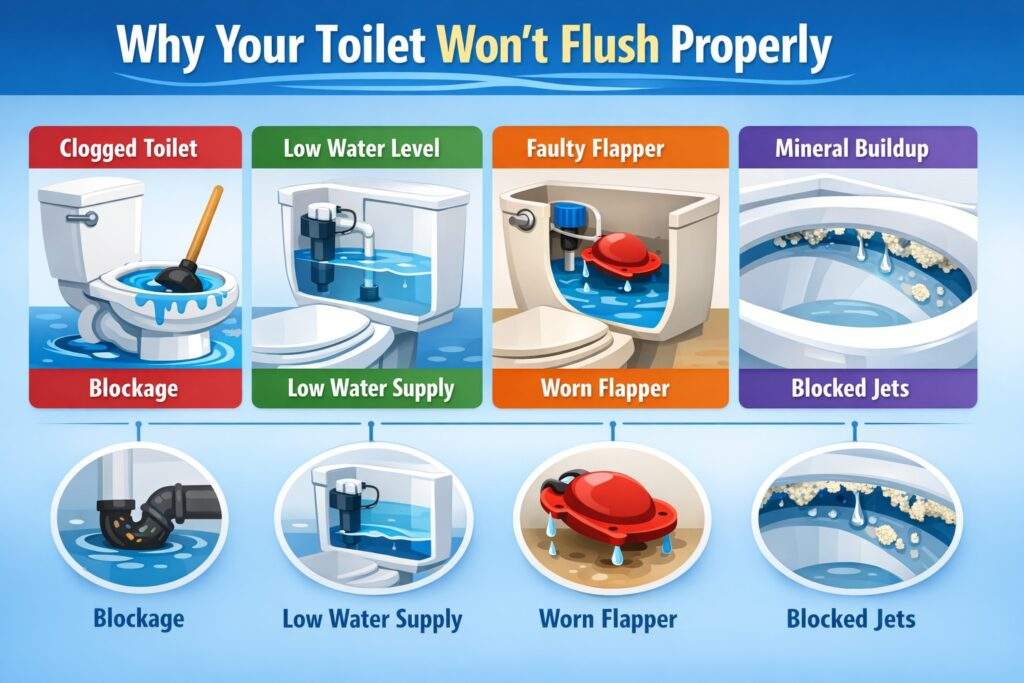
Understanding the root cause helps you choose the right fix. Most toilet flushing issues in Sydney homes fall into one of four categories: blockages, water supply problems, faulty cistern components, or mineral build-up. Each has its own set of symptoms, and once you identify which one matches your situation, the solution becomes much clearer.
Toilets rely on a precise balance of water volume, gravity, and clear pathways. When any part of that system fails, you’ll notice slow draining, incomplete flushes, or no flush at all. Here’s a quick reference, followed by a closer look at each cause.
| What You Notice | Likely Cause |
|---|---|
| Bowl fills and drains slowly, gurgling sound | Clogged trap or drain |
| Weak flush, cistern struggles to refill | Low water level in cistern |
| Cistern refills intermittently between flushes | Worn or misaligned outlet valve/flapper |
| Water trickles instead of flowing forcefully around the bowl | Blocked rim jets or siphon jet |
| Handle feels loose or doesn’t engage | Loose or tangled flush chain/linkage |
Clogged Toilet Trap or Drain
A blockage in the toilet trap is the single most common reason your toilet won’t flush. Build-up from excess toilet paper, waste, or foreign objects like wet wipes and toys can create a partial or complete obstruction. Sydney Water regularly reminds residents to keep wipes, nappies and paper towel out of the toilet, as these are a leading cause of household and network blockages. You’ll often see the bowl fill with water but drain slowly, sometimes with a gurgling sound as air tries to escape past the blockage.
If the water level rises and stays high, the clog is usually close to the trap. If it drains very slowly, the blockage may sit further down the waste pipe. Either way, this is the first thing to check when your toilet won’t flush properly.
Low Water Level in the Cistern
Your cistern needs enough water to create the force required for a full flush. If the water level sits more than 2.5cm below the top of the overflow tube, you won’t have sufficient volume. This can happen when the float valve is set too low, the fill valve is faulty, or there’s a leak inside the cistern.
A weak or incomplete flush is the telltale sign. The toilet may flush once but struggle on the second attempt because the cistern hasn’t refilled properly. Note that Australian cisterns are WELS-rated for water efficiency, so replacement fill valves and cisterns should be WaterMark-certified to remain compliant with NSW plumbing rules.
Worn or Misaligned Flapper
The flapper (or outlet valve seal) is the rubber seal at the bottom of your cistern that lifts when you press the flush button, releasing water into the bowl. Over time, rubber perishes, warps, or accumulates mineral deposits. A worn flapper allows water to leak slowly from the cistern into the bowl, so when you flush, there isn’t enough stored water to complete the job. Many newer Sydney homes use a dual-flush outlet valve rather than a traditional US-style flapper and chain, but the same wear-and-tear logic applies.
You might hear the cistern refilling intermittently between flushes, a classic sign of a leaking flapper or outlet valve. This wastes water (and adds to your Sydney Water bill) and reduces flush power.
Blocked Rim Jets and Siphon Jet
The rim jets are small holes under the rim of the toilet bowl that direct water around the bowl during a flush. The siphon jet is a larger opening at the bottom of the bowl that creates the suction needed to empty the bowl. When these holes become clogged with mineral deposits or sediment, water flow is restricted, and your flush becomes weak or incomplete.
If you notice water trickling slowly from under the rim instead of flowing forcefully, blocked jets are likely the cause. Sydney’s mains water is generally soft, so this is less common here than in hard-water regions, but it does show up more often in homes on tank or bore water, or in older properties with ageing cisterns.
How to Fix a Toilet That Won’t Flush: Step-by-Step Solutions

Now that you know the main causes, let’s move through the fixes. Each method uses household items or simple hand tools, so you won’t need a plumber’s kit to get started. Work through these steps in order, testing the flush after each one to see if the problem is resolved.
1. Clear a Clogged Toilet Trap With a Flange Plunger
A flange plunger has an extended rubber flap that fits into the toilet outlet, creating a better seal than a standard cup plunger. Place the plunger into the bowl so the flange sits snugly in the drain opening. Push down slowly to expel air, then pull up sharply to create suction. Repeat this motion ten to fifteen times with firm, controlled strokes.
If the blockage shifts, you’ll see the water level drop suddenly and hear a gurgle as air rushes through. Flush the toilet to confirm the clog is cleared. If plunging doesn’t work, the blockage may be deeper in the waste pipe, and you may need a toilet auger or professional help.
2. Use a Toilet Auger for Deeper Clogs
A toilet auger is a flexible cable with a crank handle, designed to reach blockages beyond the trap. Insert the auger into the toilet outlet and feed the cable in while turning the handle clockwise. The auger will either break up the blockage or hook onto it so you can pull it out.
Keep pushing and turning until you feel resistance give way. Withdraw the auger slowly, then flush to test. If water drains freely, the clog is gone. If the problem persists, the blockage may be in the main drain, which requires a licensed plumber with CCTV drain inspection equipment.
3. Adjust the Water Level in the Cistern
Lift the cistern lid and check the water level. It should sit about 2.5cm below the top of the overflow tube. If it’s lower, locate the float valve or fill valve adjustment screw. On older systems, you’ll see a ball float on an arm; on newer systems, a cylindrical float slides up and down a vertical rod.
To raise the water level, turn the adjustment screw clockwise or gently bend the float arm upward. Flush the toilet and watch the cistern refill. Stop adjusting once the water reaches the correct height. This simple tweak can restore full flush power without any parts replacement.
4. Replace a Worn or Leaking Flapper
Turn off the water supply at the isolation valve near the base of the toilet. Flush to empty the cistern, then unhook the old flapper from the overflow tube pegs. Take the old flapper to a hardware store to match the size and style, or buy a universal flapper kit – look for WaterMark-certified parts to stay compliant with NSW plumbing standards.
Install the new flapper by clipping it onto the pegs and attaching the chain to the flush lever. Leave a small amount of slack in the chain so the flapper can seal fully when closed. Turn the water back on, let the cistern refill, and test the flush. A new flapper should stop leaks and restore consistent flush pressure.
5. Clean Blocked Rim Jets and Siphon Jet
Pour a bucket of hot water mixed with white vinegar into the cistern and let it sit for thirty minutes to loosen mineral deposits. Use a small mirror to inspect the rim jets under the bowl rim. Take a piece of wire or an old toothbrush and gently scrape away any build-up blocking the holes.
For the siphon jet at the bottom of the bowl, use a hand mirror and a length of wire to clear the opening. Flush several times to rinse away loosened debris. If the jets are heavily clogged, you may need to repeat this process or use a commercial descaler designed for toilets.
6. Check the Flush Handle and Chain Connection
Sometimes the problem isn’t inside the cistern but with the flush mechanism itself. If the handle or button feels loose or doesn’t engage when pressed, check that the chain or linkage connecting it to the flapper or outlet valve hasn’t come loose or tangled. Adjust the chain length so there’s just enough slack for the flapper to close fully but not so much that the handle can’t lift it.
Tighten any loose nuts on the flush handle mount. A secure connection ensures the flapper lifts completely with each flush, releasing the full volume of water.
7. Inspect for Cracks or Leaks in the Cistern
Examine the inside and outside of the cistern for hairline cracks or signs of water leakage. Even a small crack can allow water to seep out, reducing the volume available for flushing. If you find a crack, the cistern will need to be replaced, as temporary sealants rarely hold under constant water pressure.
Leaks at the cistern-to-bowl gasket or around the inlet valve can also reduce water level. Tightening the bolts or replacing worn washers can stop these leaks and restore proper function.
Taking a step-by-step approach makes it easier to find the cause of the problem without rushing into unnecessary repairs. Many toilet flushing issues can be resolved with simple adjustments, cleaning, or part replacement using basic household tools. If the toilet still does not flush properly after these checks, the issue may be deeper in the plumbing system and require professional attention – and, if it involves the connection to the Sydney Water network, a licensed plumber is required by law to carry out the work.
When DIY Fixes Aren’t Enough: Recognising the Need for a Licensed Sydney Plumber

Some toilet problems can be resolved with simple home fixes, but others point to more serious plumbing issues deeper in the system. If plunging, adjusting the cistern, replacing parts, and cleaning the jets haven’t solved the problem, there may be a blockage, drainage fault, or damaged fixture involved. Knowing when to call a licensed plumber helps prevent bigger issues such as overflows, water damage, and sewage-related health risks – and keeps your home compliant with NSW Fair Trading and Sydney Water requirements.
- If multiple toilets, sinks, or drains in your home are slow or blocked, the issue may be in the main sewer line rather than the toilet itself.
- Tree roots, sediment build-up, or collapsed pipes in the main drain usually require CCTV inspection and professional clearing equipment.
- If flushing the toilet causes water to back up into the shower or basin, the problem may involve a shared drain blockage or venting fault.
- Drainage and venting issues cannot usually be fixed with household tools and should be assessed by a licensed plumber.
- Cracks in the porcelain, a loose toilet base, or water pooling around the floor can indicate that the toilet needs re-seating or replacement.
- A wobbly toilet may damage the seal underneath and allow sewer gases or leaks to escape into the bathroom.
- Any repair that involves the water supply pipework or the connection to Sydney Water’s sewer network legally requires a licensed plumber in NSW.
- Licensed plumbers can inspect the toilet, flange, drainage system, and surrounding area to identify the safest and most effective repair.
Calling a professional at the right time can prevent a small toilet issue from turning into a larger and more expensive plumbing problem. Licensed plumbers have the tools and experience to diagnose hidden faults and carry out repairs safely and correctly. For persistent flushing problems, expert help is often the fastest way to restore reliable bathroom function and protect your Sydney home.ert help is often the fastest way to restore reliable bathroom function and protect your home.
How Antons Plumbing & Gas Can Help With Toilet Repairs Across Sydney
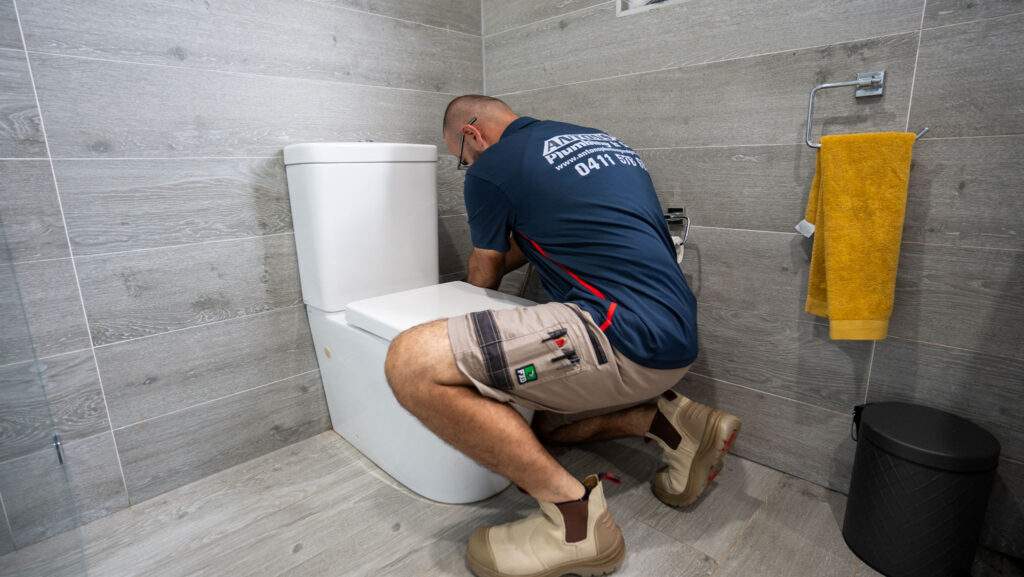
We’ve been fixing toilet flushing problems across Sydney for over 25 years. From simple blockages to complex drainage issues, our fully licensed plumbers (NSW Lic. 210933C) have the tools, training, and experience to diagnose the root cause and deliver a lasting solution in line with NSW Fair Trading requirements and the Plumbing Code of Australia. We serve the Inner West, Eastern Suburbs, North Shore, Northern Beaches, Hills District, Western and South-Western Sydney, Sutherland Shire, and beyond.
Our toilet repair services include clearing blockages with CCTV-guided equipment, replacing cistern components, reseating loose toilets, fixing leaks, and installing new toilets when repairs aren’t cost-effective. We also offer pipe relining for damaged sewer lines, backflow testing to protect your water supply in line with Sydney Water requirements, and 24/7 emergency response for urgent issues like overflows or sewage backups.
Every job is completed to NSW Fair Trading licensing requirements and relevant Australian Standards (including AS/NZS 3500). We use quality, WaterMark-certified parts from trusted brands, provide clear documentation, and back our work with a lifetime labour warranty. Whether you need a quick fix or a complete bathroom renovation, we’re here to help.
If your toilet won’t flush and DIY fixes haven’t worked, don’t wait for the problem to get worse. Call us on 0493 824 176 or book online for same-day service across Sydney. We’ll diagnose the issue, explain your options in plain English, and get your toilet working properly again, with no call-out fee and upfront pricing in AUD that you can trust.
Conclusion
Most toilet flushing problems can be fixed at home with a plunger, a few adjustments, or a replacement flapper. When DIY methods fall short, our licensed Sydney plumbers (NSW Lic. 210933C) are ready to help with same-day service and upfront pricing. Don’t let a stubborn blockage disrupt your day – call Antons Plumbing & Gas on 0493 824 176 and we’ll have your toilet flushing smoothly again.
Antons Plumbing & Gas brings 25 years of expertise to every blocked drain and toilet repair across Sydney. Our licensed team diagnoses the root cause and provides lasting solutions with upfront pricing in AUD. Contact us today to get started.
Related Articles
- How to Unclog a Toilet with a Wire Hanger Safely and Effectively
- How to Snake a Toilet with a Hanger Effectively
- Why Your Toilet Won’t Flush But Isn’t Clogged: Quick Fixes
FAQs
What Causes A Toilet To Not Flush?
A toilet may fail to flush due to several reasons, including a clogged drain line, a malfunctioning flapper or outlet valve, a broken lift chain, or insufficient water in the cistern. Our experienced team at Antons Plumbing & Gas can quickly diagnose the issue and provide effective solutions tailored to your specific situation.
How Do I Fix A Toilet That Won’t Flush But Has Water?
If your toilet has water but won’t flush, check for a malfunctioning flapper or a broken lift chain. You can try lifting the flapper manually to see if the toilet flushes. However, if the problem persists, it’s best to contact our qualified team for a thorough inspection and repair.
Can A Toilet Flush Without A Cistern?
No, a toilet requires a cistern to flush properly, as it stores the water that’s released during the flushing process. If you’re experiencing issues with a toilet that has a faulty or missing cistern, our skilled plumbers at Antons Plumbing & Gas can help you explore your options for repair or replacement.
How Do I Unclog A Toilet That Won’t Flush?
To unclog a toilet that won’t flush, you can try using a plunger to create suction and dislodge the blockage. If that doesn’t work, a toilet auger may be necessary. For persistent clogs, it’s advisable to call Antons Plumbing & Gas for professional service to ensure a thorough and safe resolution.
What To Do If The Toilet Handle Is Broken?
If your toilet handle is broken, first check if the lift chain is detached or jammed. If the handle is damaged, you may need to replace it. Our experienced team can handle such repairs efficiently, ensuring your toilet operates smoothly again in no time.
Are Antons Plumbing & Gas Plumbers Licensed In NSW?
Yes. Antons Plumbing & Gas holds NSW Lic. 210933C, and every plumber we send out is fully licensed and insured to carry out toilet repairs, drainage work, and gas fitting in line with NSW Fair Trading requirements. You can ask for our licence details before any work begins.
How Much Does It Cost To Fix A Toilet That Won’t Flush In Sydney?
Cost depends on the cause – a simple flapper replacement or cistern adjustment is far less involved than clearing a main sewer blockage. We provide upfront, obligation-free pricing in AUD before any work starts, so call us on 0493 824 176 for a quote based on your specific issue.
Do You Offer Same-Day Toilet Repairs In Sydney?
Yes, we offer same-day service across Sydney for most toilet flushing and blockage issues, including emergency call-outs for overflows or sewage backups. Book online or call 0493 824 176 to check availability in your suburb today.
Which Sydney Suburbs Do You Service For Toilet Repairs?
We cover the Inner West, Eastern Suburbs, North Shore, Northern Beaches, Hills District, Western and South-Western Sydney, and the Sutherland Shire. If you’re unsure whether we service your suburb, give us a call and we’ll confirm straight away.
Is There A Call-Out Fee For Toilet Repairs?
No, we don’t charge a call-out fee. You’ll receive upfront pricing in AUD once our plumber has assessed the issue, so there are no surprises on your invoice.
Do You Provide Emergency Toilet Repairs Outside Business Hours?
Yes, we offer 24/7 emergency response for urgent issues such as toilets that won’t flush at all, overflows, or sewage backups. Call 0493 824 176 any time, day or night, and we’ll dispatch a licensed plumber.
Do I Need A Licensed Plumber To Replace A Toilet Cistern In NSW?
Any work connected to the water supply or sewer network in NSW should be carried out by a licensed plumber to remain compliant with NSW Fair Trading regulations and Sydney Water requirements. Our licensed team (NSW Lic. 210933C) can replace cisterns, valves, and full toilet suites correctly and safely.
Can A Blocked Toilet Damage My Connection To The Sydney Water Network?
Persistent blockages, especially from wet wipes or foreign objects, can put pressure on your internal pipework and, in some cases, affect the shared sewer connection. If plunging and DIY fixes haven’t worked, it’s best to have a licensed plumber inspect the drain with a CCTV camera before the issue escalates.
Do You Offer A Warranty On Toilet Repairs?
Yes, we back our toilet repair work with a lifetime labour warranty, and we use quality, WaterMark-certified parts to ensure lasting results. Ask our team for full warranty details when you book.
How Quickly Can You Send A Plumber To My Home In Sydney?
In most cases, we can offer same-day appointments across Sydney, and priority response for emergencies like overflowing toilets. Call 0493 824 176 to check the next available time slot for your suburb.
What’s Included In Your Toilet Repair Service?
Our toilet repair service covers diagnosis, blockage clearing (including CCTV inspection where needed), cistern component replacement, reseating loose toilets, leak repairs, and full toilet installation if a repair isn’t cost-effective. We’ll always explain your options before starting any work.
Can I Get A Fixed-Price Quote Before You Start Work?
Yes, we provide clear, upfront pricing in AUD after assessing the issue, so you know the cost before any work begins. There’s no obligation to proceed if you’d like to consider your options first.
How Do I Book A Plumber For A Toilet That Won’t Flush?
You can book online through our website or call us directly on 0493 824 176. Let us know the symptoms you’re seeing, and we’ll arrange a same-day visit from a licensed local plumber wherever possible.
Should I Keep Trying DIY Fixes Or Just Call A Plumber?
If a plunger, cistern adjustment, or new flapper hasn’t fixed the issue within one or two attempts, it’s time to call in a licensed plumber. Continuing to force a stubborn blockage can crack porcelain or push debris further into the sewer line, turning a simple fix into a costly repair.
Do You Repair Both Older Single-Flush And Newer Dual-Flush Toilets?
Yes, our licensed plumbers work on both traditional single-flush cisterns with a flapper and chain, and the dual-flush systems common in most modern Sydney bathrooms. We carry parts for a wide range of makes and models.