


A blocked toilet can bring your household to a standstill, and in older Sydney homes with ageing clay or cast iron drainage, blockages can be more stubborn than you’d expect. When you don’t have a plunger or drain snake on hand, a simple wire coat hanger can become your emergency tool. This method works for many minor clogs caused by excess toilet paper, hygiene products, or small objects lodged in the trap. Before you begin, know that this technique requires patience, care, and the right approach to avoid damaging your porcelain or making the blockage worse. If it doesn’t clear, a licensed Sydney plumber is only a call away.
This guide walks you through the entire process of how to snake a toilet with a hanger effectively. You’ll learn how to prepare your makeshift tool, insert it safely, break apart the clog, and clean up afterwards. We’ll also cover when to call a licensed plumber and how our team at Antons Plumbing & Gas (NSW Lic. 210933C) can help across Sydney when DIY efforts fall short.
Key Takeaways
- Straighten a wire coat hanger completely and remove any plastic coating to create a flexible snaking tool at least 30 centimetres long.
- Wrap the hook end with a rag and secure it with electrical tape to protect your toilet bowl from scratches and improve grip on debris.
- Insert the hanger slowly into the drain, twist in multiple directions, and push gently to break apart the blockage without cracking the porcelain.
- Always wear rubber gloves, place towels around the base, and plunge vigorously after snaking to flush away residual debris.
- Call a licensed Sydney plumber (like Antons Plumbing & Gas, NSW Lic. 210933C) if the clog persists, water backs up into other fixtures, or you suspect a deeper drainage issue.
Quick Answer: You can use a straightened wire hanger to loosen a soft, shallow toilet clog, but the metal tip must be fully covered to avoid scratching the porcelain. Insert it gently into the toilet trap, rotate it slowly and never force it against firm resistance. Stop if the water rises, the blockage feels solid or the toilet still drains slowly. For recurring or deeper blockages, a toilet auger or a licensed Sydney plumber is the safer option.
Can You Safely Snake a Toilet With a Wire Hanger?

Using a wire hanger to clear a toilet clog is a practical emergency solution when professional tools aren’t available. The wire acts like a flexible probe that can reach into the curved trap of your toilet bowl. Most household clogs sit within the first 30 centimetres of the drain, making a straightened hanger long enough to reach the problem area. The hook end can grab onto soft blockages like toilet paper or push through compacted material to restore flow.
This method works best for soft, recent clogs. It won’t clear tree roots, collapsed pipes, or foreign objects wedged deep in your drainage system, a common issue in Sydney suburbs with older terrace housing and established street trees. If you’ve tried plunging without success, a hanger can sometimes dislodge what a plunger couldn’t shift. The key is to move slowly and avoid forcing the wire, which can scratch the glaze inside your bowl or push the blockage further down.
You might be wondering whether this approach is safe for all toilet types. Modern vitreous china toilets can handle gentle probing with a wire tool, but older or cracked bowls, not uncommon in Sydney’s older housing stock, may be more vulnerable. Always inspect your hanger for sharp edges before you start, and never stand on the toilet seat or rim while working, as porcelain cracks under concentrated weight.
How to Snake a Toilet With a Hanger: Step-by-Step
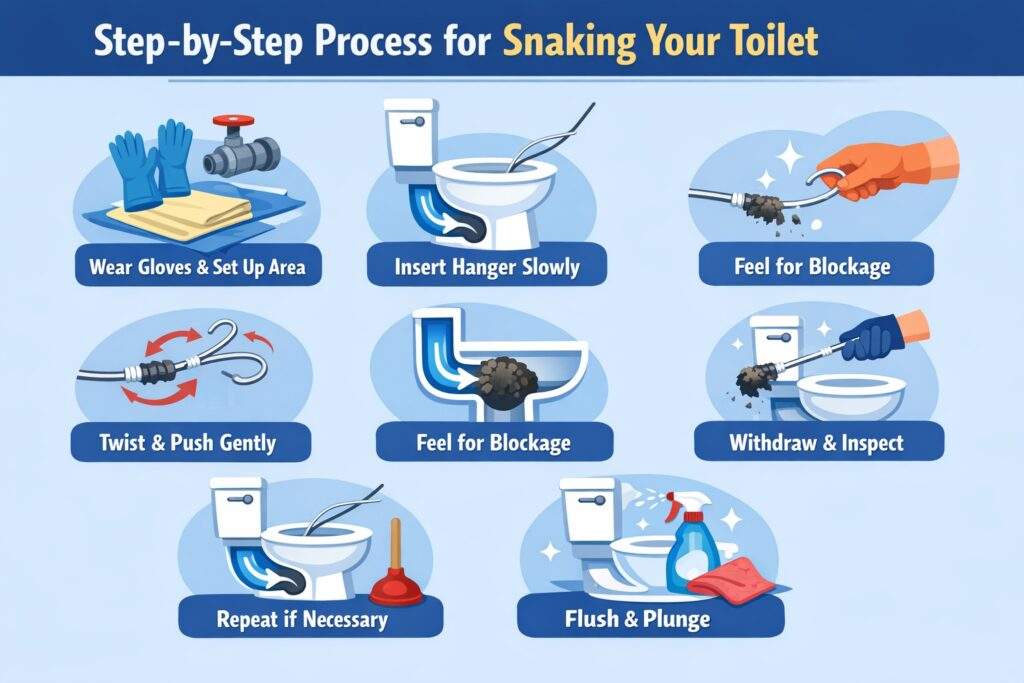
Once your hanger is prepared, you’re ready to tackle the clog. This process requires a steady hand and careful observation of how the wire moves through the drain. Rushing can push the blockage deeper or damage the toilet’s internal glaze. Follow each step in order and stop immediately if you feel strong resistance or hear cracking sounds.
Wear rubber gloves to protect your hands from bacteria and sharp wire edges. Place old towels or a plastic sheet around the base of the toilet to catch splashes. Turn off the water supply at the isolation valve behind the toilet to prevent accidental flushing while you work.
1. Insert the Hanger Slowly
Guide the wrapped end of the hanger into the toilet drain opening at the bottom of the bowl. Push gently until you feel the wire enter the curved trap. The trap is a U-shaped section of pipe that holds water to seal out sewer gases, most clogs lodge here.
2. Twist and Push Gently
Rotate the hanger clockwise and counterclockwise as you push it deeper. This twisting motion helps the wire navigate the curve and break apart soft blockages. Apply steady, light pressure, never force the wire if it stops moving.
3. Feel for the Blockage
You’ll know you’ve reached the clog when the wire suddenly meets firm resistance. Try to hook the debris with the wrapped end or push through it to create a small channel for water to flow. Move the wire in and out a few times to loosen compacted material.
4. Withdraw and Inspect
Pull the hanger out slowly and check the wrapped end for debris. You may see toilet paper, wipes, or other material clinging to the fabric. Dispose of this waste in a plastic bag, not back into the toilet.
5. Repeat if Necessary
Reinsert the hanger and repeat the twisting motion several times. Persistent clogs may require multiple passes to break apart completely. Watch the water level in the bowl, if it starts to drain, you’re making progress.
6. Flush and Plunge
Once you’ve removed as much debris as possible, turn the water supply back on and flush the toilet. Follow up with vigorous plunging to push any remaining fragments through the drain. The combination of snaking and plunging often clears stubborn clogs that either method alone cannot.
7. Clean and Disinfect
Dispose of the used hanger and towels. Wash your hands thoroughly and disinfect the area around the toilet base. Wipe down the bowl rim and flush handle with a bathroom cleaner to remove any bacteria transferred during the process.
If you’ve followed these steps and the toilet still won’t flush properly, the blockage may sit further down the line or involve a more serious drainage problem. Our team at Antons Plumbing & Gas uses CCTV drain inspection cameras to pinpoint the exact location and cause of stubborn clogs, saving you time and preventing repeat blockages.
When to Stop Using a Hanger and Call a Plumber

Some clogs lie beyond the reach of a coat hanger or plunger. Tree roots can infiltrate clay pipes in older Sydney homes, creating dense blockages that require professional equipment to clear. Foreign objects like toys, sanitary products, or broken pipe sections won’t budge with a wire tool. If water backs up into your shower or basin when you flush, the blockage likely sits in the main drain line rather than the toilet trap.
Recurring clogs signal a deeper issue. You might have a partially collapsed pipe, incorrect fall on your drainage line, or a build-up of grease and debris further down the system. Attempting repeated DIY fixes can waste time and risk damaging your plumbing. A licensed plumber can diagnose the root cause and recommend a permanent solution, whether that’s hydro jetting, pipe relining, or a section replacement.
It’s worth knowing where responsibility sits under NSW rules: Sydney Water owns and maintains the sewer main in the street, but everything from your fixtures to the boundary trap on your property, including your toilet, its trap, and internal drainage, is your responsibility as the owner. That’s exactly the type of blockage a hanger or plunger might touch, but a licensed plumber is needed to clear or repair it properly and in line with AS/NZS 3500 plumbing standards.
You should call a professional immediately if you notice any of these warning signs:
- Water rising in the bowl after flushing and draining very slowly or not at all.
- Gurgling sounds from other drains when you flush the toilet.
- Foul odours coming from the toilet or nearby drains.
- Visible cracks or damage to the toilet bowl or base.
- Multiple toilets or drains blocked at the same time.
Our plumbers carry specialised drain snakes, hydro jetters, and CCTV inspection equipment to handle clogs that DIY tools can’t reach. We diagnose the problem on the spot, explain your options in plain English, and provide upfront pricing in AUD before we start any work. Same-day service across Sydney means you won’t be left waiting with a blocked toilet.
How Plumbers Clear Stubborn Toilet Blockages Safely

Professional drain clearing gives you more than a quick fix. Licensed plumbers bring the right diagnostic tools, commercial-grade equipment, and compliance knowledge to identify the exact cause of the blockage and clear it properly the first time. At Antons Plumbing & Gas, we arrive with a fully stocked van, inspect your drainage system carefully, and use CCTV technology to show you exactly where the problem is and what is causing it.
We use the most suitable clearing method based on your pipe material, age, and overall condition. Hydro jetting can remove heavy build-up by scouring the pipe walls clean, while drain snakes are effective for stubborn clogs without relying on harsh chemicals that may damage older pipes. If the issue is more serious, such as structural pipe damage, we clearly explain your options, including repair, replacement, or trenchless relining, with upfront AUD pricing and realistic timelines.
Our work complies with AS/NZS 3500 plumbing standards and NSW Fair Trading licensing requirements, so you can feel confident the job is done properly and legally. We also offer same-day service across Sydney Metro, fixed-rate pricing, CCTV drain inspection with every blocked drain service, a lifetime labour warranty on workmanship, and full licensing and insurance under NSW Lic: 210933C. Whether you are dealing with a one-off blocked toilet or ongoing drainage problems across your property, Antons Plumbing & Gas can diagnose the root cause and deliver a lasting solution.
Conclusion
A wire hanger may loosen a soft blockage near the toilet trap, but it should never be forced. If the bowl keeps rising, the blockage returns, or other drains begin to gurgle, the problem may require professional diagnosis.
Contact our licensed plumbing team serving Acacia Gardens for safe toilet and drain clearing. Antons Plumbing & Gas (NSW Lic. 210933C) provides fixed-rate pricing in AUD, same-day service and 24/7 emergency plumbing across Sydney, ph +61 493 824 176. Our $0 (AUD) call-out fee is available from 7:00 am to 3:00 pm on weekdays, excluding public holidays.
Get an Estimate for Your Blocked Toilet Repair
When a toilet blockage cannot be cleared safely with a plunger, toilet auger, or carefully used wire hanger, the next step is to understand what professional repair may involve. Our free plumbing quote estimator helps you provide a few details about the blockage, including recurring clogs, slow drainage, overflowing, or signs of a deeper drain problem, so you can get a clearer idea of the service you may need, and an estimate in AUD, before arranging a visit.
Related Articles
- Toilet Snake vs Drain Snake: What’s the Difference and Which One Should You Use?
- Toilet Auger vs Plunger: Which Tool Saves You Time and Money?
- What Breaks Down Toilet Paper? Proven Solutions for Clogs
- How to Unclog a Toilet with a Wire Hanger Safely and Effectively
FAQs
What is the safest way to snake a toilet?
A toilet auger, also called a closet auger, is the safest tool because it is designed to move through the toilet trap without exposing the porcelain to sharp metal. Insert it gently, rotate the handle slowly and stop if it will not move through the trap. If it still won’t clear, a licensed Sydney plumber (Antons Plumbing & Gas, NSW Lic. 210933C) can attend same-day.
Can I use a wire coat hanger to unclog a toilet?
A wire hanger may help with a soft, shallow clog when a plunger or toilet auger is not available. It should only be treated as an emergency option because exposed wire can scratch the bowl or push the blockage deeper.
How do I make a temporary toilet snake from a hanger?
Straighten the hanger while leaving a small, rounded bend at one end. Cover the metal tip completely with securely applied electrical or waterproof tape so no sharp edge touches the toilet bowl.
How far should I push a hanger into the toilet?
Guide it gently into the toilet trap only until you feel light resistance. Do not force it or try to push it far into the drainage line. A blockage beyond the toilet trap usually requires an auger or professional drain-clearing equipment.
Should I turn off the toilet’s water supply first?
Turn off the isolation valve when the water is already high, the toilet may overflow or someone could accidentally flush it. The valve is usually located on the wall beside or behind the toilet.
What types of toilet clogs can a hanger clear?
A hanger may loosen a recent blockage caused mainly by toilet paper or soft waste close to the toilet trap. It is unlikely to remove a solid object, accumulated wipes or a blockage deeper in the drainage system.
What should I never try to push through with a hanger?
Do not try to push sanitary products, wipes, nappies, toys, air fresheners or other solid objects further into the toilet. Pushing them deeper can make professional removal more difficult and may block the main drain.
Can a wire hanger scratch the toilet bowl?
Yes. Uncovered wire can mark or scratch the glazed porcelain surface. Even a covered hanger should be moved slowly without scraping it repeatedly against the sides of the trap.
What should I do when the toilet water is near the rim?
Do not flush again. Turn off the water supply, protect the surrounding floor and allow the water level to fall. Remove some water carefully if needed before attempting to plunge or inspect the blockage.
Should I flush immediately after using the hanger?
Wait until the water level has fallen and the blockage appears to have moved. Test the flow cautiously with a small amount of water before performing a full flush, especially if the bowl previously came close to overflowing.
Is a toilet auger better than a coat hanger?
Yes. A toilet auger has a protective sleeve and flexible cable designed for the curved toilet trap. It provides better reach and control while reducing the risk of scratching the bowl.
Why is my toilet still draining slowly after I used a hanger?
The hanger may have opened only a small channel through the blockage rather than removing it. Slow drainage can also indicate an obstruction deeper in the branch line or main drain, in which case it’s time to book a licensed Sydney plumber rather than keep trying DIY fixes.
Can I use chemical drain cleaner in a blocked toilet?
Chemical drain cleaners are generally not a good first option for toilets. They may remain in the bowl, create a splash hazard and will not remove toys, wipes or other solid objects. A plunger, toilet auger or professional inspection is usually more appropriate.
What should I do when an object is stuck in the toilet?
Do not keep pushing it with a hanger. Remove it carefully with gloved hands or suitable gripping tools only when it is clearly visible and easy to reach. Otherwise, stop using the toilet and arrange professional removal.
How can I tell whether the main drain is blocked?
Warning signs include several fixtures draining slowly, gurgling from another drain when the toilet is flushed, wastewater backing up into a shower or floor drain, and persistent sewage odours. These symptoms usually require more than a makeshift toilet snake and should be assessed by a licensed plumber.
Can a plumber help with a stubborn toilet clog in Arcadia?
Yes. A licensed Arcadia plumber can determine whether the obstruction is in the toilet trap, connecting branch line or main drainage system and use the appropriate clearing method.
What should Balgowlah residents do when a toilet overflows after hours?
Turn off the toilet’s water supply, keep people away from the affected area and avoid using connected fixtures if they are also backing up. Residents needing urgent assistance can contact the plumbing team serving Balgowlah for 24/7 emergency call-outs.
Do recurring toilet blockages in Beaumont Hills need a CCTV inspection?
A CCTV inspection may be appropriate when a toilet repeatedly blocks after being cleared, especially when several fixtures are affected. A plumber serving Beaumont Hills can assess the symptoms and determine whether a camera inspection is necessary.
Can a blocked toilet in Blacktown be cleared without replacing it?
Many blocked toilets can be cleared without replacing the fixture. The plumber should first identify whether the cause is a soft clog, lodged object or deeper drainage fault. The Blacktown service team can diagnose the cause before recommending repair or replacement, with fixed-rate AUD pricing upfront.
Who should inspect a toilet blockage when other drains back up in Breakfast Point?
When a toilet blockage affects showers, basins or floor drains, the problem may be in a shared branch or main drainage line. A licensed plumber covering Breakfast Point can inspect the system rather than repeatedly treating the toilet alone.
How quickly can Antons Plumbing & Gas attend a blocked toilet in Sydney?
We offer same-day service across Sydney Metro and 24/7 emergency plumbing, with a $0 (AUD) call-out fee available from 7:00 am to 3:00 pm on weekdays, excluding public holidays. Call +61 493 824 176 or book online to arrange a visit from our licensed team (NSW Lic. 210933C).
How much does it cost to have a plumber clear a blocked toilet in Sydney?
Pricing depends on the cause and severity of the blockage, whether it needs a simple snake and plunge, hydro jetting, or a CCTV inspection. We provide fixed-rate pricing in AUD and explain all costs upfront before starting any work, so there are no surprises on your invoice.