

A blocked toilet is one of those household emergencies that always seems to happen at the worst possible time. You reach for the plunger only to realise it’s missing, broken, or buried somewhere in the garage. Before you panic or start searching online for emergency plumbers, there are several simple methods you can try using everyday household items.
This guide walks you through five practical ways to unclog a toilet without a plunger, explaining how each method works and what to watch out for. We’ll also cover when it’s time to stop experimenting and call in a licensed professional to prevent further damage or health hazards – important in Sydney, where most sewer work is regulated by NSW Fair Trading and Sydney Water.
Key Takeaways
- Hot water and dish soap can loosen and shift minor toilet blockages by lubricating the pipe.
- Baking soda and vinegar create a fizzing reaction that may help break down organic matter causing the clog.
- A wire coat hanger can be straightened and used as a makeshift drain snake for shallow obstructions.
- Enzyme-based cleaners offer a gentler, chemical-free option for dissolving waste over time.
- If DIY methods fail or the blockage recurs, professional diagnosis with CCTV inspection identifies root causes and prevents future issues.
- In NSW, any work on the sewer main or fixed plumbing must legally be carried out by a licensed plumber – Anton’s Plumbing & Gas holds NSW Lic. 210933C.
Quick Answer: To unclog a toilet without a plunger, add dish soap and hot—not boiling—water to the bowl. Wait 10–15 minutes for the blockage to soften. Stop and call a licensed Sydney plumber if the water rises or the toilet remains blocked.
Why Toilets Block and When DIY Methods Work
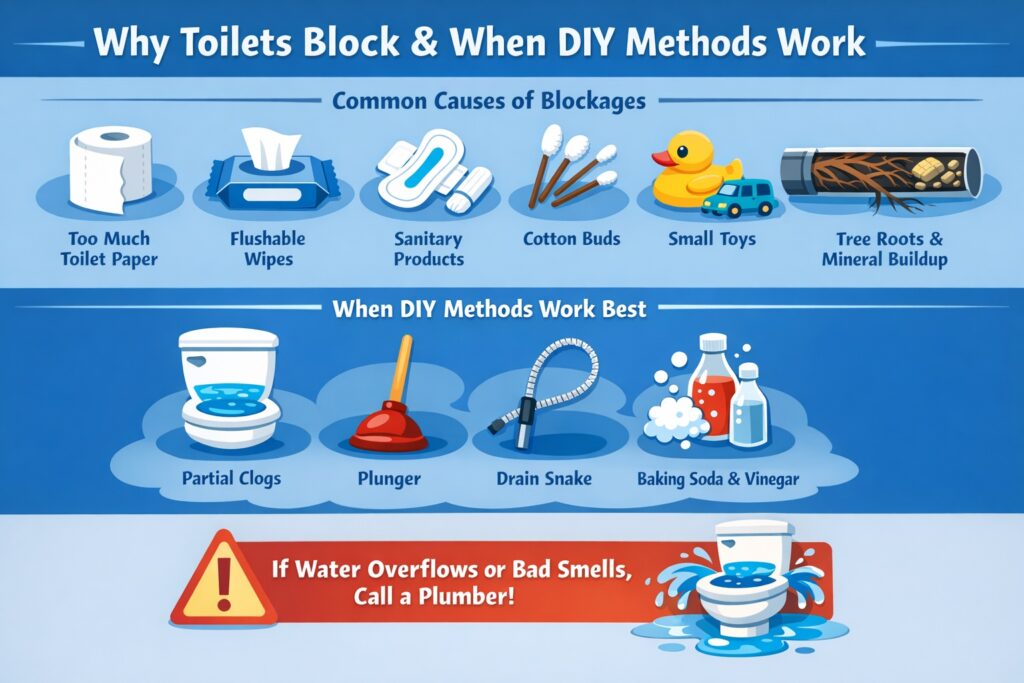
Most toilet blockages happen because too much material is trying to pass through the S-bend at once. Common culprits include excessive toilet paper, wet wipes labelled as flushable, sanitary products, cotton buds, and even small toys dropped in by curious children. In older Sydney homes, particularly in leafy suburbs, tree roots can infiltrate ageing clay sewer pipes, creating partial obstructions that catch waste over time. Hard water deposits and mineral buildup can also narrow the pipe diameter, making blockages more likely.
DIY methods work best on fresh, soft blockages caused by organic waste or paper. If the water level is rising slowly or draining partially, there’s a good chance one of the techniques below will clear it. But if the bowl is completely full, water is backing up into your shower or sink, or you notice foul smells coming from multiple drains, the problem is deeper in your sewer line and needs professional attention from a licensed Sydney plumber.
Before you start, protect your hands with rubber gloves and lay down old towels around the base of the toilet to catch any spills. Turn off the water supply at the isolation valve behind the toilet if the bowl is close to overflowing. This prevents an accidental flush from making the mess worse.
1. Hot Water and Dish Soap Method to Unclog a Toilet
This is often the first method plumbers recommend because it’s simple, safe, and uses items you already have at home. The heat helps soften and break apart waste, while the dish soap coats the pipe and acts as a lubricant, making it easier for the blockage to slide through—especially when the clog is mostly toilet paper or organic matter.
Start by squeezing about half a cup of liquid dish soap into the toilet bowl and let it sit for 5–10 minutes so it can work its way toward the obstruction. Meanwhile, heat around 4 litres of water until it’s hot but not boiling (boiling water can crack porcelain, particularly in older toilets), then pour it carefully into the bowl from about waist height to add gentle force.
2. Baking Soda and Vinegar Reaction for Unclogging a Toilet

This classic combination creates a fizzing reaction that can help loosen and break down organic blockages without relying on harsh chemical drain cleaners. It’s a gentler option for your plumbing and a safer choice for most households—and it’s kinder to Sydney’s sewer network than caustic products, especially when the water level is low enough that you can add ingredients without risking overflow.
Pour one cup of baking soda into the bowl (aiming toward the drain opening), then add two cups of white vinegar slowly to control the foaming. Let it sit for 30–60 minutes so the fizzing can work on the clog, then follow with hot (not boiling) water poured from waist height, wait 10 minutes, and flush—repeat once if needed, but if nothing changes, the blockage is likely too stubborn for this method.
3. Wire Coat Hanger Snake for Shallow Obstructions
When the blockage is close to the surface, a straightened wire coat hanger can work as a simple, makeshift drain snake. This method is most useful for clogs caused by solid items like toys, sanitary products, or wet wipes that don’t break down easily, but it requires patience and a careful touch to avoid scratching the porcelain.
Unwind the hanger into a straight wire and form a small hook at the end, then wrap that hook with cloth or duct tape to protect the toilet’s glaze. Wearing gloves, insert the wire gently into the drain opening and slowly wiggle and twist as you guide it through the bend—if you feel resistance, try hooking the obstruction to pull it back or nudging it to break it apart, then flush to test once the water level drops.
4. Toilet Brush Plunge Technique

If you don’t have a plunger, a toilet brush can still create a push-pull motion that helps move minor clogs. The idea is to build water pressure against the blockage, similar to plunging, which can be enough to shift soft obstructions through the trap and into the main drain line.
Wrap the brush head in a plastic bag and secure it tightly with a rubber band or tape to create a smoother “seal.” Push the wrapped brush down into the drain opening firmly and pull back quickly, repeating 10–15 times to create suction and pressure, then try flushing—if it improves but doesn’t fully clear, do another round, and disinfect the brush thoroughly afterward (or replace it if it contacted waste directly).
5. Enzyme-Based Drain Cleaners for Gentle Unclogging
Enzyme-based drain cleaners are a safer, more eco-friendly alternative to strong chemical products because they use bacteria and enzymes to break down organic waste over time. They work best for minor clogs, slow drains, or routine maintenance, especially if the issue is recurring buildup from paper and biodegradable material rather than a sudden “hard stop” blockage. They’re also gentler on Sydney’s older clay and PVC sewer pipes than caustic chemical cleaners.
To use one, follow the label instructions—typically you pour a measured amount into the toilet bowl and let it sit overnight without flushing so the enzymes have time to work. In the morning, flush to check results; if the clog is caused by non-organic materials like wet wipes, sanitary products, or foreign objects, enzymes won’t solve it, so you’ll need a mechanical method (plunger/auger) or a licensed plumber if the obstruction is deeper in the line.
Sydney Water and NSW Regulations You Should Know
In New South Wales, any work on fixed plumbing, drains, or the sewer main legally requires a licensed plumber under NSW Fair Trading rules. As a homeowner, you’re generally responsible for the pipework on your property, while Sydney Water owns and maintains the main sewer line running under the street. If a blockage is on your side of the boundary, it’s your responsibility to have it cleared by a licensed plumber; if it’s in the Sydney Water main, you can report it directly to Sydney Water.
Pouring harsh chemical drain cleaners down your toilet isn’t just risky for older pipework—it can also damage the broader sewer network. Sticking to gentle household methods or calling a licensed plumber helps protect your plumbing and Sydney’s wastewater system.
When to Stop and Call a Professional Plumber

DIY methods are great for simple, surface-level clogs, but there are times when continuing to experiment can make the problem worse. If you’ve tried two or three of the techniques above without success, the blockage is likely deeper in the sewer line or caused by something more serious than excess toilet paper. Continuing to flush or pour water into the bowl can lead to overflow, water damage, and contamination of your bathroom floor.
You should call a licensed Sydney plumber immediately if you notice any of these warning signs. Water backing up into your shower, bath, or sink when you flush the toilet suggests a main sewer line blockage. Foul smells coming from multiple drains, gurgling noises when water drains, or sewage pooling in your yard are all signs of a serious issue that requires professional diagnosis and repair by a licensed tradesperson.
Tree roots are a common cause of recurring blockages in Sydney, especially in older suburbs with mature trees and ageing clay pipes. Roots can infiltrate tiny cracks in the pipe, growing into dense mats that catch waste and eventually block the entire line. A CCTV drain inspection can pinpoint the exact location and cause of the blockage, allowing our team to recommend the right solution, whether that’s high-pressure water jetting, pipe relining, or excavation and replacement.
Why Choose Anton’s Plumbing & Gas for Blocked Drains

We’ve been helping Sydney homeowners and businesses with blocked drains, burst pipes, and plumbing emergencies for more than twenty-five years. Our team is fully licensed (NSW Lic. 210933C) and insured, and we complete every job to Australian Standards with clear communication and upfront pricing in Australian dollars. When you call us, you’ll speak to a real person, not a call centre, and we’ll arrange same-day service across the Sydney Metro, from the Inner West and Eastern Suburbs to the North Shore, Northern Beaches, Hills District, and beyond.
We don’t charge a call-out fee, and we provide a detailed quote in AUD before we start work, so you know exactly what to expect. Our vans are stocked with professional-grade equipment, including CCTV cameras, high-pressure jetters, and pipe relining gear, so we can diagnose and fix most problems on the spot. We treat your home with respect, protect your floors and fittings, and clean up thoroughly before we leave.
Every job is backed by a lifetime labour warranty, giving you peace of mind long after we’ve finished. If you’re dealing with a blocked toilet, slow drains, or recurring plumbing issues, don’t wait for the problem to get worse. Call us on +61 493 824 176 or book online for fast, reliable service from a licensed Sydney team that puts your safety and satisfaction first.
Conclusion
A blocked toilet doesn’t have to ruin your day. Simple household items like hot water, dish soap, baking soda, and vinegar can often clear minor clogs quickly and safely. But when DIY methods fail or the problem keeps coming back, it’s time to call in the experts. Our team at Anton’s Plumbing & Gas is ready to diagnose the root cause, clear stubborn blockages, and protect your Sydney home with compliant, professional workmanship you can trust.
Anton’s Plumbing & Gas offers expert blocked drain solutions across Sydney with same-day service available. Our NSW-licensed team (Lic. 210933C) handles stubborn toilet clogs fast. Contact us today to get started.
Related Articles
- What Does a Shower Drain Look Like? Key Features Explained
- Why Your Shower Takes Long to Heat Up: 5 Common Causes
- Toilet Auger vs Plunger: Which Tool Saves You Time and Money?
FAQs
What Can I Use To Unclog A Toilet Without A Plunger?
You can use a variety of household items to unclog a toilet without a plunger. Hot water, baking soda, and vinegar are popular choices. If you’re not comfortable doing it yourself, our licensed team at Anton’s Plumbing & Gas (NSW Lic. 210933C) can help ensure the job is done right the first time.
How Do You Unclog A Toilet With A Coat Hanger?
To unclog a toilet with a coat hanger, straighten one end of the hanger and create a small hook. Carefully insert it into the toilet bowl and try to dislodge the blockage. If this method doesn’t work, our skilled Sydney plumbers can provide a thorough inspection and reliable solutions.
Can Baking Soda And Vinegar Unclog A Toilet?
Yes, baking soda and vinegar can help unclog a toilet. Pour one cup of baking soda followed by one cup of vinegar into the toilet bowl. Allow it to fizz for a few minutes, then flush with hot water. If the clog persists, our qualified team at Anton’s Plumbing & Gas is ready to assist with efficient and effective solutions.
Is It Safe To Use Dish Soap To Unclog A Toilet?
Using dish soap can be safe and effective for unclogging a toilet. Pour a generous amount into the bowl, let it sit for a few minutes, and then flush with hot water. For more stubborn clogs, consider calling Anton’s Plumbing & Gas for professional assistance.
What Household Items Can Help Unclog A Toilet?
Household items like baking soda, vinegar, hot water, dish soap, and even a coat hanger can help unclog a toilet. If you’re facing a tough blockage, our experienced plumbers are equipped to handle it safely and efficiently, ensuring your plumbing is always in top shape.
Do I Need A Licensed Plumber For A Blocked Toilet In Sydney?
For simple, surface-level clogs, DIY methods are fine. But under NSW law, any repair work on fixed plumbing or the sewer line must be carried out by a licensed plumber. Anton’s Plumbing & Gas (NSW Lic. 210933C) can legally diagnose and repair blockages anywhere in Sydney.
How Much Does It Cost To Unblock A Toilet In Sydney?
Cost depends on the cause and severity of the blockage. We don’t charge a call-out fee, and we’ll always give you a clear, upfront quote in AUD before any work begins, so there are no surprises.
Who Is Responsible For A Blocked Sewer Line – Me Or Sydney Water?
Generally, you’re responsible for the plumbing and drains on your property, while Sydney Water maintains the main sewer under the street. If you’re unsure where the blockage sits, our team can inspect with a CCTV camera and advise whether it’s a private repair or a Sydney Water matter.
Can I Use Chemical Drain Cleaners In My Sydney Home?
We recommend avoiding harsh chemical cleaners, as they can damage older pipework and are harder on the broader sewer network. Gentler options like enzyme cleaners, or a call to a licensed plumber, are safer for your plumbing and for Sydney’s wastewater system.
Do You Offer Emergency Plumbing In Sydney On Weekends?
Yes, we offer same-day service across the Sydney Metro area, including weekends, for urgent issues like blocked toilets, burst pipes, and overflowing drains. Call us on +61 493 824 176 to arrange a visit.
What Sydney Suburbs Does Anton’s Plumbing & Gas Service?
We service the Sydney Metro area, including the Inner West, Eastern Suburbs, North Shore, Northern Beaches, and Hills District, among other areas. Get in touch to confirm coverage for your suburb.
How Quickly Can You Send A Plumber To My Home?
We offer same-day service in most cases across Sydney. Call us directly on +61 493 824 176 or book online, and we’ll aim to get a licensed plumber to you as quickly as possible.
Do You Provide A Warranty On Blocked Drain Repairs?
Yes, every job we complete is backed by a lifetime labour warranty, so you can have confidence in the quality of our work long after we’ve left your property.
What Happens If Tree Roots Are Blocking My Sewer Line?
Tree roots are a common cause of recurring blockages in older Sydney suburbs. We use CCTV inspection to locate the root intrusion, then recommend the right fix, such as high-pressure jetting, pipe relining, or, in severe cases, excavation and pipe replacement.
Can I Book A Plumber Online?
Yes, you can book a licensed plumber through our online booking page, or call us directly on +61 493 824 176 for faster, same-day arrangements.
Is Anton’s Plumbing & Gas Insured And Licensed In NSW?
Yes, we are fully licensed (NSW Lic. 210933C) and insured, and every job is completed to Australian Standards with upfront communication and pricing.
What Should I Do If My Toilet Overflows?
Turn off the water supply at the isolation valve behind the toilet immediately, avoid flushing again, and lay down towels to contain any spill. If the water keeps rising or won’t recede, call a licensed Sydney plumber straight away.
Do You Use CCTV Drain Cameras To Diagnose Blockages?
Yes, our vans carry CCTV drain cameras, high-pressure jetters, and pipe relining equipment, so we can accurately diagnose the cause of a blockage and often fix it in the same visit.
How Do I Get A Quote For Blocked Drain Repair In Sydney?
Simply call us on +61 493 824 176 or use our online contact form. We’ll assess the issue and provide a detailed, no-obligation quote in AUD before starting any work – with no call-out fee.