


A slow or completely blocked shower drain can turn your morning routine into a frustrating mess. Water pooling around your feet, unpleasant odours creeping up, and the worry that something bigger is brewing beneath the surface are all too familiar to Sydney homeowners, especially in older homes with ageing clay or cast-iron pipework. The good news is that learning how to unclog a shower drain often requires nothing more than simple tools and household items you already own.
This guide walks you through how to unclog a shower drain, explains when DIY efforts make sense, and highlights the warning signs that mean it’s time to call a licensed plumber. Whether you’re dealing with hair build-up, soap scum, or something deeper, you’ll know exactly what to do next — and when it’s time to bring in a licensed Sydney plumber (Antons Plumbing & Gas, NSW Lic. 210933C) rather than risk your plumbing or your warranty.
Key Takeaways
- Hair and soap scum are the most common culprits behind a clogged shower drain.
- Removing visible debris and flushing with hot water can resolve minor blockages quickly.
- Bicarbonate of soda and vinegar offer a safe, chemical-free alternative to commercial drain cleaners.
- Plastic drain snakes reach deeper clogs without damaging your pipes.
- Recurring blockages, slow drainage across multiple fixtures, or foul smells indicate a deeper issue that requires professional diagnosis.
- Under Sydney Water rules, you’re generally responsible for plumbing on your side of the boundary trap — which covers most shower drain blockages.
- Antons Plumbing & Gas provides same-day drain clearing, CCTV inspections, and pipe relining across Sydney with no call-out fee.
How to Unclog Shower Drain Using Simple DIY Methods
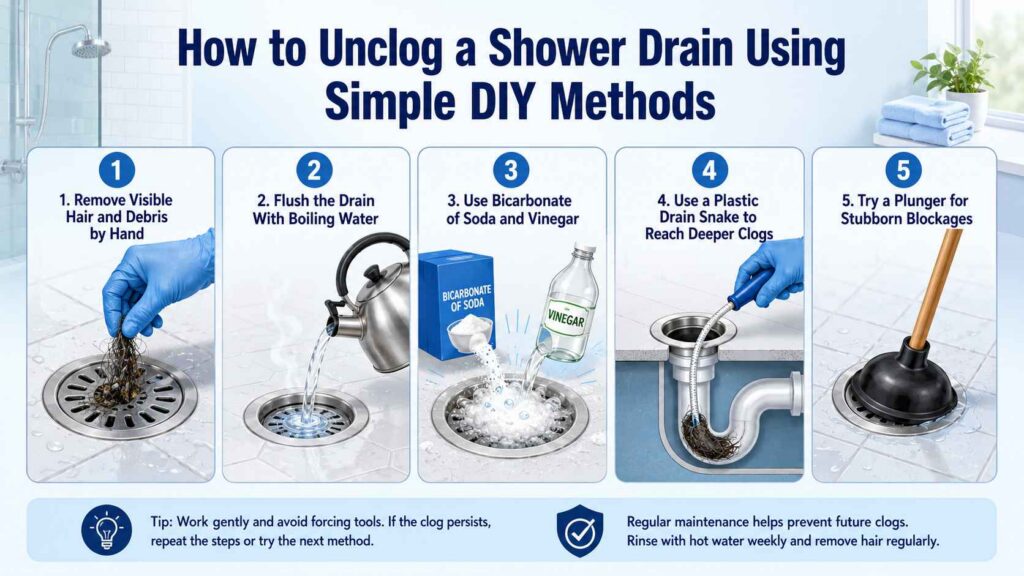
Most shower drain blockages sit close to the surface, making them accessible with basic tools and a little patience. The first step is always to remove the drain cover and inspect what you’re dealing with. You might see a clump of hair, soap residue, or a combination of both tangled just below the grate.
Grab a pair of tweezers or needle-nose pliers and pull out as much debris as you can reach. This alone can restore flow if the blockage hasn’t travelled further down the pipe. Once you’ve cleared the visible material, flush the drain with hot water to wash away any remaining soap scum or grease.
1. Remove Visible Hair and Debris by Hand
Start by unscrewing or lifting the drain cover. Many shower grates simply pop out with a flathead screwdriver or a firm tug. Shine a torch down the drain to see what’s lurking below.
Use tweezers to pull out hair, soap chunks, and any other material you can reach. Wear gloves if you prefer. This step is quick, free, and often all you need to restore normal drainage.
2. Flush the Drain With Boiling Water
Boil a kettle of water and pour it slowly down the drain in two or three stages, allowing a few seconds between each pour. The heat helps dissolve soap scum, body oils, and light grease build-up that clings to pipe walls.
Avoid this method if you have old PVC pipes or if the drain has been sitting completely blocked for days — thermal shock can sometimes crack brittle fittings. For most modern Sydney homes, it’s a safe and effective first step.
3. Use Bicarbonate of Soda and Vinegar
This classic combination creates a fizzing reaction that can dislodge light blockages and freshen your drain at the same time. Pour half a cup of bicarbonate of soda (baking soda) directly into the drain, followed by half a cup of white vinegar.
Let the mixture bubble and foam for fifteen minutes, then flush with hot tap water. For stubborn clogs, some people add a quarter cup of table salt to the bicarb before pouring in the vinegar. The extra abrasion can help break up soap scum and hair.
4. Use a Plastic Drain Snake to Reach Deeper Clogs
A plastic drain snake is a long, flexible strip with barbed edges designed to hook hair and debris. Feed it slowly into the drain until you feel resistance, then twist and pull back gently.
You’ll often retrieve a surprising amount of hair and gunk in one go. Rinse the snake and repeat until the drain flows freely. These tools are inexpensive, reusable, and far gentler on your pipes than metal coat hangers.
5. Try a Plunger for Stubborn Blockages
A small cup plunger can create enough suction to dislodge clogs that sit just past the trap. Remove the drain cover, add a few centimetres of water to the shower base, and place the plunger over the drain opening.
Pump firmly and steadily for twenty to thirty seconds, then lift the plunger and check if water drains. Repeat two or three times if needed. This method works best when the blockage is soft and hasn’t hardened over time.
If water still drains slowly, the blockage is likely sitting deeper in the trap or waste line. That’s when you move to the next set of techniques — or when it’s worth calling a licensed Sydney plumber before you risk cracking your shower base.
When to Use Shower Drain Unclog Liquid and What to Avoid
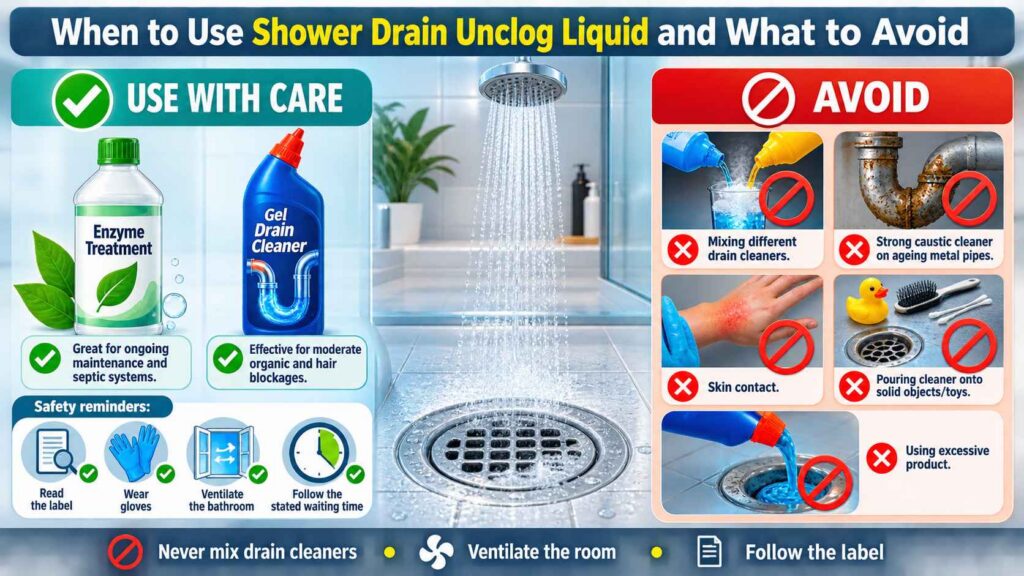
Chemical drain cleaners promise fast results, and products like gel-based formulas or enzyme treatments can break down hair and organic matter in minutes. They’re convenient when you’re short on time or when manual methods haven’t worked. That said, not all drain cleaners are created equal, and some can do more harm than good — particularly in older Sydney terraces and units with ageing pipework.
Strong caustic cleaners generate heat and can corrode older metal pipes, damage rubber seals, or leave behind residue that makes future blockages worse. If you choose a chemical product, read the label carefully and follow the instructions exactly. Never mix different cleaners, and always ventilate the bathroom while the product works.
| Method | Best For | Typical Time | Safety Notes |
|---|---|---|---|
| Baking soda & vinegar | Light soap scum, odour control | 15–20 minutes | Safe for all pipe types, eco-friendly |
| Plastic drain snake | Hair clogs near the surface | 5–10 minutes | No chemicals, reusable, gentle on pipes |
| Gel drain cleaner | Moderate organic blockages | 15–30 minutes | Ventilate room, avoid skin contact, not for septic |
| Enzyme treatment | Ongoing maintenance, septic-safe | Overnight | Slow-acting, won’t clear solid objects |
| Plunger | Soft clogs just past the trap | 5 minutes | Works best with standing water, no chemicals |
If your property runs on a septic system (common in parts of outer Sydney and the Hills District), enzyme-based cleaners are a safer choice. They use natural bacteria to digest organic material without damaging pipes or disrupting your septic balance. Just know that they take longer to work — sometimes overnight — and won’t clear solid obstructions like toy parts or metal objects.
Warning Signs That Your Shower Drain Needs a Professional
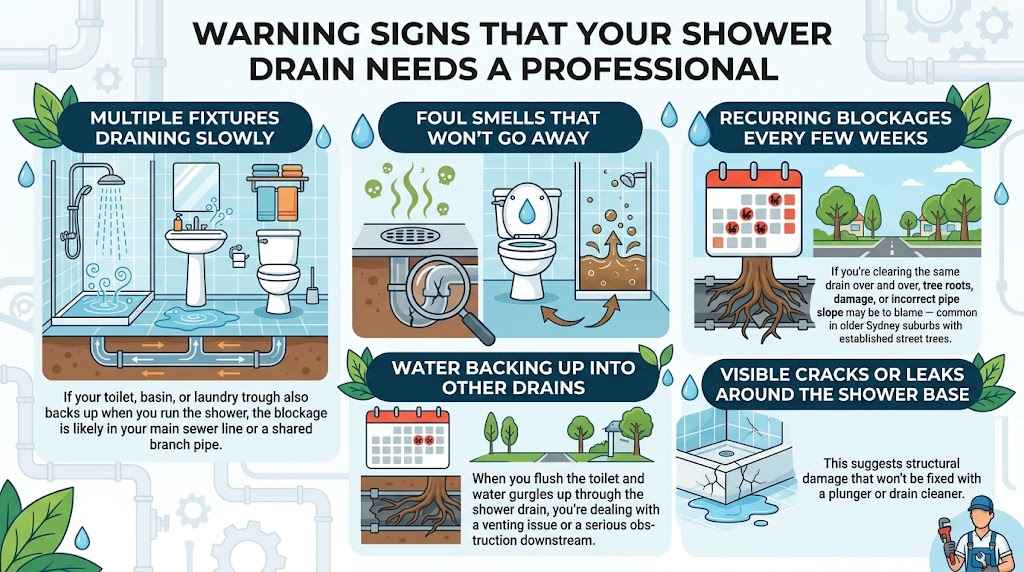
Sometimes the problem isn’t hair at all. You’ve tried every DIY trick, the drain snake came back clean, and water still won’t flow. That’s a clear signal that the blockage sits deeper in your waste line, or that the issue involves something more complex than surface debris — and something you shouldn’t keep chasing with a plunger.
Here are the red flags that mean it’s time to call a licensed plumber.
- Multiple fixtures draining slowly: If your toilet, basin, or laundry trough also backs up when you run the shower, the blockage is likely in your main sewer line or a shared branch pipe.
- Foul smells that won’t go away: Persistent odours can indicate a broken trap seal, a cracked pipe, or organic matter decomposing inside the wall cavity.
- Water backing up into other drains: When you flush the toilet and water gurgles up through the shower drain, you’re dealing with a venting issue or a serious obstruction downstream.
- Recurring blockages every few weeks: If you’re clearing the same drain over and over, tree roots, pipe damage, or incorrect pipe slope may be to blame — common in older Sydney suburbs with established street trees.
- Visible cracks or leaks around the shower base: This suggests structural damage that won’t be fixed with a plunger or drain cleaner.
Under NSW regulations, plumbing on your side of the Sydney Water boundary trap is your responsibility, and any repair or replacement work must be carried out by a licensed plumber and comply with AS/NZS 3500. Our team at Antons Plumbing & Gas (NSW Lic. 210933C) uses CCTV drain cameras to pinpoint the exact location and cause of stubborn blockages. We can see tree roots, collapsed pipes, and foreign objects in real time, which means no guesswork and no unnecessary digging. Same-day service is available across Sydney, and we charge a fixed rate with no call-out fee, so you know the cost before we start.
Preventative Habits to Keep Your Shower Drain Flowing
Clearing a blockage is one thing. Stopping it from happening again is another. A few simple habits can save you time, money, and the frustration of standing in ankle-deep water every few months.
Install a Drain Screen or Hair Catcher
A stainless steel or silicone screen sits over your drain and traps hair before it enters the pipe. Empty it after every shower and rinse it under the tap. This small step prevents the majority of clogs and is one of the cheapest bits of plumbing kit you can buy at a Sydney hardware store.
Flush With Hot Water Weekly
Once a week, pour a kettle of hot water down the drain to dissolve soap residue and body oils. This keeps pipe walls clean and reduces the build-up that turns minor clogs into major blockages.
Avoid Pouring Oils or Thick Products Down the Drain
Shaving cream, thick conditioners, and body scrubs with exfoliating beads can all contribute to sticky build-up. Wipe excess product off your hands or body before rinsing, and never pour cooking oil or grease down any drain — it’s also not permitted under Sydney Water trade waste rules for a reason.
Brush Hair Before Showering
Loose hair that comes out during washing is the number one cause of shower drain clogs. A quick brush before you step in can reduce shedding and keep more hair out of your pipes.
Schedule an Annual CCTV Drain Inspection
If you live in an older Sydney home with clay pipes or mature trees nearby, an annual camera inspection can catch root intrusion, cracks, and corrosion before they cause a full blockage. We provide clear video footage, a written report, and tailored recommendations for maintenance or repair.
Common Mistakes to Avoid When Clearing a Shower Drain
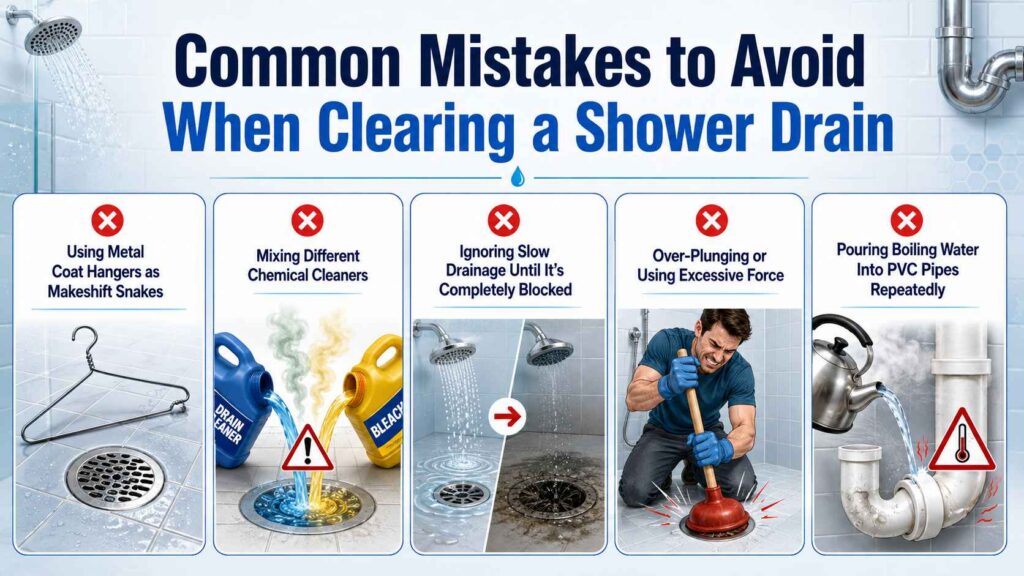
Even with the best intentions, it’s easy to make a small mistake that turns a simple clog into a bigger repair job. Here are the pitfalls to watch out for.
Using Metal Coat Hangers as Makeshift Snakes
Straightened coat hangers can scratch chrome-plated traps, pierce rubber seals, or get stuck inside the pipe. Plastic drain snakes are cheap, flexible, and designed for the job. Stick with the right tool.
Mixing Different Chemical Cleaners
Combining caustic soda with an acid-based cleaner can produce toxic fumes or even cause a dangerous reaction. If one product doesn’t work, flush the drain thoroughly with water before trying another — or call a licensed plumber instead.
Ignoring Slow Drainage Until It’s Completely Blocked
A drain that’s draining slowly is already partially blocked. Waiting until water won’t drain at all means the clog has hardened, spread, or moved deeper into the line. Early action saves time and money.
Over-Plunging or Using Excessive Force
Plunging too hard can crack a ceramic shower base or dislodge pipe joints. Use steady, controlled pressure and stop if you don’t see results after a few attempts. Force won’t fix a solid obstruction.
Pouring Boiling Water Into PVC Pipes Repeatedly
One flush of hot water is usually fine, but repeated boiling pours can soften or warp older PVC fittings. If you’re unsure of your pipe material, stick to warm tap water or call a professional.
How Antons Plumbing & Gas Clears Blocked Shower Drains Fast

When DIY methods don’t cut it, our licensed plumbers arrive with the tools and training to diagnose and fix the problem on the spot. We don’t just clear the symptom — we find the root cause and give you options to prevent it happening again.
Here’s what you can expect when you book a drain clearing service with us.
Same-Day Response Across Sydney
We know a blocked drain doesn’t wait for business hours. Our team is available 24/7, and we aim for same-day service across the Inner West, Eastern Suburbs, North Shore, Northern Beaches, Hills District, and beyond. No call-out fee means you’re only paying for the work we do, not the trip to your door.
CCTV Camera Diagnosis
We feed a high-resolution camera into your drain to see exactly what’s causing the blockage. Tree roots, collapsed sections, or foreign objects all show up clearly on screen. You’ll see the footage yourself, and we’ll explain what needs to happen next in plain English.
High-Pressure Water Jetting
For stubborn clogs, grease build-up, or root intrusion, we use a high-pressure water jetter that scours the inside of your pipes without damaging them. It’s fast, effective, and leaves your drain cleaner than it’s been in years.
Pipe Relining for Permanent Solutions
If the camera reveals cracks, corrosion, or root damage, we can install a resin liner inside the existing pipe. This creates a new, seamless pipe within the old one — no digging, no mess, and a lifetime labour warranty. It’s a cost-effective alternative to full pipe replacement, especially in heritage homes or tight access areas common across the Sydney inner ring.
Clear Pricing and Compliance
We quote upfront and explain every option before we start. All work complies with AS/NZS 3500 plumbing standards, and we hold full licensing and insurance under NSW Fair Trading (Lic: 210933C). You’ll receive a written report, photos, and a compliance certificate where required — important if you’re on Sydney Water infrastructure or planning to sell your home down the track.
If you’re tired of temporary fixes and want a drain that stays clear, call us or book online. We’ll get your shower flowing again — and keep it that way.
Conclusion
A blocked shower drain is more than an inconvenience — it’s a warning sign that something needs attention. Simple clogs respond well to bicarb, vinegar, and a plastic drain snake, but recurring issues or slow drainage across multiple fixtures call for professional diagnosis. Antons Plumbing & Gas delivers same-day service, CCTV inspections, and lasting solutions across Sydney, so you can shower with confidence again.
Antons Plumbing & Gas offers expert blocked drain solutions across Sydney with same-day service available. Our fully licensed team (NSW Lic. 210933C) uses CCTV inspections to diagnose and clear shower blockages fast. Call +61 493 824 176 to get started today.
Related Articles
- What Is CCTV and Why Is It Recommended?
- Sydneysiders Take Note: Plumbing Is an Essential Service
- 5 Essential Tips for Choosing Different Kinds of Shower Drains
FAQs
What Is The Best Way To Unclog A Shower Drain?
The best way to unclog a shower drain is to start with a simple method like using a drain snake or a wire coat hanger to remove visible hair and debris. If that doesn’t work, you can try pouring boiling water down the drain to dissolve any soap scum or grease. For more persistent clogs, consider calling a professional like Antons Plumbing & Gas, who have the expertise and tools to handle complex blockages safely and effectively.
How Do You Unclog A Shower Drain With Bicarb And Vinegar?
To unclog a shower drain with bicarbonate of soda and vinegar, start by pouring about half a cup of bicarb down the drain, followed by half a cup of vinegar. Cover the drain with a plug or cloth to contain the reaction, and let it sit for about 30 minutes. Afterward, flush the drain with hot water to clear any remaining debris. If the clog persists, it’s best to consult a licensed plumber to avoid damage to your plumbing.
Can You Use A Plunger To Unclog A Shower Drain?
Yes, you can use a plunger to unclog a shower drain. Make sure to cover the overflow drain if your shower has one, and create a tight seal around the drain. Pump the plunger vigorously to create suction, which may help dislodge the clog. However, if the clog remains, it’s advisable to seek assistance from Antons Plumbing & Gas, who can provide a thorough inspection and effective solutions.
What Tools Do I Need To Unclog A Shower Drain?
To unclog a shower drain, you’ll typically need a drain snake or a wire coat hanger, a plunger, and possibly a bucket to catch any debris. You may also want to have bicarb and vinegar on hand for a natural cleaning solution. For more stubborn clogs, professional tools and expertise are available from Antons Plumbing & Gas to ensure the job is done right.
How Do You Prevent A Shower Drain From Clogging?
To prevent a shower drain from clogging, regularly remove hair and debris from the drain cover. Using a drain strainer can also help catch hair before it enters the plumbing. Additionally, consider rinsing the drain with hot water weekly to dissolve soap scum before it builds up, and avoid pouring oils, thick conditioners, or exfoliating scrubs down the drain. If clogs keep recurring despite these steps, book a CCTV drain inspection with a licensed Sydney plumber to rule out deeper pipe issues.
Do I Need A Licensed Plumber To Unclog A Shower Drain In Sydney?
For simple surface clogs, DIY methods are fine. However, NSW law requires that any plumbing repair, alteration, or work involving fixed pipework be carried out by a licensed plumber. If your blockage keeps returning, affects multiple fixtures, or you suspect pipe damage, call a licensed Sydney plumber like Antons Plumbing & Gas (NSW Lic. 210933C) rather than continuing to DIY.
Is Antons Plumbing & Gas Licensed And Insured?
Yes. Antons Plumbing & Gas holds full licensing under NSW Fair Trading (Lic: 210933C) and carries appropriate insurance. All drain and pipe work is carried out to AS/NZS 3500 plumbing standards, and you’ll receive a compliance certificate where required.
How Much Does It Cost To Have A Blocked Shower Drain Professionally Cleared In Sydney?
Cost depends on the cause and severity of the blockage. We provide an upfront, fixed-price quote before any work begins, so you know exactly what you’re paying before we start — with no surprise call-out fee. Call +61 493 824 176 and our team can talk you through pricing for your specific situation.
Do You Charge A Call-Out Fee?
No. Antons Plumbing & Gas does not charge a call-out fee for drain clearing across Sydney. You only pay for the work carried out, which is quoted upfront before we begin.
How Quickly Can A Plumber Come To Unclog My Shower Drain?
We offer same-day service across most of Sydney, including the Inner West, Eastern Suburbs, North Shore, Northern Beaches, and Hills District. Call us and we’ll do our best to get a licensed plumber to you the same day.
What Suburbs Does Antons Plumbing & Gas Service?
We service homes and businesses across greater Sydney, including the Inner West, Eastern Suburbs, North Shore, Northern Beaches, and Hills District. If you’re unsure whether we cover your suburb, give us a call and we’ll confirm straight away.
Is A Blocked Shower Drain My Responsibility Or Sydney Water’s?
Generally, plumbing on your side of the Sydney Water boundary trap — including your shower drain and internal waste pipes — is your responsibility as the property owner. Sydney Water is typically only responsible for the main sewer main and infrastructure beyond that point. If you’re unsure where the fault lies, a licensed plumber can confirm this for you during an inspection.
Do You Provide CCTV Footage Of The Blockage?
Yes. We feed a high-resolution camera into the drain and record the footage so you can see exactly what’s causing the blockage. We’ll walk you through the footage and explain your options in plain English before recommending any further work.
What Happens If The Blockage Is Caused By Tree Roots?
Tree root intrusion is common in older Sydney suburbs with mature street trees and clay pipes. Once confirmed by CCTV, we can typically clear the roots with high-pressure water jetting and, if the pipe is cracked or damaged, recommend pipe relining as a permanent, no-dig solution.
Can I Book A Plumber Online Or Do I Need To Call?
Both options are available. You can book online through our website or call +61 493 824 176 directly for faster, same-day scheduling, especially if your drain is completely blocked.
Do You Offer Emergency Plumbing Services On Weekends?
Yes, our team is available 24/7, including weekends and public holidays, for urgent blocked drain issues across Sydney.
Will Clearing My Shower Drain Require Council Or Sydney Water Approval?
Standard drain clearing, such as removing hair, soap scum, or minor blockages, doesn’t require approval. However, if pipe replacement or relining work is needed and it affects shared or main infrastructure, our licensed plumbers will advise you on any necessary compliance steps and handle the paperwork on your behalf.
What If The DIY Methods Don’t Work — What’s The Next Step?
If bicarb and vinegar, hot water, a drain snake, and a plunger haven’t cleared the blockage, stop before you risk damaging your pipes or shower base. Call Antons Plumbing & Gas for a CCTV inspection so we can identify the exact cause and clear it properly, often the same day.
Do You Offer Pipe Relining As An Alternative To Digging Up My Yard?
Yes. If our CCTV inspection finds cracks, corrosion, or root damage, we can often install a resin pipe liner instead of excavating. This creates a durable new pipe inside the old one, with no digging, minimal disruption, and a lifetime labour warranty.
How Do I Know If My Blockage Is An Emergency?
If water is backing up into multiple fixtures, overflowing onto your bathroom floor, or you notice sewage odours, treat it as an emergency and call us straight away. For a single slow-draining shower with no other symptoms, you can usually try the DIY steps above first before booking a licensed plumber.