

Staring at a Sydney Water bill that’s doubled or tripled can feel overwhelming, especially with the recent price rises hitting NSW households hard. Your first instinct might be to question the meter reading, but the reality is that sudden spikes in water usage often point to hidden leaks, faulty fixtures, or inefficient systems quietly draining your wallet. The good news is that most high water bill culprits can be identified and fixed quickly with the right approach.
This guide walks you through the most common reasons why you have a high water bill and provides immediate steps you can take to identify problems before they cause serious damage. You’ll learn simple detection methods, understand when to call professionals, and discover how fast action can save both water and money across Sydney and NSW.
Key Takeaways
- Check your water meter and toilet for leaks first, as these cause a large share of high water bills.
- A running toilet can waste up to 750 litres a day, adding hundreds of dollars to your annual water bill.
- Hidden pipe leaks often show no visible signs but can be detected through meter testing.
- Faulty hot water systems and dripping taps contribute significantly to water waste over time.
- Professional leak detection using CCTV and acoustic tools finds problems faster than DIY methods.
- Any plumbing work involving the water supply, gas, or drainage should be carried out by a licensed Sydney plumber to stay compliant with Sydney Water and NSW Fair Trading requirements.
Why Your Sydney Water Bill Suddenly Spiked
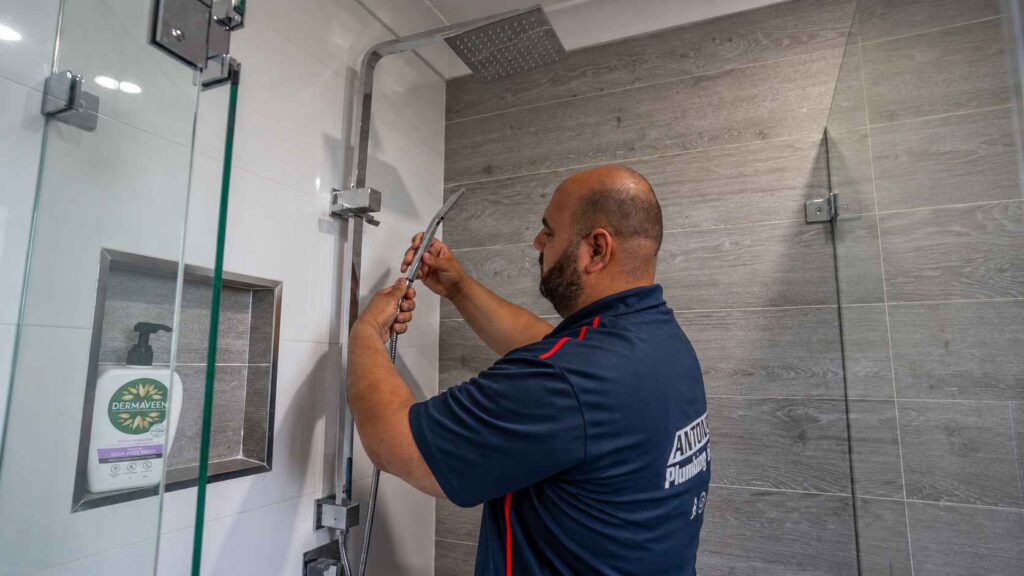
Sydney Water announced a 13.8% price increase from October 2025, raising average household bills from around $1,220 to $1,388 (AUD) annually. Even accounting for this increase, a bill that’s dramatically higher than expected usually indicates excessive water consumption rather than just rate changes. Understanding the difference helps you focus on the right solutions.
Most Sydney homeowners use between 150-200 kilolitres annually, but hidden leaks can easily double this usage. A single running toilet can waste around 750 litres a day, while a small pipe leak might go unnoticed for months in the older housing stock common across many Sydney suburbs.
1. Leaking Toilets – The Silent Water Wasters
Toilet leaks account for a large share of residential water waste but often make no sound. The flapper valve, chain, or fill mechanism can fail gradually, allowing water to flow continuously from tank to bowl.
2. Hidden Pipe Leaks Behind Walls
Concealed leaks in walls, under slabs, or in garden areas waste massive amounts of water without obvious signs. These leaks often develop slowly in older Sydney homes with ageing copper or clay pipes.
3. Faulty Hot Water Systems
Temperature and pressure relief valves on hot water units can develop slow drips that seem minor but waste significant volumes over time. Corroded tanks or loose connections also contribute to hidden water loss.
4. Dripping Taps and Shower Heads
A tap dripping once per second wastes over 11,000 litres a year. Multiple dripping fixtures around your home can substantially impact your water bill without seeming urgent.
5. Pool and Garden System Leaks
Swimming pool equipment, irrigation systems, and garden taps often develop leaks that homeowners attribute to normal evaporation or watering needs rather than mechanical failures.
Common Water Bill Culprits and Quick Fixes
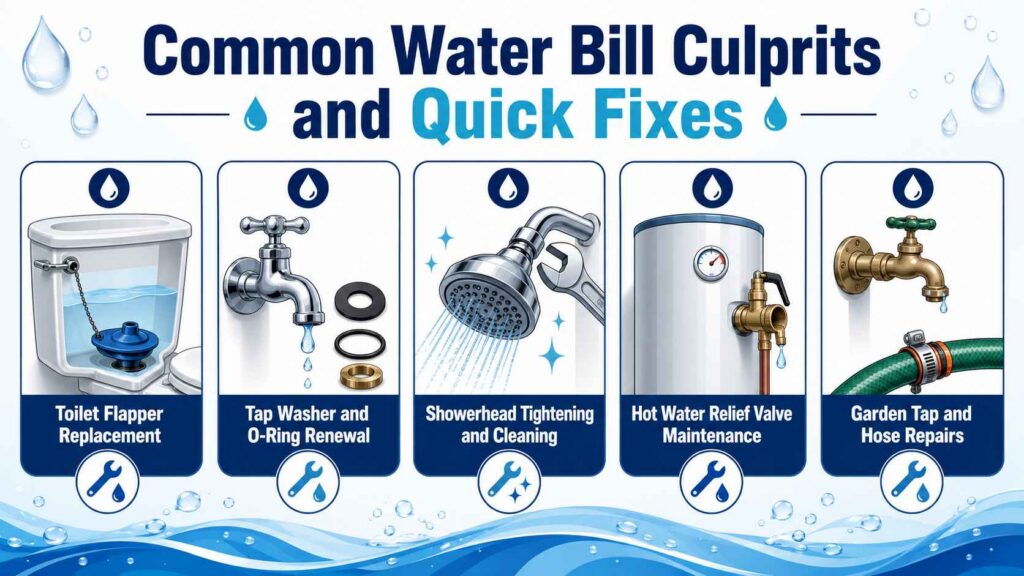
Understanding which problems you can address immediately versus those requiring professional repair helps you take fast action while planning for proper solutions. Some issues need urgent attention to prevent property damage, while others can wait for scheduled repairs. Quick temporary fixes can reduce water waste while you arrange professional service.
Toilet Flapper Replacement
Most toilet leaks stem from warped or mineral-encrusted flapper valves that don’t seal properly. Replacement flappers are inexpensive and install in minutes, potentially saving hundreds of dollars a year on your water bill.
Tap Washer and O-Ring Renewal
Dripping taps usually need new washers, O-rings, or cartridges depending on the tap type. These inexpensive parts stop most leaks and restore proper water flow control.
Showerhead Tightening and Cleaning
Loose showerhead connections cause leaks at wall joints, while mineral buildup prevents proper shut-off. Tightening connections and cleaning mineral deposits often resolves these issues.
Hot Water Relief Valve Maintenance
Temperature and pressure relief valves occasionally need replacement due to mineral buildup or age-related failure. These safety devices should only be serviced by a licensed plumber, in line with NSW safety and Sydney Water requirements.
Garden Tap and Hose Repairs
Outdoor taps face weather exposure that damages washers and seals more frequently than indoor fixtures. Regular maintenance prevents continuous dripping that homeowners often ignore.
Have a High Water Bill in Sydney? Start with These Checks
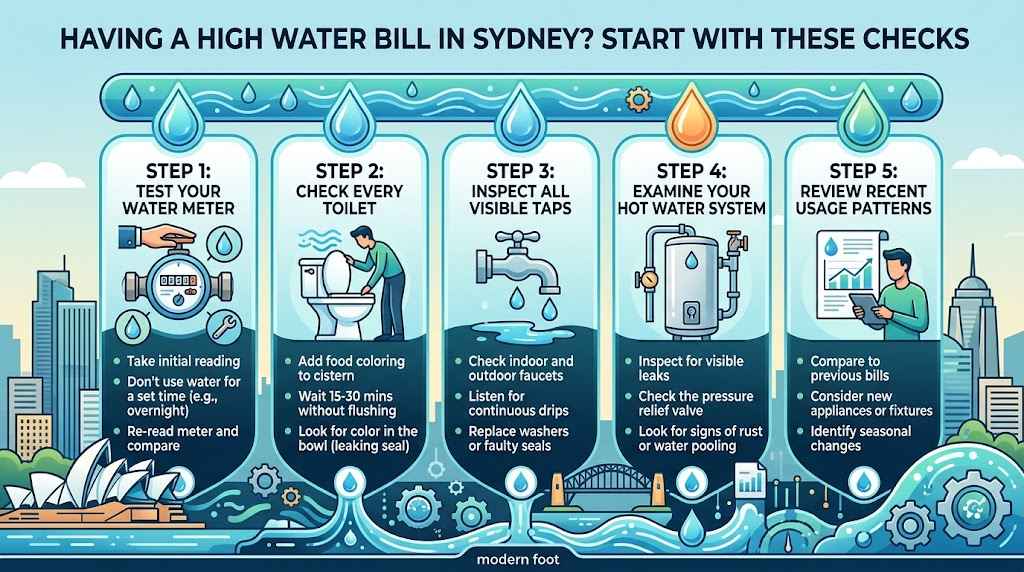
Start with simple checks that require no tools or expertise before calling professionals. These quick tests help pinpoint the most common water wasters and determine if you need urgent repairs. Most homeowners can complete these checks in under 30 minutes.
Step 1: Test Your Water Meter
Turn off all water appliances, taps, and irrigation systems in your home. Check your water meter and note the reading, then wait 2 hours without using any water. If the meter reading has changed, you have a leak somewhere in your system.
Step 2: Check Every Toilet
Remove toilet tank lids and listen for running water sounds. Add food colouring to the tank water and wait 15 minutes without flushing – if colour appears in the bowl, your flapper valve is leaking.
Step 3: Inspect All Visible Taps
Check every tap, shower head, and outdoor tap for drips or continuous flow. Even slow drips waste substantial water over weeks and months, especially from hot water taps.
Step 4: Examine Your Hot Water System
Look around your hot water system for puddles, rust stains, or wet patches. Check the temperature relief valve for dripping and inspect all visible connections for moisture.
Step 5: Review Recent Usage Patterns
Consider any changes in household size, new appliances, increased lawn watering, or pool maintenance that might explain higher consumption legitimately.
When to Call Professional Leak Detection Services

Professional leak detection becomes essential when simple checks don’t reveal obvious problems or when you suspect hidden leaks behind walls or underground. Advanced equipment like CCTV cameras, acoustic leak detectors, and thermal imaging can locate problems that waste thousands of litres monthly. Anton’s Plumbing & Gas (NSW Lic. 210933C) uses these tools daily to help Sydney homeowners identify costly leaks before they cause structural damage, and to keep repairs compliant with Sydney Water and NSW Fair Trading regulations.
| Detection Method | Best For | Time Required |
|---|---|---|
| CCTV Inspection | Underground pipes, blocked drains | 1-2 hours |
| Acoustic Detection | Pressurised water lines | 30-60 minutes |
| Thermal Imaging | Wall and floor leaks | 45 minutes |
| Pressure Testing | System-wide leak assessment | 2-3 hours |
CCTV Drain and Pipe Inspection
Camera technology allows our plumbers to inspect inside pipes and drains without digging or demolition. This method quickly identifies cracks, root intrusion, or joint failures in underground water lines – common in older Sydney streets and terraces.
Acoustic Leak Detection
Sensitive listening equipment detects the sound of water escaping from pressurised pipes, even when leaks are buried under concrete or hidden behind tiles. This technology locates leaks within centimetres of their actual position.
Thermal Imaging for Hidden Leaks
Infrared cameras detect temperature variations that indicate water movement behind walls or under floors. This non-invasive method identifies problem areas without damaging your property.
Water Pressure Testing
Systematic pressure tests on different sections of your plumbing system isolate leak locations and determine repair priorities. This approach ensures we fix the right problems efficiently and in line with Sydney Water plumbing standards.
We provide same-day leak detection services across Sydney and greater NSW using specialised equipment that pinpoints exact leak locations. This targeted approach saves time, reduces property disruption, and prevents unnecessary excavation or wall removal. As a fully licensed Sydney plumbing business (NSW Lic. 210933C), any notifiable water or gas work we carry out is compliant with Sydney Water and NSW regulations.
Preventing Future High Water Bills
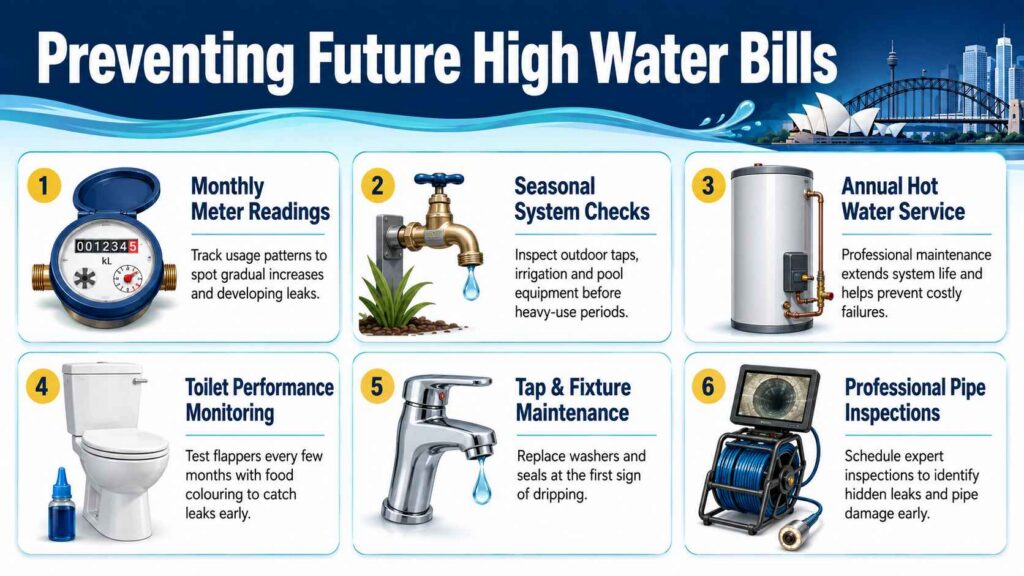
Proactive maintenance and regular inspections catch small problems before they become expensive water wasters. Simple monthly checks and annual professional inspections can identify developing issues early. Most water-related property damage results from small leaks that go unnoticed for months or years.
- Monthly meter readings: Track your water usage patterns to spot gradual increases that indicate developing leaks.
- Seasonal system checks: Inspect outdoor taps, irrigation systems, and pool equipment before heavy-use periods.
- Annual hot water service: Professional maintenance extends system life and prevents costly emergency failures.
- Toilet performance monitoring: Test toilet flappers every few months using food colouring to catch leaks early.
- Tap and fixture maintenance: Replace washers and seals at first signs of dripping rather than waiting for major leaks.
- Professional pipe inspections: CCTV drain inspections every 3-5 years identify developing problems in older Sydney homes.
We offer comprehensive plumbing maintenance programs that include annual inspections, priority emergency service, and preventive repairs. Our maintenance customers rarely experience surprise water bill spikes because we catch problems during routine visits.
Conclusion
High water bills usually signal fixable problems rather than billing errors, especially with Sydney Water’s recent price increases. Quick identification and repairs from a licensed Sydney plumber prevent minor leaks from becoming major property damage while reducing ongoing water waste. Contact our team at +61 493 824 176 for same-day leak detection and transparent repair solutions across Sydney and NSW.
Anton’s Plumbing & Gas (NSW Lic. 210933C) offers professional leak detection to identify hidden water waste causing high bills. Our licensed team uses advanced equipment to pinpoint problems quickly and accurately. Learn more about how we can help reduce your water costs.
Related Articles
FAQs
What Causes A High Water Bill?
A high water bill can result from various factors, including leaks in pipes or fixtures, increased usage during summer months, malfunctioning appliances, or changes in household occupancy. It’s essential to regularly monitor your water usage and inspect for any irregularities.
How Can I Reduce My Water Bill?
You can reduce your water bill by fixing leaks promptly, installing water-efficient fixtures, using appliances wisely, and being mindful of water usage in your daily routines. Our experienced team at Anton’s Plumbing & Gas can assist with assessments and solutions tailored to your Sydney home.
Is A High Water Bill A Sign Of A Leak?
Yes, a high water bill often indicates a leak somewhere in your plumbing system. If you suspect a leak, it’s crucial to investigate immediately, as unresolved leaks can lead to more significant issues and higher costs. Our leak detection services can help identify and resolve the problem quickly.
What Should I Do If My Water Bill Is Unusually High?
If your water bill is unusually high, start by reviewing your recent water usage and checking for leaks in your home. If the issue persists, consider contacting a licensed plumbing professional like Anton’s Plumbing & Gas for a thorough inspection to diagnose and rectify any underlying problems.
How Can I Check For Water Leaks In My Home?
You can check for water leaks by inspecting your water meter, noting the readings before and after a period of no water use. Additionally, look for signs of moisture, water stains, or mould in areas like basements, under sinks, and around toilets. For a comprehensive leak detection service, our team is ready to help.
Do I need a licensed plumber to investigate a high water bill in Sydney?
For anything beyond the basic checks in this guide – such as opening walls, working on hot water relief valves, or repairing underground pipes – you need a licensed plumber. Anton’s Plumbing & Gas holds NSW Lic. 210933C, so all leak detection and repair work we carry out meets Sydney Water and NSW Fair Trading requirements.
How quickly can you attend a suspected leak in Sydney?
We offer same-day leak detection services across the Sydney region. Call +61 493 824 176 and we’ll arrange a licensed plumber to attend as soon as possible to stop the water waste and protect your property.
Which Sydney suburbs do you service for leak detection?
Anton’s Plumbing & Gas services Sydney and the greater NSW metro area, including suburbs such as Carlingford and Chatswood. If you’re unsure whether we cover your suburb, call us on +61 493 824 176 to check availability.
Can a leak affect my Sydney Water bill even after it’s fixed?
Once a leak is repaired, your usage should return to normal levels on your next Sydney Water billing cycle. If you believe you’ve been charged for water lost to an eligible leak, Sydney Water has its own process for reviewing high consumption bills, and our team can provide documentation of the repair to support any enquiry you make with them.
What is NSW Lic. 210933C and why does it matter?
NSW Lic. 210933C is Anton’s Plumbing & Gas’s official licence issued for plumbing and gas fitting work in New South Wales. Using a licensed plumber protects you legally and ensures work on notifiable items, like hot water systems and water supply pipework, is compliant with Sydney Water and NSW regulations.
How do I book a leak detection appointment with Anton’s Plumbing & Gas?
You can book online through our booking page or call us directly on +61 493 824 176. Let us know you suspect a high water bill leak and we’ll prioritise a same-day visit where possible.
Do you offer emergency plumbing outside business hours in Sydney?
Yes, Anton’s Plumbing & Gas provides emergency plumbing response for urgent issues such as burst pipes or major leaks. Call +61 493 824 176 any time you have a plumbing emergency and we’ll advise on the fastest way to get a licensed plumber to you.
What should I do while I wait for a plumber to arrive?
If you can safely locate your water meter or stopcock, turning off the water supply can limit further loss and damage while you wait. Avoid using electrical appliances near any pooling water and keep the area clear until our licensed plumber arrives.
Will you give me a quote before starting any repair work?
Yes, our licensed plumbers will explain what they’ve found during leak detection and outline the repair options before any work begins, so you know what to expect before we proceed.
Are your plumbers fully licensed and insured for water and gas work?
Yes, Anton’s Plumbing & Gas operates under NSW Lic. 210933C, covering licensed plumbing and gas fitting work across Sydney. This means our team is qualified to carry out both routine repairs and notifiable work under NSW regulations.
Can hidden leaks cause compliance issues with Sydney Water?
Unresolved leaks, particularly on private water pipework, are your responsibility as the property owner. Getting a licensed plumber to detect and repair leaks promptly helps ensure your plumbing stays compliant with Sydney Water’s requirements and avoids ongoing water waste.
Do you repair the leak on the same visit you find it?
Where possible, our team aims to complete straightforward repairs, such as tap washers, flapper valves, or relief valve replacements, on the same visit once the leak is located. More extensive repairs, like underground pipe replacement, may be scheduled as a follow-up job.
How do I get started if I think I have a leak right now?
Call Anton’s Plumbing & Gas on +61 493 824 176 or book online via our plumber booking page. Our licensed Sydney team will arrange leak detection and get your water bill back under control.