
Gas compliance certificates protect your family from carbon monoxide poisoning and ensure your property meets legal safety standards. Without proper certification, you face potential fines, insurance claims being rejected, and most importantly, the risk of gas leaks that can prove fatal.
This guide explains everything you need to know about gas compliance certificates, from legal requirements to the inspection process. You’ll learn how our licensed gas plumbing services help Sydney property owners pass inspections first time and maintain ongoing safety compliance.
Key Takeaways
- Gas compliance certificates are mandatory for rental properties and recommended for all homes with gas appliances.
- Certificates verify that gas installations, appliances, and ventilation systems meet Australian Standards.
- Licensed gas fitters must conduct inspections and issue certificates – DIY checks are not legally valid.
- Pre-inspection checks can identify and fix common fail points before formal testing.
- Certificates typically cost between $150-$400 depending on property size and appliance count.
What Is a Gas Compliance Certificate
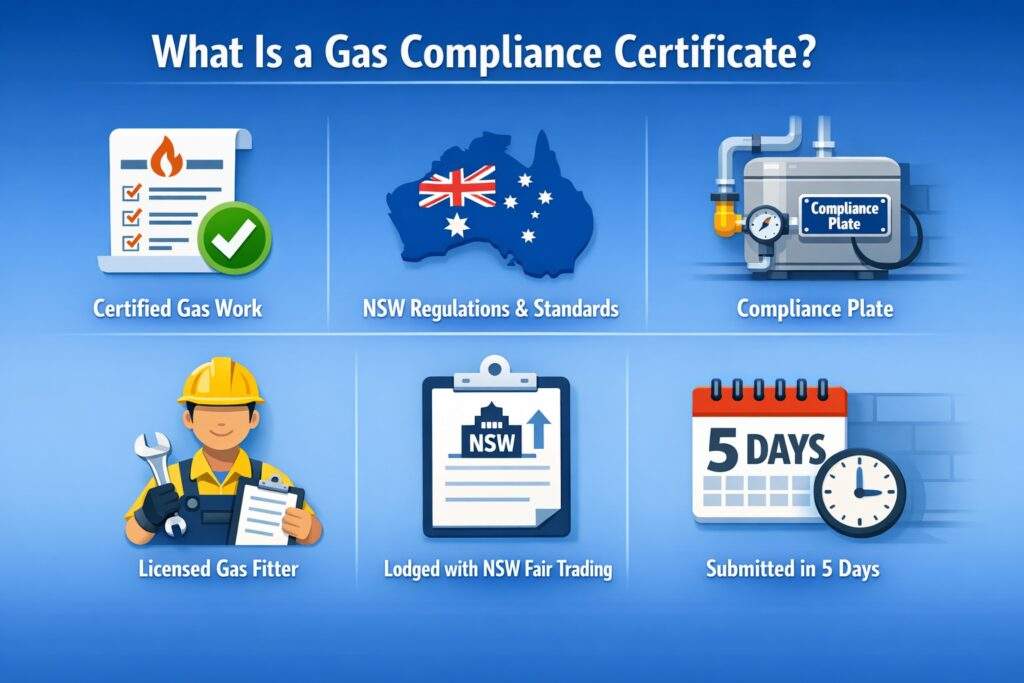
A gas compliance certificate is an official document issued by a licensed gas fitter confirming that a gas installation or gasfitting work has been completed in line with NSW regulations and the relevant Australian Standards. It’s essentially the formal proof that the work has been done safely and correctly, and that it meets the compliance requirements expected for gas systems in NSW.
In most cases, the certificate is supported by a physical compliance plate fixed to the installation, which identifies the work and helps with future inspections or servicing. The licensed gas fitter also typically lodges the certificate with Building Commission NSW/NSW Fair Trading within 5 business days of completing the job, creating an official record that the work was carried out and certified within the required timeframe.
Why Gas Safety Obligations Matter for Every Property

Gas safety obligations exist because faulty gas installations kill people every year across Australia. Carbon monoxide is odorless and colorless, making it impossible to detect without proper equipment and regular safety checks. Property owners who ignore these requirements face serious legal and financial consequences.
Legal Requirements Under NSW Regulations
NSW Fair Trading requires all gas work to be performed by licensed professionals holding current gas fitting qualifications. Our team operates under License 210933C and maintains full insurance coverage for all gas plumbing services work.
Rental properties need annual gas safety checks covering all appliances, pipework, and ventilation systems. Owner-occupied homes don’t have mandatory inspection intervals but should conduct safety checks every two years.
Financial Risks of Non-Compliance
Fines for unlicensed gas work start at $1,100 for individuals and $5,500 for businesses. Insurance policies often exclude coverage for incidents involving non-compliant gas installations.
Medical costs from carbon monoxide poisoning can reach tens of thousands of dollars. Legal liability for tenant injuries or deaths creates unlimited financial exposure for property owners.
Health Dangers From Faulty Gas Systems
Carbon monoxide testing reveals dangerous gas concentrations before they reach lethal levels. Early symptoms include headaches, dizziness, and nausea that people often mistake for flu.
Prolonged exposure causes permanent brain damage or death. Children and elderly people are most vulnerable to carbon monoxide poisoning effects.
Landlords must provide current gas compliance certificates to tenants before lease commencement. Insurance companies can refuse claims if gas incidents occur without valid certification.
What Is a Gas Compliance Certificate Step-by-Step
A gas compliance certificate documents that your property’s gas installations meet current Australian Standards for safety and performance. Licensed gas fitters conduct comprehensive inspections covering appliances, pipework, ventilation, and gas meter connections. The certificate provides legal proof of compliance for insurance, rental agreements, and property sales.
1. Initial Property Assessment and Documentation
Our licensed gas fitter arrives with testing equipment and begins by documenting all gas appliances on the property. This includes hot water systems, cooktops, ovens, space heaters, and any commercial equipment.
We photograph existing installations and note appliance model numbers, installation dates, and current condition. This documentation becomes part of your permanent gas safety record.
2. Gas Meter and Supply Line Inspection
The gas meter connection receives detailed inspection for proper installation and leak-free operation. We test gas pressure at multiple points to ensure consistent supply throughout the property.
Supply lines undergo pressure testing to identify any drops that indicate leaks or blockages. All connections must meet AS/NZS 5601 standards for residential and commercial gas installations.
3. Appliance Installation and Ventilation Checks
Each gas appliance gets individual testing for proper installation, ventilation clearances, and safe operation. We verify that flue systems discharge combustion gases safely away from living areas.
Ventilation requirements vary by appliance type and installation location. Indoor gas heaters need different ventilation than outdoor hot water systems.
4. Leak Detection and Gas Concentration Testing
Electronic gas detectors scan all connections, joints, and appliances for escaping gas. Even minor leaks that don’t smell can create dangerous accumulations over time.
Carbon monoxide testing measures combustion gas levels around appliances during operation. Readings above safe limits require immediate repairs before certificate issue.
5. Safety Device and Control Testing
Gas appliances include safety devices like flame failure protection and overheat cutoffs that must function correctly. We test these systems to ensure they activate when needed.
Thermostat controls and gas valves receive operational testing to verify proper function and safe shutdown capabilities. Faulty controls can cause gas leaks or overheating.
6. Certificate Issue and Compliance Documentation
Passing inspections result in immediate certificate issue with detailed findings and recommendations. We provide digital copies for your records and physical certificates for rental compliance.
Failed inspections receive detailed reports explaining required repairs and timeframes for re-inspection. Most issues can be fixed same-day to avoid delays.
Common Fail Points and Fast Remedies Before Re-Inspection
Most gas compliance failures come down to a handful of common issues that are usually quick to fix, not major system overhauls. Things like blocked ventilation, loose connections, installation defects, and outdated safety devices account for most initial inspection failures and the delays that follow. Knowing these fail points ahead of time makes it easier to prepare properly and avoid the hassle of re-booking a re-inspection.
| Common fail point | Why it fails compliance | Fast remedy before re-inspection |
|---|---|---|
| Ventilation blocked or missing | Indoor appliances need adequate airflow to prevent carbon monoxide buildup | Clear blocked vents, install/replace ventilation grilles, and confirm required airflow paths |
| Inadequate clearances | Appliances must meet minimum safe distances from combustibles and obstructions | Reposition appliance where possible, remove obstructions, and correct spacing to required clearances |
| Small gas leaks at connections | Loose joints or worn thread seals fail leak tests | Re-seal threaded joints with approved compounds, tighten fittings, and re-test with electronic detection |
| Larger leaks or damaged pipe sections | Cracked lines or compromised sections require more than tightening | Replace the affected pipe section, reconnect correctly, and pressure/leak test the full run |
| Appliance installation defects | Incorrect sizing, poor support, or missing components creates safety risk | Correct line sizing/support, secure mounting, and rectify missing components to meet installation standards |
| Missing or faulty safety devices | Older units may lack flame failure protection or thermal cutoffs | Retrofit approved safety devices where possible and verify correct operation during testing |
| Flue/exhaust issues (blockages or damage) | Poor discharge and restricted flues can cause dangerous fume buildup | Clear debris/bird nests, repair/replace flue terminals, and verify discharge points are compliant |
When these problems are handled early, re-inspections become straightforward and far less stressful. Fast, same-day repairs are possible when the technician arrives prepared with common parts, sealants, and proper testing equipment. The result is less downtime, fewer appointments, and a much smoother path to getting your compliance certificate issued.
How Anton’s Plumbing and Gas Helps You Pass First Time With Pre-Checks and Fixes

Anton’s Plumbing & Gas helps you pass first time by doing the work that most people only discover they need after they fail. Our pre-check service spots compliance issues before formal testing begins, so you’re not wasting time booking repeat visits or scrambling to fix problems under pressure. With 25+ years of hands-on experience and a systematic approach, we catch the small details that can trigger a fail—then fix them on the spot whenever possible.
We arrive with a structured pre-inspection checklist that covers the key areas inspectors focus on, from visible installation faults to hidden safety risks. Visual checks pick up obvious issues like damaged gas lines, missing safety devices, poor ventilation, or incorrect clearances, while our electronic equipment confirms leak integrity and checks carbon monoxide levels before the official test starts. That’s also when we verify things like meter connection security, supply pressure, appliance controls, flue condition, discharge points, and gas concentration around appliances—so you’re not guessing whether everything is safe and compliant.
If repairs are needed, we aim to resolve them during the same visit to keep the process moving. Minor leaks at threaded connections can often be tightened and re-sealed immediately, and blocked flues caused by debris or bird nests can typically be cleared on-site to restore safe ventilation. And if we detect anything dangerous—like significant gas leaks or elevated carbon monoxide—our team follows emergency safety procedures straight away, including isolating the gas supply, explaining the risk clearly, and using our 24/7 emergency response to address urgent issues across Sydney.
Conclusion
Gas compliance certificates protect your family while meeting legal obligations for property owners across Sydney. Our licensed gas plumbing services team provides same-day inspections, repairs, and certification with transparent pricing and no call-out fees. Contact us at 0493 824 176 to schedule your gas safety inspection today.
Antons Plumbing & Gas provides licensed gas fitting services ensuring your compliance certificates meet NSW standards. Our 25+ years experience guarantees proper documentation and safety compliance. Learn more about our gas certification services today.
Related Articles
- Gas Plumbers in Sydney: Appliance Installation Rules & Compliance Certificates
- Sydneysiders Take Note: Plumbing Is an Essential Service
FAQs
What Is A Gas Compliance Certificate And Why Is It Required?
A gas compliance certificate is a legal document that confirms all gas installations and appliances in a property meet safety standards and regulations. It is required to ensure that gas fittings are safe for use and comply with the relevant NSW laws, protecting both residents and the property itself.
Who Can Issue A Gas Compliance Certificate And What Do They Check?
A licensed gas fitter, like those at Antons Plumbing & Gas, can issue a gas compliance certificate. They check for proper installation, adherence to safety standards, functionality of appliances, and overall compliance with Australian Standards to ensure safety and reliability.
How Long Is A Gas Compliance Certificate Valid For Homeowners Or Rentals?
A gas compliance certificate does not have a specific expiration date; however, it is advisable to have regular safety checks, ideally every two years, to ensure ongoing compliance and safety. This is particularly important for rental properties to maintain tenant safety.
What Are Common Reasons A Property Fails A Gas Safety Check?
Common reasons for failing a gas safety check include improper installation of gas appliances, gas leaks, lack of ventilation, and outdated or non-compliant fittings. Our experienced team can identify these issues and provide the necessary solutions to ensure compliance and safety.
How Much Does A Gas Compliance Certificate Cost And What Is Included?
The cost of a gas compliance certificate can vary based on the complexity of the job and the specific services required. Typically, the fee includes a thorough inspection of all gas installations, documentation of findings, and the issuance of the certificate by a qualified professional. At Antons Plumbing & Gas, we ensure transparent pricing with no hidden fees.