

The right drain repair depends on the defect, not simply whether relining is advertised as less disruptive. Before approving work on a Sydney property, ask what inspection evidence supports the recommendation. This guide focuses on technical suitability; our separate value guide covers total cost and property disruption.
Start with a defined inspection scope
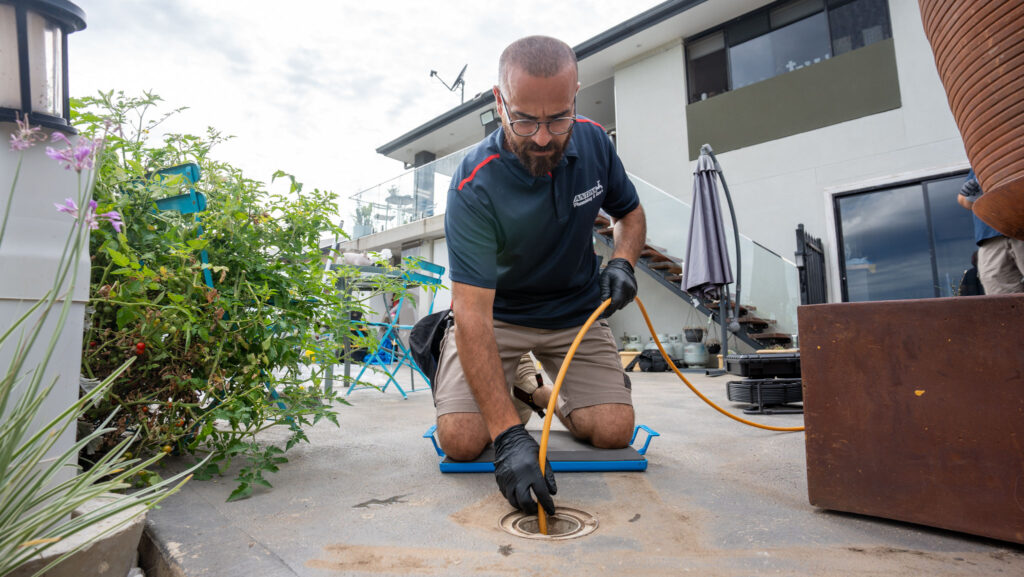
Ask which drain run will be examined, how it will be accessed and whether cleaning is needed first. A CCTV drain inspection can show visible internal conditions along the accessible route, but it cannot certify every hidden part of the system. Request the footage or report and a clear explanation of any uninspected sections.
Have the contractor identify the defect location, pipe material, approximate dimensions, connections and practical access. A camera stopping at an obstruction is a limitation to investigate, not proof that everything beyond it is sound.
When relining may be a practical option
A suitable pipe-relining system can form a new lining within an existing drain. Cracks or leaking joints may be candidates when preparation, access and the product’s design requirements can be met. Material or age alone should not decide the outcome.
Ask the installer to explain how the proposed system suits the specific defect and how junctions will remain functional. Product documentation and site assessment should support the proposal; general lifespan claims do not establish suitability.
When replacement or a combined repair may be needed
A pipe with a significant change in shape, lost alignment, collapsed section or incorrect fall may need excavation or another preparatory repair. A liner follows the existing route; it should not be presented as automatically correcting a drainage gradient problem.
The choice is not always an entire new line versus relining everything. A local excavation followed by relining of another suitable section may be worth assessing. Ask why the proposed repair extent is necessary and what defects it leaves untreated.
Use this evidence checklist before approval
Request: the defect location and images; the inspected and uninspected lengths; the proposed repair length; access and preparation requirements; treatment of branches; and the checks planned after installation.
If standing water or poor flow suggests a fall problem, ask what additional assessment is needed. Do not treat a single still image as a measurement of the whole line’s gradient or structural condition.
Confirm responsibility and handover
Establish whether the affected asset is private, shared or part of a utility network before authorising work. Sydney Water’s blockage guidance explains the distinction between its pipes and private drainage; the visible symptom alone does not identify ownership.
Ask for the product and installation warranty terms, records of the completed repair and post-work inspection or testing. Document any remaining defects and restrictions. A clean image of one repair does not guarantee that unrelated drain sections cannot fail.
Compare feasible options, then compare cost
Once the technically suitable options are identified, compare the full scope using our pipe-relining value and disruption guide. For an explanation of the diagnostic tools, see modern drain technology for homeowners.
To discuss an assessment with Anton’s Plumbing & Gas, request a booking and include previous footage, reports and access details. Ask for a recommendation tied to the observed fault rather than a method chosen before inspection.
Frequently Asked Questions
What decides whether relining is suitable?
The defect, pipe shape, access, preparation and the selected system’s requirements all matter. Ask the installer to connect the recommendation to the inspection findings.
Does an old clay drain always need replacement?
No. Age and material alone do not establish the repair method. The actual condition and suitability of the proposed system need assessment.
Can a camera inspect the entire drain system?
Only the accessible route within the equipment’s reach can be viewed. Obstructions, bends and access limitations should be recorded in the report.
Should the drain be cleaned before inspection?
The contractor should assess the safe sequence. Debris may obscure defects, but cleaning methods must suit the pipe condition.
Can relining fix cracks?
Some cracked drains may be suitable, subject to the defect and system design. Ask for the relevant findings and product-specific recommendation.
Does relining correct a sagging pipe?
A liner follows the existing route and does not automatically correct the fall. A low section causing poor drainage needs specific assessment.
Can a collapsed section be relined?
Do not assume ordinary lining can pass through or restore it. Excavation, preparatory work or a different repair may be required before any lining is considered.
What if only one joint is badly displaced?
Ask whether a local repair is feasible and whether other defects remain. The answer depends on access, alignment and the condition of surrounding pipework.
Does root removal repair the entry point?
Clearing roots can restore flow but may leave the crack or joint through which they entered. Ask whether a structural repair is needed.
Can relining and replacement be combined?
A combined approach may suit different defects along a run. Request a plan showing which sections receive each treatment and why.
Will relining preserve all branch connections?
The proposal should explain how junctions are located and kept or restored in service. Ask how their function will be checked afterwards.
Is a camera image enough to measure pipe fall?
A camera can raise questions about standing water or alignment, but additional assessment may be needed to establish levels and the cause of poor flow.
How do I know which length is included in the quote?
Ask for start and end points, the repair length and a marked location or reference to the footage. Avoid an undefined promise to repair the drain.
What if the camera cannot pass a blockage?
The report should identify where inspection stopped and what remains unknown. Agree on the next investigation step before approving a repair based on incomplete coverage.
Can every pipe material use the same liner?
No universal suitability should be assumed. The selected product and preparation method must be assessed for the installation and service.
Do relined pipes have a guaranteed lifespan?
Request the specific product information and warranty terms. Design-life statements, workmanship coverage and the actual operating life are different things.
What should I receive after the repair?
Ask for the completed scope, relevant inspection or test evidence, product details and warranty documents. Record any defects outside the repaired section.
Who handles a fault in Sydney Water’s network?
Establish responsibility with Sydney Water before authorising private work on utility assets. See its blockage guidance.
Where can I compare the full financial trade-off?
Read our relining value guide for access, restoration, downtime and quote comparisons once the feasible repair options are known.
How should I prepare for a drain assessment?
Gather previous reports, access information and a history of recurring blockages. Send them with your booking enquiry so the inspection can address the unresolved questions.