

Cracked, root-damaged or collapsed drainage doesn’t fix itself, and clearing it repeatedly just delays the bill. We locate the fault exactly, then repair it — usually without digging up the yard.

Most people arrive at drain repairs the same way: the drain has been cleared two or three times, it keeps blocking, and someone has finally put a camera down and found the reason. A crack. An open joint. A section that’s dropped and now holds water instead of draining it.
At that point clearing stops being a fix and becomes a subscription. The debris that keeps catching isn’t the problem — the rough edge or the gap it’s catching on is, and no amount of jetting removes a fault in the pipe itself.
The good news is that repairing drainage rarely means what people fear it means. Relining lets us cure a new pipe inside the old one without excavation, which saves the driveway, the paving and the garden. Digging is genuinely a last resort, reserved for pipes that have collapsed past the point of lining.
If any of these sound familiar, it’s worth booking rather than waiting.
If nothing structural has been identified yet, start with a camera inspection instead. There’s no sense quoting a repair before anyone knows what’s actually broken.
These point past a blockage and towards the pipe itself.
The clearest indicator. Sound pipe doesn't reblock every few months.
Fast regrowth means a substantial opening, not a hairline gap.
Waste escaping from a cracked section into the surrounding soil.
Soil washing into a broken pipe leaves a void that settles above it.
Roots and vegetation feeding off a leaking sewer.
A cracked drain venting where it shouldn't, even when flowing.
Often a sag holding water rather than a blockage.
Broken drainage is a common access route worth ruling out.
Almost every drain repair we do traces back to one of these.
They enter through an existing gap, then thicken and force it wider each season until the pipe fractures around them.
Original earthenware and clay drainage across Sydney’s older suburbs was laid in short sections with mortared joints. Those joints were never going to last indefinitely.
Sydney’s soils expand when wet and shrink when dry, and buried pipework gets dragged along with that movement year after year until a joint opens or a section cracks.
A line laid without adequate fall, or one that has settled, creates a sag where waste pools instead of flowing. This is a construction fault rather than damage, and clearing never fixes it.
Drainage under driveways and parking areas carries loads it was never designed for, particularly older shallow lines.
Pipes struck during landscaping, fencing, pool installation or extensions — sometimes years before the symptoms appear.
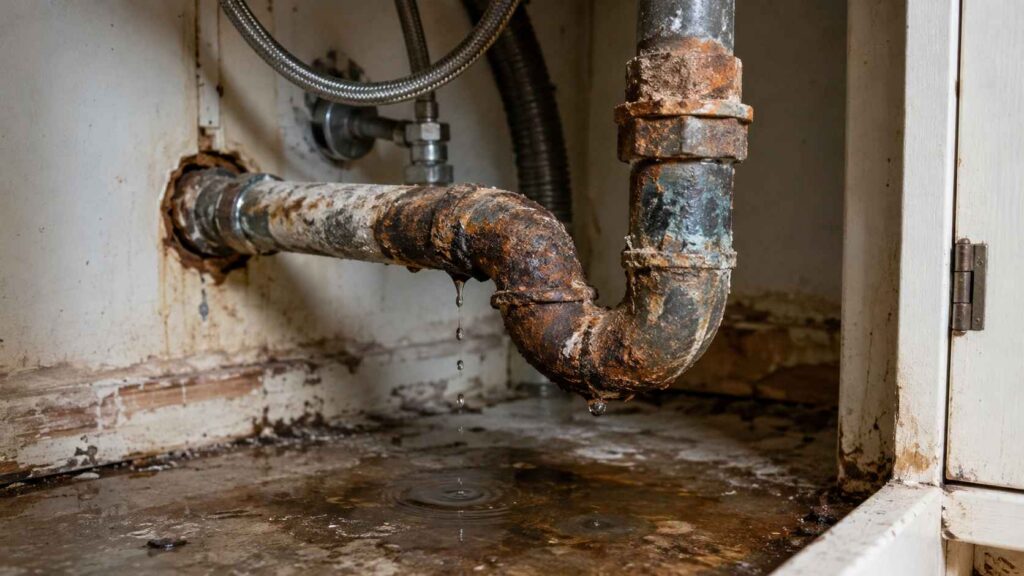
Damaged drainage doesn’t stabilise. It gets worse on its own timeline.
Send us what you’ve got and we’ll talk through the repair options.
No guesswork and no surprise bills. Every job runs the same way, so you know what’s happening and what it costs before work begins.
If you already have footage, we'll work from it. If not, we camera the line first — nothing gets quoted from assumption.
Distance along the line, depth, and the position marked on the surface. This is what keeps any excavation targeted.
Relining needs a stable host pipe. Whether yours qualifies is a condition question, not a preference.
Typically point repair, relining, or replacement of a section — with the trade-offs explained plainly.
Relining is cured in place inside the existing pipe. Excavation, where genuinely needed, is targeted to the located fault.
Verification that the repair holds and the line is clear end to end. You get the footage.
A new pipe cured inside the old one.
A single damaged section, patched in place.
Fractured earthenware and PVC.
Sealing gaps roots enter through.
Repairing the entry point after root removal.
Restoring fall where waste pools.
Where lining is no longer possible.
Yard drainage and downpipe runs.
At the connection to the main sewer.
Where lines meet.
Shared drainage between lots.
Damage caused during building work.
Typically an older property where roots or ageing earthenware have finally caught up with the drainage. Relining suits these well — it fixes the pipe without taking apart a garden that took years to establish.
A permanent repair ends the cycle of callouts and tenant complaints. On shared lines, the located fault position is what determines whether the cost sits with the owners corporation or an individual lot — and footage settles that far faster than argument.
Drainage failures under commercial premises are disruptive to fix, which makes no-dig relining particularly valuable. We can often work around trading hours. After-hours availability: [confirm].

The pipe’s condition decides this, not preference. Here’s how the common findings map to the method.
Crack or fracture, pipe still round and stable
Relining that section
The host pipe holds shape, so a new lining cures inside it — no digging.
Open or dropped joint, sections aligned
Relining across the joint
Seals the gap roots enter through without excavation.
Single short defect, easy access
Point repair
Smallest possible intervention where the rest of the run is sound.
Multiple defects along one run
Reline the full run
Cheaper and less disruptive than repeated point repairs.
Sag or belly holding water
Excavate and re-lay to correct fall
Lining follows the existing shape — it can't create fall that isn't there.
Collapsed or badly displaced pipe
Excavate and replace
No stable host pipe means nothing to line against.
If someone has quoted you excavation, it’s worth having the footage looked at again — relining is viable more often than people expect.
Drain repairs are quoted from the footage, so the price reflects the actual fault rather than a general estimate.
A single joint versus a full run are very different scopes.
Point repair, relining and excavation sit at quite different price points.
Relining needs access at the right points; tight or restricted sites add time.
Included as part of diagnosing a recurring sewer problem — and worth it on the main line.
Where excavation is needed, restoring paving, concrete or landscaping is part of the total.
Standard hours differ from after-hours attendance. Policy: [confirm]
Inspection on site; the written quote follows shortly after
Often completed within a day where access is straightforward.
Typically a day on site, including preparation and curing time.
May extend beyond a day depending on length and access.
Longest option — and the reason relining is preferred wherever the pipe allows.
If something on site changes the picture, we tell you before we keep going — not after.
NSW plumbing licence 210933C — all work to Australian Standards.
Relining saves the driveway, the paving and the garden — we only excavate when the pipe leaves no choice.
You approve the price before any work starts.
We quote from footage, not assumption — and you get to see it.
The Hills, North West, Northern Sydney and the Hawkesbury.
One team for owners, landlords, agents and businesses.
Confirm before publishing.
Confirm before publishing.
Confirm before publishing.
The Hills District, North West, Northern Sydney, the Hawkesbury and greater metro.
Written as a real conversation with the plumber — your question, our answer.
The pattern tells you. Sound pipe doesn’t reblock every few months — so if you’ve had the same drain cleared two or three times and it keeps coming back, something structural is causing it. A camera inspection confirms it and shows you exactly what, which is where any repair conversation should start.
Usually, yes. Relining cures a new pipe inside the existing one, so the fault gets sealed without excavation — the driveway, paving and garden stay intact. The exception is a pipe that’s collapsed or dropped badly, because lining needs a stable host pipe to work against.
We work from camera footage, either yours or ours. We need to see the nature of the defect, how long a section is affected, how deep the line sits, and whether the pipe still holds its shape. Quoting a drain repair without that is guesswork, and it’s usually guesswork in the contractor’s favour.
Rarely. Most repairs are targeted to the affected section — a point repair for a single defect, or relining a run where there are several. Full replacement is reserved for pipes that have genuinely collapsed or where the fall is so wrong that the line has to be re-laid.
It’s worth a second look at the footage. Relining is viable more often than people are told, particularly for cracks and open joints where the pipe is still round. If the pipe really has collapsed then digging is the honest answer — but you should be able to see why on screen rather than take it on faith.
A point repair is often done within a day where access is easy. Relining a section is typically a day on site including preparation and curing time, and a full run may run longer. Excavation and replacement is the longest option, which is exactly why we reline wherever the pipe allows it.
Send us any camera footage or plumbing reports you already have — it can save an inspection. Have the blockage history clear in your head: how often, which fixtures, over what period. And have a think about what sits above the drain run, because that affects the method we’d recommend.
How much pipe needs repairing, which method suits it, and how deep and accessible the line is. A shallow line under open lawn is a very different job from one under a concrete driveway. If excavation is needed, restoring the surface afterwards is part of the total and we’ll include it rather than surprise you.
No — drainage repairs are on the waste side, so your supply keeps running. We will need you to avoid using the drainage into the section we’re working on, which usually means limited use of certain fixtures for part of the day. We’ll tell you which ones and for how long.
Partially. While we’re lining or repairing a section, nothing can drain through it — so the fixtures feeding that line are out of action for the duration. Other parts of the property on a separate run are generally fine. We’ll go through which fixtures are affected before we start so you can plan around it.
Relining is a long-term repair rather than a patch — the cured lining is a structural pipe in its own right, and manufacturers rate the materials for decades. What matters more is that it seals the entry point, so roots can’t get back in through the joint they were using. We’ll go through the specific product warranty with your quote.
At the repaired section, yes — that’s the whole point. Roots enter through a gap, and sealing the gap removes their way in. What relining one section can’t do is protect a different joint further along the line, which is why we survey the full run and tell you if there’s more than one entry point.
It hinges on where the fault sits, and the camera survey establishes that with a measured distance from the access point. Pipework within a lot is typically the owner’s; common drainage typically isn’t. Having the location documented means the strata manager is working from evidence rather than adjudicating between opinions.
For insurance, check your policy — some cover sudden damage and exclude gradual deterioration, and the distinction often turns on what you knew and when. For a sale, known defects are generally a disclosure issue, and it’s worth getting proper advice on that. Either way, having the fault documented and repaired properly puts you in a better position than leaving it.
Have the line re-cameraed about a year after the repair so you know it’s holding — cheap peace of mind. Keep aggressive tree species away from the run, don’t drive over shallow drainage, and locate the pipes before any digging or landscaping. And keep the footage; it’s the baseline that makes every future inspection more useful.
Don’t wait on a form, call now for 24/7 priority response.