
A blocked toilet is one of the most frustrating plumbing emergencies you can face at home. Water rises in the bowl, panic sets in, and you’re left wondering whether to reach for a plunger or call for help. The good news is that many clogged toilet issues can be tackled with the right tools and a bit of know-how—but knowing when to stop and bring in a licensed plumber is just as important.
In this guide, we walk you through five practical clogged toilet fixes every Sydney homeowner should understand. You’ll learn how to use a toilet plunger correctly, what household products can help, and when a blockage signals a deeper drainage problem that requires professional attention from our team at Anton’s Plumbing & Gas.
Key Takeaways
- A flanged toilet plunger creates the seal you need to clear most simple blockages quickly and safely.
- Hot water and dish soap can soften minor clogs before you resort to more aggressive methods.
- Never flush foreign objects or excessive paper—they’re the leading cause of recurring toilet blockages.
- Persistent or recurring clogs may point to tree roots, damaged pipes, or main-line obstructions that need CCTV inspection.
- Same-day service from a licensed Sydney plumber ensures compliance, safety, and a lasting fix—not just a temporary patch.
Understanding What Causes a Clogged Toilet Bowl
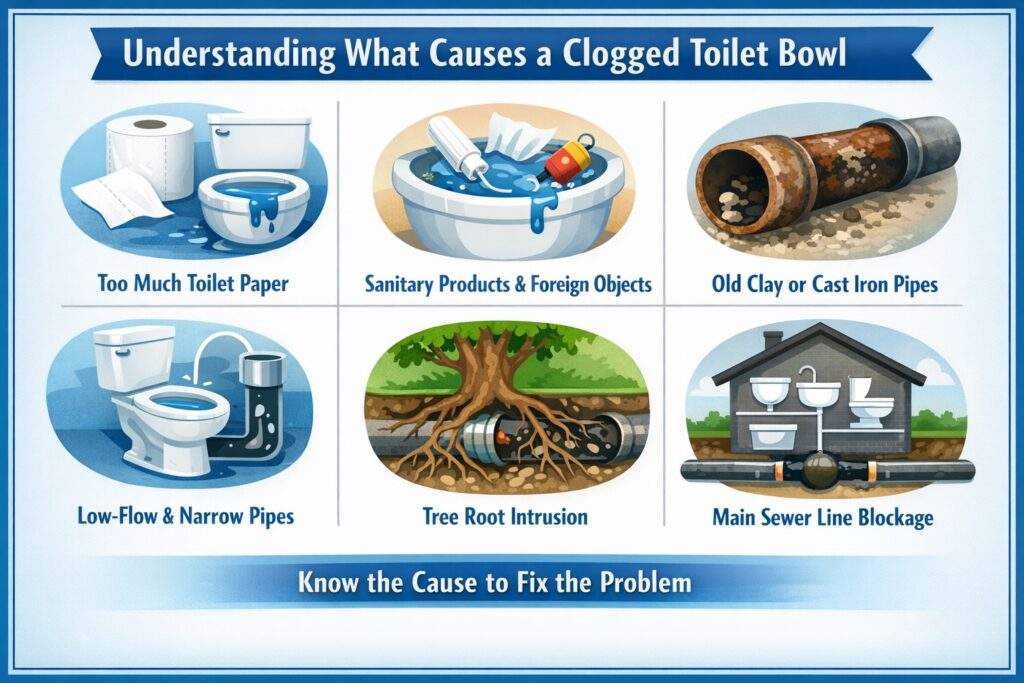
Before you grab any tools, it helps to understand what’s actually causing the blockage in the first place. Most clogs form in the toilet trap—the curved section beneath the bowl—where waste, paper, or foreign items can snag and build up. In Sydney homes, older clay or cast-iron pipes, low-flow toilets, and even tree roots can also contribute to repeat blockages.
| Common Cause | Why It Blocks | What You’ll Notice |
|---|---|---|
| Too much toilet paper | Paper compacts and sticks in the trap bend | Slow draining, bowl rises before dropping |
| Sanitary products / wipes / foreign objects | Items don’t break down and lodge in the trap | Sudden full blockage, plunging often fails |
| Older clay/cast-iron pipes | Rough internal surfaces catch debris over time | Recurring clogs that return more frequently |
| Low-flow toilet + older narrow pipes | Less flush volume struggles to carry waste through | Frequent partial clogs, weak flush performance |
| Tree root intrusion | Roots enter cracks and trap waste like a net | Gurgling, slow drains, repeat blockages |
| Main-line obstruction | Build-up or damage blocks the shared sewer line | Multiple fixtures drain slowly or back up |
Once you know the likely cause, you can choose the right fix instead of guessing. If a clog returns within days or starts affecting more than one fixture, it’s usually a deeper drainage issue, not just the toilet trap. In those cases, a licensed plumber can inspect the line and clear it properly to prevent repeat emergencies.
1. Use a Flanged Toilet Plunger the Right Way
A flanged toilet plunger is the most reliable first step for clogged toilet how to fix because it creates a tight seal inside the toilet outlet. Many people struggle because they use a flat sink plunger, which can’t grip the drain opening properly. When you understand how to use a toilet plunger, you can clear most paper-and-waste clogs quickly without chemicals.
To apply how to use toilet plunger correctly, make sure the rubber cup is fully submerged so you’re pushing water pressure, not air. Insert the plunger at a slight angle to expel trapped air, then plunge in firm, steady cycles for 10–12 strokes while keeping the seal intact. If the water doesn’t improve after three rounds, stop and move on, because over-plunging can damage seals or older porcelain.
2. Hot Water and Dish Soap Method
If you’re unsure about clogged toilet bowl what to do after plunging, hot water and dish soap is a safe next step. Dish soap acts as a lubricant that helps waste slide through the trap, while heat softens paper-based clogs. This method is gentle on pipes and works best for minor blockages caused by toilet paper or organic material.
Pour a generous squirt of dish soap into the bowl and let it sit for 5–10 minutes so it can work down toward the clog. Carefully add hot water that is not boiling, pouring from waist height to add a little force without risking cracks in the porcelain. Wait 10–15 minutes, then flush once or try another short plunging round if the water level is still slow.
3. Baking Soda and Vinegar Reaction
The baking soda and vinegar method is one of the most common products to unclog toilet blockages using household ingredients. It creates a fizzing reaction that can loosen minor organic buildup without the risks of harsh chemical cleaners. This is best used when the water level is low enough to prevent overflow and the clog isn’t caused by a solid object.
Add one cup of baking soda into the bowl first, aiming toward the drain opening to keep the reaction close to the blockage. Follow with two cups of white vinegar slowly, then let it sit for 20–30 minutes so the fizzing can help break down the obstruction. Finish with hot (not boiling) water and a flush, and if nothing changes after one attempt, move on because repeated tries usually won’t fix a stubborn clog.
4. Call a Licensed Plumber for CCTV Drain Inspection
If the toilet keeps clogging or multiple drains slow down together, a deeper issue may be causing the blockage. In Sydney homes, tree roots, cracked pipes, and main-line obstructions are common culprits that home remedies cannot resolve. A CCTV drain inspection pinpoints the exact cause so you don’t waste time repeating temporary fixes.
With CCTV, a plumber feeds a camera through the waste line to find cracks, root intrusion, collapsed sections, or trapped foreign objects. This gives you a clear diagnosis and helps choose the right solution, whether it’s jetting, relining, or targeted repair. If you’re stuck on clogged toilet bowl and what to do after repeated failures, CCTV is often the fastest path to a lasting fix.
5. Professional Drain Clearing (Jetting or Drain Machine)
When basic methods fail, professional drain clearing is the safest way to remove the blockage without damaging your toilet or pipes. Licensed plumbers use drain machines and high-pressure water jetters to break up and flush out stubborn debris effectively. This approach is especially important for recurring clogs, because it clears buildup deeper in the line that plunging can’t reach.
High-pressure jetting blasts away grease, paper accumulation, and early-stage root intrusion to restore full pipe flow. Drain machines can retrieve or break apart tougher obstructions when a blockage is lodged further down the branch line. If you’ve already tried basic at-home methods and the problem returns, professional clearing prevents repeat blockages and protects your system long-term.
Preventing Future Clogged Toilet Issues
Once you’ve cleared a blocked toilet, the next priority is making sure it doesn’t happen again. Most repeat clogs come down to everyday habits—flushing the wrong items or using too much paper in one go. A few simple changes, plus occasional maintenance, can dramatically reduce the chances of another clogged toilet emergency.
- Only flush toilet paper and human waste (avoid sanitary products, wet wipes—even “flushable” ones—cotton buds, dental floss, and paper towels).
- Limit toilet paper per flush and flush twice if you need more, especially with low-flow toilets.
- Keep a bin in the bathroom so non-flushable items have an easy, obvious place to go.
- Teach children what can’t be flushed (toys, crayons, and small objects are common culprits in family homes).
- Schedule regular drain maintenance such as annual CCTV checks and high-pressure jetting to remove buildup and early root intrusion.
- Consider pipe relining for older homes with clay or cast-iron pipes to prevent roots and extend pipe life with minimal disruption.
- Install a backflow prevention device if your property is low-lying or near stormwater drains to reduce sewage backup risk during heavy rain.
Prevention is always cheaper than dealing with an emergency call-out and potential water damage. If blockages keep coming back, it usually means there’s a deeper drainage issue that needs proper inspection, not just another quick fix. With the right habits and proactive maintenance, you can keep your toilet running reliably and avoid repeated plumbing headaches.
Why You Should Call a Licensed Sydney Plumber

DIY fixes have their place, but there’s a point where trying to handle a blocked toilet yourself can cause more damage than the clog itself. Toilets connect into your home’s waste and vent systems, so improper plunging, chemical use, or DIY “snaking” can lead to leaks, cracked porcelain, failed seals, and even non-compliance with NSW plumbing rules. A licensed Sydney plumber has the training, tools, and insurance to diagnose the true cause and repair it safely in line with Australian Standards.
At Anton’s Plumbing & Gas, every job is completed by qualified professionals with current NSW licensing (Lic: 210933C) and compliance with AS/NZS 3500 plumbing standards. We don’t just clear the blockage and leave—you get a proper assessment of why it happened, what needs to be fixed, and how to prevent it from returning. Our work is backed by a lifetime labour warranty, so you can trust the repair quality long after the toilet starts flushing normally again.
We also keep pricing and service straightforward so you can make decisions with confidence. You’ll receive a fixed rate upfront before any work begins, with no hidden fees, no surprise add-ons, and no pressure—if a simple plunge or drain clean is enough, we’ll tell you. And if you need a bigger solution like pipe relining, a toilet replacement, or a drainage upgrade, we explain your options in plain English and deliver same-day support across greater Sydney with 24/7 emergency availability when it matters most.
Conclusion
Knowing how to fix a clogged toilet can save you time and stress, but recognizing when to call a professional protects your home from bigger problems down the line. If plunging and home remedies don’t clear the blockage—or if clogs keep coming back—reach out to Anton’s Plumbing & Gas at 0493 824 176 or book online for same-day service and a lasting solution you can trust.
Antons Plumbing & Gas offers expert blocked drain solutions backed by 25 years of experience. We provide same-day service across Sydney with no call-out fee. Contact us today to get started.
Related Articles
- Why Your Shower Gets Cold When Other Faucet Runs
- 5 Simple Ways to Unclog Toilet Without a Plunger
- What Are the Warning Signs of a Clogged Toilet? Act Fast!
FAQs
What Is The Best Way To Unclog A Toilet?
The best way to unclog a toilet is to use a plunger designed specifically for toilets, as it creates a strong seal and helps to dislodge the blockage effectively. If the clog persists, consider contacting Antons Plumbing & Gas for professional assistance, as we have over 25 years of experience in resolving such issues safely and efficiently.
How Do You Fix A Clogged Toilet Without A Plunger?
If you don’t have a plunger, you can try using a mixture of hot water and dish soap. Pour a generous amount of dish soap into the toilet bowl and follow it with hot (not boiling) water. Let it sit for a few minutes before flushing. For persistent clogs, our expert team at Antons Plumbing & Gas is always ready to help.
What Causes A Toilet To Get Clogged?
Common causes of toilet clogs include the accumulation of toilet paper, non-flushable items, or a buildup of hard water deposits. Regular maintenance and timely inspections by a professional plumber, like those at Antons Plumbing & Gas, can help prevent clogs before they become a significant issue.
Can You Use Baking Soda And Vinegar To Unclog A Toilet?
Yes, you can use baking soda and vinegar to unclog a toilet. Pour one cup of baking soda followed by one cup of vinegar into the bowl, and let it fizz for about 30 minutes before flushing. While this method can work for minor clogs, for more stubborn blockages, our team at Antons Plumbing & Gas offers effective solutions that guarantee results.
When Should You Call A Plumber For A Clogged Toilet?
You should call a plumber if the clog persists after trying basic remedies, if you notice multiple drains backing up, or if there are signs of water damage. At Antons Plumbing & Gas, we provide same-day service and 24/7 emergency response to address your needs promptly and professionally.